
Why it exists, what to accept, what to plan for, and how to tackle it
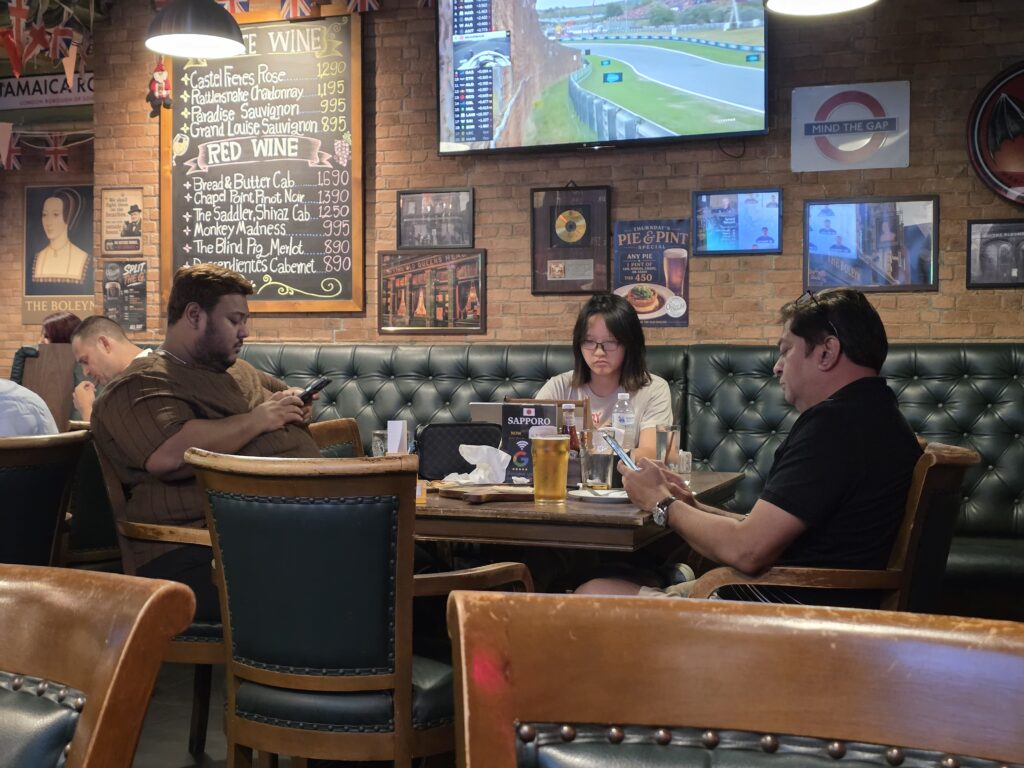
A group of travelers, taking a break from each other to check their phones
I’m a millennial. One of the defining traits of our generation is that we were lucky enough to be “digital pioneers.”
We grew up in a world before the internet, unwired but deeply connected, with a life lived outdoors in parks and wild spaces, dances at roller skating rinks, and bulletproof trust that your friend would meet you at the mall, the park, or the corner before playful antics followed.
In our lifetime, we shaped the digital age as young adults, the first to experience YouTube, social media, smartphones, and all things tech that were once novel but now pervade our lives.
I often reminisce about the old days of my childhood and young adulthood in a world that seemed a little more lighthearted and trustworthy. The character-building adventure of roaming on summer vacation days as a kid, coming home just before the street lamps came on. The carefree upbeatness of Myspace with cheesy background song choices and just enough digital connection to spark a gathering somewhere. The openness of strangers at a bar, a beach, or a salsa dancing meetup eager to connect, craving to talk and befriend, partly because they hadn’t spent the day being force-fed artificial, curated digital snippets of connection through a device that followed them everywhere.
The Stranger Things Effect: Nostalgia of decades past alludes to something invaluable yet lost
It feels weird that this reminiscence, a pleasant stream of memories from 2000 to 2010, has the same shape as my dad’s indulgence out loud I remember as a kid. I fondly remember his memories of how carefree and easy life was in the 1970s. Look back on old movies and writing from his time, and you’ll find freebird norms: no seatbelts, road trips in VW vans from LA to New York or London to Nepal on pennies, and a pace that didn’t force work or consumption into every second of the day. Personally, I would take that same free-wheeling way of living from the ’70s as my own memories from the 2000s.
But…what about now?
At this moment, I am on a search for my new home. Sitting in Bangkok, enjoying a cappuccino in the expat hive of Thonglor, thinking through the options of where in the world to go, there’s an interesting wrinkle.
*
Six years ago, when the pandemic started, I doubled down on a base near Canggu. At that time, the little Balinese surf village was one of the most socially connected, cheapest, wellness-focused places on the planet. However, while the pandemic contorted the shape of newly insulated countries and cities, Canggu popped onto the radar of many as an untapped gem ripe to be exploited and overmarketed. As of now, that once peaceful enclave has crumbled under the unsustainable weight of millions of new visitors. I spent the better part of 5 years trying to sever myself and my commitments from Bali, and finally did. But little did I know that while my borrowed home of Canggu evolved for the worse right before my eyes, the rest of the world was on a different but equally disturbing path that I wouldn’t realize until years later, which would then fuel a grave social shift.
In 2022, I finished the research that became the Global Digital Nomad Study, aiming to understand who digital nomads are and what their lives are truly like as the foundation for my book Digital Nomad Nation.
The most potent finding from my conversations and surveys with hundreds of nomads was that loneliness was the #1 reason nomads stopped traveling the world and went home.
At the time of my research, it made sense. I thought I understood it. A person moving homes every 3 months, inherently forced to sever dozens and possibly even hundreds of social ties along the way while skipping across time zones in a way that’s hard to stay connected to, is bound to be alone at times. Eventually, they will feel alone in a way that evolves into loneliness if unchecked.
Just as I didn’t fully understand how the world, and the cities that expats and nomads gravitate to, had changed during the pandemic, I didn’t fully understand the depth and structural causes of the loneliness common to so many nomads and expats. But look at history, look at the data, and you’ll realize the world is increasingly more isolating not just for nomads but for everyone.
That moment in Bangkok, deciding where to go next, was more complicated than simply picking a livable city to connect in because what we can rely on cities for, in support of social connection, has quietly changed.
Disappearance of third spaces: The first to fall with increasing loneliness
Sociologist Ray Oldenburg presented an idea that a “third place” is anywhere people gather regularly, outside the home (the “first place”) and outside work or school (the “second place”), to relax and connect (1). What makes a third place actually work, in Oldenburg’s framing, isn’t the location; it’s the conditions. Neutral ground. No cost of entry as the primary filter. Conversation or low-effort connection as the main event. Potentially a cast of regulars to anchor the location and the experiences it promises. Low profile and playful mood are imperatives.
That quintessential image of bell-bottom jeans-wearing 20-somethings gathered in a grassy space somewhere, perhaps sharing a summer afternoon or a festival experience, is part of this. The Stranger Things-esque visual of a cluster of kids riding on bikes to who knows where to hatch a nonsensical scheme is part of this. My own Tuesday Taco meetups, where friends and I would show up with a box full of al pastor tacos to a beach or a park and share with any strangers that wanted to enjoy polite chat and a sunset, were part of this. Though these experiences seem simple and free, think on them, and you’ll realize they’re actually priceless for connecting people and allowing community to grow. Unfortunately, the light-hearted nature of these experiences also meant that we commonly took them for granted, making them easy to trim for any person or corporation willing to put in the effort to usurp the space, the time, and the emotional energy we once invested there.
Robert Putnam documented the front half of this collapse in his book Bowling Alone and its follow-up, The Upswing, detailing a decades-long erosion of American associational life. Bowling leagues, clubs, informal gathering habits, and essentially the entire connective tissue of a functioning social fabric, dissolving beneath us. What Oldenburg defines structurally, Putnam charted historically. Together they describe exactly what I watched happen, starting firstly for me in Bali, and then city by city around the world.
Mount Vernon: An introduction to what community could be, open and free
Back in 2012 I moved to Baltimore. Despite the accuracy of the TV show The Wire and the admitted sketchiness of most of the city, I was lucky enough to land in the city’s “gayborhood,” Mount Vernon. It was home to the city’s welcoming LGBT community, some great restaurants and bars, and a large cluster of not-so-pretentious young professionals eager to make friends and explore together.
The chemistry between the people and the place bubbled into a single night with a drunken idea at a bar.
Five of us were sitting at a table at the Brewer’s Art, who’d met in passing at bars and concerts in the park, when one of us spouted, “Let’s build a community.” The confused looks across the table in response gave way to a “what if,” then the snowballing idea rolling between the five of us of starting a neighborhood group for meetups. Within the span of the evening, we decided to each take on hosting a weekly event individually and one big event per month together.
The resulting calendar for the rest of the year swelled into a series of events that anyone who wanted to experience something could join. A local wine bar hosted us weekly for “Wine down Wednesday” to connect after work, with a portion of proceeds going to a pet charity. The free summer concerts in the park came with a big sign that read “strangers who need friends can sit here” and an extra blanket for anyone who cared to join. Weekly movie night, aiming to rewatch the classics most had never seen, was a more intimate highlight.
We realized we’d stumbled into something amazing when our simple Halloween ambitions grew into a neighborhood-wide “house crawl.” Late into the night, several groups of 25 people each, led by a single wrangler, playfully switched between houses every hour, where they would chat, drink, play games, and vote on costumes. Between the houses, they wandered together as the groups crossed paths and cross-pollinated, exchanging members, stories, and candy, in a “trick or treat” meets musical chairs and mingle-style concoction. That night we discovered we’d assembled an energetic cluster of over 125 people, trick-or-treating like children and behaving much like friends. All of this started with a wild idea at a bar to just get people together.
For all of this to happen, there was no fee to pay, no membership required, no ticket to buy. We fueled the project with our passion, because it wasn’t a business; it was just the act of adding bricks to the life we wanted to live. To participate, all it cost participants was the willingness to come and be open to connecting with a few strangers – which, in a world that already demands so much emotional energy from us, is more than enough cost. Socially, the adventurous soul should be rewarded before demanding more in return, and the community did just that.
That year in Mount Vernon with the “Vernonites” was easily the most belonging and connectedness-filled year of my life, in a neighborhood that saw and knew us and, in exchange for our openness, filled our lives with fun acquaintances and close friends.
Now, back in Bangkok 15 years later, I sit reviewing a list of all of the places in the universe of options for most nomads, screening for connectedness and belonging like this. Thinking about what a healthy social life requires, and thinking back on what I’ve seen in the last few cities, my heart sinks. Not just because people don’t connect in the real world, or at least don’t connect as much as we did before, but because slowly and quietly the infrastructure and motivation to make these connecting, nourishing experiences happen is being quietly taken from them. Taken from us.
The solution became the problem, as finding each other now has a cost.
The platforms built to facilitate free, open connection now charge just to show up, and charge facilitators to even try to connect people. Meetup, one of the trailblazers for helping people curate free experiences just to get people together, now charges organizers roughly $175 a year minimum just to even try. This not only increases the cost of just getting out there for the lonely person seeking to connect but naturally decreases the number of possibilities to pick from. In 2012, we had a menu of five different events a week to taste before finding a genuine fit, none of them requiring a cover charge or overcommitment. With cost-of-living crises and budgets already tight, forcing someone to pay before even trying to connect stifles an already struggling flame.
Facebook’s Events corner was a key tool for us organizing events in Baltimore and is now a go-to resource for expat events around the world. The platform’s simplicity, at the time, of showing your friends and connections, and only your friends and connections, empowered our little community.
Now, to see events on Facebook, the platform charges in attention, gatekeeping events behind dozens of advertisements and threads to other content aimed at pulling you into the scrolling for hours as the punishment (or payment) for just seeking humans to connect with.
These platforms were built on the network effects that came from the users, the people like us, open, trusting, willingly participating in and building the platform. This new accepted norm in the attention economy of monetizing everything possible or gatekeeping the once-trusting participants from what they helped build, behind memberships and paywalls, is at best an exploitation and at worst a betrayal. They cut us off from the social connection we helped build, one revenue ratchet at a time. There was a way for this to work before: free, open, honest, and mutually beneficial. There still is, but for the tech corporations we once trusted, their income stream is more valuable than the healthy lives they once encouraged us to build.
Layer a second problem on top: cover fees for everything create both a cost asymmetry (you pay before you get anything or even see if that thing suits you) and an additional financial crunch when the younger generation is already triaging which bills to pay.
Social media is the profit-producing Band-Aid, not the cure, as carefree community is replaced by the attention economy.
Social Media has evolved into an exploitation machine and has simultaneously been the Band-Aid. It soothed us just enough to overlook that emotional lifeblood and genuine connection were being harvested from our lives, imperceptible drop by imperceptible drop.
It didn’t start that way. Social media started as the light and playful connection of MySpace, as a tool that connected us online and facilitated us meeting in the real world – a useful, if not admirable, thing. As the spaces and events we knew and loved faded, social media coincidentally evolved into a place people lived virtually – talked, expressed, shared with people they’d met and knew – a new replacement for the spaces and events gradually lost.
Then (and now), driven by the unforgiving ratchet of capitalism, social media sprinted into monetization by using and perfecting the attention economy, and our energy as its resource to sell. In pursuit of the dollar incentive, those social media companies shifted the model of what was being used by whom (us using the platform, or the platform using us) without telling us. Now, they connect us not with the people in the real world that we want to stay connected to, or even need to stay connected to, but instead with the brands, the influencers, and the arguments that are willing to pay more ad revenue for attention and engagement.
A metaphorical example of this risk and warning is the Rat Park Experiment (2). In this experiment, rats in a rich, social environment with toys and other rats largely ignored drugged water. By contrast, caged rats kept alone in empty environments always chose drugged water over normal water.
Applying this to us as humans, the social connection theory of addiction, sometimes known as the social disconnectedness theory, states that human beings have a natural need to bond. If people cannot connect with others, they will bond with something else to soothe their pain, such as drugs, alcohol, gambling, technology, or social media.
The thing (social media) that evolved to facilitate and soothe the disappearance of social connection has become the thing most people are unknowingly addicted to in place of its loss. What was once the facilitator of a healthy social life has slowly taken it, and monetized most people in the process as marketable attention sources, getting them addicted in the process, keeping the engine in place.
According to Johann Hari, the opposite of addiction isn’t sobriety. It’s connection. He captured this not-so-intuitive idea eloquently in his TED Talk, sourced from his book Chasing the Scream: The First and Last Days of the War on Drugs.
As more people become aware of this catch-22 and begin to avoid social media as a connection crutch, AI chatbots have started rising as yet another virtual substitute to “connect” to, with the potential of becoming an even more anemic band-aid, concealing the same real wound, or social deficiency, underneath.
Trust: The final thing taken from us
A few years ago, I packed everything I cared to continue owning and flew to Argentina, following through on a promise to myself.
15 years earlier, Buenos Aires was where I discovered the idea, more so the possibilities, of a life abroad and the option of trading the idea of “fitting in” for “finding a place I fit into.”
During that three-month trip, I fell in love with a place for the first time. The people. The food. The city layered with an intoxicating, gritty beauty that exists in a way only Latin America does.
My memory of this unique social concoction stayed like a splinter in my mind for over a decade, calling me back. But that first surreal experience was long ago, and I was returning just after the pandemic had altered everywhere in the world I’d visited since, culturally, economically, and socially.
I still had love for Argentina, but I realized it was love for the country I once knew. I was scared the country I fell for would disappoint as the new version that survived a global disaster. I didn’t know what to believe or be confident in. I was as excited as I was reticent and anxious as I deplaned, walking into what I hoped was familiar but was actually the unknown. I was flying in blind.
As I deplaned, I proceeded out of the gaggle of passengers towards the customs and immigration booth. I expected the intense scrutiny of the immigration task force I’d become recently acquainted with in Bali or the anti-immigration climate so common around the world at that time. But what I actually got was a playful, pearly smile and “bienvenidos” as the immigration agent waved me on and continued playfully arguing with her colleague about something incomprehensible. The ambiance of that moment felt almost pleasant.
But that was just the beginning. There was still the unknown and risk ahead.
I walked through the airport jet-lagged from 45 hours of travel with 3 duffle bags holding my entire life and clumsily stacked on a tiny airport trolley. In my haze, the bags fell everywhere. With my life’s possessions scattered across the arrivals area floor, I was frustrated and vulnerable, questioning not just that moment, but my decisions over the last few years that led me to this point. In that exact same moment, an Argentine stranger dashed to help, reacting with concern as he looked me in the eyes, placing my bags back on the cart and saying “tranquilo” as he urged me to relax. In a way, he was genuinely assuring me across the language barrier, “it’s ok, just be human.”
Almost hopeful, I made my way to an Uber and departed for my future home neighborhood for the spring and summer.
*
Finally arriving in my new neighborhood of Palermo, I was unloading my overstuffed duffle bags from the unhurried driver’s car and stopped briefly to take in the moment, soaking up the neighborhood. A glance at the familiar cobblestone street lit up memories. A lady struggling to push her baby’s stroller back up onto the sidewalk. Through the haze of jet lag, I hesitated, realizing I should help, but just enough to observe a well-dressed man, slacks and all, rush across the street to help the woman get her stroller back onto the sidewalk and sorted. He apologized profusely for taking so long in a concerned way that showed personal investment in the world he walked through. It warmed my heart and renewed my belief that this place, the place I was in the process of calling “home,” would welcome me in, functioning in a way that I could be confident about, and believe in.
Those three simple observations renewed something that is, according to not only my own observations in Bali and beyond but the research as well, being drained from society and us on an individual basis. Trust.
Trust is rooted largely in personal experience. Trust is strengthened and maintained in those small Sicilian villages where an old Nana demanded moments of my time to check in on my eating as I offered to help with her bags, and places like Buenos Aires where my overly chatty landlord, Gladys, never quite fixed the internet but became so emotionally invested in the problem that it comedically soothed my own headache just enough. People who’ve lived through significant scarring events, such as millennials through job losses and housing crises, immigrants through discrimination, or Gen Z losing their young social years to the pandemic and isolation from all sides, tend to trust less afterward.
Many people in these three groups are part of the portion of Americans who are losing trust in the world in a way researchers have been tracking for decades. According to Pew Research, the portion of Americans who agreed “most people can be trusted” fell from 46% in 1972 to 34% in 2018, then held flat at 34% through 2023–24. This means we, as a society, hit the floor of trust well before we had the pandemic as an excuse.
Another analysis of that same data found that declining confidence in institutions combined with the accumulated scarring effect of unemployment together explained roughly half of the entire measured decline in American social trust in that period.
So many of the foundations of society have quietly shifted in recent years that it is hard to keep track. The disappearance of spaces to effortlessly connect in. The disappearance of low-commitment experiences to connect through. The profit-driven, monetized digital alternatives for how we connect that we’re forced to deal with. All of this has milked the patience, emotions, and energy of the average human in a shift over the last 15 years. And it’s all happening so subtly it could make one question their own grip on reality and be skeptical of everything around them. In response, most people have changed, evolving to protect themselves emotionally, becoming more skeptical and less trusting in the process.
Losing our social lives and social spaces has made people lose trust, and understandably so. Losing jobs, losing homes, and losing the ability to afford the basics with no clear explanation has made people lose trust. The tiny social frictions bound to occur in daily life among other people who are simply fighting to survive, too busy to be fair or careful with each other, accumulate as thousands of tiny betrayals that make people lose trust, drip by drip. Tech companies pushing anemic, artificial connection into every corner of daily life, and pushing out the tiny remaining moments in the real world, demands more of attention spans that don’t have any slack left; losing trust that things will just be fine is a hidden cost.
And this is the final lynch pin of what makes us feel so alone now.
What made our gaggle of fast friends on a trick-or-treat tour was trust. We came in with openness and a desire to connect. But the end prize of “togetherness” was only possible because we trusted the world, or neighborhood, and each other, even as strangers, enough to meet halfway.
That’s not a problem I have a clean fix for. But naming it, rather than pretending there’s a tidy answer, holds more potential for the future.
There is no time machine to go back with, but we can repeat the best of the past to fight loneliness and protect socially empowering structures now.
As grim as the outlook may feel, the single promising opportunity is that all of these changes have taken shape so quickly, so recently, that we can still look into recent memory and see the better alternatives. We may not be able to go back, but we can still carry the best patterns from society forward, into the future, before they’re forgotten and written into unrecognizable accounts in distorted histories.
Here’s how you can bring the best of the past into a better version of our future…
1. Seek out places that don’t just value shared spaces, but protect them
Despite what the trends in losing third spaces imply, plenty of beautiful and welcoming cities continue to protect accessible third spaces. These social havens are beacons in the struggle against loneliness and for connectedness.
Whether these cities maintained their community-centric places for cultural reasons, or they were protected by design, through architecture and city planning, each destination has protected and continues to keep these spaces for the people that live around them. Knowing this, knowing the places, and knowing the types of places, gives you several tools in your quiver to fight loneliness and move toward community. For people who want more ways to connect but haven’t wandered the globe as much as others, these cities may not be known as obvious options, so seeking them out is well worth the effort.
Explore cities that constantly maintain and improve shared greenspaces, like parks, plazas, and lakes. “Proof of life” will be present as children, friends, and families strewn about playing, having picnics, and enjoying company and sunshine or a cool evening without a phone in sight or a fee to pay. European cities and Argentina top this list, with Italy, Spain, and Portugal benefiting from walkable city planning that predates cars and weather that keeps it lively almost year-round. Buenos Aires constantly improves and maintains its hundreds of parks admirably. And Austria and Switzerland’s parks and rivers fill with smiling strangers at the first sign of a sunny day.
Also, seek out cities where the third spaces may be more compact and less green, but still encourage connection and exchange among higher-energy cultures. Think of the chatty men playing backgammon and having chai in Istanbul, or friends debating over light beer on tiny plastic chairs in Hanoi. Places where you can walk down the street and see energetic exchanges dotting the neighborhood are high value and low loneliness if you’re willing to join.
Last, seek out places that curate not just spaces, but free and inviting events. The constant free festivals like Eeyore’s Birthday or food truck festivals in Austin, Texas, the concerts in the park in Chicago, or the celebration of any event worth celebrating, as is the culture of university cities, are all perfect examples.
Digging deep to find locations that are structurally built to put you with other humans, with no barrier or exploitation layer between you all, will set you up with a strong start toward a healthier and more socially connected life.
2. Screen for meetup events open to strangers and lack an entry fee
While social media, like Facebook, and the event platforms, such as Meetup, do have their downsides, they do allow a view of each city’s social scene remotely, well before arriving. As you screen cities for the infrastructure of available third spaces, adding a layer – checking that events already exist as proof of an actively connected community – ensures you drop in to the place you want to be, and with people you want to be with, instead of arriving at the equivalent of an amazing stadium that is completely empty.
The Nordic states stand as an excellent example of this. Norway, Sweden, and Finland rank among the highest in the world on metrics such as trust, which is invaluable in our pursuit of connection, and happiness. However, despite being accurately reputed as friendly, Scandinavian social circles are also notoriously more difficult to penetrate than most others in the world, as trust of each other is high but trust of strangers is low.
Searching Facebook Events or Meetup to see what events are happening, who is attending, and what’s happening will help you manage expectations for connection early and plan your next city accordingly.
3. Create your own accessible, interest-based meetup welcoming new strangers.
Once you’ve landed on a place that has the infrastructure you want and need, the third spaces, the layout, the quality of life, and you know there are people there, consider becoming part of the solution even more. Take the time to create a small event or group that adds an interest, an event, and a connection option to the menu of things people can do and try to connect in your hosting city.
It is extremely unlikely that you will stick with the first meetup or event you go to. Perhaps because the people are pleasant but not your people. Perhaps experiencing the interest was fun once but not to your liking for a second go. Or, perhaps the event chemistry was just off. This is all ok. And this will be ok for countless other people doing what you’re doing.
You will need to casually drop in, ideally with low commitment from you and no cost beyond the effort of participation, to several events before you find that one that is perfect for you. This requires there to be dozens, if not hundreds, of event options to choose from, for you and for the other social explorers like yourself. You can make this possible, rebuilding what we left in the 2000’s and early 2010’s, by being adventurous enough to find a space and create an event where people can be people. In return, you’ll be rewarded socially; as a leader, you’ll meet even more people by nature, and you’ll be perpetuating the positive process of community building.
4. Don’t let social media and doomscrolling conceal your need for real connection
Don’t fall victim to the slippery slope of social media masking your need for the social substance and “network nutrition” that you are lacking, or becoming a replacement for healthy, enriching human connection.
If you’re unable to tell the difference between how much of your social connection is virtual and how much is in the world you’re lucky enough to live in, consider taking a break from social media for a month or more. You can deactivate your account and reactivate it later easily. In that period, observe the vacuum of time and glut of attention “leftover” when there is nothing to scroll. That newfound time and energy become your surplus to start connecting more in the real world.
5. Build the offline you, with routines and habits, that resists the online pressures
Intentionally build a resilient, healthy version of you that stands apart in the real world, healthy emotionally and physically, and when disconnected from socially undermining systems of social media. In doing this, you maintain your health and happiness without them and maintain your agency with them.
Realize that this resilient, empowered, healthy version of yourself offline can only exist with habits and systems that support you.
In the realm of loneliness and emotional health, this means actively having hobbies that you routinely allocate time to, having a system and routine to find and connect with people that share your values and interests, cultivating healthy time alone offline that leaves you recharged and rebuilt by nature, and building habits that support your physical health as a healthy body is more capable of “foraging” the world for authentic community and connection and balanced enough to let the happy and empowering hormones flow in a natural and balanced way.
6. Avoid investing time, energy, or reliance in institutions, companies, and platforms that are incentivized to exploit you
Consider avoiding or reducing your reliance on questionable institutions that have a low cost for creating high friction for you. Facebook. Instagram. TikTok. AI chatbots to an extent. Avoid investing time or energy in social platforms or products from companies that are ambivalent toward exploiting your time, energy, and emotions and open to manipulating you to your “stickiness” to the platform. As an alternative, live in your community-owned channels and with real people.
Log out of the apps. Don’t immediately hop on the new trendy social platform. Don’t trade your agency for convenience or pseudo-connection that will change shape as the company that owns it discovers new revenue opportunities.
In place of this, invest your time exploring the real world. Look at those bulletin boards in coffee shops for events. Ask the barista or a stranger at a bus stop what they recommend doing nearby. Plan to be in cities during cultural festival periods, when every corner turns into an invitation to just experience and enjoy.
7. Be a human worth trusting to build a world that encourages the same
The trust problem is the hardest, and I don’t have an answer to it other than: as you wander the world and interact with other humans, be a person worth trusting. Be willing to help. Be aware of and responsive to your fellow humans around you. Be responsible for the world that you exist in, not just as a guest but as a steward. Be a human worth trusting, and you may find more reason to trust humanity.
A Warning: Real connection requires the real, possibly unfamiliar, you.
The journey back to a life lived in the real world requires you. Not the curated, filtered you. It requires the real you. The wabi-sabi you. The you that you may be unfamiliar with living in publicly.
While social media has, in its own interest, encouraged us to craft curated virtual representatives exuding perfection and designed for snippets and reels, the real world wants genuine humans. Rough edges and all. This approach of being something, someone, real that can be seen, felt, and confirmed over repeated hellos, gatherings, and conversations is the only path that can encourage the trust that will make all this work. Contribute by existing as a genuine piece in a patchwork of real-world social community.
Be quirky. Be grumpy at times. Be off-colored. Be disheveled at times. The throughline is to just be you.
Where this leaves us
Now, 15 years after the social summer of Mount Vernon, with the world, our institutions, and the technology that underpins our lives changed so much, if I could have that same table of five friends at the bar, right here in Bangkok, what would I tell them? What would I say?
I’d say exactly what I think we all need to hear right now.
“Let’s build a community.”
*
If you found this useful, encouraging, or thought-provoking, please share it wherever your friends need to hear it, share a thought in the comments below – then go outside and say hello to someone.

Sources:
- 1. The Great Good Place: Cafés, Coffee Shops, Bookstores, Bars, Hair Salons, and Other Hangouts at the Heart of a Community*
- 2. “Effects of early and later colony housing on oral ingestion of morphine in rats.” Pharmacology Biochemistry and Behavior. Alexander, B.K., Beyerstein, B.L., Hadaway, P.F., & Coambs, R.B. (1981). (Original research)
.
.
ABOUT THE AUTHOR
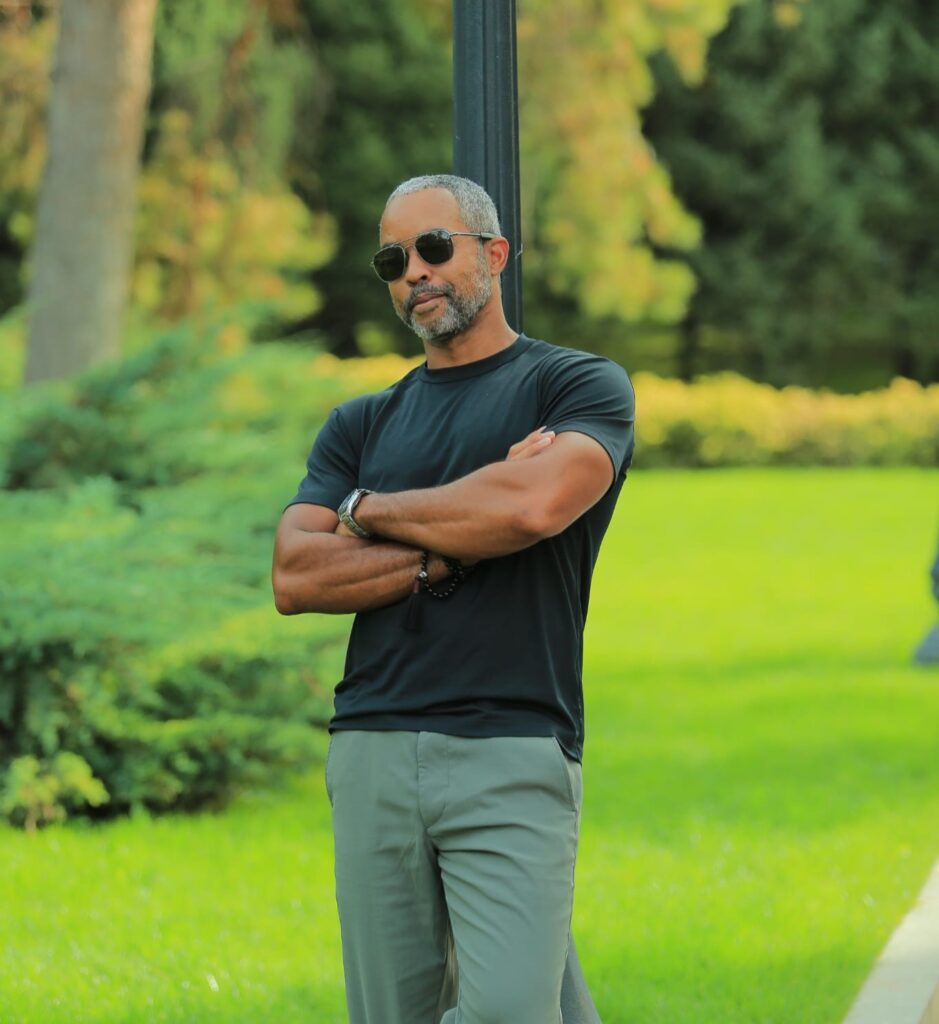
Carlos Grider launched A Brother Abroad in 2017 after a “one-year abroad” experiment turned into a long-term life strategy. After 65+ countries and a decade abroad, he now writes about FIRE, personal finance, geo-arbitrage, and the real-world logistics of living abroad—visas, costs, and tradeoffs—so readers can make smarter global moves with fewer surprises. Carlos is a former Big 4 management consultant and DoD cultural advisor with an MBA (UT Austin) and Boston University’s Certificate in Financial Planning. He’s the author of Digital Nomad Nation: Rise of the Borderless Generation and is currently writing The Sovereign Expat.