
Ten years ago, I decided to leave the United States and travel for one year. That year was one of the most fulfilling years of my life, and I enjoyed every month, day, minute, and second of the experience. So much so that when it was time to come home, I couldn’t.
Now I can happily say that I live abroad.
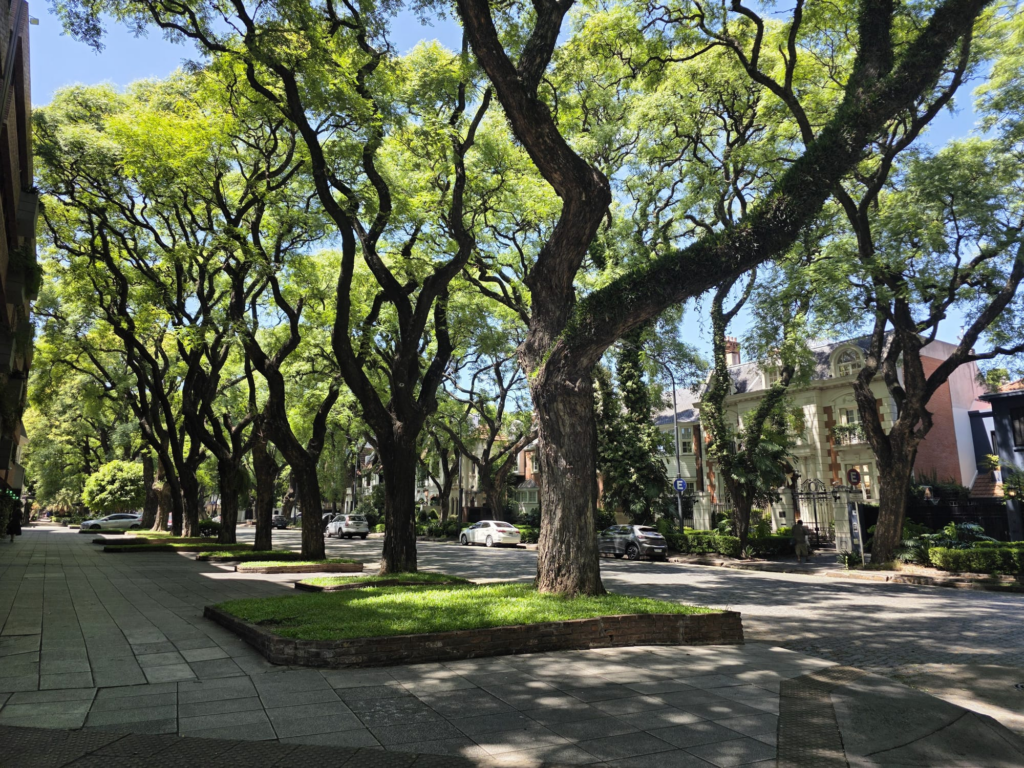
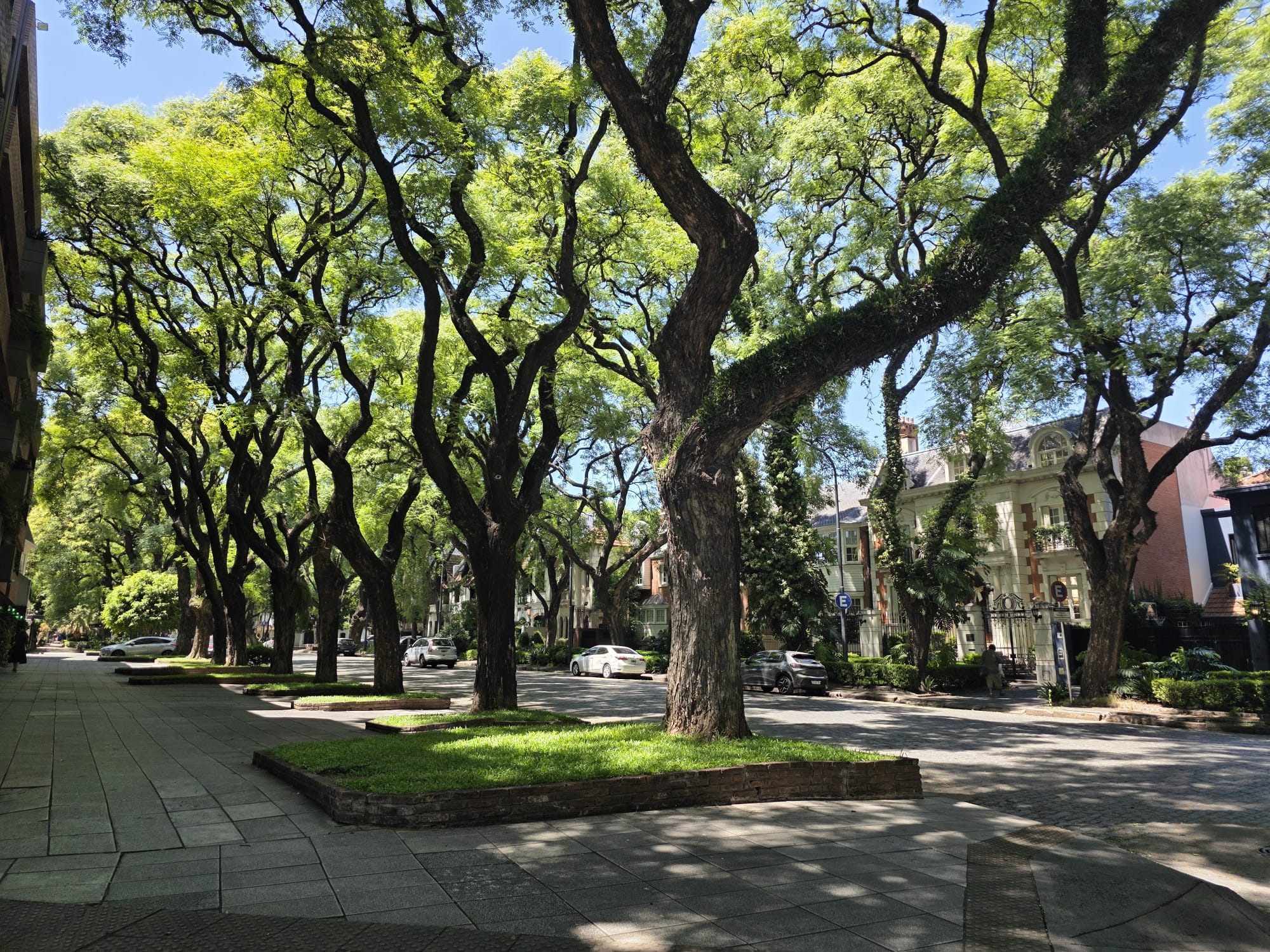
A view of the most beautiful street in Buenos Aires
But there is an important nuance there.
Living abroad is very different than traveling abroad. And that difference is the whole reason I still live outside the U.S.
Because here’s the thing: for all its flaws and everything that happens in the news, the United States is a great place. There are tons of economic opportunities. There is some of the most beautiful nature in the world. And as quirky and eccentric as they can be, there are some wonderful, charming, and diverse people hidden in the nooks and corners all over. California will always be my home at heart.
So then, if I do appreciate my home country… why do I now live abroad?
Why I live abroad
I live abroad to intentionally design my life.
One of the most shocking things when I came back from traveling the world and returned to Dallas, Texas, was how much I realized the small things in life matter. I realized a good cup of coffee can really make your day – not Starbucks flown halfway around the world, but fresh roasted beans in a café two hours from the plantation they were plucked from. I realized being close to nature — as in minutes walking distance from hundreds of acres of green spaces filled with clusters of chirping parrots or miles of empty beaches — can lighten your mood. And I realized that being in a place where culture, art, and music (as in live music) are accessible adds an irreplaceable spice to life.
During my first month back from my initial trip, over the period of three months, I visited my favorite places in the U.S. with fresh eyes once again, with the goal to find where, in the US, I would settle for my next stage of life.
I went back to Austin, Texas — a beautiful university town with tons of live music, rich and quirky culture, and grounded intellectual buzz. I went back to San Diego — the land of beaches, rock climbing, and burritos that I’ll always love. And my last stop was Santa Monica, California — nestled between a beautiful beach, Hollywood, bohemian Venice Beach, plenty of mountains to hike, and plenty of waves to surf.
And with all that… I still returned abroad.
The truth I couldn’t unsee
As much as I loved everything that I found in those three wonderful cities — Austin, Santa Monica, and San Diego, the now inescapable truth was, I knew I could find the same things abroad.
Furthermore, abroad, I had already experienced cities around the world that combined the best of these three cities for a fraction of the cost.
While geoarbitrage is definitely a major reason that I live abroad, it is absolutely not the biggest reason. I live abroad because I can easily design my life by choosing the cities and places that nourish me, delivering the same enriching nature, culture, and community that I valued in my favorite places in the US.
The experience of the beaches of Santa Monica and San Diego can easily be found in Da Nang, Vietnam, for a fraction of the price, or nestled on the coast of Japan, cradled by amazing food, endearing culture, and a pristine perfection that leaves you questioning how the rest of us haven’t done better.
I’d love the live music scene of Austin and the bohemian vibes that make that city, with its wonderful university, too, but I found the same energy in university towns abroad, and in back-alley corners of Lisbon, where makeshift bars host part-time quartets obsessed with jazz and act as little crevices hosting and preserving beautiful variations of non-conventional culture.
I share this to say that so many places in the world offered the elements of what I loved about the cities that I loved — more accessibly, more plentifully, and in a more potent combination.
But it gets even better.
Lifestyle design is like cooking: your life is the plate, and the world is your “menu.”
I realized that lifestyle design is much like crafting a meal to suit your appetite.
There is no single meal that is suitable for every time of day, every day of the year, or every person on the planet. Sometimes you crave salty, savory — a nice grilled steak, perhaps. Other times you crave something sweet — a scoop of ice cream or a fluffy, bready slice of cake. And often, you’re just thirsty for a nice, crisp glass of water.
This is how designing the perfect life works: it’s based on rotating needs and desires.
And here’s the key: even if you do love all of something, you will never crave it all of it all the time.
Though I loved the peaceful beaches of San Diego, the live music and bar scene of Austin, and the art galleries and posh restaurant scene of Dallas, Texas, I didn’t crave any of these things all of the time.
Naturally, at different times in my life, I craved and needed some things more than others.
For example: during my first year of travel, I spent entire, irreplaceable months right next to the beach, experiencing quintessential Southeast Asia. In my second year of travel, my happiest times were split between mountainous villages in the Balkans and the Mediterranean, and within cities that boasted communities around the world of mind-stimulating and interconnected people — be they backpackers, digital nomads, or expats that managed to extricate themselves from the rat race in society.
Though I would have happily taken any of the cities that I spent an extended period of time in — Lisbon, Chiang Mai, Canggu — the best recipe for my life wasn’t a single one. I realized the perfect life was to have the best of those, together, as one cohesive experience.
This is why I still live abroad.
Your Life Menu (a simple tool you can actually use)
If you want to make this practical, start here:
Think of your life like a plate, and everything the world has to offer as the menu. You’re not “choosing a country.” You’re choosing the ingredients that make up a life that nourishes you. Day to day. Month to month. Season after season.
Your Life Menu categories:
- Nature (beaches, mountains, groomed greenspaces)
- Community (local cultures, nomads, global citizens)
- Culture (fine art, music, artisanal and craft culture, culinary arts)
- Health (wellness culture and infrastructure, Blue Zone lifestyles, medical tourism hubs, adventure tourism hubs)
- Cost (low cost, high value in relation to services and infrastructure, geoarbitrage friendly)
- Convenience (walkable, planned communities and urban landscapes, high-quality public transportation, accessible and high-quality essentials, easily experienced social scenes)
Now do this:
Pick 3 non-negotiables + 2 nice-to-haves from the list
…ideally not just the category, but the specific offering.
That’s it.
Those seemingly simple filters instantly clarify why one place will feel like home during one chapter of your life… and why a different place may become the right “home” later.
I don’t live in a country. I live in the world.
Whenever people ask, I never say I live in Buenos Aires, I live in Thailand, and I never felt right saying I live in Bali.
Despite the fact that I did tend to live in these places for six months to a year at a time, I didn’t live in those places — the most accurate way to describe it is, I have lived in the world.
And as my whims, desires, needs, personal goals, and professional goals change, I’ve switched out countries and cities to suit my changing life.
That is the real difference between living abroad and traveling abroad.
Travel is movement. Vacation. A brief experience with rose colored glasses and lovely, polished memories.
Living abroad — the way I’m describing it — is a strategy.
It’s building a life where location becomes a dial you can turn.
Field Notes: Buenos Aires
2026: I’ve purposefully spent long stretches in Buenos Aires, recharging and rebuilding myself in ways that work for me — riding trains for the pleasure of it, walking hundreds of miles through huge parks and green spaces, exercising outside, getting back in touch with my body, focusing on building a bulletproof heart and cardio system, and focusing on how I eat. In the land of steak and vegetables, it’s a lot easier than, say, the land of chubby yet delicious tacos, car culture, and blazing hot summers in Austin, Texas. Within this Buenos Aires experience, I’ve stumbled on a trait of the culture here of being less consumerist, perhaps by necessity, less phone-obsessed, in a way that sometimes feels like an echo of a world I miss, maybe from the 80s or 90s — which can be exactly what you need when you’re recharging and rebuilding.
In writing this, I know that this nearly retro experience in the rustic Paris of South America is not “the answer.” It’s just one season of my life menu, and it is perfectly serving its purpose now.
So, what’s the point of all this?
First, I want you to think about the possibilities of a life abroad.
I know from experience that when we’re stuck in the rat race of corporate America, we tend to think about going abroad as a vacation, which it can be. We think about “abroad” as an escape, bouncing between countries, and just carelessly enjoying the experience.
Don’t get me wrong: even for me, this has been a very enjoyable experience that I wouldn’t trade for anything. I would have happily traded ten years before this for one year of my life abroad.
But the point I want you to take is this:
Life gets better when the city you live in naturally delivers not only what you want, but what you need.
And also delivers what you need at the changing phases of life…even if that means changing cities, countries, or communities on a whim.
As you grow from your 20s to 30s to 40s to 50s… as you fall in love and get married and your situation changes… as you have children and your priorities in life change… as you grow into your older, more mature body, and at the same time grow into your older, more mature tastes… what you want and need will change.
And that is okay.
What is important is designing a life that allows you to live out the “perfect adventures” of that change. Maintaining this opportunity takes a little planning, a little intention, and a little bit of crafting the kind of life that allows for such.
Life portability: the ability to redesign your life by changing location
In this story of my experience not just traveling abroad, but living abroad, I’m offering you the idea that if you design your life with a little bit more “life portability” and mobility, you can plan on the possibility of changing location to design your life too, choosing that specific location to live to deliver exactly what you need for the season you’re in.
A maximized life abroad isn’t just about travel or being in a cheaper place. It’s about designing the life you’ve always wanted.
And with this, I want to make the point of how valuable your mobility is.
Having the financial situation, the living situation, the logistical situation, and the relationship situation to move around the world becomes such a valuable thing when you realize how much positive change, or new opportunity, you can create in your life just by changing location.
So, let’s think about how to make that real.
How to Build Life Portability (the 4 pillars)
If you want this lifestyle to work (and not just feel like a fantasy), you build it like an asset. Like a portfolio. Like a system.
1) Financial portability
This is the obvious one — and the one people usually get wrong.
It’s not just “earn more money.” It’s cashflow + runway + savings rate, and yes, sometimes geoarbitrage as a lever.
When your baseline expenses drop, everything gets easier: saving, investing, taking a risk on a better job, taking time to build something, or just breathing. Financial portability and financial independence are the most essential tools in the life portability toolbox.
2) Legal + logistics portability
This is the unsexy part that makes everything else possible:
Visas. Banking. Insurance. Phone. Taxes. The boring stuff that becomes stressful if you ignore it — and liberating if you set it up correctly. Intentionally creating frameworks, systems, and tools, and gathering the essentials, makes the frequent moves in a location-independent life easy and enjoyable, making your life portable an asset you can enjoyably, adventurously, and freely.
3) Work portability
You don’t need a perfect remote job. You need portable value:
A skill. A client base. A business. A role that travels.
The goal is optionality — so you can move because you want to, not because you’re forced to. Yes, financial independence can partially nullify the need for this, but a location-independent marketable skill adds resilience to your life, and purpose to balance the pleasure – and balance is essential for a long, happy life, no matter where you are.
4) Relationship + community portability
This is the part most people don’t talk about — and the part that determines whether you last.
How do you build community? How do you not get lonely? How do you avoid burnout? How do you find a partner that’s not just “suitable” but an asset on the journey? And how do you bring in children in a way that their needs are not only tended to, but nourished, so they can grow through the experience more than they would ever have elsewhere?
As with all conundrums involving love, family, and community, there is no single answer – but starting with awareness that this is a tool to build, and asking the question of how to cultivate/shape it to be a solid foundation point in a portable life is a great jump-off point.
You need a repeatable way to plug into people: routines, hobbies, gyms, language exchange, coworking, communities of nomads/expats — whatever your version is.
So, why do I live abroad?
To the question, why do I live abroad?
The answer is that in my life abroad, I found the best of everywhere that I’ve ever lived — and it’s added up to my perfect life.
I highly recommend that you, too, consider the possibilities of designing a life abroad that’s perfect for you.
What Next
- If you want the practical side, start here: moving abroad checklist / planning an international move.
- If you want the numbers side, use my Expat FIRE / Nomad FIRE calculators.
- If you want the decision side, use the Life Menu worksheet (3 non-negotiables + 2 nice-to-haves).

.

.
ABOUT THE AUTHOR
Carlos Grider launched A Brother Abroad in 2017 after a “one-year abroad” experiment turned into a long-term life strategy. After 65+ countries and a decade abroad, he now writes about FIRE, personal finance, geo-arbitrage, and the real-world logistics of living abroad—visas, costs, and tradeoffs—so readers can make smarter global moves with fewer surprises. Carlos is a former Big 4 management consultant and DoD cultural advisor with an MBA (UT Austin) and Boston University’s Certificate in Financial Planning. He’s the author of Digital Nomad Nation: Rise of the Borderless Generation and is currently writing The Sovereign Expat.