
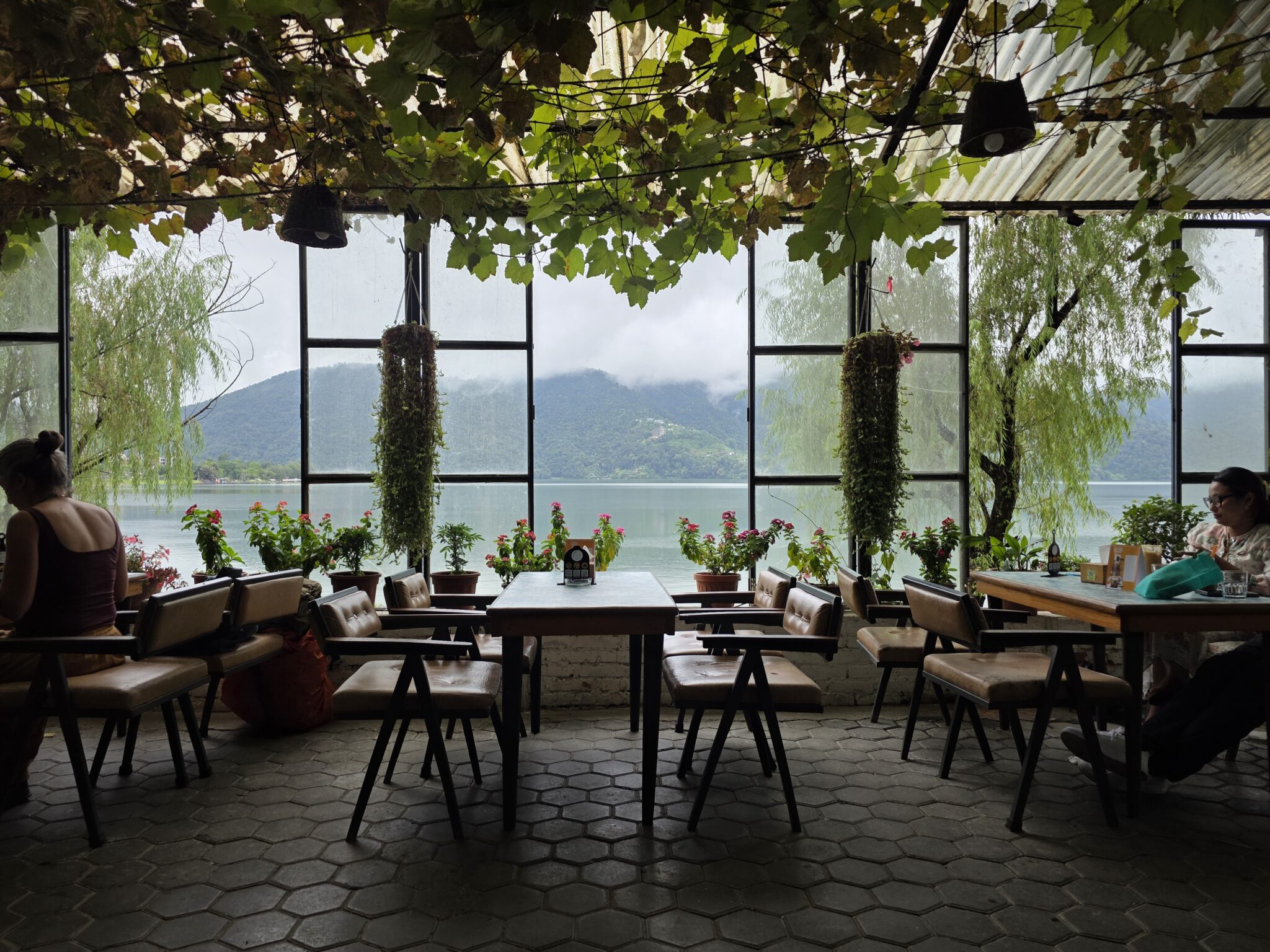
Looking out over the silted green lake, reflecting the lush mountains on either side, I sipped my coffee and stared miles out as my laptop sat untouched. The hills towering out of the water could easily be mistaken for fjords in Bergen, Norway, or Kotor, Montenegro, if not for the white Peace Pagoda barely visible up top. Peaceful, beautiful, and incredibly distracting. At the same time, for a mountain person like me, the work delay was worth the unexpected recharge I was soaking up.
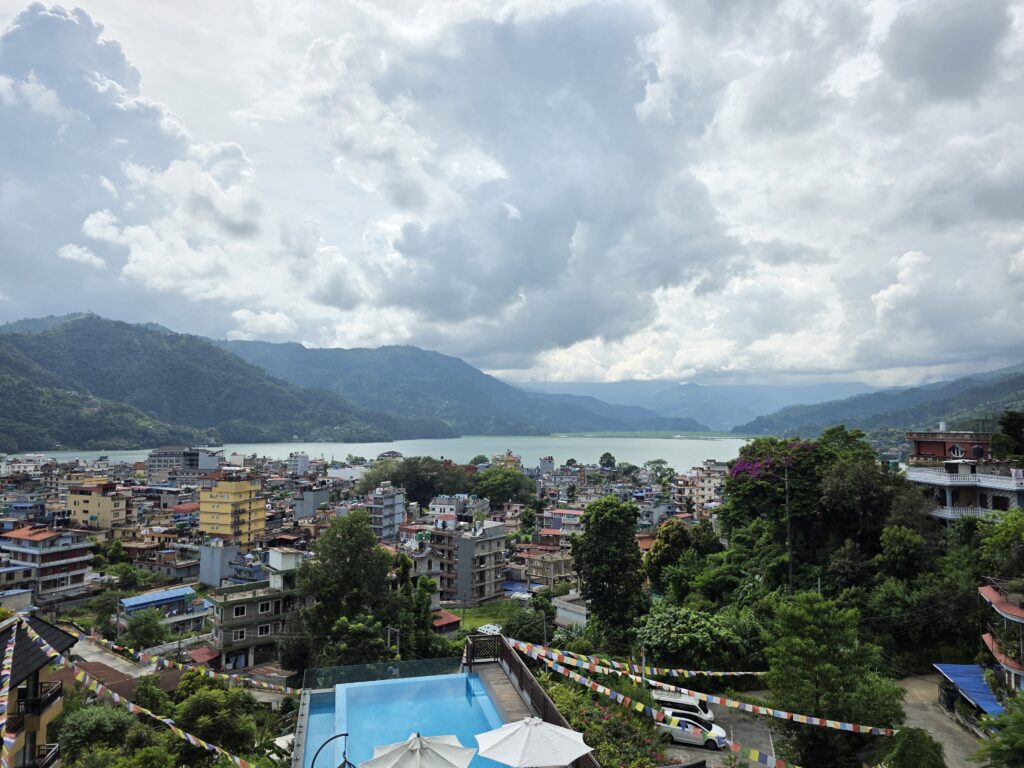
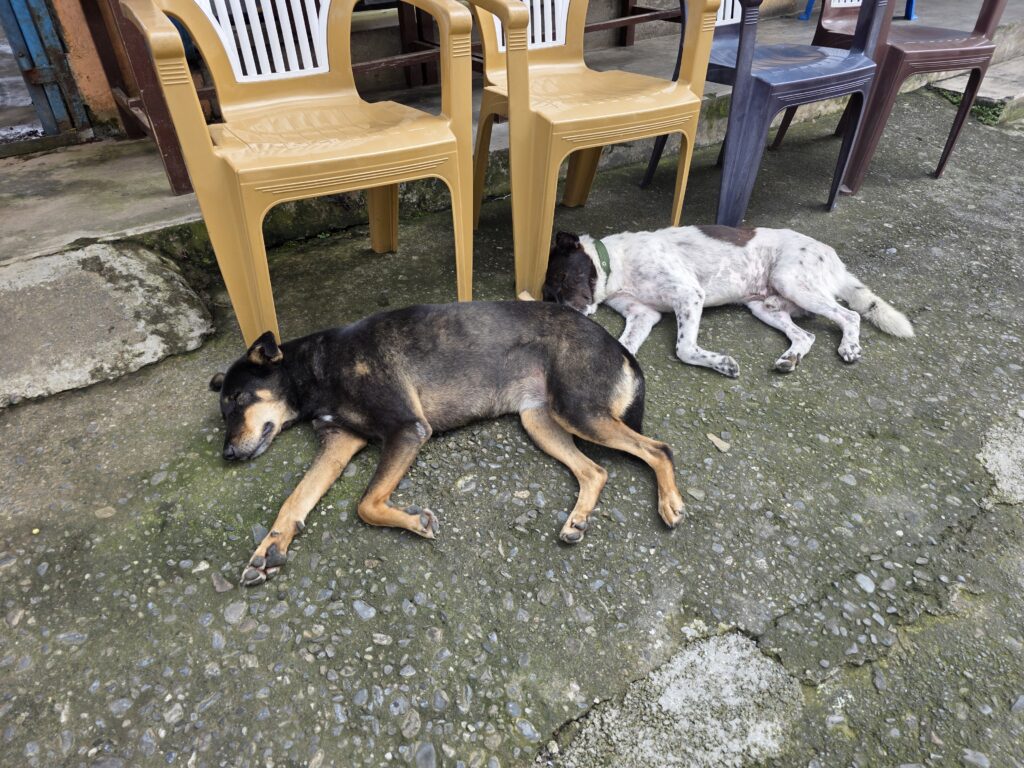
Then the only thing that could possibly distract me. Rhinos. Not here, and not now. A message came confirming that, yes, the safari would be to a village a couple of hours away where rhinos and elephants roam the streets, as close as the stray pups on the streets below. Just then, a monkey with a fuzzy red butt clattered across the roof with fruit it had just stolen from one hotel over, signaling it was time to work inside before my notebook was commandeered next.
This is Pokhara, Nepal.
During my recent experience living in the lakeside city at the foothills of the Himalayas as a digital nomad, Pokhara proved to be a rich, nature filled, affordable place to base for weeks at a time. Then adventuring into the Annapurnas, flying elsewhere in Asia, or staying longer for a productive, active lifestyle in nature with a spiritual, green backdrop were all easy options.
A small but growing nomad scene, locals that are shy at first but welcoming and chatty once you get to know them, and endless adventures at your doorstep make Pokhara a worthwhile emerging destination. Outdoorsy nomads and expats in search of a temporary home that delivers might find just all they need here.
The Pokhara Digital Nomad Guide Contents
Why Pokhara
Cheap. Mountainous and green. Steeped in authentic Nepalese culture that’s genuinely spiritual (not just for tourists). Accessible adventures nearby range from single afternoon trips (day hikes, paragliding, a bungee jump) to multi-week treks and wandering (the Annapurna Circuit, Mustang “The Forbidden Kingdom” by motorbike). And it’s off the well-worn Southeast Asia nomad circuit entirely, not yet overrun by the nomads and expats who’ve overloaded Chiang Mai, Bali, and Lisbon.
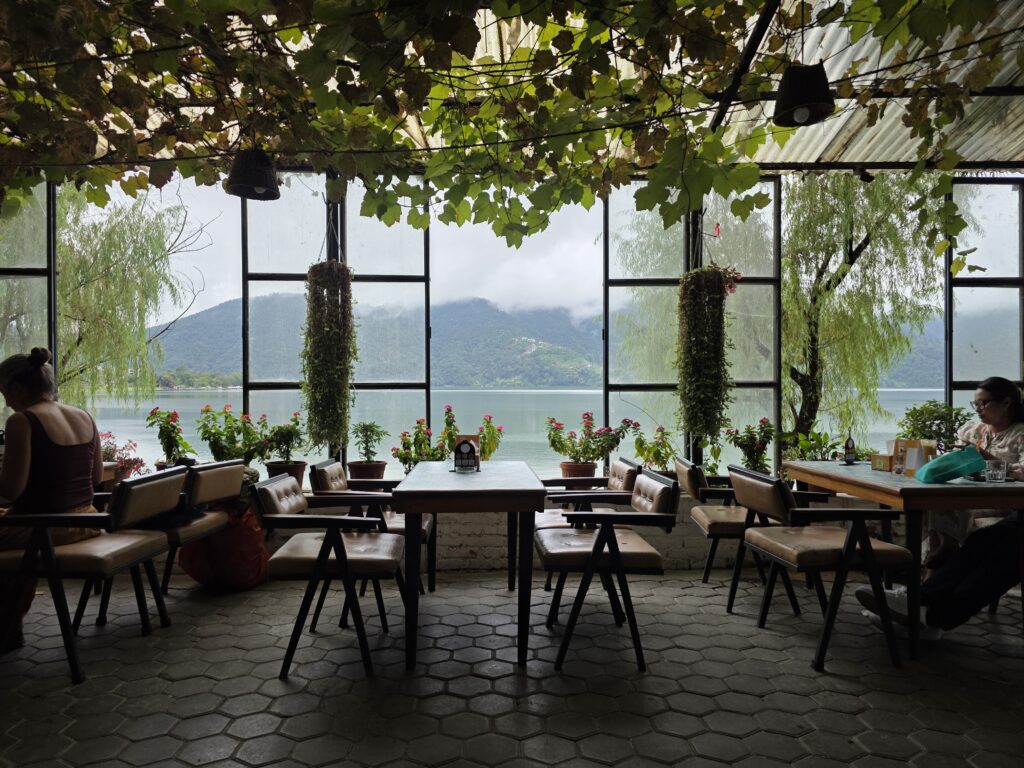
A meal costs $3 to $7 USD, a coffee costs $1.50 to $2, day hikes, lakefront views, and countless yoga studios within a 15 minute walk.
Similar to Bansko in pace and landscape but swap the Balkans for a multi-ethnic South Asian cultural backdrop, but warmer, more hiking, and tied to Asia’s cultural and economic gravity instead of Europe’s.
Pokhara is also, quietly, a great to reset your body while you work, through simplicity and the kind of active lifestyle that comes with a mountain town. Restaurants range from clean-eating to fully vegan. Yoga retreats and training programs are everywhere. The opportunities to explore outdoors get you moving healthily without trying. There’s a reason the Nepalese Gorkhas, some of the most legendary soldiers in the world, humbly use Pokhara’s hills as their training ground. If it’s good enough for them, it’s good enough for your morning routine to get in shape.
Add the growing remote worker infrastructure, a small but real and connected local nomads, coworking spaces, co-living spaces, plenty of co-work-friendly cafés, and a community already acquainted with digital nomads and wanderers, and you get a potential base that’s cheap and effective right now, but won’t stay this quiet forever.
Not Just for Nomads: A Base for Mountain-Loving Slow Travelers and Expats
For the aspiring expat considering Nepal for a more permanent stay, Pokhara is an ideal starting point. Prettier, cleaner, quieter, and greener than Kathmandu, making it a low-risk and low-cost place to figure out whether Nepal, and Nepali culture, is actually for you before you commit further.
During my stay, I ran into more expats and slow travelers than I expected to see making Nepal their base. With its low cost of living, 150-day visa, and a regional cultural authenticity with a calm you won’t find in India, Nepal is reemerging as a potential place to run away — just like it was for The Beatles, the founders of the Lonely Planet guide, and even Rick Steves on the hippie trail** of the 1970’s. But the proposition of staying long-term fits a unique type of wanderer. In return, they’ll have a unique experience few other places in the world can offer.
The Honest Contrast on Nepal: It’s Still Developing
While Pokhara is absolutely wonderful and cheap, it’s important to remember it is in a developing country, and a few fickle issues come with that.
You may turn a street and end up in a neighborhood with houses that don’t look as nice as your accommodation. Power may go out briefly. Flooding in September 2026 washed out the main road between Pokhara and Kathmandu and made a flight back the only option, which admittedly was a minor inconvenience compared to the locals’ struggle that followed. There is visible poverty and barefoot begging children in a few places. Know this going in, to not only manage your expectations but to be respectful of the situation they are developing through and of the culture in general.
However, don’t take “developing country” with the condescending connotation it often comes with. Take “developing” to mean Nepal is figuring out its own way, and because of that you’ll find things that are different from home, in uncomfortable ways as well as surprisingly pleasant ways.
For instance, this (pictured below) is a free charging station for electric motorbikes just outside of my, now, favorite café in Pokhara as an example of how the city and the country are “developing” in their own way.
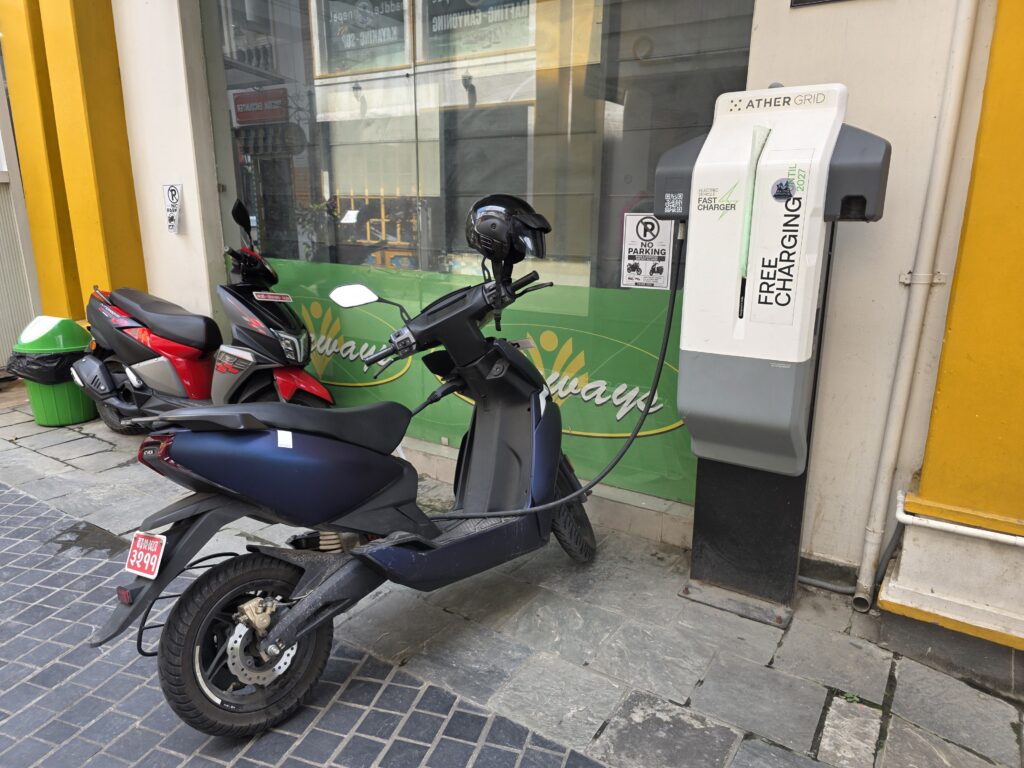
What “developing” looks like in a developing country…
If you do still decide to come, recognize that there is an opportunity to not only be immersed in and share a rich culture, but potentially to give back, absorb, and be a bridge between your home country and Nepal.
Getting There
You can now fly into Pokhara directly via Dubai:
Flydubai, the UAE’s official low-cost airline, launches daily direct Dubai to Pokhara flights starting September 23, 2026. This is the first daily international service in Pokhara International Airport’s three-year history, and more will likely begin soon. The flight is roughly ~5 hours from Dubai on a Boeing 737 operated by Emirates Airlines. This opens genuine one-stop access directly to Pokhara from Europe, Africa, and beyond, as Dubai already connects to 300+ cities.
Fly into and through Kathmandu (the most common route):
Fly into Tribhuvan International, then hop a short flight to Pokhara Airport (~$105+, 30 minutes, on Buddha Air or Yeti Airlines). Note these routes often don’t surface on Google Flights but do show up on Momondo, and it is best to book directly with the carrier.
Fly into Kathmandu, then bus to Pokhara:
After arriving in Kathmandu, simply book a bus to Pokhara. For the unrushed and relaxed traveler, this is the slowest but cheapest and most flexible option, perfect for last minute planning.
To book locally, visit any travel agency in the Thamel neighborhood in Kathmandu (**). Booking the day prior is easily possible. Alternatively, book your bus online at 12Go.asia for easy booking and the same price. Day buses commonly “leave” at 7 am.
Pickup in Kathmandu generally happens at the Sorhakhutte (Nayabazar) bus stop or the Tourist Bus Stop and drops off at the Pokhara Tourist Bus Park, but confirm with your travel agent when booking, and get their Whatsapp to sort any confusion later easily.
For the bus ride to Pokhara, get the “sofa chair” bus, with comfy, nearly Lazy Boy recliner styled seats. While it runs a touch pricier than the standard bus, the 1,700–2,000 NPR (~$11 to ~$14 USD) price and extra $2 to $3 is well worth it. A normal local bus, mostly differentiated by the harder, narrower seats, costs ~1,300 NPR (~$8.75 USD).
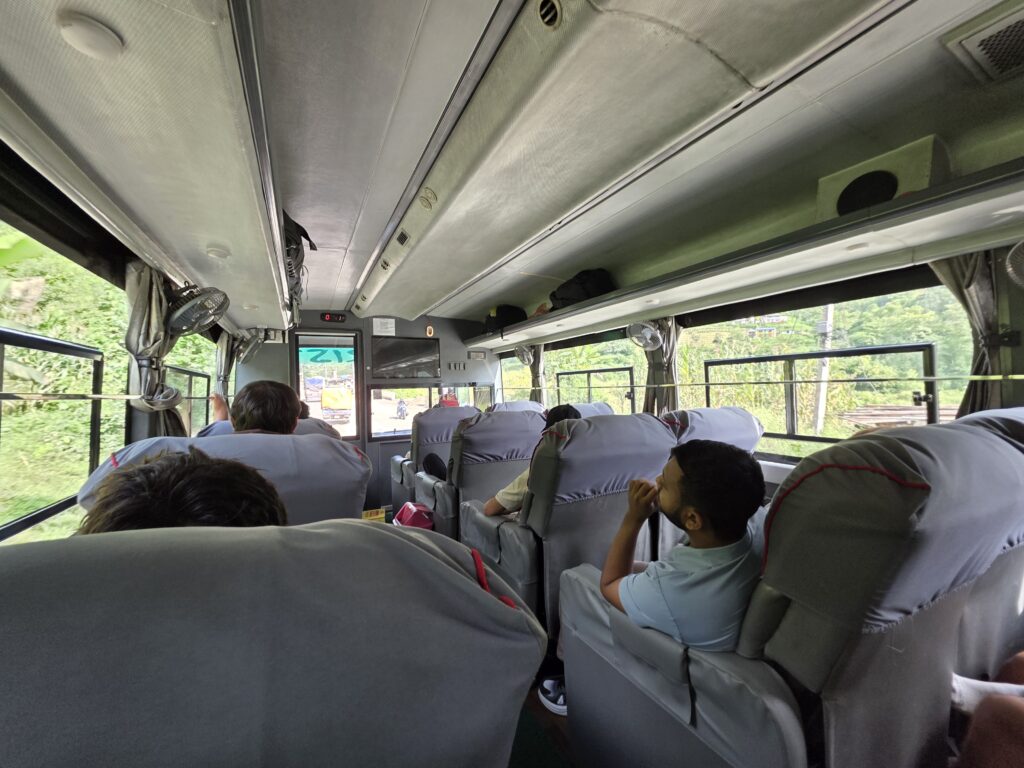
Uber-comfy, wide seats make the windy ride from Kathmandu to Pokhara part of the adventure
The bus ride from Kathmandu is a 10 to 14 hour ride on windy roads through towering green mountains and valleys accented by “very South Asian driving,” and stunning scenery. The bus stops roughly every 1.5 hours for toilets and roadside coffee, including, memorably, a KFC.
Accommodation Tip for the Kathmandu Leg: stay in Thamel for easy access to cafés, restaurants, bars, events, travel-booking agencies, and walkable distance to your bus.
Getting Around Kathmandu: Staying in Thamel keeps things walkable, but Uber is the best, lowest-headache option for rides from the airport to Thamel and around the rest of the city.
Quick Kathmandu Eating Recommendations in Thamel: VIVI Kathmandu for burgers and Gorkha Beers
For an amazing, authentic lunch or dinner in Kathmandu before departure, visit Kutee in Thamel and order the classic Nepali dish Thali with the mutton. Cooked by a Nepali executive chef that spent the last 20 years cooking in Dubai, Qatar, and Singapore, it was easily the most delicious thing I’ve eaten the last year!
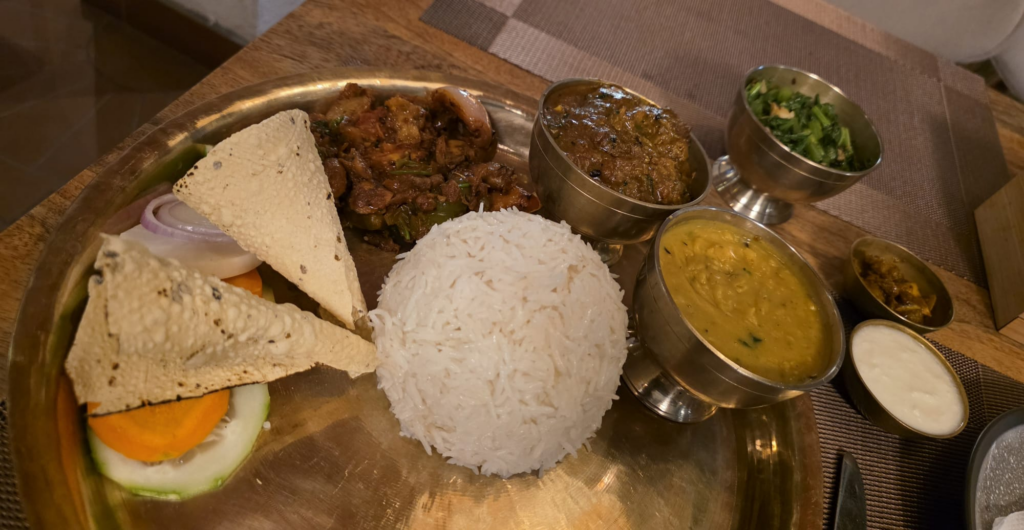
Thali with mutton, a Nepalese food staple. If you love this, you will love the food to come….
Just be sure to request not spicy if you’re a spicy weakling (like me).

Getting Around Pokhara
iNdrive is the local rideshare app of choice in Pokhara. Uber works in Kathmandu. It does not work in Pokhara.
While iNdrive is the local rideshare app of choice in Pokhara, beware of the annoyance that in the evening drivers will likely accept a ride and then demand double the price (which essentially means doubling from $1.50 to $3), and refuse to cancel the ride. This is simply the game; everyone knows it and builds around it. This is especially true if you drop a pin at accommodation known for “overpaying foreigners” that are expected to have the cash to spend. Unfortunately, this is the struggle you should know going in. If you want to get where you’re going in time, be prepared to pay the ride ransom.
Bicycles are cheap and easy to rent around town.
Motorbikes are available for rent throughout Pokhara, especially in the Baidam neighborhood and on Phewa Marga street; rental shops are plentiful. If you do ride, wear a helmet, bring an International Driving Permit with motorcycle endorsement, and be sure to get travel insurance. If you haven’t ridden a motorbike before, I recommend not starting in the chaotic traffic or mountain roads of Nepal. Motorbiking in Nepal is not for amateurs.
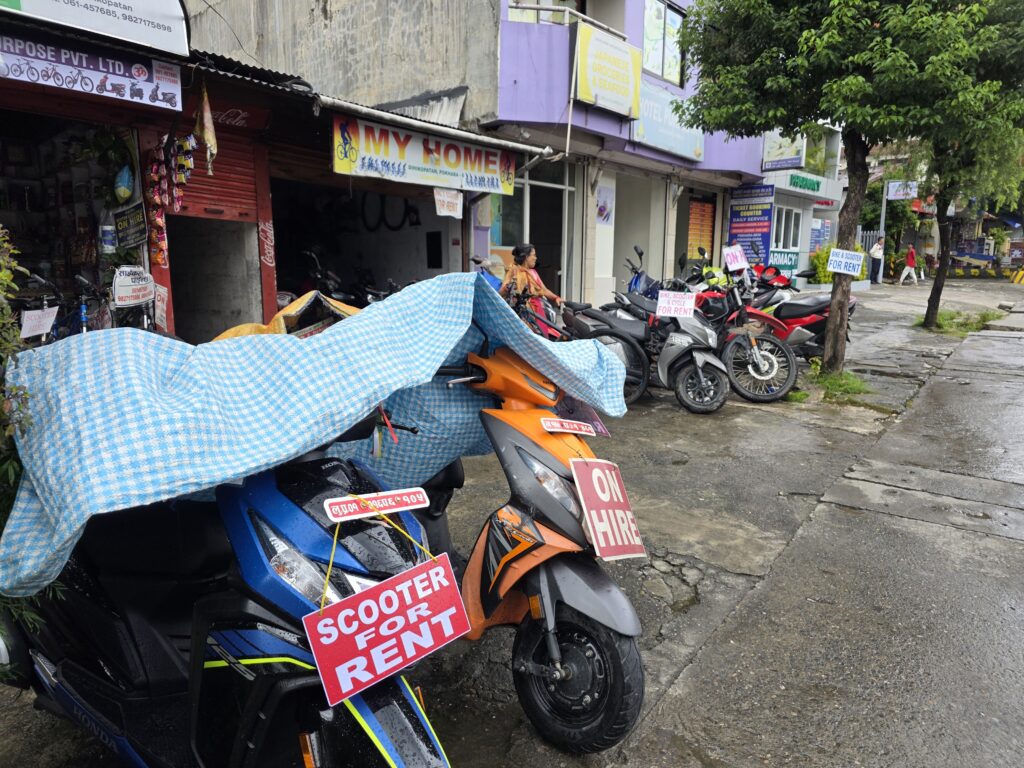
For buses, taxis, and public transport, Pokhara’s Main Square is the transportation hub.
There is a local bus route, but to be honest, I wasn’t able to figure it out, and I often walked faster than the bus passed. If you figure this one out, let me know.
Connectivity: Cheap SIMs with Ncell and Namaste as the best options
Internet in Pokhara: Generally strong internet, but keep a SIM card as a reliable cheap backup
Throughout Pokhara, at my accommodation and throughout the nomad-friendly cafes, internet remained stable and fast.
At the popular cafes among nomads, internet speed was 55Mbps download and 25 Mbps upload at midday. At the same time, the Namaste data connection was 25Mbps download.
Keep in mind that at your accommodation, internet speed will vary with the package the owner has purchased, so if your work leans heavily on a strong internet connection, ask for a test before booking.
Additionally, be sure to get a local SIM card as a backup, which is quick, easy, cheap, only requires your passport, and takes 5 minutes total.
SIM Cards for Data: Cheap, reliable, and worth it
Nepal has two carriers: Ncell and Nepal Telecom (Namaste/NTC). Both sell tourist SIMs at Tribhuvan International Airport arrivals, and at NCell/NTC counters and shops around Kathmandu and Pokhara.
Don’t stress this too much as you’ll rarely be more than 100 meters from a SIM card kiosk.
Getting a sim is not only great for staying connected via Whatsapp (messenger of choice in Nepal), but also for using a data hotspot to run your laptop from when café WIFI lags and continuing to work during power outages (the cell towers still transmit data during outages). Additionally, the Annapurna base camp and circuit treks increasingly have mobile data coverage at the teahouses and stops, so getting a sim (ideally Namaste for the treks) will keep you connected through the whole journey.
- Ncell: SIM itself costs ~100–110 NPR (~$0.80). Tourist data packages run roughly 7GB for 599 NPR (~$4.30) up to unlimited-data tourist packs (TouristPro tiers from 595 NPR/7 days). Best urban 4G/LTE speeds. This is the go-to if you’re staying in town.
- Nepal Telecom / Namaste: Generally cheaper per GB (packages often 200–1,000 NPR/~$1.50–$7), and the better performer in the mountains (at base camps and teahouses, not on the walks), so the ideal option if you plan on trekking.
- Realistic 30-day SIM card budget: $8–$16 covers a generous data plan on either network.
To get a sim: Visit any kiosk, bring your passport. After purchase, the sim will likely take 30 minutes to be activated, so don’t worry if the kiosk owner tells you this when you’re paying, but buy in a place where you can return easily within an hour if your phone and mobile data are having issues.
eSIM alternative: Third-party providers (Airalo and similar) are available but run noticeably higher per-GB than a local SIM. While they are convenient, expect to pay roughly 50–70%+ more for the convenience of skipping the counter.
Cost of Living in Pokhara: $400 to $1,000 per month
~$1,000/month on a nomad budget pays for an extremely comfortable monthly stay in one of the most budget-friendly places in the world. But this number can flex up or down drastically if you choose humble accommodation and cook at home, or alternatively higher if you take frequent tours while staying at accommodation that leans more toward resort and eat out every meal.
A comfortable lifestyle for the average nomad (quality apartment, daily café work, regular dining out for dinner) will run $400–$800/month.
Costs for a private studio apartment or hotel room in Lakeside
- Monthly accommodation: $375 to $700 per month booked on Booking.com on average, with $1200 as the high end
- Daily accommodation: $10 to $25 per night booked on Booking.com as the average, with $34 to $45 per night being the high end
Accommodation assumes a studio with a connected bathroom, an 8/10+ rating, and located with a 15 minute walk of the lake. You can cut costs immensely by booking directly with the owner or flexing on quality/location.
Eating Budget
- Meals: 500 NPR to 1,500 NPR per dish (~$3.25 USD to ~$10 USD), with 500NPR being breakfast and 1500 NPR being pricier Western food
- Coffee at a remote work-friendly café: 230NPR to 300NPR ($1.50 – $2)
- Beer at a minimart: 200–225 NPR/bottle
- Beer at a bar: Tall (660ml) Carlsberg — 700 NPR
- Meal at a local restaurant: 300NPR to 600NPR ($2 USD to $4)
- Western meal at a Western-standard restaurant: 600 NPR ($4 USD) for a protein breakfast of chicken, avocado, and eggs to 1200 NPR ($8 USD) for a buffalo steak dinner
Example Menus from my Favorite Westerner Friendly Spots
These menu snippets give you an idea of eating out, at a descently nice restaurant, runs in Pokhara, with ~150 Nepali Rupee equaling $1 USD.
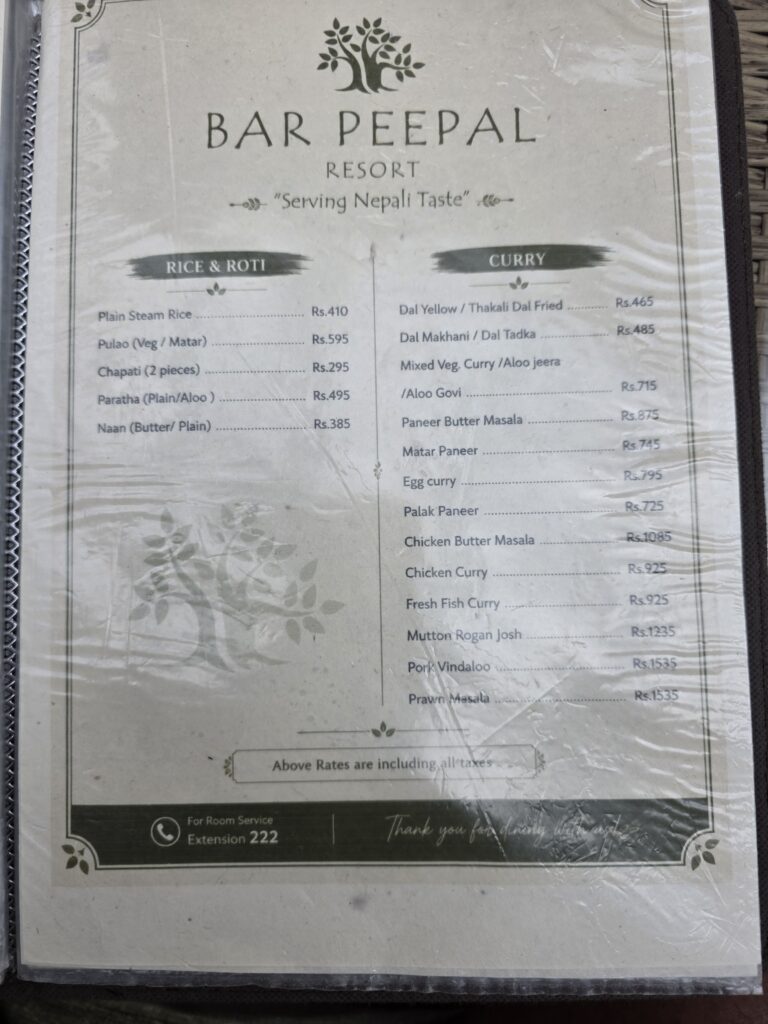

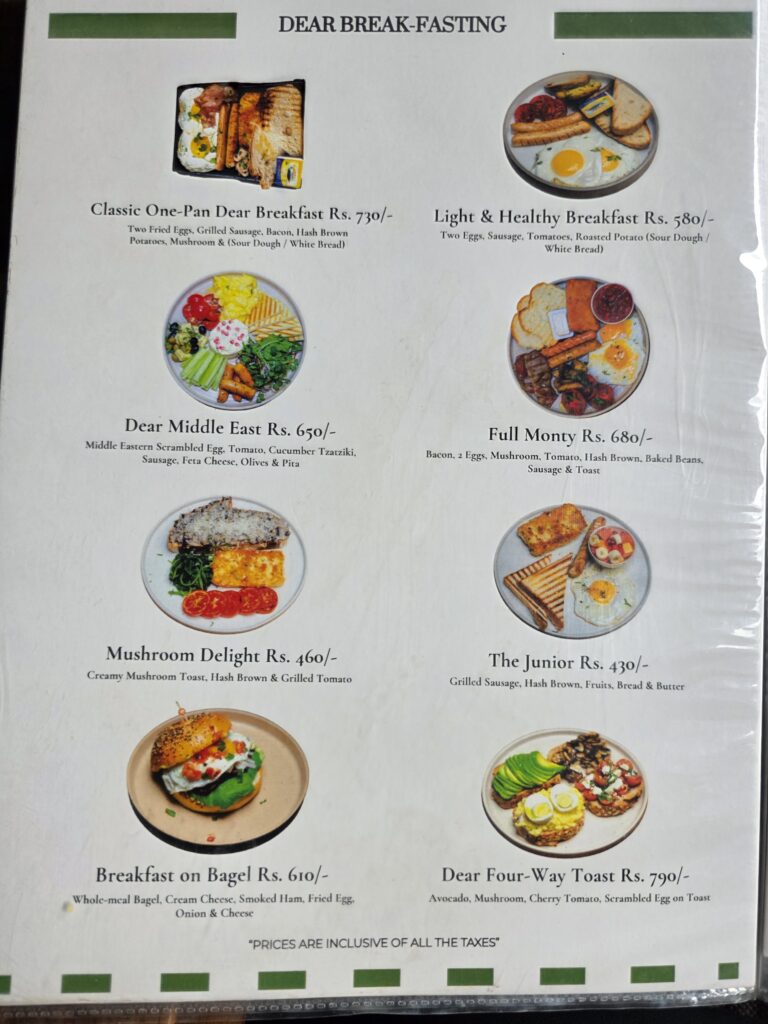

- Coworking: Monthly Pass: 20,000 NPR ($150 USD)
- Gym Pass: Day Pass: 800NPR daily and 5,000NPR monthly ($5.30 daily, $34 monthly)
- Mobile data: ($8–$16/month)
Neighborhoods & Where to Stay: Lakeside or Hillside
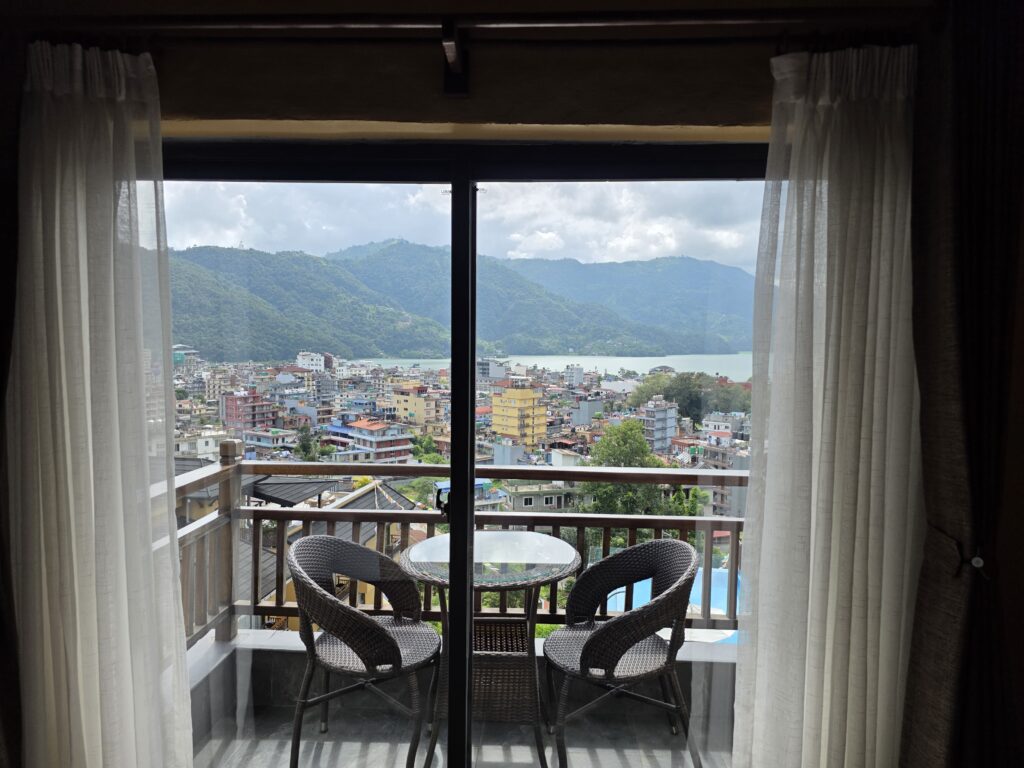
Most of what nomads love and need, such as work-friendly cafés and restaurants, clusters in the Baidam and Lakeside neighborhoods, including Dihikopatan and on the lakefront. Street 7, Middle Path Street, Street 15, and the walking path along Lake Fewa are great places to start your stay to keep everything conveniently close.
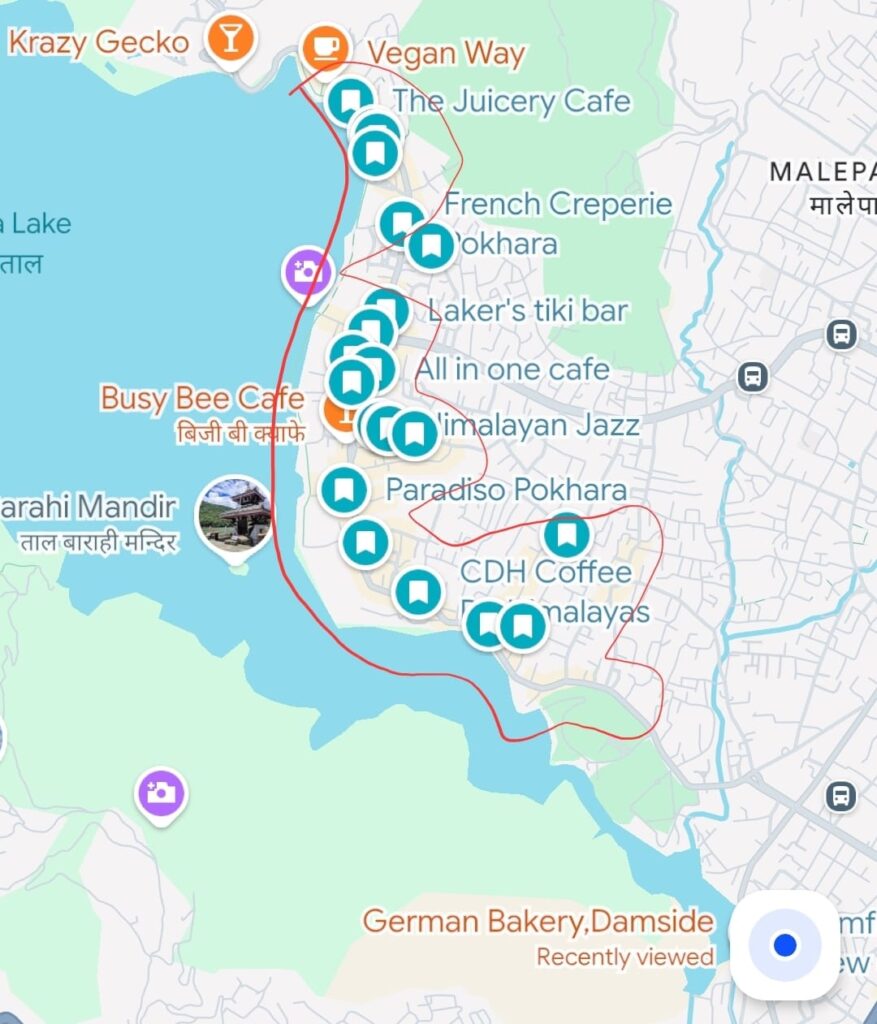
A simple map illustration of where to live, eat, and play in Pokhara
Lakeside neighborhood delivers walkable accessibility
The Lakeside neighborhood positions you for short, flat walks, to most places you’ll go for breakfast in the morning, work after, dinner in the evening, and to socialize at night. The tradeoff is that you won’t wake up to the full view of Lake Fewa and the Himalayan foothills.
The Hillside neighborhood delivers beautiful green Himalayan foothill views in exchange for a little daily hike
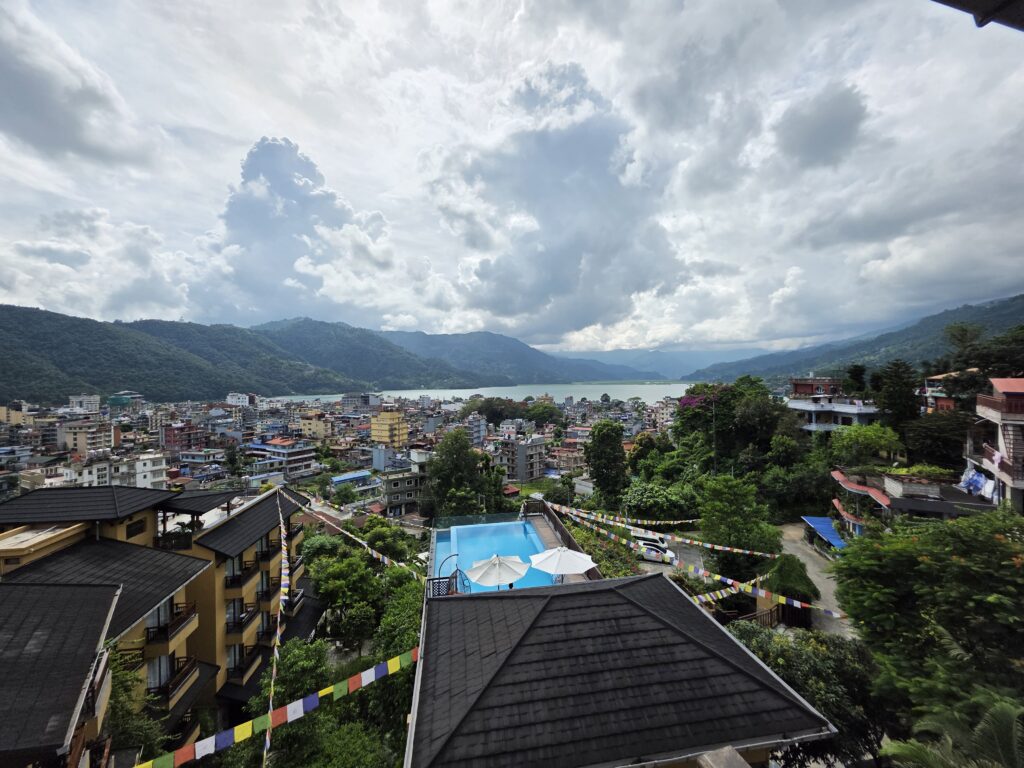
Hillside accommodations (like Bar Peepal and Pinnacle Residences) deliver immaculate views of the lake and surrounding mountains, at the cost of a short but very steep walk every time you leave. I preferred this area as the views made for an amazing work backdrop; walks into and out of town were natural exercise, and I wandered through the lived-in community, and the interactions with the red fuzzy butt monkeys here added excitement to my day.
No matter where you stay, aim for somewhere within a 15-minute walk (about half a mile) of Lake Fewa and this will put you close to the best views, as well as the café cluster, and restaurant cluster. Closer to Lakeside than Damside, and close to Baidam, are the best spots.
Where I stayed and recommend:
- Bar Peepal: Pricier, hillside, with an amazing view and a great breakfast buffet ($55 per night, which is absurdly high compared to the rest of Pokhara) (Location)
- Pinnacle Residences ~$44 per night (Location) Hillside views and comfort are what stand out here. Modern rooms, a balcony overlooking Fewa Lake, and reliable internet make it a great pick if you want hotel-grade comfort with an expansive view, and still within walking distance (and a small hill) of the Lakeside bubble.
- Mountain House ~$22 per night (Location) Family-run by hosts Nabin and family, offering genuinely useful trekking advice for trails, guides, and weather as part of the stay. Best pick for a personal, guesthouse feel and free local info before a trek.
- Hotel Forest Lake Backpackers Hostel ~$17per night (Location) The social pick: a rooftop terrace with lake views and the chance to meet other travelers, plus extras (laundry, booking for the Sarangkot cable car and Kathmandu bus, etc.). Best pick for solo travelers who want to meet people fast on a budget.
How to find accommodation in Pokhara:
Short-term: To lock in a comfortable short stay before arrival, or a short stay while you hunt for a long-term apartment, use Booking.com, Airbnb, and VRBO. The low cost of Pokhara accommodations makes platform fees less of an issue, and booking ahead avoids missing out on the best spots.
Long-term: Aim for direct-to-owner via Facebook Marketplace and local Facebook groups, or ask your Airbnb host if they’ll lease the apartment to you one-on-one.
For average prices, click here to jump to the Pokhara Cost of Living section.
How long to stay in Pokhara and Nepal
For productivity stints – whether for focused work, health, or just a reset – Pokhara is a great spot for as long as your visa allows, assuming the personality of Nepal and the mountains suit you. You’ll be able to find the essentials, easily access good food at restaurants and cafes, and the small nomad social scene is active enough to pull you in and keep you entertained (start at The Juicery Café).
Beyond Pokhara, figure out your priorities and add ample time (these adventures are on the menu).
Plan 3 weeks extra for the ABC trek and 2 weeks extra for the EBC trek. Hiking or motorbiking the Mustang region could add days or weeks. Village and national park safaris could add days or weeks. Yoga retreats can last from days to three.
Pokhara is small enough that you’ll become quickly acquainted, and large enough that if you’re on a productivity stint you won’t become bored, and venturing beyond Pokhara adds up to a full menu.
Recommended Pokhara Coworking and Coliving Space Options
Given Pokhara’s clustered offerings for nomads, across eating, living, and socializing, it’s good to know the Pokhara coworking space options as well as remote work-friendly cafes. This is because all of the coworking options at current skew in locations fairly far east of Lake Fewa, outside of Lakeside and too far for a walk on a humid day. Alternatively, all of the reliable cafes are well within the Lakeside bubble.
As a strategy, if you need a long, quiet, focused work day, make it a full day at a co-working space – worth the rideshare out. If you simply need a slightly social space and internet, the variety of cafes in Lakeside will do fine.
Coworking:
- Pokhara Coworking: Open 10 AM to 6 PM Daily. The most established coworking option; dedicated desks, meeting rooms, community-driven space. Monthly Pass: 20,000 NPR ($150 USD) (pokharacoworking.com) (Google Maps Location)
- Pokhara Nomad Coworking: Open 10 AM–5 PM, closed Saturdays. Friendly, modern, and comfortable, with the perk of sitting directly above Café Restrorent, so food and coffee are always steps away. Ultimately a smaller and more workshop/community-event oriented than a pure desk-rental space. (Google Maps Location)
- Gyan Hub: (Google Maps Location) Open 9 AM–6 PM, also closed Saturdays. Heavily community-focused rather than logistics-focused, with visitors saying it “feels like home,” “more a family than a coworking space,” delivering overall good vibes. Genuinely loved by repeat users, but reviews skew toward and “awesome atmosphere” over a focus on hard items like WIFI speed or desk availability.
Work-friendly cafés:
Pokhara is filled with cafes with great coffee and friendly to nomads working on their laptops for a bit (just politely order something extra if you’ll be sitting a while). While I’ve worked at 20+ cafes in my time in the city, I recommend starting with the cafes below to get in and get started quickly first. Then, keep an eye out for the roads you’ll walk through to the café, along Baidam and Lakeside neighborhoods, and littered along Lakeside Road, Street 7, and Middle Path Road.
- Himalayan Java Coffee
- Coffee Break
- CDH
- The Juicery (before the music kicks in)
- Café Camelia
(Click here to jump to full café list and details)
While the cafes all had strong internet available, be sure to get a cheap SIM card to hotspot for constant, reliable, strong connectivity, as my Namaste SIM card connection stayed at 25 Mbps download. But my internet connection at the cafes (such as Himalaya Java Coffee) stayed at 55+ Mbps download and 30+ Mbps upload
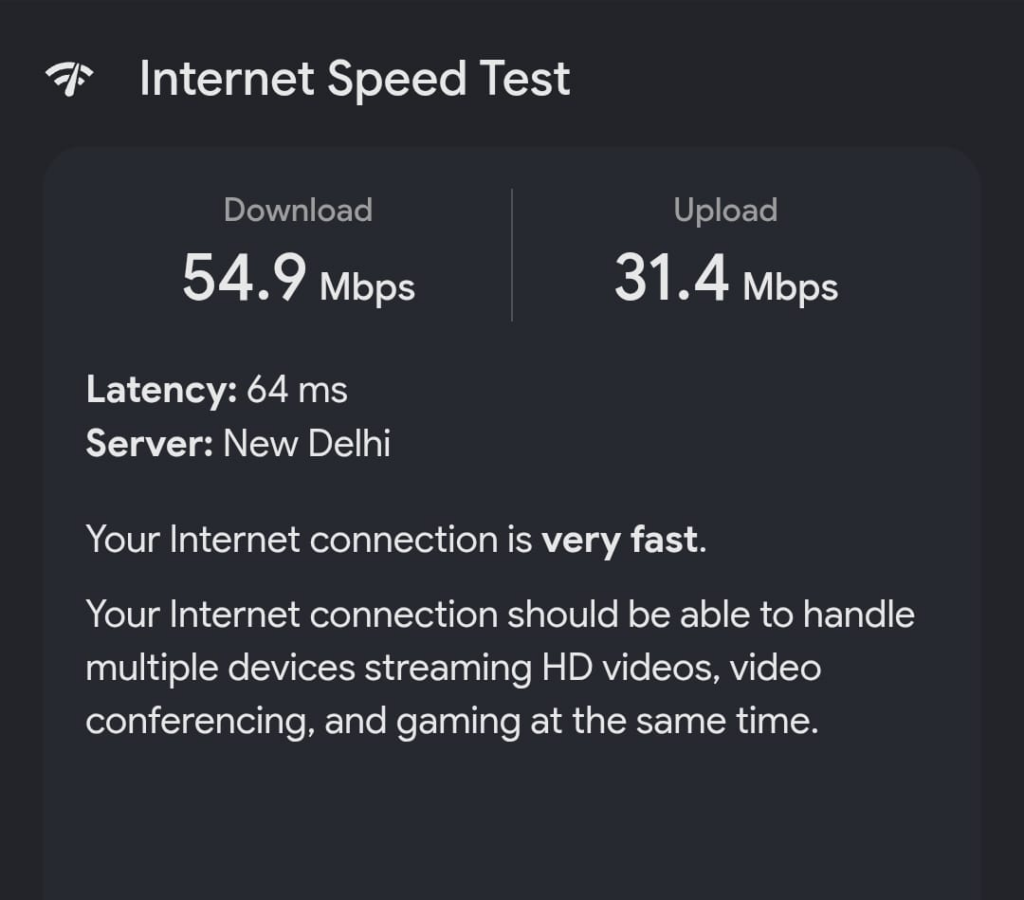
Internet speed from a common Lakeside, remote worker-friendly cafe
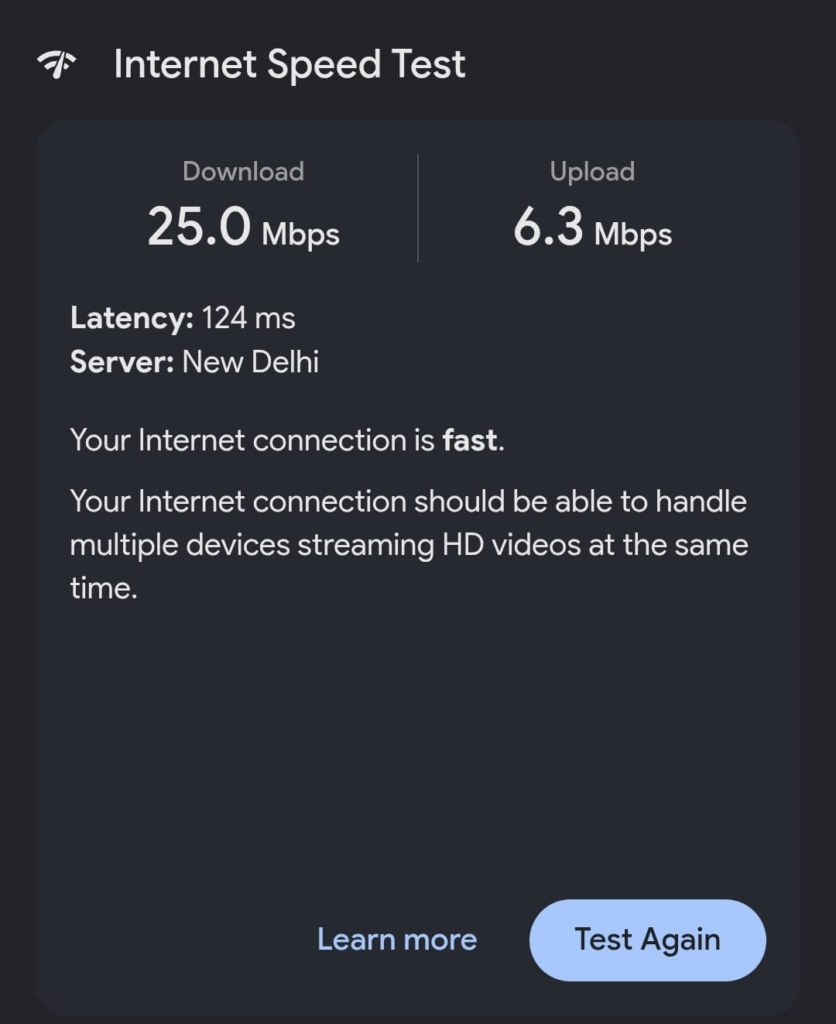
Speed test with a Namaste network SIM card
Coliving in Pokhara:
We are still currently hunting for reliable and recommended options. If you’re a Pokhara co-living provider, please contact me at [email protected]
Until then, hunt for any comfortable hotel within two blocks of Lakefront Rd, and you’ll be within walking distance to the most social areas of Pokhara.
When to Go to Pokhara: Spring or Autumn
Spring (March to May) and autumn (late September to November) are the sweet spots: Dry, cool, and busy enough to actually socialize with other nomads and locals alike.
Winter (December–March) is too cold and dangerous for trekking, but Pokhara city itself still makes a solid and cheap productivity base. In winter, average highs of 15–19°C (59–66°F) and lows of 5–7°C (41–45°F) are what’s expected at Pokhara’s relatively gentle 822–827m elevation.
In contrast, The Annapurna Circuit’s Thorong La Pass sits at 5,416m (17,769 ft), nearly 15,000 feet higher, which turns winter trekking into a genuine no-go, with nighttime temperatures dropping to -15°C to -20°C in the mountains.
Monsoon (June to late September) should generally be avoided as the weather swings between unpredictable rain or uncomfortably humid heat. Absolutely skip it for trekking, but Pokhara itself remains entirely livable if you want a quiet, indoor-leaning work stretch with fewer people around – just plan on rain popping up while you’re out midday, or pouring as the bar closes at midnight.
Watch for the festivals: Dashain, Tihar, and the Fewa New Year
Dashain: Hindu Festival of the Victory of Good over Evil
A 15 day long Nepali festival considered the grandest and longest, a Hindu festival celebrating the victory of good over evil. It happens in the Nepali month of Ashwin or Kartik (September or October) ending on the full moon day called Kojagrat. Learn more on Wikipedia.
Tihar: The Nepalese Hindu festival of lights and flowers
Each day of the 5 day long festival is dedicated to a different animal and deity. It generally happens in October or November but is based on the lunar calendar (in the Nepali month of Kartika). Learn more on Wikipedia.
Fewa New Year: Pokhara’s lakeside celebration of the Nepali New Year
An annual street festival specific to Pokhara in which locals celebrate the Nepali New Year (Bikram Sambat) and turn the Lakeside stretch into a celebration of Nepali and local food and culture. The festival generally happens mid-April each year.
Where to Eat and Drink: On the Lakeside strip and lakefront path
Pokhara is filled with cafes, to just have coffee or to work as well, and delicious yet cheap restaurants ranging from delicious local Nepali curries, to European-style bakeries, to buffalo burger joints, to vegan and beyond. With Pokhara’s growing popularity, many more will pop up in the next year as well.
My recommendation for good eating: Use this list as a starter to save time and find good eats when you arrive, but recognize that most of the great cafes and restaurants cluster onto 7th Street, 15th Street, Middle Path Street, Lakeside Rd., and the lakefront path. Then, after you’re fueled up and ready to explore, take some time to wander the areas and find your own special spot as new places pop up.
Restaurant Budget Legend for our List:
Budget | Per Main Dish (NPR) | Per Main Dish (USD) | |
$ |
|
|
|
$$ | Rs 450–1,200 | $3–$8 | Tourist-friendly cafés, fusion plates, Western-leaning mains: Fresh Elements (Rs 480–1,200), Godfather’s pizza (<Rs 700) |
$$$ | Rs 1,200–2,500+ | $8–$17+ | Splurge/specialty dining: Med5, a full multi-item spread like Moondance’s ~Rs 1,990 combo |
Pokhara Cafes
Himalayan Java – Center Point: 6 AM–10 PM daily ($$) Espresso drinks, certified halal menu. Rare halal certification in Pokhara. (Google Maps Link)
CDH Coffee De Himalayas: 7:30 AM–9 PM daily. ($$)Single-origin pour-overs, flat whites. Its own roastery + barista training school on-site. (Google Maps Link)
Caffe Concerto: 12–10 PM daily ($$). Wood-fired pizza, tiramisu, gluten-free pasta. Long-running “legendary” lakeside spot. (Google Maps Link)
Café Camelia: 6 AM–10:50 PM daily. ($$) Sweet & spicy chicken rice bowl, iced lattes. (Google Maps Link)
Recommended Restaurants in Pokhara
The Juicery Café: 7:30 AM–11 PM daily ($$)(RS 500 – 1000) Pad Thai, Himalayan Red Ice Bowl, smoothie bowls. Live music 5 nights/week, karaoke Sun & Wed, the default nomad hangout. (Google Maps Link) (The Juicery Menu)
Silk Road: 8 AM–11 PM daily. ($$) (RS 500-1000) Amaretto Sour, Darjeeling/Nepal/Italy fusion plates. Musician-run cocktail bar with resident dogs and a garden. (Google Maps Link)
Pokhara Thakali Kitchen: 11 AM–11 PM daily. ($$)Veg/paneer/egg Thakali thali. Regularly cited as the best Thakali thali in Pokhara. (Google Maps Link)
Moondance Restaurant & Bar: 7 AM–10:30 PM daily. ($$) Tandoori korma, wild boar stew. Often the go-to “last big meal” spot for trekkers finishing up. (Google Maps Link)
Dear Breakfast: 7 AM–10:30/11 PM. ($$) Cheesecake, seasonal drink specials. Newly opened and shared with the Fresh Elements Restaurant kitchen, but specializing in breakfast. (Google Maps Link)
Fresh Elements Restaurant & Bar: 7 AM–4 AM. ($$) Tandoor platter, crepe with chicken, croissants. Widely recommended as the best restaurant in Pokhara; live guitar most evenings. (Google Maps Link)
Med5: 8 AM–10 PM daily. ($$$) King steak, Mediterranean plates, sundaes. One of the few reliable places in Pokhara for a proper beef steak (not buffalo). On the pricier side of this list (Google Maps Link)
French Creperie: 8:30 AM–10:30 PM. ($$) Buckwheat galettes, Fewa Lake cheese crepe. Considered a genuine “slice of France,” and widely recommended. (Google Maps Link)
Mashup Smash Burgers: 1–10 PM daily. $ (~500 NPR/burger). The double-patty buffalo smash burger is a jackpot (and it’s served with fries!). Repeatedly called the best burger in Nepal, not just Pokhara. (Google Maps Link)
Relax Kitchen & Bar: Open 24 hours. ($$) Butter chicken and mint lemonade are tops. The rare 24-hour option. Asian-fusion menu spanning Indian/Thai/Japanese/pizza. (Google Maps Link)
Pandey Restaurant: 6:30 AM–9:30 PM. ($). Apple momos, chicken cheese momos. Family-run, dog-friendly, quiet side street. (Google Maps Link)
New Turkish & Nepali Kitchen Kabap House: 10 AM–10 PM daily. ($) Chicken doner, mixed grill. Rare genuine Turkish street food in Pokhara, still delicious. (Google Maps Link)
New Fewa Restaurant: 8 AM–9 PM daily. ($) Simple breakfast (~200 NPR promo), masala tea. Family-run, budget-friendly lake view breakfast. (Google Maps Link)
Godfather’s Pizzeria: 8 AM–10 PM daily. $$ (12″ pizza <Rs 700). Wood-fired pizza. Reviews are genuinely split, as some call it a must; others call it average. Don’t go if you’re Italian or a pizza snob. (Google Maps Link). The alternative, Best Godfather Pizzeria, is more highly rated, but I wasn’t able to confirm if it is actually better.
The German Bakery (Damside): 6 AM–9 PM daily. ($$) Donuts, pastries, coffee. Long-running local institution, garden and roof terrace seating. Beware: this is a different bakery than the lower-rated lakeside German Bakery (Kharare) (Google Maps Link)
Veggie, Vegan, or Plentiful Veggie Options:
Vegan Way: 7:30 AM–8:30 PM. ($$) Hummus bowl, vegan BLAT, seitan burger. Slightly cheaper than The Juicery with a similarly strong lake view. (Google Maps Link)
AM/PM Organic Cafe: 7 AM–10 PM daily. ($$) Falafel, mango smoothie, cinnamon roll. Organic-leaning menu with vegan/veg/omnivore options. (Google Maps Link)
Lumuma (Vegan Café): 7 AM–10 PM daily ($$). Nachos, pasta, Snickers dessert. The only fully vegan restaurant in town. (Google Maps Link)
Food + Music Venues
Himalayan Jazz: 8 AM–1 AM daily. ($$) Chicken sizzler, chicken alfredo. Live music venue doubling as a full restaurant and karaoke bar (upstairs) some nights. (Google Maps Link)
All in One Cafe: 7 AM–10:30 PM (varies). ($$) Thukpa, cocktails. Artist-owned, live music, skate-culture crowd. (Google Maps Link)
Paradiso Pokhara: 10 AM–2/3 AM (varies). ($$) Butter chicken, garlic naan. Purported to be the best live rock music scene in Pokhara, sunset lake view seating. (Google Maps Link)
Bars and Nightlife: Head to lakefront pleasant pubs, live music, karaoke, and the chance to meet other nomads
The lakefront walking path is lined with lively bars and restaurants that keep getting better after dark. The first nomad friends I made were by going solo to karaoke, and someone saying hello and inviting me to their table. If you’re hoping to meet people by night, aim for these bar meets island café vibed spots.
Karaoke runs at The Juicery Café on Thursday nights, 7:30–11:30, and daily from 8–11 PM at the Himalayan Jazz Bar, which also hosts live music under the Himalayan Jazz Club banner. Round out the circuit with Busy Bee Cafe, All in One Blues Cafe, and Paradiso Pokhara.
However, The Juicery Café remains the default watering hole among nomads.
Drinks & Entertainment Venues:
Busy Bee Cafe: 11 AM–2 AM daily. $$ (marked-up drinks). Steak and fries, live music after 7 PM. Big-screen sports viewing, billiards, free popcorn. (Google Maps Link)
Laker’s Tiki Bar: 7 AM–11:30 PM. ($$) Go for the vibe and the drinks, not the menu as the food gets mixed reviews. (Google Maps Link)
On eating safety in Pokhara: Check the Google Reviews, start with recommended spots, and consider vegan while your stomach adjusts
Google star ratings aren’t very reliable in Pokhara when it comes to matching great food, good ratings, and avoiding stomach bugs.
A few of the 4+ Google star reviewed places showed reviews of westerners getting food poisoning in recent months, meaning whether or not you would get it is a gamble. To be safe while your stomach adjusts to Nepal, scroll through the restaurant’s Google reviews from the last year, specifically looking for anyone reporting getting sick. If you’re prone to stomach sensitivity, then stick to vegetarian while your stomach adjusts to the region, starting with the most recommended and western-leaning restaurants while you settle.
In my personal experience eating in Pokhara, I ate everywhere on this list, and I was perfectly fine. My only incident was accidentally ordering Nepali-spicy instead of weak western-spicy…and it was still totally worth the meal.
Other Useful Spots in Pokhara
Perfect Books: Well stocked with travel guides, maps of all the nearby treks, and all of the popular nonfiction makes this a great place to buy a book for your stay while you unplug
Small kiosko type local mini marts everywhere for snacks as well, with a bonus of chatty owners (half the time) if you have questions for locals.
Things to Do in Pokhara and Around
In town:
- Walking the lakefront path along Lake Fewa
- Boat from Lakeside neighborhood’s shore across the lake to hike up to the Shanti Stupa (World Peace Pagoda) and an amazing view of the Himalayas
- Hike through the hills along Lake Fewa starting from Damside
- Hike to the Hotel Pumdikot Shiva Statue (next temple over from the World Peace Pagoda, reachable by the same hike)
- Visit Sarangkot Sunrise Viewpoint (cable car option available) for another amazing view north of Pokhara
- Devi’s Fall waterfall
- Bindabasini Temple
- Seti River Gorge
- International Mountain Museum
- Gorkha Museum
- Pokhara Regional Museum
- Paddleboarding/kayaking on Lake Fewa (including out to the lake temple)
Keep an eye out for the Gorkha candidates training throughout Pokhara
The Gorkhas are legendary warriors that Nepal still produces, known worldwide as fearsome fighters, and Pokhara is one of the hubs for their selection and training process. When Pokhara hosts the Gorkha’s annual selection, thousands of young Nepali men compete for ~500 spots in the British Gurkha Regiment, Indian Gorkha Regiment, and Singaporean Police. During your stay in Pokhara, you’ll commonly see young aspiring candidates (strictly 18 to 21 years old) sprinting up the hills you’ll be hiking and training at the Lakeside park calisthenics station.
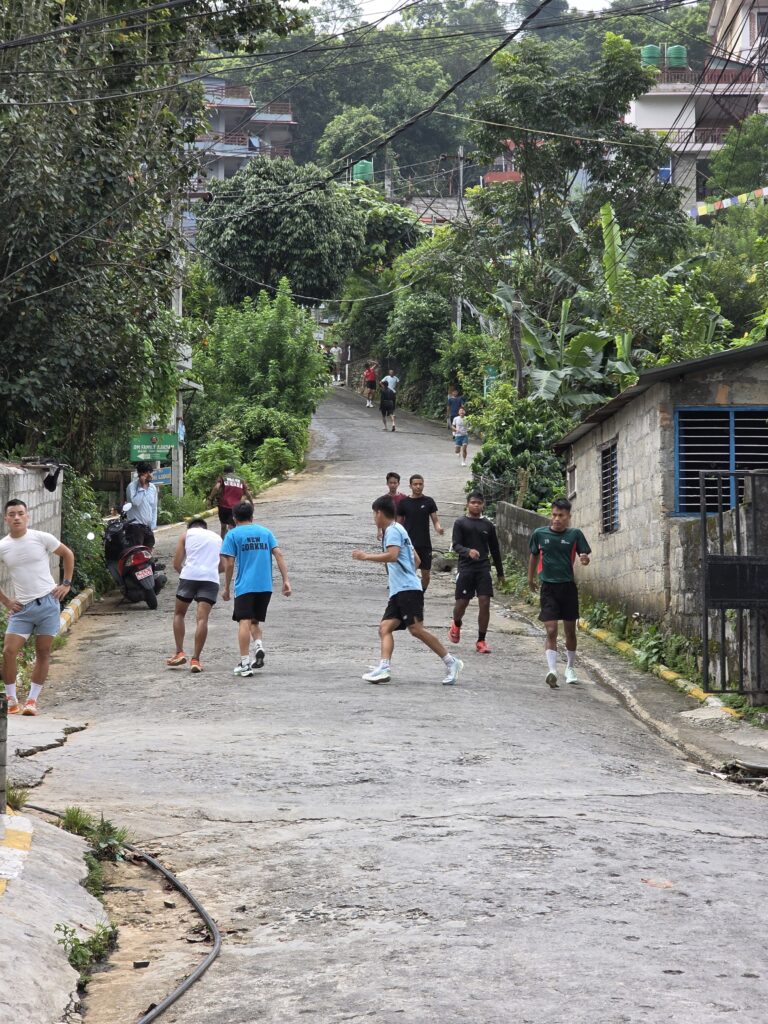
On the side street of Koirala Marg, there is a steep hill that leads up to a path toward “California Lakeside Viewpoint” and continues on a hike through the forest. Here, the Gorkha hopefuls sprint up hills daily, and it was a fun, practical workout trying to keep up with them.
If you want a calisthenics workout with some texture, go join them at Komagane Miteri Park at the pull up bars, smile, and try to keep up.
Beyond the crowds:
During peak season crowds, Begnas Lake is a quieter, less developed, and more peaceful lakefront alternative to Pokhara, just 35 minutes away. Consider renting a hotel or resort there for (what a local argued) prettier and quieter lakefront living.
Renting a motorbike
Several rental shops around Baidam and Phewa Marg street rent out scooters and motorcycles, allowing you to explore around and outside of Pokhara independently. Locals recommended this several times as the more authentic and cheaper alternative to the guided tour. Just be sure to wear a helmet, and make sure you have travel insurance.
Adventure activities nearby
- Ziplining
- Bungee jumping (Bungy Jumping Nepal — gobungynepal.com; The Cliff — thecliffnepal.com, world’s second-highest bungy jump)
- Ultralight glider tours (aviaclubnepal.com)
- Hang gliding
- Paragliding (increasingly popular)
- Rafting
- Cycling
- Trekking via NepalYogaTrek.com
For guides, ask your accommodation host for a vendor recommendation, or check the trekking/tour shops around Baidam and Phewa Marg as there are many shops there. Always negotiate, and check recent Google Reviews before locking in with a tour provider.
Yoga and Meditation Retreats
- Three-day meditation retreats at Gaden Yiga Chozin Meditation Center (pokharabuddhistcentre.com)
- Purna Yoga Retreat in Sedi Village
- Himalayan Yogini Retreat
- Sadhana Yoga Retreat (Sedi Village, 3-week yoga courses)
Other Experiences
Visiting the Tibetan refugee settlement (Tibetan-encounter.com) for the market, open Monday to Sunday, 8 AM to 5 PM
While I normally advise against grey tourism, involving anything with refugees, visiting the Tibetan settlement market is a great way to economically contribute to the community during their hardship, and skipping the profit takers and NGOs in the process. In return, you’ll find unique, culturally authentic Tibetan crafts and art pieces that you otherwise would not be able to find in most other places in the world. Come, browse, connect, grab a souvenir, and help someone along the way.
Adventures Beyond Pokhara: Trekking and Tours
- Ghandruk Village
- Mahendra Cave: A 300-meter limestone cavern with a Shiva shrine at its end, paved and lit enough for families, though it can feel tame if you’ve done bigger cave systems elsewhere. A convenient adventure.
- Lumbini: The birthplace of Buddha, in a city in southern Nepal, 6 hours away. A true pilgrimage site rather than a nature or adventure stop
Treks:
- Australian Camp: The easiest overnight trek of the Annapurna foothills. Doable as a short 1-2 day trek instead of a multi-week itinerary.
- Annapurna Base Camp: The bucket-list trek of this region and passes the base of the world’s 10th-highest mountain without the technical climbing skill Annapurna’s summit would require.
- Annapurna Circuit (2–3 weeks): The classic multi-week trek, differentiated by variety of views and terrain along the way. You pass through dramatically different climate zones and villages rather than hiking toward one single viewpoint.
- Manaslu Circuit Trek: The Annapurna Circuit’s wilder, quieter sibling. The trek offers the same caliber of scenery around the world’s 8th-highest mountain, without the crowds the ABC trek and EBC trek have picked up.
- Ghorepani Poon Hill trek: A shorter trek with views of Annapurna and Dhaulagiri ranges. Rhododendron forests and views of two mountain ranges in a fraction of the days a full circuit requires
- Mustang Trek: The “forbidden kingdom” of the Mustang region filled with Tibetan culture, desert landscape, ancient monasteries.
- Langtang Region Trek: The closest major trek to Kathmandu, making it the pick for travelers short on time who still want genuine high-Himalaya scenery
Visa: Up to 150 days (with extension), available on arrival
On-arrival visas: 15-day ($30), 30-day ($50, extendable to 120 days), and 90-day multiple-entry ($125, extendable to 150 days) visas are available at the airport. Bring cash to pay the fee at the airport, as they don’t accept cards.
Alternatively, apply for your visa online in advance at nepaliport.immigration.gov.np.
The Nomad Remote Work and Volunteering Grey Area in Nepal
Though there are talks of a Nepal Digital Nomad Visa, which would allow remote work and a longer stay, there is no digital nomad visa yet. Tourist visas technically don’t permit remote work, though this technicality is rarely enforced. Be aware of this when speaking with immigration, though personally I never encountered an issue, and salty nomads in Nepal shared the same.
The same “work” grey area applies to volunteering. Tourist visas don’t allow volunteering either, and Nepal has no dedicated volunteer visa category. Instead, it technically requires a Non-Tourist Visa with a work permit, as is commonly required of NGOs. Though, again, for brief volunteering stints the rule is rarely enforced. However, if you are planning a long volunteering stay, communicate about this with your organizer before arrival.
Nomad Community & Being Social
Pokhara’s nomad cluster is nowhere near the nomad density of Da Nang, Chiang Mai, or Canggu, so ensuring loneliness as a nomad won’t be an issue is essential. Despite arriving around two nomad summits happening the month I visited, there were no in-person meetups on the calendar (on Meetup.com or the major sites) and very few events that weren’t tied to a paid event. That said, other foreigners were visibly around, several were remote working in cafés, and the trajectory points toward more nomads coming soon. Even better, at the end of week two for me, every other night went late going out with solo nomads in town, connecting impromptu, approximately half from the conferences and half just in town enjoying Pokhara.
Nomads in cafés have been friendly and open to chat. You’ll find other nomads anywhere in Baidam or along the lakefront if you’re open to smiling, being friendly, and can master the art of just saying “Hi”.
Facebook Groups and Facebook Events for the area are another good way to find events and opportunities to connect.
Getting to know Pokhara Locals
Pokhara Locals are warm and friendly once you get past initial shyness, and widely spoken English makes diving into the culture easy. Nepal has a distinct personality compared to much of Southeast Asia, in which you can enjoy the country and socialize (with locals) without even looking for foreigners. At every group I attended, roughly half of the people joining were local to Nepal.
A quirk as an American, who generally smiles a lot to connect and can be unnecessarily loud, is that Nepalis don’t tend to smile for no reason in response to a smile, but this by no means implies unfriendliness. I found just saying “Namaste” (hello) even without a smile sparked several friendly conversations. If you can’t think of anything else to say after the potential start of the conversation, I recommend asking where in Nepal they’re from as many Nepalis in Pokhara aren’t from Pokhara proper, and they’ll happily share travel and culture tidbits that will add richness to your stay. As a bonus, they’ll absolutely remember you the next time you pass, which adds a beautiful bit of texture to the stay.
Giving Back
Pokhara and Nepal come with the nuances of a developing country, and in that, a real opportunity to give back exists. I was lucky enough to donate to a children’s home in Damside doing wonderful work for orphans; other nomads acted as a bridge for donations from abroad to help those whose lives were wrecked by the September 2026 floods.
Some opportunities to give back
- Several privately-run children’s homes doing genuinely good work, so ask around
- A conservation project for Eva and Lahmo (elephants) — su4e.org; coordinator Susan, reachable at 9865544265
- Kathmandu children’s school actively seeks donations **
If you are hoping to volunteer, be sure to read about the visa grey area mentioned in the visa section
Staying Active & Healthy
Two calisthenics stations in Lakeside Park and in the Hillside area, with the Hillside calisthenics station delivering a little more to work with, along with simply running and hiking through the many beautiful views, served as my perfect immersive yet simple fitness program during my stay.
Consider rucking through the town and hills nearby to up the intensity and take a page from the Gorkhas training book.
Gyms
- Vyayamshala Gym in Lakeside
- Bob’s Gym Pokhara in Lakeside, closer to Baidam; 800NPR daily and 5,000NPR monthly ($5.30 daily, $34 monthly) (www.bobsgympokhara.com)
- Ratna Shree Gym in the hillside portion of Lakeside is impressively cheap at 300 NPR ($2 USD per day) or 3000NPR ($20 USD) per month
Best bets for fitness:
- Yoga classes and retreats
- Paddleboarding or kayaking on Lake Fewa, easily rented at the lakeside path from several private rental kiosks
- Booking a hotel with even a minimalist gym simplifies (like I had) everything.
Health, Safety & Insurance
Pharmacies are plentiful throughout Lakeside, well-stocked with medicines, antibiotics, and first aid supplies. For anything serious, CIWEC Clinic is open 24 hours (ciwechospital.com).
Get travel insurance. No exceptions. If trekking, confirm your policy covers evacuation and high-altitude activity as you’ll need both coverages for the ABC and EBC treks.
Also check the specific elevation of trekking threshold your policy sets because some coverages do not cover trekking to the elevations common on EBC and ABC. For instance, World Nomads travel insurance has three tiers with one only covering up to 2,000 meters elevation, one covering up to 3,000 meters elevation, and one covering up to 6,000 meters elevation, with none covering technical climbing or if ice axes or crampons are used. Annapurna Base Camp trek reaches 4,130 meters and Everest Base Camp Trek reaches 5,555 meters elevation, so, check your travel insurance coverage to be sure before you depart.
Note that SafetyWing only covers up to 4,500 meters at the time of writing and thus does not cover you on the EBC trek.
Avoid swimming in Lake Fewa. Visible plastic along the shore and additional pollution make getting the water in your eyes/nose a risky experience that will likely make your stay “a little extra spicy.” If you want to swim, plan to book accommodation with a pool and a mountain view instead.
Weather/crime: Keep someone informed. Keep someone informed of your plans if you go hiking, due more to weather risks than not. Avoid hiking through the forest after dark as muggings in the hills have been attributed to unsavory characters.
Money & ATMs
The main tourist area, around lakeside, has several ATMs that were functioning every time I passed, making cash access in Pokhara no issue. Do account for a 600NPR ($4USD) charge withdrawal if your debit card doesn’t refund ATM fees.
Alternatively, money exchange offices are scattered throughout the tourist area and exchange with a ~2% spread ($2 fee per $100 USD), making cash exchange an option as well.
Practical FYIs
Short Power Outages are Common
Power outages are common, usually just for a few minutes at a time, but happen several times a day. To avoid work disruptions, keep your devices and a portable battery charged, and make sure you can hotspot off your local SIM, since cell data typically survives the outages that kill wifi entirely. Mobile data on a local SIM card in Nepal is cheap enough here to just treat as a standing backup.
Adventure gear is easily purchased or rented in Pokhara
If you’re coming from other travels with only warm weather/non adventure gear, don’t sweat it. Adventure gear (boots, insulating layers, trekking poles, backpacks) is rentable around Pokhara, in both name-brand and knockoff versions. Knockoff is fine for most things, but don’t compromise on boots as the blisters aren’t worth the risk.
Tipping: Only common in tourist areas or after tours
Tipping runs 10–20% in resorts and tourism-oriented experiences.
Bring Mosquito spray from home
Though dry season and winter are generally fine, mosquito spray is a great backup luxury. If it rains, pterodactyl sized bug vampires begin popping up out of nowhere, and you’ll be stuck between sweating in pants or playing barehand mosquito paddle. Err on the side of caution and bring some good bug spray.
.
.
ABOUT THE AUTHOR
Carlos Grider launched A Brother Abroad in 2017 after a “one-year abroad” experiment turned into a long-term life strategy. After 65+ countries and a decade abroad, he now writes about FIRE, personal finance, geo-arbitrage, and the real-world logistics of living abroad—visas, costs, and tradeoffs—so readers can make smarter global moves with fewer surprises. Carlos is a former Big 4 management consultant and DoD cultural advisor with an MBA (UT Austin) and Boston University’s Certificate in Financial Planning. He’s the author of Digital Nomad Nation: Rise of the Borderless Generation and is currently writing The Sovereign Expat.