
Fifteen years ago, after just over a decade playing my part in a war that had already gone on too long and a lot of accumulated “travel abroad” to sandy locales, I was at a happy transition point in my life.
A short walk, mere blocks from the Pacific Ocean in San Diego, I was living out my last few weeks in one of my favorite cities in America. I was preparing to leave for Washington D.C. The moment I’d planned and waited years for had finally come. Soon I’d start grad school, with an eye on business and foreign policy, hoping it would dovetail from my unconventional life back into the normal world.
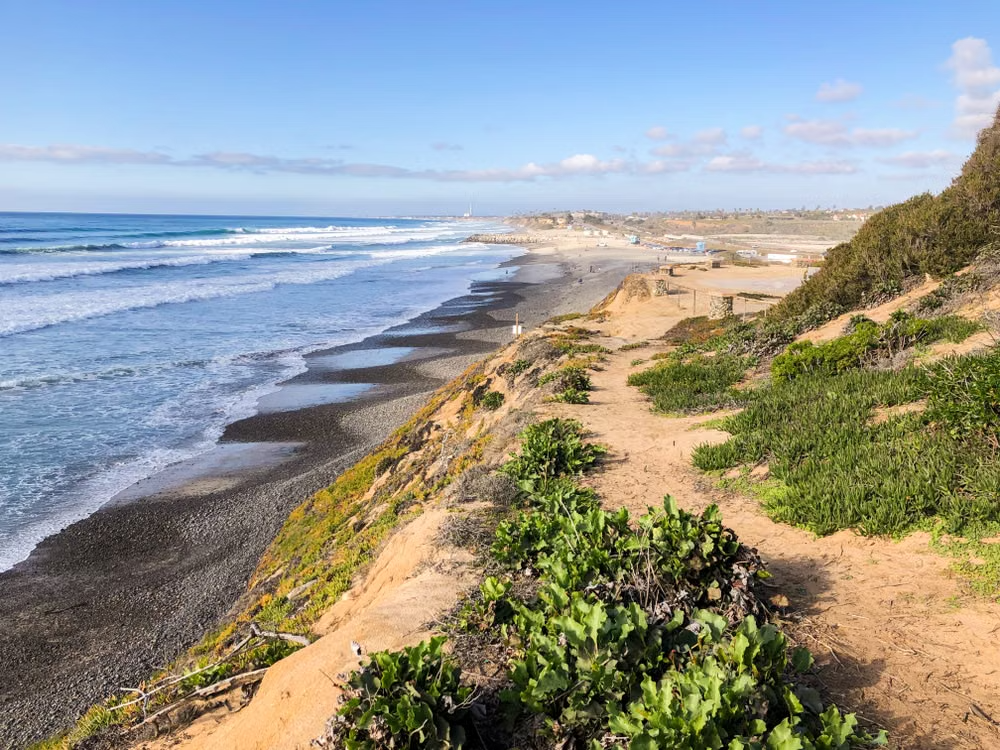
Little did I know that this sandy cliff in Carlsbad, CA was the start of my lesson on how to invest a windfall, and how not to…
For the short version and checklist, click here…
Then, one plain grey Wednesday in January, a mysterious email from an unknown sender arrived and derailed everything.
“I received your resume and email address from a colleague. I have an opportunity you will be interested in. Please call me today.”
As much as I dislike uninvited contact, the mystique had me too curious to pass up.
So, I called.
“I can’t tell you anything about the opportunity, but you may never be able to do this kind of work again. The pay is over $200,000 a year, and you’ll need to fly next week. I need an answer by tomorrow.”
I was separating from the military at the time, earning roughly $29,000 a year in exchange for 60-plus-hour workweeks. That one call offered nearly seven times what I’d earned most of my adult life. Leaving George Washington University to get my MBA in a few months had been the plan — the way to upskill and boost my income. This surprise, and mysterious, Plan B was nearly impossible to say no to.
$200,000 a year. Or more.
Who says no to that?
Fast forward a week. I’d broken my apartment lease, given away most of my belongings, gotten the university’s okay to postpone admission indefinitely, and handed my car to my brother, indefinitely. One backpack, one passport — as instructed — and I was on a plane to…a “very wild adventure.”
One year later
Those four passing seasons felt like a lifetime. I was burnt out in every way imaginable, working nearly 100-hour weeks for months in more dark ambiguity than I’d ever known. But in exchange for my empty emotional gas tank, my bank account had grown zeroes.
The nature of the work, my backpack holding my only possessions, with food and housing covered by my “sponsor,” cut my costs naturally. The Foreign Earned Income Exclusion eliminated a healthy chunk of my taxes – this was the first year I’d ever heard of it. No apartment, no possessions, no maintenance fees on the subscription to life we carry in the civilized corners of the world.
For over a year, every paycheck was pure money in the bank.
Now, with well into six figures cash sitting in a checking account that once struggled to break four figures, I was in uncharted financial territory. My employer offered me a one way ticket out of Europe to anywhere in the world as we parted ways. I had no idea what I should do. So, I did the only thing I could think of.
I went to Las Vegas.
Booking two weeks at the Bellagio and eating at Thomas Keller’s Michelin-replica restaurant every night wasn’t the worst thing I could have done with the money. It was one step in a string of missteps that quietly degraded my newfound assets — and the wealth they could have become.
But the real problem wasn’t the spending that followed shortly after during an extended New Year’s Eve run in Sin City, or the impromptu snowboard purchase and season pass that came as the follow up.
The real problem was that I didn’t know true wealth is built by wealth-maintaining and wealth-compounding habits — from day one.
If I’d known then what I know now about simple, healthy personal finance habits, that one year of earnings alone could be a present-day million dollar addition to my networth, with zero additional effort on my part.
Run the numbers: Just $150,000 invested in a broad U.S. total stock market index fund 15 years ago, growing at the market’s actual trailing 15-year annualized return of roughly 13.7%, would be worth close to $1 million today. That’s not a hypothetical return — it’s what the broad market has actually delivered over that exact window. I didn’t need to pick winners. I needed to sit still.
Initial Investment | Compounding Annual Interest | Year End Amount | |
Year 0 | $ 150,000 | +$20,550 | = $170,550 |
Year 1 | $ 170,550 | +$23,365 | = $193,915 |
Year 2 | $ 193,915 | +$26,566 | = $220,482 |
Year 3 | $ 220,482 | +$30,206 | = $250,688 |
Year 4 | $ 250,688 | +$34,344 | = $285,032 |
Year 5 | $ 285,032 | +$39,049 | = $324,081 |
Year 6 | $ 324,081 | +$44,399 | = $368,481 |
Year 7 | $ 368,481 | +$50,481 | = $418,962 |
Year 8 | $ 418,962 | +$57,397 | = $476,360 |
Year 9 | $ 476,360 | +$65,261 | = $541,622 |
Year 10 | $ 541,622 | +$74,202 | = $615,824 |
Year 11 | $ 615,824 | +$84,367 | = $700,192 |
Year 12 | $ 700,192 | +$95,926 | = $796,118 |
Year 13 | $ 796,118 | +$109,068 | = $905,186 |
Year 14 | $ 905,186 | +$124,010 | = $1,029,196 |
Year 15 | $ 1,029,196 | +$140,999 |
|
Through the months that followed, unsavvy as I was, I stumbled into invaluable alternative life paths that still serve me today. Wandering through South America and the National Parks of the US. The return on what felt, at the time, like a wasted investment of experience.
I discovered geoarbitrage while living for months in Buenos Aires. I discovered that a windfall can be an accelerant for financial independence, not just a number in an account. I discovered that changing your location strategically can turn a simple cash win into years of runway in a life of freedom. I found the shape of peaceful Expat FIRE in Chilean Patagonia, and lived the reality of nomad FIRE across Latin America. Even with those irreplaceable experiences, I still didn’t know what the best use of that money was.
The rest sat rusting in a checking account, earning nothing — not invested in stocks, ETFs, or real estate. Mostly out of fear, because it was the first time I’d had enough money to be afraid of losing it.
A night in Vegas is expensive, but it doesn’t feel like losing money — you walk away with an experience, or so I told myself. Stocks and real estate, by nature, lose value, from time to time. But I understood exactly what I was risking at a $0.25 slot machine or on a $25 Cirque du Soleil ticket. I didn’t understand what I was risking — or gaining — in the market.
So, I ignorantly stayed out of the stock market and investing it entirely, and missed the opportunity along with the risk for 15 years.
I didn’t know how to make that money work for me. Or more precisely, for future me.
…But Now I Do
Move the clock forward, past the wastefulness and the ignorance, and I did eventually achieve FIRE.
The insight came slowly — from traveling through places like Italy and Colombia, where people lived better on less than I did; from conversations with people who invested proactively; from friends introducing me to the philosophies of Mr. Money Mustache and the plain wisdom of Jack Bogle and his revolutionary index funds. A decade of small, consistent moves added up to what I think of as a “slow windfall” — the one that actually walked me into financial independence.
I’m writing this from a coffee shop beside a mountainside monastery overlooking the Thai hill country. I have no debt. My investment income covers my apartment, my Thai food, the sushi flown in from Japan, and four viewings of The Odyssey in IMAX last week. My time is mine — not two weeks of going hog wild in Sin City, but indefinitely.
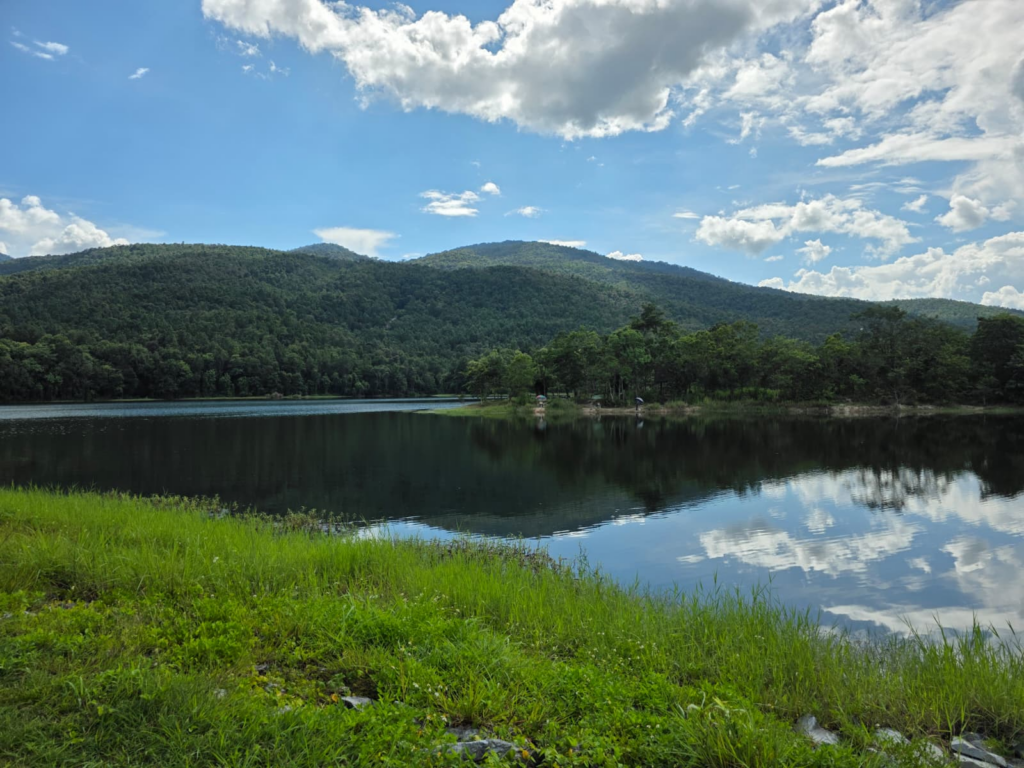
I traded adrenaline fueled high stakes and late nights in Vegas, for a meticulous plan leading here, walking distance to a monastery and unlimited time. Both experiences powered by windfalls, but one will endure.
That’s the difference smart moves have made, compounded over the years since my last windfall.
Sudden Wealth Syndrome Is Real, and I Had It
There’s a name for what happened to me in Vegas: sudden wealth syndrome. It’s the disorientation — guilt, anxiety, impulsive spending, decision paralysis — that hits people who come into money faster than their habits, identity, or financial education can keep up with. It shows up with inheritances, lawsuit settlements, stock windfalls, and yes, a surprise year of tax-free overseas pay followed by a ticket to anywhere.
You don’t need a diagnosis to fix it. You need a pause, a plan, and people around you who know more about money than you do at that moment. That’s the whole next section.
And if you’re like I was and don’t have people around that know enough about money to stop your spending spree, you’ve got me, now, here to share what could save you thousands and make you millions.
A quick note before the checklist: I’m not your financial planner, and none of this is personalized advice — it’s what I got wrong, what I got right, and what I’d do differently, told straight.
The Windfall Rules: What I’d Do With the Money Today
If I land a windfall tomorrow, here’s the order of operations I follow, no exceptions:
- Park it, don’t spend it. Move the cash into something safe and liquid that beats inflation while you think — a high-yield savings account, a short-term CD with decent returns, or a Treasury-based cash vehicle. Give yourself a real cooling-off period before making any financial or purchase decision.
- Call a tax strategist before you call anyone else. You need to know what you already owe the government and what legal options exist to keep more of it. This isn’t optional.
- Hire a fee-only financial planner, ideally a CFP — one who doesn’t sell financial products — to map your options against your actual goals and risk tolerance, and has no possibility of ulterior motives.
- Update your will, beneficiaries, and estate documents. A windfall changes what you have to protect and who’s protecting it. Loop in an attorney alongside your financial planner, and keep your circle extremely small at this stage.
- Assess your debt with your planner, not your gut. Pay off anything charging more than your after-tax investment returns immediately. Everything else gets a deliberate plan backed by calculation and market tested tactics, not a reflex.
- Invest the bulk of your cash in low-cost, diversified index funds. This is the single most powerful, least exciting thing you’ll do with the money. It can be as temporary as you want. Research low-cost fund families from Vanguard, iShares, State Street, and Schwab, and talk to your planner about what fits your risk tolerance. If putting it all in at once feels too risky, research “dollar-cost averaging” to understand how wand why to invest it slowly over several months instead. I dollar cost average constantly in unpredictable markets.
- Freeze new purchases and big-ticket decisions for at least six months, ideally a year. No new house, no new car, no “just this once.” Anything that wasn’t permanent before doesn’t become permanent during this period.
- Review your risk exposure. More money means more to lose to lawsuits, fraud, and bad actors. Insurance and legal structure, put in place early, are cheap compared to what they protect. Umbrella insurance, insurance for your large exposed assets, trusts, LLCs, new contracts, and countless other tools are at your disposal and should be used to protect your assets.
- Don’t tell people. Not your extended family, not your group chat. This single rule will save you more stress than anything else on this list.
What I Got Wrong
The Vegas trip wasn’t the real mistake. The real mistake was believing that not spending felt like losing, and that not investing felt safe. Cash sitting in a low-interest checking account for a year, out of fear, cost me more than the Bellagio ever did — I just couldn’t see it, because the loss never showed up on a receipt.
What I Got Right — and Would Do Again
Even wasteful and unsavvy, I stumbled into a few habits that held:
I avoided every debt that didn’t buy me something productive.
I bought with a “buy it for life” mindset — cars, jeans, boots — instead of buying twice.
I built a minimalist life around experiences that paid a high, lasting return per dollar, or high enduring satisfaction per dollar, instead of chasing lifestyle creep with the people around me.
I upskilled constantly, treating every dollar as if it could vanish, which constantly produced new ways to build more dollars.
I moved my geography — and my life — toward whatever opportunity had the highest ceiling, without much sentiment about staying put.
I kept my body strong and mobile for free, which has done more for how much I enjoy my 40s than any dollar I’ve spent. The dollars I’ve spent on fitness, basic nutrition, and fitness education have given the best return in my portfolio.
The Real Payoff: My Windfall Was a Geoarbitrage Accelerant
Here’s the piece that gets missed in every generic “what to do with a windfall” article: the money isn’t the point. What the money buys you — years of runway to redesign your life on your own terms — is the point.
A windfall invested well is a financial independence accelerant. Geoarbitrage is what turns that accelerant into decades of runway instead of one good year. The math is simple: park your money in the broad U.S. market, then spend your life somewhere your dollars go three or four times as far. You don’t need $150,000 to become a million dollars sitting untouched in an account for fifteen years to benefit from this — you need it working in the market while you live somewhere it doesn’t have to work as hard to support you.
That’s the version of this story I wish someone had told me on that grey Wednesday in January. Not “invest your windfall.” Invest your windfall, then go build a life somewhere it can actually set you free.
A note: I’m not a licensed financial advisor, and nothing here is personalized financial advice for your situation. This is my own financial history — the opportunities I missed, the mistakes I made, and how I’d approach them today — shared so someone in my old position might see a few new options for what’s possible.

.
.
ABOUT THE AUTHOR
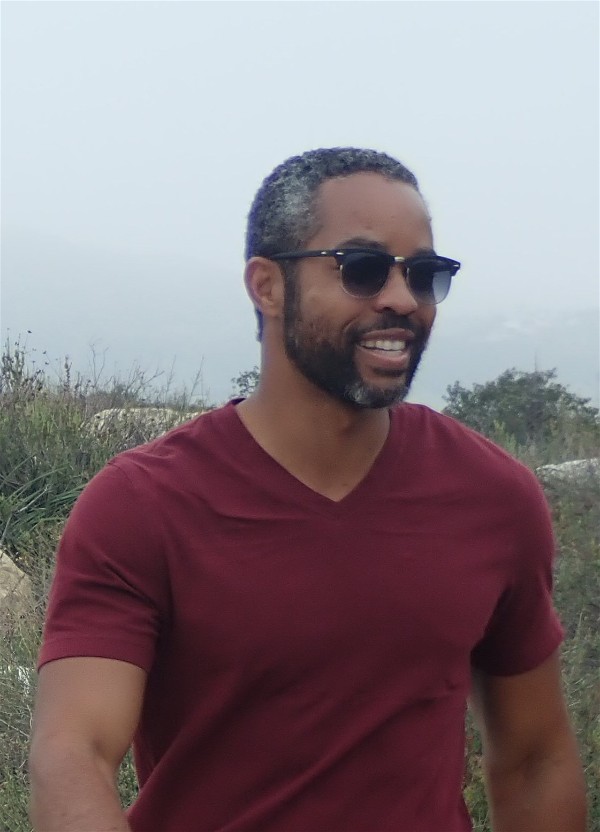
Carlos Grider launched A Brother Abroad in 2017 after a “one-year abroad” experiment turned into a long-term life strategy. After 65+ countries and a decade abroad, he now writes about FIRE, personal finance, geo-arbitrage, and the real-world logistics of living abroad—visas, costs, and tradeoffs—so readers can make smarter global moves with fewer surprises. Carlos is a former Big 4 management consultant and DoD cultural advisor with an MBA (UT Austin) and Boston University’s Certificate in Financial Planning. He’s the author of Digital Nomad Nation: Rise of the Borderless Generation and is currently writing The Sovereign Expat.