
For the aspiring expat, aiming to leave their home country for a more comfortable life abroad, with a slower pace and more time, Colombia always comes up as an option – and with good reason. As an expat who has been living abroad for more than a decade, spent years enjoying South America, and spent ample time living the best that Colombia has to offer, I can assure you, the “Land of a Thousand Rhythms” and gateway to South America is a gem worth considering.
Moving to Colombia from the US, Canada, or Europe is an uncommon yet easy way to trade in the high cost, fast paced rat race of home for a land of eternal springtime, a comfortable life at half the costs of home, rich culture, festivals & farmers markets, and a lifestyle that will make you want to join the rhythm too – if you are the right type of person. As amazing as Colombia is, its “interesting” history, exaggerated reputation, and exotic mystique – that is often misunderstood – can leave you questioning. As great as Colombia is, is this potentially wonderful move the right move for you?
Yes.
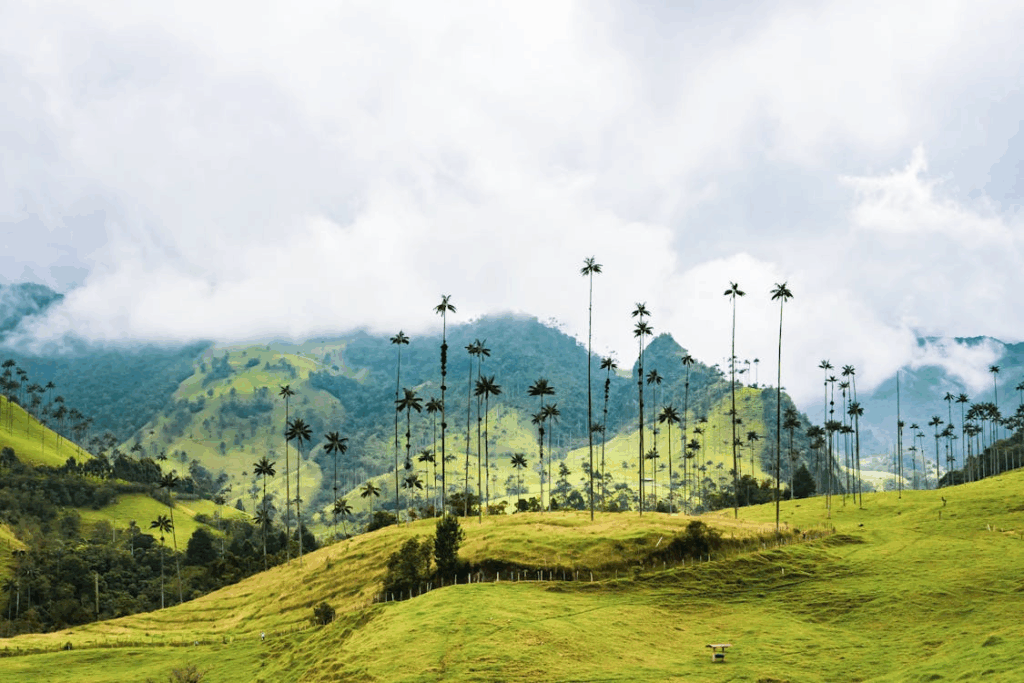
If you pick the right neighborhood, understand the Colombia you’re moving to, and make the right plan, Colombia can be a safe, cheap, enlivening fresh start into a new life.
In this complete guide to moving to Colombia, I’ll share firsthand why Colombia isn’t just a popular destination but a high-potential new home for expats, digital nomads, and retirees, how to know if it’s right for you, and the logistics of how to make the move. Visas, where to live, how to stay safe, healthcare planning, and essential things to know – with a final guide on how to make the move.
Read on to discover the why and how of moving to Colombia.

Contents
- Why Colombia
- Where to live in Colombia: The best places for your fresh start
- Who is moving to Colombia best for: FI Expats, digital nomads, “Latin Souls.”
- Money, Finances & Employment: Cost of Living and how to pay for it
- How to make it happen: A Step-by-Step Overview of How to Move to Colombia
- Essential Logistics of Moving to Colombia
- FAQ
Key Points on Moving to Colombia
- Safety and security in Colombia is about choosing the right neighborhood (not just the right city), connecting with your community, and moving like a local
- Though foreigners are allowed to buy homes, do not buy for the first two years – rent.
- The best resources for finding apartments are Facebook groups and marketplaces, local real estate agencies, and the expat community.
- Visit and stay for a period before you plan to move
- While local employment is possible, remote work or a FI plan are much better options for foreigners
- You could survive in Colombia with no Spanish, but learning basic Spanish will make for cheaper living, better experiences, more friends and social connections, and a better life
- Leave the household goods (appliances, furniture) in storage and travel light until you’ve settled in Colombia.
A note: Please visit Colombia, well before you move, to appreciate and think
As much as you have a burning desire to get out and move to Colombia, do not fully commit to moving to Colombia until you’ve visited, wandered to taste each of the recommended cities, and have experienced its highs, lows, and innate beauty. Ideally, at least 1 month in total of spending time in the country, but no less than 3 weeks before committing.
Colombia is a dream-worthy destination for an expat move; however, life in Colombia comes with Pros and Cons, and there are plenty of other great expat destinations. So, do your due diligence, and do yourself the favor of traveling to Colombia before committing.
Why Colombia & What Does Colombia Have to offer?
For the open-minded expat that priorities a comfortable pace of life, warm community, beautiful nature, and vibrant culture, Colombia has a lot to offer.
- Low cost, high quality living at half the price of living in the US, with so much more opportunity to live – and still ~30% cheaper than neighboring Panama and Costa Rica for similar (if not more vibrant) lifestyles
- Easy access to the US, Central America, and Europe (via Miami) makes flights home easy, with $300 flights being the norm, ~4 hours long.
- As the gateway to South America and adventure, Colombia puts the Andes, Patagonia, the Galapagos Islands, the food of Lima, and more at your doorstep for adventures at your pleasure.
- Pleasant climate and beautiful weather year-round, throughout the country, such as Medellin’s 22°C (72°F) year-round temperatures, and sunny and beachy weather elsewhere
- Everyday comforts of walkability and easy access to everything one needs are common in all of Colombia’s best cities for expats
- Vibrant culture, mixing African, Spanish, and indigenous Andean cultures today, translates to warmth, connection, and tight-knit community daily, and lively, inviting festivals the rest of the year.
- Colombian culture as a whole is a unique blend of polished and polite yet warm, friendly, and loving, yet still ready to party (after the work is done) in a way few other cultures in the world are
- World-class healthcare is available, for a fraction of US costs, through Colombia’s many hubs, and accessible as a resident through the collaborative public and private medical system.
- Perfect for remote workers and digital nomads due to North America’s time zone alignment, high-speed internet everywhere, and ample coworking spaces and communities
- Perfect for FI retirees as a low-cost, high-quality of life destination that delivers lots of buying power
- Amazing, beautiful nature and beautiful landscapes: From winding walking paths through Medellin, to the beaches on the warm Caribbean and beautiful Pacific, to green hills towering palms, and hot springs of Zona Cafetera
- Dance and Music: As the home of salsa and heavy Afro-Caribbean culture, if you love culturally deep dance and music, Colombia has festivals and opportunities to add beautiful depth to your life
- Coffee and hearty food: The Amazon, flat lands, and Andean mountains of Colombia are rich with delicious locally produced foods – and Medellin and Bogota are packed with restaurants, eateries, and cafes that make living the good life (of coffee and food) easy and affordable
How to Go about Moving to Colombia: Step by Step
As we go through this guide, we’ll review everything you need to know, do, and plan to move to Colombia. First, let’s quickly review the process that we’ll cover, and that you’ll start after finishing this guide.
Steps for Moving to Colombia
- Learn about Colombia, your options of where to live, visa options, the culture, and the tradeoffs
- Make a list of potential cities and neighborhoods
- Visit once (at least) and visit your short list of destinations
- Decide your visa typeTypes of Visas & Visa Requirements
- Decide how you’ll pay for your stay (remote work, financial independence, or local work)
- Decide on your city
- Decide on your neighborhood
- Plan your budget and check your finances
- Gather your documents and apply for your visa
- Book your initial accommodation (2 weeks to 1 month via AirBnB, Agoda, or Booking)
- Have a plan for on the ground, from doorstep to doorstep, to expat life
- Consider what to do with all your stuff: Discard or store, but don’t bring it
- Review our guide for moving abroad for more of the logistics at home
The adventurous approach to making it happen
Before social media overload and influencer reels as tourist guides, there was a different way to find a home abroad fit for you. If you are feeling adventurous (and antsy), unplug and try this approach to moving to Colombia.
If you are feeling less adventurous, scroll on to discover where to live in Colombia and the logistics of moving there.
- Set aside 3 months (no visa necessary for Americans) (savings of $5000 to $7500 should be plenty to cover this period – it will be more expensive than normal life because you’re traveling.
- Literally buy a paper guidebook, and get off social media
- Visit with a single piece of luggage
- Start in Medellin, travel the circuit to Guatape, Cartagena, Bogota, Santa Marta, and Zona Cafetera, to spend at least 3 days in each of our recommended locations. Get around by arranged transport or flights.
- Ask for recommendations on small, livable towns, noting specifically neighborhoods.
- Travel for the quintessential experiences of coffee, beaches, and food – keeping notes along the way
- Return home to consider your visa and financial situation
- When you’ve digested your “research trip” return to Colombia, to your top city and rent via Airbnb for 2 weeks to a month in your chosen neighborhood
- On the ground, seek out a longer lease apartment, and use Facebook groups, for real estate in the location and expats in the location, are the best starting point, along with Facebook marketplace
Where to live in Colombia: The best places for your life in Colombia
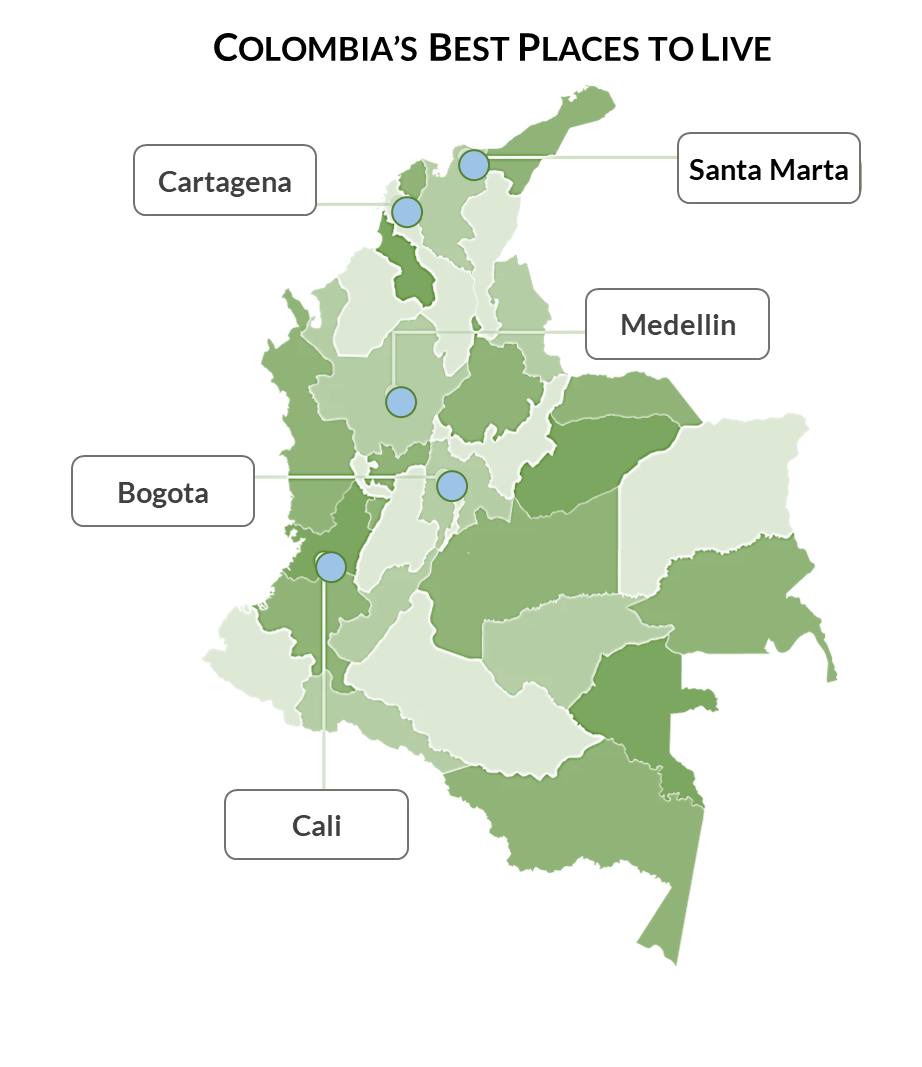
Part of Colombia’s allure, and what I love about the country, is the diverse variety that stretches across it. Not just variety in skin colors, types of music, and cultures, but in geographies, paces, and ways of life. From posh and glitzy Bogota, to nomad enclaves in Medellin, to salsa hubs in Cali, Colombia offers a little of everything. Knowing what the menu of Colombia has to offer, in terms of homes, is the first step to finding out if Colombia is for you and, if so, where and how.
The location that’s perfect at the start won’t be the best place for the long run…and that’s ok.
Before we get into the list of best places for expats and nomads in Colombia, understand that, especially if you are not familiar with Colombia, the first place that you visit or live might not be where you stay. This is because the popular places in Colombia that you’ve heard of and may be considering are popular for a reason – and that reason may not be conducive to a long-term stay. For instance, I love the El Poblado area of Medellin. 10 Years ago, this place was a dream to nomad in – like the Beverly Hills of Medellin, with quiet cafes (Pergamino being my favorite) wrapped in greenery, fantastic brunch spots, and a 13th-floor gym that overlooked Escobar’s old stomping ground. Now, that same café hosts hungover stag partiers and clusters running off the “juices” from the night before – and I’ve happily moved towards Laurelles.
I share this walk down memory lane to highlight – if I’d signed a long-term lease in the first place I loved, I’d be living in a place that, while fun, doesn’t suit my everyday life, and I didn’t realize this for two weeks. The best path was to give myself a few weeks to a month at a time, moving neighborhoods and cities at the recommendations of others, until I found a safe, walkable, green, quiet, and welcoming corner of Medellin to call home, and share with my neighbors (and the cute red squirrels that dropped in to be fed mango daily).
The point: Plan to visit, enjoy, and explore before you commit.
Now, on to the places to explore, as one will definitely be the best place in Colombia for you.
Colombia’s Regions and the Differences: Caribbean Coast, Andean Pacific Zone, and the Amazon
Caribbean Coast: Baranquilla, Cartagena, Santa Marta: Heavy Afro-Caribbean influence, tropical heat, plenty of beaches, and a laid-back yet festive undercurrent to culture in the region
Andean Region: Bogota, Medellin, and Cali. Home to the elite, industrious sectors, and the major cities – lifestyle is more comfortable, structured, and in line with Spanish colonial roots
Pacific Coast Zone: Culturally similar to the Caribbean coast, but the transition to the Pacific makes for different, yet still beautiful, beaches and beachscapes, with fewer big cities and less developed infrastructure.
The Amazon: More preserved indigenous cultures and harsher nature make for a very different, but still endearing, experience than the rest of Colombia, which you must experience, but may not deliver the comfort and convenience most expats are searching for

Medellin: A top pick to start, aim near El Poblado and Laurelles to explore at first, and find your place from there
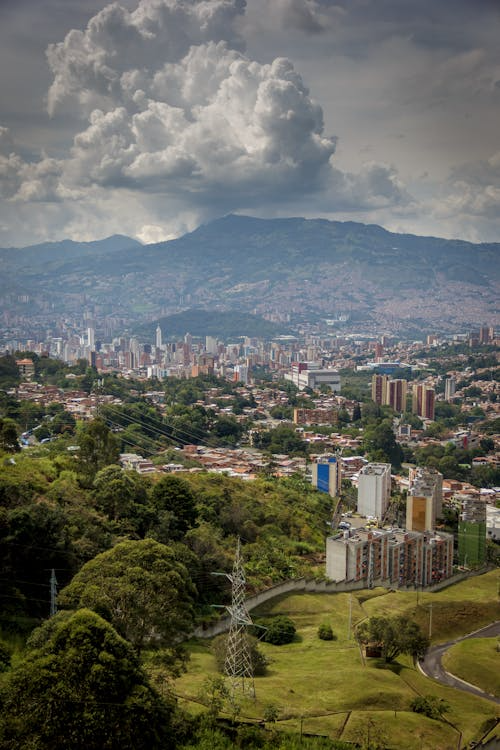
Medellin is a gem, not just in Colombia, but throughout all of South America. In my experience, this was the only city that rivaled the walkability, livability, and welcoming vibrancy of Buenos Aires, with a comparable nightlife and celebration scene.
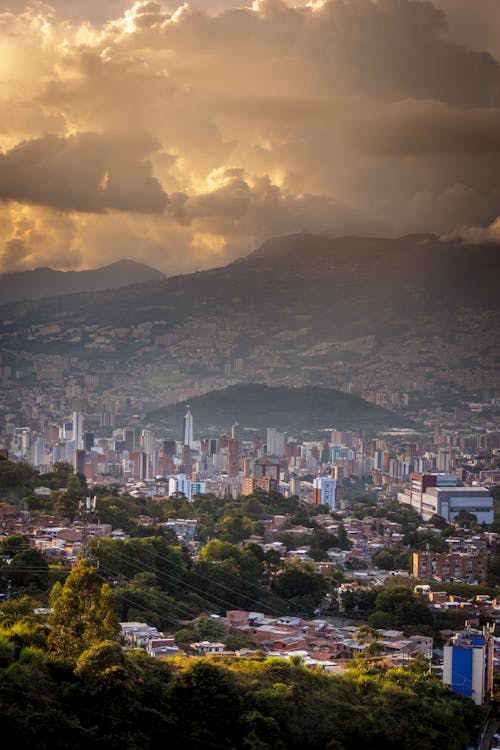
Nicknamed the “City of Eternal Spring” thanks to its wonderful weather year-round, 72°F degrees (22°C), this city feels like a futuristic utopia carved out of a friendly jungle. The city government made intentional efforts for years to plant more trees, build more green spaces, and build a network of paths that feel like walking trails, that connect neighborhoods – combining walkability with connection to nature – and actually reduced Medellin’s average temperature by 2°C.
The city sits nestled in a valley between the Andean hill tops, surrounded by green tree canopy tops, simultaneously busy and bustling with 2.5 million people, but still chill thanks to the unique “Paisas” culture, while being Colombia’s second largest city.
Walkable, beautiful, and green, this city (one of my favorites in South America) gives a balance between big city convenience and the livability of a city that operates at a different pace.
Public transportation is good in Medellin, though walking on foot is often easier and more enjoyable.
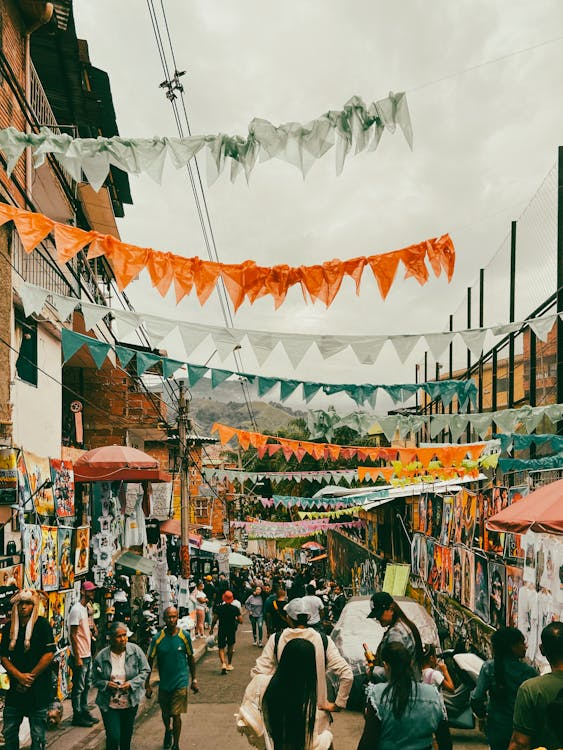
Weekends, the Golden Mile (Milla de Oro) and others shut down so that families can walk, run, and bike the city on the shaded, tree-lined street, with farmers’ markets lining the street along the way.
Neighborhoods: I recommend starting in El Poblado first, then visiting and testing Laurelles, and also Envigado
- El Pobaldo: The original nomad and expat hub in Medellin, home to posh cafes, upscale eateries, and walkable blocks lined with beautiful trees. Nightlife here is cosmopolitan and lively, but likely too lively for the expat aiming for life long term – and high rents to boot, thanks to growing popularity.
- Laurelles: Becoming the go-to nomad and expat hub, filled with walkability, livability, and the little luxuries that make a neighborhood lovable. This area is becoming more popular with expats, retirees, and nomads as the stag parties and the weekend passport bros take over El Poblado.
- Envigado: Further out, but still well connected by public transport, Envigado is a cheaper option that still delivers the great quality of life Medellin is known for.
Bogota
Colombia’s financial and political center has the upsides and downsides that you would expect from such in any country – think New York, London, Bangkok, or Boston.
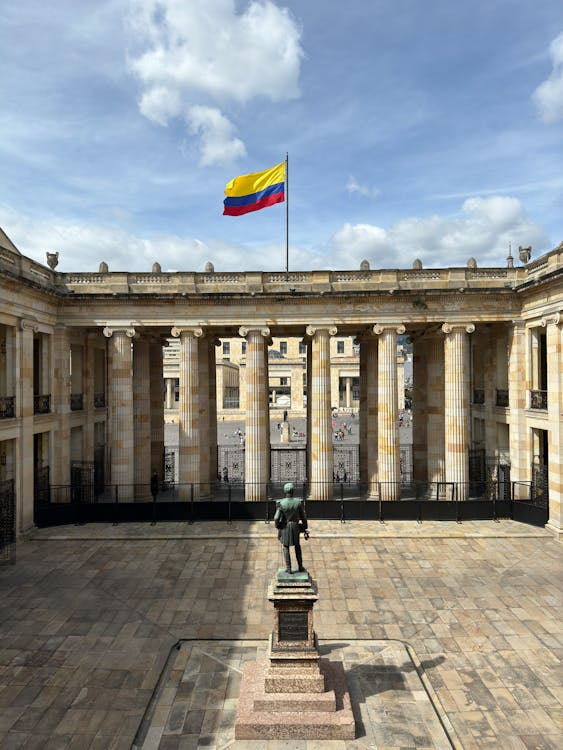
Cosmopolitan, rich with food, arts, and culture, Bogota is home to, and caters to, much of Colombia’s wealthy and elite – and delivers the experiences to cater to such. At the same time, like its international counterparts, it suffers from a bit more pollution than the other green and nature-filled places on this list, and more crime.
Neighborhoods: Chapinero, Usaquen, La Candelaria
- Chapinero: Attracts the young, hip, and bohemian crowd with an array of cafes, art galleries, and nightlife, along with a healthy LGBT scene.
- La Candaleria: More of the “historic Bogota”, this area is the historic colonial city center, filled with Spanish colonial architecture and museums, and suitable for history buffs and those in search of the colonial ambiance.
- Usaquen: Characterized by Sunday art and farmers markets and posh restaurants, this neighborhood balances the tastes of the hip with the modern
- Salitre: Residential and affordable, suitable for families in need of a few extra rooms and more focused on the lives of children
- Rosales and Chico: Upscale Bogota with the price tag, infrastructure, and local elites
Cartagena
A UNESCO World Heritage and ancient Spanish colonial port city is beautiful, and a must-visit, whether or not you decide to live here. Cartagena is simultaneously one of the safer cities and one of the livelier cities in Colombia, compared to cities in the interior of Colombia. The narrow streets lined with old-world colonial architecture made of the sandy colored coral stone carved out of the turquoise waters feet away make for a backdrop that doesn’t get old.
When coastal style city life gets a little too hectic, all of the Caribbean sits at your doorstep, whether driving to Barranquilla for the “greatest Carnival outside of Rio” or sailing to Panama, Cartagena offers comfort when you’re in rest mode, and opportunity when you’re ready to explore.
Neighborhoods: Bocagrande, Manga, Getsemani
Santa Marta, Minca, and a touch of Tayrona
A beautiful coastal city that flew under the radar for years, as visitors preferred more well-known Medellin, Cartagena, and Bogota. Now, the city boasts a hefty expat population that coexists well with Colombian locals and Venezuelan migrants.
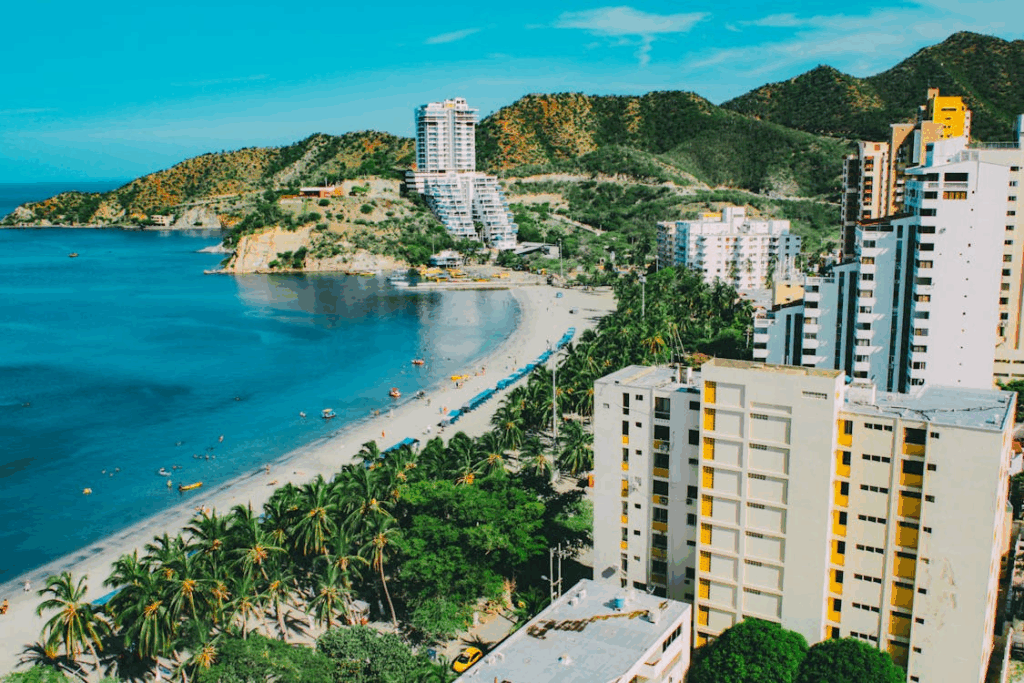
Santa Mart is the oldest city in Colombia and, just like that understated fact, has understated charm in spades. Compared to other destinations in Colombia, Santa Marta feels slower, more relaxed, and very much Caribbean.
Nearby, Minca sits in the hills and cool high country, home to yoga retreats and the main location for coffee plantations outside of Zona Cafetera.
Also nearby is Tayrona National Park, great for a day hike, or simply camping on the beach with 100 of your closest backpacker friends.
The Caribbean coastal gem and laid-back beach town offers colonial architecture, chic restaurants, and more safety than other parts of Colombia (like Bogota and Baranquilla), adding up to a wonderful option for the expat aiming to move into a beachfront lifestyle away from it all.
Zona Cafetera | The Coffee Triangle: Smaller, Quieter, Cheaper, More Peaceful, Just as Beautiful
Outside of the big, popular cities lie the true gems for the nomad or expat hoping for a different pace. While the other locations offer beaches, urban scenes, and cafes, the coffee region offers traditional vibes, greener views filled with more nature, and a pace that gets into your soul. Most cities have less than 500,000 people, and with that come more spread out but tighter-knit communities, and a lower cost lifestyle.
These are the places to consider in the coffee region:
- Bucamaranga: Situated further inland, surrounded by greenery and a waterfall. Less popular but an amazing value. Great healthcare infrastructure, public transportation, and over 150 public parks and green spaces make this a very livable and affordable destination
- Manizales: A smaller city of just under 500,000 people regarded as safer and still very livable for expats. Great public transport, and a walkable setup with plenty of sidewalks.
- Pereira: Another safer option in Colombia’s mountainous and laid-back coffee-growing region (Zona Cafetera / the Coffee Triangle), with a population of ~500,000, mountain views, green nature, and accessible hot springs add affordable natural luxury to life. In Pereira, consider the neighborhoods: Pinares, Alamos, El Camino, Alpes, Cerritos (outside of the city)
- Salento & Filandia: These tiny twin cities offer an even slower pace, more peaceful living, and much smaller, but more tight-knit communities. Expect fewer apartments and condos, but expect to gain affordable single-family home options instead. Life here tends to be more immersed and closer to nature, with prominent Andean indigenous culture, and nature (jungles, hot springs, waterfalls, beautiful plantations). Access to healthcare (wait times, access to special treatments) is more limited, so people with special or frequent healthcare needs should research healthcare options before settling outside of better-equipped hubs. In return for these tradeoffs, the costs of living are far lower than in most other popular places in Colombia.
Who is moving to Colombia best for
From a personality perspective, those who lean towards flexible, go with the flow vibes and appreciate the vibrance of the Latino way of loving, living, and socializing will adapt to and appreciate the experience most.
From a “life state” perspective, those with independent income, whether working remotely and being paid abroad (nomads), in Euros, USD, or similar strong currency origins, or those who are retired or financially independent, will be most comfortable in Colombia – thanks to geoarbitrage and disconnection from the bureaucracy and headache of local employment.
For nomads, Colombia’s low cost of living, access to other great nearby destinations, and rich digital nomad enclaves (El Poblado and Laurelles), allow nomads to easily stay on a tourist or visitor visa, and split time between Colombia and another, nearby, desirable hub: El Zonte, El Salvador, Antigua, Guatemala, Tulum, Mexico, etc.
For retirees and FI expats, Colombia offers easy visas for long stays, high-quality life in easy navigable hubs, great healthcare, and easy access to home countries or other adventures – in the US and Europe.
Also
- Budget-conscious expats looking for a new home
Money, Finances, & Employment
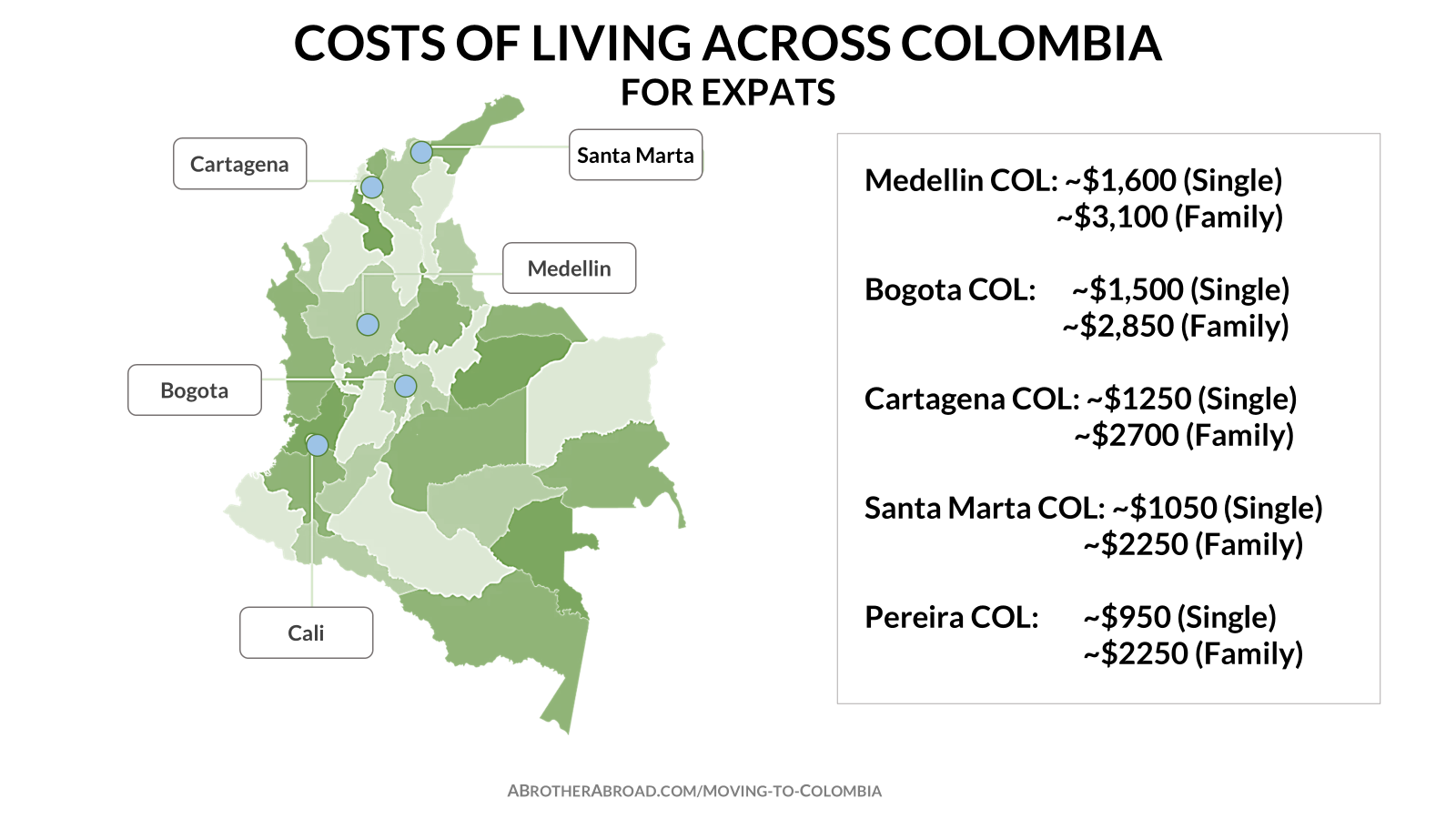
How much do you need to move to Colombia? Cost of Living in Colombia and around.
While costs vary widely across Colombia, dropping off steeply as you move away from the big cities and expat magnets, the average cost for a single expat was ~$1,300 per month, and the average cost for a family of 4 is ~$2,700 as of 2026. Furnished one-bedroom apartments range between ~$600 and ~$1,000. Though these numbers are accurate as of 2026, visit Expatistan for updated COL numbers.
On average, plan for the cost of living in Colombia to be ½ (or less) the cost of a comparable city and life in the US.
- Medellin COL: ~$1,600 (Single) ~$3,100 (Family)
- Bogota COL: ~$1,500 (Single) ~$2,850 (Family)
- Cartagena COL: ~$1250 (Single) ~$2700 (Family)
- Santa Marta COL: ~$1050 (Single) ~$2250 (Family)
- Pereira COL: ~$950 (Single) ~$2250 (Family)
How to pay for life in Colombia
- Local Employment (not advised)
- Remote work**, set up before leaving the US (excellent option)
- Saving for FI before leaving the US (excellent option)
You can work in Colombia (on the right visa), but there are better options
While most aspiring expats immediately consider employment in Colombia, I advise prioritizing other options for paying for your life in Colombia first, as local employment comes with significant financial and bureaucratic downsides:
- It will require working for a Colombian company with the proper visa and Colombian work permit
- Average salaries are ~$1150
- You will need to be fluent in Spanish, and “cultural fluency” will be more important
Come to Colombia, financially independent or as a remote worker: Geoarbitrage, and a better quality of life.
US Salaries are significantly higher than Colombian salaries, and allow two opportunities: Remote work, or “Save & FI.”
According to the IMF and CEIC data, the average salary in Colombia is only ~$1,125. Even an English-fluent developer in Colombia working for American companies will only make ~$1700 per month (a relatively “comfortable” salary). By contrast, the average US monthly salary is $5,250 per month according to the US Bureau of Labor and statistics.
Option 1: Remote Work
As an expat and nomad who has been abroad for a decade, I highly recommend remote work instead of considering local employment in Colombia. The geoarbitrage and lifestyle opportunities of earning a US salary and living in Colombia make for a much better option.
A major benefit of the Colombia move is the cost of living difference, when accounting for a US salary, and the geoarbitrage opportunity it creates.
If you remove the US salary (and replace it with a Colombian salary), the cost of living (and a significant amount of the quality-of-life difference) disappears. While personally, I would be happy living and working in Colombia, I don’t recommend giving up an advantage you already have. Instead of walking away from the US empty-handed, or any other country that pays a higher average salary than Colombia’s average salary, use it to trade up and improve your situation before moving.
Heavily consider either converting your current employment to remote work or cultivating a US-based source of remote-friendly income before moving to Colombia.
And, if you can wait long enough, consider option 2 for a more comfortable situation.
Option 2: Stay, save, and leave when the cash resources match the needs of your planned stay
For the prudent, aspiring expat, this wage gap – between US salaries and Colombian salaries – leaves an opportunity earn and save more – in line with the Expat FIRE financial independence movement
Bide your time, work, and save along the way. Stash as much cash away as possible, and invest – whether that means focusing on building equity in a home, or adding to your portfolio – do not exit until, financially, you’ve made the most of your resources in the US, or other home country. Aiming for Expat FIRE, or financial independence as an Expat in Colombia, is easier than you think, and far more worthwhile than you’re likely aware of
Essential Logistics for Moving to Colombia
Types of Visas & Visa Requirements
A simple way to think about Colombia’s visa system is: you start as a visitor, then (if you like the country) you “upgrade” into a visa that matches your actual life—work, study, retirement, investment, family, etc. Colombia’s Ministry of Foreign Affairs (Cancillería) defines the big buckets as Type V (Visitor), Type M (Migrant), and Type R (Resident).
One important nuance: what most people call a “tourist visa” is usually not a visa at all—it’s a tourism/entry permit stamped into your passport when you enter (often called the PIP/tourist permit).
- Typical stay: up to 90 days, with the ability to extend for another 90 (for a total of 180 days in a calendar year).
- How extension works: you request the extension through Migración Colombia before your initial stay expires.
- Warning: if you overstay, you can be fined and may have trouble leaving until it’s paid.
Temporary visas (the “live here for real” layer): Student, employment, business, etc.
In the current system, most temporary stays fall under Type V (Visitor) or Type M (Migrant), depending on your intent and whether you’re establishing yourself.
The main visa types you’ll hear about (and what they’re actually for)
Type V (Visitor) visas: Stay temporarily for a defined purpose; not “permanent life” status.
- Student Visa (Type V) – for formal education programs (often used for longer courses/programs).
- Business / “Negocios” (Type V) – for business visits, meetings, market research, investment planning, etc. (not local employment).
- Digital Nomad Visa (Type V) – for remote work for non-Colombian employers/clients; you must prove income of at least 3× SMLMV (minimum wages) and typically show health insurance for your stay.
Type M (Migrant) visas: You’re establishing yourself in Colombia; usually valid up to 1–3 years depending on category.
- Work Visa / Worker (Type M – Trabajador) – requires a Colombian employer/entity and is restricted to the role/entity it’s granted for.
- Investor Visa (Type M – Inversión inmobiliaria) – commonly used if you buy property; the minimum is 350× SMLMV in real estate investment.
- Retirement / Pensionado (Type M) – based on receiving a monthly lifetime pension of at least 3× SMLMV (this is about the pension amount, not your age).
- Other common “real life” M visas: spouse/partner, parent of a Colombian, socio o propietario (company owner/partner), etc.
Type R (Resident) visa: The long-term status.
- The resident visa (essentially permanent residency) is designed for foreigners who qualify to establish permanent residence; it’s typically issued with long validity and requires periodic renewal/transfer formalities over time.
- Exact eligibility paths and time-to-Resident can vary by category and policy updates—always confirm the current rule set on Cancillería before you build your whole plan around an assumption.
What you’ll need for your visa applications
- Valid passport with 6+ months validity.
- Financial proof you can support yourself: bank statements, income proof, employment letter/contract (depends on visa type).
- Health insurance that covers you in Colombia is commonly required for many visa types (explicitly so for digital nomads).
- For some visas: background checks, apostilles, translations, and other “paperwork gravity.” Requirements shift and can be strict depending on the category and where you apply.
Where to verify everything:
- Cancillería (Ministry of Foreign Affairs) is the authority on visa categories, requirements, and official application rules.
- Migración Colombia is the authority on entry permits (tourist stays), extensions, overstays, registration, and ID processes.

Housing & Accommodation: Which is better – renting an apartment or buying a home in Colombia? + How to do both
The easiest way to lower your cost of living in Colombia, once you’re certain you’ve found your home neighborhood, is to switch from the Airbnb life to a long-term rental.
Apartment leases are generally for 1 year and require a local guarantor.
This is when the headaches, as a foreigner, really begin.
The biggest apartment struggle for foreigners in Colombia: Getting a guarantor
Look through many forums of new expat headaches in Colombia, and South America in general, and “guarantors” as the obstacle to an apartment lease.
In Colombia, “guarantor” usually means one of these two figures on a long-term lease:
Codeudor (a.k.a. deudor solidario / obligado solidario), which is essentially a “co-debtor”. This person is held accountable, right alongside you, if anything goes wrong with your apartment during your stay, and the landlord can demand payment from either you or the codeudor if you fall behind. The codeudor typically stays tied to the contract (and renewals) unless everyone signs an addendum replacing them.
Or
Fiador, which is a secondary guarantor. In simple terms, the landlord usually pursues the main debtor first, and only then goes after the fiador. Commonly in Colombia, many landlords/inmobiliarias say “fiador” when what they really want is a codeudor.
This process exists because many rentals—especially through an inmobiliaria—run through a “estudio de arrendamiento” (screening/underwriting) and often a póliza/seguro de arrendamiento (rental insurance). The codeudor/fiador is part of the risk-control package.
The cleanest way to get a guarantor, or deal with the issue, is to work with an inmobilaria/agent, as they will help arrange it for you (for a fee)
How to find apartments for rent in Colombia: Facebook, Local Real Estate Agencies, and Expat Groups
Facebook location-based groups, real estate groups, and Facebook marketplace are the best resources for researching apartments from outside of Colombia – but don’t plan to arrange a long lease (~1+ years) before arriving in Colombia. Book a short stay of 2+ weeks, then after arrival, explore your desired neighborhood, visit coffee shops and coworking spaces, and explore for contacts and connections to a long-term apartment.
After arrival, local real estate agencies – easier to find when walking down the streets of Laurelles than searching online – are the best source for apartments, as they know the market and can guide you through the lease and “local guarantee” process. Expat groups, online and offline, are great for leads on apartments available and local real estate agencies.
Renting vs. Buying in Colombia: Wait at least a year, ideally two
Foreigners are legally allowed to buy and own property in Colombia unrestricted. Expats in Colombia report real estate broadly being cheaper than in the US, anecdotally below $250,000 for well-located condos in Medellin and Bogota.
Outside of the major cities, in the smaller, safer gems, single-family detached homes are what most expats who purchase real estate (think, married to a Colombian and returning) with average prices ranging from $50,000 to $150,000 for a modest, single-family home.
All of this poses what appears to be a great opportunity
Local Advice: Live in Colombia, invest elsewhere, live off the interest
Expats who have been in Colombia for a fairly long time report that real estate and investments in Colombia have much lower returns than in the US. This means there is normally no rush to buy, and you should take your time, as rents in Colombia are cheap enough that comparable investments in the US will more than cover them.
In Colombia, or any foreign country, the transaction costs of real estate will be high, the time to sell if you change your mind will be low, and, if you do decide to move, you will be stuck with a slow-selling, illiquid asset while you wait to move, or will be forced to move, leaving an asset unproductive.
The bottom line is, don’t consider buying a home in Colombia until you’ve lived there for two years, and don’t be afraid to stay a renter.
If you are considering moving to Colombia and either plan to sell your home to buy a new one in Colombia or have a lump sum of cash that you are considering buying a home in Colombia with, wait. Consider “rentvesting” instead, as well as using the ExpatFIRE approach to use your assets to pay for life in Colombia.
Taxes for Foreigners in Colombia
A person is considered fiscally resident in Colombia if one remains in the country (continuously or not) for an aggregate period of time of 183 days within a period of 365 consecutive days. If one finishes in the second year, the individual is considered resident in the second year. (https://taxsummaries.pwc.com/colombia/individual/residence)
For more information on fiscal/tax residents, Colombia taxes worldwide income, read: (https://taxsummaries.pwc.com/colombia/individual/taxes-on-personal-income)
Many expats reported that, for tax management purposes report spending less than 6 months in Colombia, and less than 6 months in Mexico (or another nearby country), to avoid becoming tax residents of Colombia.
Taxes for US Citizens in Colombia
US citizens living in Colombia are still liable to file for taxes in the United States.
Though no comprehensive tax treaty exists between the US and Colombia, US citizens still have a significant portion of their foreign-earned income excluded from US taxation due to the Foreign Earned Income Exclusion.
Additionally, taxes paid in Colombia are eligible for a US Foreign tax Credit
Safety: Neighborhood, and moving like a local, matter
Safety is hard to describe generally across Colombia, as it varies not only by city but by neighborhood. Picking the right neighborhood, and understanding where to go in your chosen city, where not to, and how to travel, is what makes life in Colombia a safe pleasure for some expats, and an accident-prone affair for others.
While there has been a noticeable uptick in violence, most crime is associated with clubs, nightlife, partying, and dating scams. Following the normal “papaya rule” protocols, keeping your phone away, and knowing the places where trouble congregates (so you can avoid it) are best bets.
The biggest safety insurance most expats exercise is going for a well-chosen neighborhood with an active community, a known safe reputation (day and night), good lighting, and access to well-maintained public transportation. Beyond home, practicing traveler common sense safety essentials fulfills the remainder of a good safety approach for living in Colombia.
Pickpocketing and phone snatching are common in the city centers and busy areas of most cities, so use the right bag and conduct yourself accordingly.
However, violence against expats is very rare, unless dealing in prostitution or drugs, which tend to coincide with crime and unsavory experiences.
For hyper-local safety awareness and a bit of community, join neighborhood WhatsApp groups and Facebook groups for alerts and updates, and the bonus of community support.
Overall, the major areas in Colombia, where expats will stay, are well policed and secure, and you can contact emergency services, available in Colombia, by dialing 123
A brutal truth: Don’t carry what you are not willing to lose (passport, laptop). If you do carry it, keep it secure from pickpockets (discreetly zipped into a backpack), and if you are ever targeted, give what they are asking for, without question. This is how most Colombians approach the situation – simply not making themselves a target, avoiding the places where people are frequently targeted (as these things generally happen in the same areas, at the same times of day/night), minimizing the damage if they are targeted, and going on happily with life outside of that.
Money and Banking
Foreigners can easily set up a bank account in Colombia, so once you get your Cedula de Extranjero (Foreigner ID card), you can then open a bank account.
Because a “cedula” is necessary, most expats who don’t have a cedula, and cannot get a bank account, but need to move money into Colombia electronically, do so through broker accounts
Banks in Colombia
The most well-known banks in Colombia are:
- Bancocolombia
- BBVA
- Colpatria
- Banco de Bogota
- Davivienda
Healthcare planning
Colombia has a two-tier healthcare system in Colombia, with public and private. This national healthcare system is called Entidades Promotoras de Salud (EPS), and very good.
Colombia’s healthcare system ranked highly against healthcare systems around the world according to the 2023 World Health Organization Healthcare Index (1). Additionally, Bogota and Medellin have some of the best hospitals in Latin America
The public healthcare system is available to registered residents, but wait lists and “public quality healthcare” lead to most wealthier Colombians and Expats opting for private healthcare insurance instead
What’s best for you, in terms of a healthcare plan for your stay, depends on whether you intend to stay the entire year, or if you will stay partial year, in which case, international expat healthcare may be better
Recommended Healthcare Planning
While Colombia’s healthcare system is there for residents, as a savvy expat or nomad, I recommend maintaining expat-specific healthcare insurance that covers preexisting conditions and medical evacuation.
For expats in Colombia, the most commonly recommended Expat Health Insurance Options are Cigna and IMG – and these were widely recommended in Indonesia, Thailand, and Argentina during my time there.
Alternatively, for nomads, a good nomad insurance or travel insurance covering medical evacuation and political evacuation is worthwhile, but understand that these usually do not cover pre-existing conditions or routine care, and might require you to pay for treatment first, and later be reimbursed, which adds some risk and complexity to the process.
This list of hospitals in Colombia is a great place to start research and screening cities.
The Cedula de Extranjeria: A mandatory ID for foreigners staying longer than 90 days
The Cédula de Extranjería is Colombia’s official foreign resident ID card. If you’re staying in Colombia beyond the normal tourist window (or you’ve entered on a visa that puts you past ~90 days), this becomes your “real life” identification inside the country — the document you’ll use for day-to-day admin: signing leases, dealing with service providers, and generally proving you exist in the system as something other than “a person holding a passport.”
How to get the Cedula de Extranjero:
- Complete the FUT (Formulario Único de Tramites) online at Colombia’s Migraciones site & schedule an appointment at the Migration Services Facilitator Center
- Show up and present your passport, visa, and the listed documents required
- Pay the 280,000 COP (~$$) fee
- Pickup your card – generally available within 10 days
The Realities of Moving to Colombia: The Good, the Bad, and the Beautiful
Language and culture
You could get by without Spanish, but knowing even basic Spanish helps…a lot. If you don’t learn Spanish, expect things to be more expensive, and expect to miss out on a layer of cultural experience and vibrancy that won’t make it across the language barrier.
However, once you learn even basic Spanish – greetings, the initial everyday interactions, playful phrases – expect the entire experience in Colombia to become more enjoyable, cheaper, and safer.
Most Colombians do speak Spanish. However, while Spanish is optional in most larger cities, fluent Spanish is required for any meaningful employment.
Culture and Customs
The following list is a shortcut to understanding cultural aspects of the Colombian way of life that otherwise might be confusing.
- Time is fluid, and punctuality is “negotiable”: Plan on “on time” being a 15 to 30 minute window.
- The “Papaya Rule” is understood and followed everywhere – “If a papaya is left unattended, someone must take the papaya” – thus, secure and protect your belongings to avoid them being taken.
- Relationships are warm, friendly, and open – expect as such and reciprocate.
- Politeness and courtesy are pivotal in Colombian culture, and balanced with their lively approach to living and relating – this is part of what makes Colombian culture as endearing as it is
- Carnival in Colombia (especially in Baranquilla) is popular, amazing, and a once-in-a-lifetime type of experience – go if you have the chance.
Essential Colombian Festivals
Great festivals are not only a reason to come and explore Colombia before your move, but also a great indicator of the place you intend to live in, and the culture and society that make it what it is. Colombia boasts several festivals, amazing enough to be considered some of the best and most unique experiences in the world, appreciating art, dance, and the people that make up its society.
- Carnival (of Baranquilla): The biggest, and arguably best, Carnival outside of Rio
- Feria de Cali: A celebration of salsa in its homeland and world hotspot — held annually from December 25-30 in Cali, the world’s salsa capital, this event celebrates the city of Cali’s cultural identity with massive salsa events like the Salsódromo parade, horse parades (Cabalgata), Carnaval de Cali Viejo (Old Cali Carnival), concerts, and Caleño cuisine and traditions. This 6-day-long fiesta annually consists of 50+ events, showcasing dance, culture, and heritage unique to the city and the region.
- Blacks and White Festival (In Pasto): Known locally as the “Carnaval de Negros y Blancos, this UNESCO-recognized celebration happens every year from January 2 to 7, and celebrates both Andean and Hispanic cultural traditions. This festival aims to unify the people through symbolic white powder and black makeup worn throughout the days of the fest, further celebrated through floats, musical performances throughout the city, and cultural parades. This event is a true, reinforcing celebration of equality and diversity through art and community.
- Vallenato Legend Festival: The premier annual festival of Colombia’s own genre of folk music – Vallenato. Held in late April, this extended festival honors the Vallenato artists with competitions, parades, and performances.
FAQ
Can US citizens move to Colombia?
- Yes, a US citizen can move to Colombia unrestricted. As long as they have a valid passport, follow the process necessary to get their visa of choice, and have the financial resources to afford their stay, they can move to Colombia.
How much money do you need to make to live comfortably in Colombia?
- The average salary in Colombia is ~$1125, and the average expat cost of living ranges from $1,000 to $1500 for a single expat, and $2250 to $2900 for a family of 4.
Other Great Resources
- How more people are finding the “American Dream” abroad
- 11 Great Retirement Visas for Americans
- 82 Long Term Visas for Nomads and Expats
- “Where can I afford to live on my income” calculator
- Moving Abroad: Why it is more possible than you think
- The Sovereign Expat: The Next Evolution of Nomadic Livng and Global Citizenship
- 47 Cheapest Cities to Live in
- Crucial things to do before moving to another country

.

.
ABOUT THE AUTHOR
Carlos Grider launched A Brother Abroad in 2017 after a “one-year abroad” experiment turned into a long-term life strategy. After 65+ countries and a decade abroad, he now writes about FIRE, personal finance, geo-arbitrage, and the real-world logistics of living abroad—visas, costs, and tradeoffs—so readers can make smarter global moves with fewer surprises. Carlos is a former Big 4 management consultant and DoD cultural advisor with an MBA (UT Austin) and Boston University’s Certificate in Financial Planning. He’s the author of Digital Nomad Nation: Rise of the Borderless Generation and is currently writing The Sovereign Expat.