
A testament to ExpatFIRE, NomadFIRE, BaristaFIRE, CoastFIRE, and financial creativity on the path to financial independence
As I sit on another one way flight to Bangkok, this time from Seattle, I can’t help but smile, excited with both anticipation and appreciation…for what I experienced on my financial journey of the last 9+ years, for what is to come as I now fly into a new chapter with a “designed” and portable life, and for the flurry of thoughts running through my mind with a shocking new realization.
I am excited thinking about the recent past.
This morning, my “America reacquaintance road trip” came to a close as I rolled my fun little Ford Bronco rental into the Seattle Tacoma airport rental car return. Over the last 30 days, I cruised from Austin, Texas, to Las Vegas, to San Diego, and even to Vancouver, Canada, to get back in touch with America, to see some new sights, and to decide whether “home” for the next chapter could be stateside, or if a life abroad is best path for me. The verdict was…both, as Austin, Texas and Portland, Oregon charmed the hell out of me, but the comforts, variety, and utility of a life abroad still call and have a priceless place in my life.
I am excited for what is to come.
My life plan for the near future is a blank page of 6 months to do as I wish in the hill country of northern Thailand, made carefree and easy by a backpack charged with $9,900 in cash, a semi-luxury AirBnB paid up for 6 months, and a lack of obligations beyond the personal and passion projects on my “to do” list for the next year. During this period, I’ll eat, wander, and enjoy one of my favorite places on the planet as I transition into new projects, new work, and a new life.
Lastly, and most shockingly and importantly…
I have achieved financial independence.
As a wanderer, I’ve somehow managed to creatively craft a passive income of over $3,500 a month and tuck away a net worth over $600,000. This means, I can now afford to live in every place outside of the US that I love, and never work again if I wish.
I have to admit, achieving FI feels very uncomfortable to share.
Firstly, in some ways, as an international traveler that loves visiting sketchy places, it’s partly unsafe to share such personal financial information — however if you decide to kidnap me, the joke is on you. All of the assets are locked up and impossible to access abroad, beyond the monthly payments. That’s as much to protect the funds from hostage takers and mafia as it is to protect my nest egg from my own bad ideas that come too often (crowdfund a castle in southern France, perhaps?).
Secondly, discussing money has always been a taboo topic, and is commonly avoided because of the potential awkwardness it creates, the potential jealousy (or criticism) it sparks and the potential stream of negativity to follow. However, in sharing my financial story, I feel that there is also potential insight, for you as the reader, that comes from the transparency of sharing financial details that people all too often hide. My journey to this point, has zigzagged through a myriad of life experiences, from a wildly underpaid young military service member, to a member of the corporate rat race with no financial guidance, to a backpacker purely following passion, then finally to FI as a “flexpat.” During that journey, I would have loved to have heard the stories of someone who had already been there, done that, followed an unconventional path in life, and still managed to break the financial chains to the rat race. In the spirit of that past desire, I am taking the risk of sharing, and sharing the details of my financial situation and the journey to get there.
To me, the situation feels absolutely worth the risk to share where I’m at financially, what it really looks like, and how I got here. Here’s why…
The FIRE Space Has a Problem: Most FIRE Success Stories Aren’t from People Like “Us”
Within the personal finance and FIRE space, I tend to see three types of personalities.
The first are the closet millionaires that talk about FIRE, the power of it, and the accessibility, but actually achieved it thanks to a decade of $150,000+ salaries, often in tech or finance. Though this setup makes for a readable story, it is likely unattainable for the average person. While characters such as these — like Financial Samurai and Mr. Money Mustache — do wonderful jobs of explaining the essentials of healthy personal finance (I love their writing by the way), their stories don’t quite show a financial path that most could follow without a top 20% salary.
The second are the aspiring FIRE bloggers, writing passionately about something they haven’t achieved yet. The principles are sound in theory. But there’s a difference between explaining a mountain and having climbed it. The fact that they haven’t proven it yet means something, and honestly that approach reeks of the influencer pyramid scheme “buy my course” problem that pervades the internet.
The third are the professional, corporate financial planners, advisers, and large companies who aim to give you just enough information to need them and pay them for their services. The problem for me is these “advisors” aren’t empowering you to get to financial independence on your own, when self-sufficiency is the underpinning ethos of FIRE. Also, I have yet to see a financial planner or financial adviser open their own personal finance books and show me that their net worth and accounts prove that they effectively practice what they preach. Some of the poorest, lowest net worth people I’ve known made 6 figure salaries (I’m looking at you lawyers and finance bros). I absolutely know there are financial planners and advisers that are financially independent, but these days, when seemingly everyone has an angle to profit off you and trustworthy characters are more difficult to come by, personally, I find immense reassurance in seeing proof that people live out, and exemplify the thing they aim to share, and aren’t simply selling an idea they can’t manifest themselves.
Most importantly, I just think a valuable fourth type of financial personality is missing – the adventurous saver, that is open to moving abroad, and has proven it as a possibility, through their own observable experiences. With Americans increasingly moving abroad in unprecedented numbers, there should be at least one example of someone sharing a proven story of how FIRE can be achieved on a reasonable income, and how, yes, choosing a life abroad can supercharge your path to FIRE, if you plan correctly. As someone who didn’t come from a family that had or even discussed money, as someone who has left the workforce multiple times to wander the world for 6+ months at a time, and as someone who had to learn — via both hard, practical lessons in life and formal education — personal finance in a way that makes financial independence possible, I want to share my insights with you as the fourth FIRE personality type.
I’ve been there, done that, and adventured the world. Despite these distracted wanderings, I have still achieved FI, and I did it all on a budget empowered by embracing my love of wandering and living abroad. If this approach, of using wanderlust as an empowering FIRE hack, is truly a fit for you, I want you to feel inspired and motivated from hearing about my journey to FIRE via an unconventional path.
Mastering the Basics: Frugality and Avoiding Debt
My journey to financial independence started with mild ignorance, but deep frugality. In 2002, I joined the military as an alternative to university because, honestly, I didn’t know what I wanted to do (and be) in the world yet, I craved adventure, and I saw no sense in paying $50,000 for a four year degree that I wasn’t even sure would result in a career that paid a worthwhile salary, or lead me to a career I’d even enjoy. Additionally, I was 100% averse to taking out debt (student loans) without a clear productive path I could see through. So, instead of going to college, I joined the military and served from 2002 to around 2010, along the way taking low cost courses at community colleges near my bases and online to expand my mind, while spending much of life living outside in a healthy but low cost way in line with my budget — mountain biking, rock climbing, and hiking — while fantasizing about what life would be like in far off, non-war torn corners of the world, in Europe, in Asia, and in Africa.
I clearly remember the defining financial moment of this period, when I and a few buddies were freezing in the middle of the night during a military exercises and calculated that we were being paid less than minimum wage, were expected to work 16 hours or more, and would be in a war zone in three months. In that moment, I internalized the concept of doing the financial math before big decisions and big commitments.
While I made zero stock or real estate investments during this period (with inflation essentially eating the value of the little money I did save) and missed the opportunity to buy a dirt cheap house around 2008, I did continually expand my mind, and learned a few things:
- Frugality is a financial tool: Earning close to no money encouraged me to spend wisely and intentionally
- Avoiding bad debt is a tool: Anything purchased today on debt commits money earned tomorrow, robbing you of freedom, opportunity, and the opportunity to enjoy (in the moment) the product of your labor
- Thinking about the profit outcome puts you closer to a profitable scenario: Sitting in the field getting rained on for less than minimum wage made me prioritize “is the profit in the end worth the effort”
- Education is invaluable: College classes were paid for in the military, so to maximize value I got multiple degrees on the government. While most were worthless, the gems of insight made me realize the broad pursuit of knowledge is a good practice, and gems of insight that come from it are their own form of wealth
I specifically remember separating from the Marine Corps with just about $8,000 saved to my name and a Toyota 4runner I owned outright as I departed into the world.
Discovering the Possibility of Geoarbitrage
In 2011, I spent a fairly bittersweet stint deployed to the Middle East as a defense contractor for a year. During that year, I earned more than I had in any other year of my life, bolstered by the nature of “FIFO” work in which I took a paycheck while all of my expenses (food and accommodation) were covered. The downside was I consistently worked 100+ hours over 7 days per week, but the upside is I had no time or place to spend the money. As a result, I had saved enough to make up for a decade of low wages, but by the end I was completely burned out and needed an escape.
An observant colleague overheard my grumblings about escape and asked if I liked “steak and beautiful women,” and of course the answer was yes. So, he suggested running away for a few months to recover, specifically in Argentina, which I honestly knew nothing about at the time. But, I took his advice, and it was possibly the best decision of my life, and lit up a whole new potential map in my life.
On that trip, not only did I enjoy an amazing quality of life in a grungy yet charming, Latin American Paris, something impossible to replicate in the US, but I did so at 1/3 the price of life in my home town of San Diego. At the end of a three month stay, I was hooked on a life abroad.
After returning to Argentina in 2014 to even lower prices, thanks to the Blue Dollar and their seemingly never-ending financial crisis, I realized I was on to something. Earn in dollars, from a higher paying country, and live in places where they’re better at living actual life than in the US. Traveling to Peru, Ecuador and the Galapagos Islands, Chile, and Colombia on that trip affirmed it: I could boost my quality of life by just changing my home town, while saving money in the process. I just needed to figure out how to get the money, and where to go.
Though this brief period working in the Middle East as a defense contract was my first experience as a “high earner,” it was preceded and followed by months unemployed and living a true “dirtbag” in the words of Yvon Chouinard, spent snowboarding, climbing, and camping around the US, making the most of my youth, energy, and freedom. Unfortunately during those wonderful California adventures, I experience the downsides of being a high earner, that were just as low as the highs. The precious nest egg that I’d saved was eroded by the US taxes that come with being a 6 figure earner, followed by California taxes (the highest in the US) eating an additional 13%. To compound the issue further, my fear of investing improperly kept me from putting this lump sum money saved (~$100,000) into the stock market when it was ripe with opportunity during 2011 and stocks were on sale.
My FIRE journey didn’t actively start then, but I did become aware of financial opportunities to take advantage of and financial problems to be solved:
- Opportunities to work in a “constant work” state with living expenses covered can supercharge your FI journey — travel nursing, FIFO oil and mining work, general contract work
- Taxes, and optimization of them, are a significant place where you lose, or keep, money. Switching my residency from California (13% state taxes) to Texas (0% state taxes) and discovering the Foreign Earned Income Exclusion achieved by living abroad allowed me to save ~30% more money.
- Geoarbitrage is an immense lever for saving, and achieving FI — but it requires either a large nest egg or a portable income.
Boosting My Earning Potential, While Still Avoiding Debt
As the Iraq war came to a close, so did my military and defense contracting career, and I took the cue to follow my desire for stability and normalcy in life. While abroad, I applied for grad school, which I planned to use the GI Bill for to, again, avoid debt. I screened for low cost of living locations with high quality of life, top tier universities, and the result was an amazing decision, attending the University of Texas in Austin. The experience — of going to business school and being in Austin, Texas — had the massive benefits of showing me that not all cities are created equal, as Austin delivered the livability of San Diego without the cost, and actually delivered a lovable quirkiness. A bonus was my finance classes showed me that my money handling skills, investing specifically, had a lot to be desired.
Upon graduation, I joined a management consulting firm, requesting Dallas, Texas when I was offered northern California, simply because the pay was the same and I knew Dallas was half as expensive, offering me the opportunity to save much more.
While I was mastering frugality, saving, and increasing my income, I was still doing horribly at making my money work for me. At the time, I trusted my money to be invested in mutual funds by a “wealth manager” at the bank I’d had since I was in the military, which left me furious as he barely beat inflation after his fees.
In 2017, I was laid off from my job which left ample time to study, learn, and experiment with alternative sources of income.
In the process of experimenting with online sources of income (web development, freelance writing, freelance marketing) as side hustles I realized an opportunity: what if I gave myself a period to travel and experiment? I could travel the world for a year and see if, along the way, I could figure out how to make this thing — working as a digital solopreneur — work. If at any point it didn’t seem like it would work, I would stop working, simply focus on travel, and return to the US at the end of the journey to return to work and the rat race.
Discovering FIRE, and the Missing Pieces in My Approach
During this period, a friend from school introduced me to Mr. Money Mustache and his groundbreaking blog about frugal personal finance and FIRE. It was the missing link in a strategy I had 90% figured out. I had frugality and delayed gratification down to a science. I didn’t have any debt — no credit card debt, no car loans, no student debt. I saved and tucked away everything I could. I optimized my cost of living by living in the best value locations in the country and building a healthy life around active lifestyle activities, Costco trips for stacks of steaks, and intentional spending. But I was missing the investing strategy.
I didn’t have the time to research the right stocks, and I didn’t have enough insight to know the right way to do it. However, after reading MMM and stumbling down the rabbit hole of FIRE blogs I realized, the entire market is where I needed to put my money. The Vanguard Total Market Index. VTI. I timed some dollar cost averages of VTI and put my entire $135,000 into the market, and that’s how it really started.
Because I chose a simple, proven strategy, my money was safe enough and working harder than it ever had before.
The strategy was set. Now, I just needed a destination and a moment of nerve.
Where It Started: The Taco Shop Moment
In 2017, I sat in a taco shop in the kitschy Farmer’s Market of Dallas, freshly laid off, staring at the bottom of a margarita glass, asking myself what came next.
The honest answer was: I didn’t want what came before. The 7AM-to-9PM grind. The late-night emails. The paycheck that paid for a life I was too exhausted to actually live. The prospect of finding the same work as a management consultant, again, somewhere, and calling it a plan.
So, I didn’t.
I pulled out my phone, put my credit card down, and bought a one-way ticket to Bangkok. I gave myself twelve months to wander, experiment, and figure out whether there was another way to live. I had $135,000 in savings which was money that, until a friend introduced me to MMM and the concept of index fund investing, had been sitting in the hands of a “wealth manager” who barely beat inflation after fees.
That $135,000 went into Vanguard’s all market stock index fund, VTI. Then, I left.
Wandering the World: Discovering Geoarbitrage and Lovable Locales
Throughout 2017, I paid zero attention to my invested assets and focused on traveling. Though Argentina was calling me back, I decided to do myself a service as a true traveler and start with Asia.
In all honesty, I didn’t have any strong desire to travel to Asia, as the memories of Argentina and the vibrance of Latin America called me back, and I couldn’t think of anything in particular about Asia I was passionate to see.
In hindsight, that willingness to explore what I didn’t know and force myself into exposure was a blessing in disguise. Southeast Asia not only held cheaper destinations, but also safer destinations, more exotic destinations, beautiful islands and beaches, and a vast variance in offerings that I would have done myself a disservice by skipping. While Latin America is beautiful, and everyone should see it, Southeast Asia delivers a combination of low cost, high comfort, and high livability that, for those that can get over the larger cultural divides, makes it a much more suitable FIRE destination for many.
During my world tour, not only was I able to experience 65 different countries, but I accidentally found more than a handful of “geoarbitrage gems,” locations that fit extremely well into my “ExpatFIRE” strategy I was unwittingly crafting.
Bali, Bangkok, Albania, Montenegro, Colombia, and more. All locations I realized could deliver the life I wanted, and for a fraction of the price of home.
Discovering NomadFIRE and Digital Nomadism
At the end of 2017, I concluded the travel year I had promised myself and returned home to the US with a job opportunity I had arranged as an executive consultant back in Dallas, Texas. The professional fit was right. The pay was right. The professional trajectory was right. However, something had changed in my situation.
During 2017, I wrote about travel, as a hobby and passion, and also as an experiment. However, by the end of 2017, the website was earning $1,000 per month. At the time, it was still possible to travel the world for ~$50 a day, and one could travel Asia for $35 if they were intentional. An idea became a splinter in my mind stoking the question: could I make this work? At that time, with honest writing and affiliate marketing, I was making $33 a day. Perhaps, with intention, I could crank that up to $50 a day…or more?
So, I decided to keep going. I refused the job in Dallas. I moved to Santa Monica for one last sunny month in the US. I prepped my personal situation for an indefinite life abroad.
In early 2018, I left again, but with no intentions of coming back this time.
After half a year checking off bucket list items, visiting the Balkans and Portugal, volunteering, surfing in Sri Lanka, I finally beelined for the primary goal of the trip – Bali. I knew nothing about Bali, except a lead from a friend that there was a place – Canggu, Bali – where people who worked and built businesses online were gathering, in a surf village next to the ocean.
After another 6 months abroad, in Bali this time, I achieved a morale-boosting milestone with this site, A Brother Abroad, crossing 50,000+ visitors per month, and I remember breaking an income of $2,000 per month, ecstatic about the possibilities. Another shocking revelation during that time was how cheap life could be if I chose correctly. I lived in an apartment walking distance from the beach that cost ~$500 per month with utilities, I paid $50 for a Crossfit gym, and $3 a day for surfboard rental. Rarely was breakfast or lunch over $5 and dinner was rarely over $10.
As I slowed down my pace of travel and chose the right destination, $1,500 a month was the standard monthly cost of living for a very non-standard life.
I realized 1) I could earn money online and 2) some of the best things in life were cheap.
Between travels throughout Southeast Asia to continue exploring, I returned to life on Bali as a cheap base for productivity. Then, my surfing addiction led me into a great financial move, the pandemic, and a FIRE assets snowball.
$460 a Month for a Villa in Bali: Geoarbitrage at Full Throttle
Year: 2019
While I loved Canggu, there were three problems.
First, everyone partied constantly (which was honestly enjoyable) but made focusing difficult.
Second, the surfing in the part of Bali I was in (Canggu) left a lot to be desired.
Third, after 2+ years wandering the world, I was getting slightly fatigued not having a permanent home base.
The three-way solution ended up being renting a nice, brand-new villa in the less populated south of Bali near Uluwatu for a year. The brand new 3 bedroom, 3 bathroom house I rented cost only 85,000 rupiah (~$5,500 at the time) for a year, or $460 a month. With it being only a 10 minute ride from the beach, I bought two new surfboards and somehow stumbled into the perfect health, productivity, and personal finance setup for that point in my life. For the first half of 2019, all I did was surf, write, exercise, and enjoy a social scene akin to Leonardo Dicaprio’s movie The Beach. My total expenses totaled $1,100 to $1,500 per month, and at the same time my income, from blogging, broke $3,000 per month. This setup was perfect!
During this period, I saved between $1,500 and $2,000 every month, between sessions of surfing, writing, working out, and wandering.
And then the pandemic rolled in.
Enter 2020. As the COVID-19 plague loomed its ugly head, I decided to stay on Bali, thinking the end of the world might be nicer near a beach. As lockdowns and isolation rolled in, tourism died, but the remaining expats (the pandemic immigrants) began clustering together as I moved back to Canggu to live a version of Neverland. We snuck to the beaches and surfed (with the police’s permission of course), we had pub crawls, we co-worked, and we had comedy nights as the world ended — all while living $700 a month villas and on a $1,500 a month cost of living.
For context, friends were doing the same in Koh Phangan, Thailand, Buenos Aires, Argentina, and Baja California, and countless other places around the world. If you chose right, the pandemic was an unforgettable circus of a time.
Back on Bali, as travel died off, and all I did was surf and workout, I wrote about fitness (that content has been spun off into a new site, Forge the Flow which generates residual income, just like A Brother Abroad) to maintain income, and this ended up growing my income as the pandemic went on.
In 2021, as the pandemic continued and costs stayed low, I was stupid and arrogant enough to buy land in Bali. At the time, I was renting the villa I lived in for $10,000 a year (~$850 a month), utilities were $300 a month, my lux gym membership was $150 per month and food was about $500 a month, putting my cost of living between $1,800 and $2,000 per month.
During this same period, my income oscillated between $4,000 per month and $8,000 per month, leaving plenty of room, between $2,000 and $6,000 per month, for savings, which I promptly invested in VTI while the market was down.
Unconventional Investments: Building a Home in Southeast Asia
In 2022, I followed up on the bold, and arrogant, choice of building a villa on Bali. While I wouldn’t recommend this path, my excessive involvement managing the construction circus, and the brutalist, function-focused design I created allowed me to keep costs very low at roughly $130k for the build, land, and permits on a 187 sqm industrial styled villa in Bali on a fairly large plot of land minutes from a surf beach. Staying true to my ethos of no debt whenever possible, I financed the costs of land purchase and construction entirely with two very good years of earnings from my websites (earning via ads and affiliate marketing commissions), bolstered by the extremely low taxes American expats potentially pay (or don’t pay) when qualifying for the Foreign Earned Income Exclusion.
Pandemic Bali living combined with an active lifestyle meant living costs remained impressively low, allowing me to avoid liquidating my stocks while also funding a build.
I don’t remember my exact net worth from this period, but I believed it was in the $225k to $250k range at the end of this period, when the villa was completed.
In September 2022, we moved into the villa, and this cost saving act was a key supercharger in my FIRE journey.
From September 2022 until our departure from Bali in August 2025, we lived in that villa, near a beach paradise essentially for free. Once every few months we would fly to Kuala Lumpur, or Thailand, or Japan on a very cheap “vacation,” but other than that, I lived in my house in Bali, surfing, exercising, socializing, writing, and building online income. This — owning a home in an already low cost destination — was an unreal step up from the normal approach to geoarbitrage.
At that time in our area of Bali, an “expensive” meal was $10 to $15 and involved something like a full Sunday roast or a “Miso crusted sea bass” from my favorite local upscale restaurant. Most days, I just enjoyed cooking at home in the kitchen I obsessively patched together. All in all, food totaled ~$400 per month, with enough meals for me to get chubby from time to time.
Utilities in total ran close to $200, and the only vehicle I owned was a brand new, and kind of lux, Yamaha scooter that I paid $1,700 for. My biggest luxury, a monthly membership to a luxurious gym with top notch equipment, saunas, ice baths, and an ambiance that seemed more like a resort, cost roughly $125 per month. Additionally, this “no cost accommodation” came during a Bali tourism boom that drove villa rental prices from hundreds of dollars to literally thousands of dollars a month — affording us the opportunity to live for free in a place others were paying $2,000 a month for rent alone to live.
So, for three years straight, I earned increasingly more money while spending ~$700 per month. This all happened while getting the tax benefits and savings of an American living outside of America (Foreign Earned Income Exclusion, Foreign Tax Credits) which meant most of those earnings, savings, and investments were tax free.
While I don’t have my earnings numbers for these years handy, simply imagine if you only spent $700 a month and didn’t have to pay any taxes (and healthcare was less than $100 per month). How much would you have saved over three years? And how much would that be if you aggressively invested it while the stock market was down?
Lesson 1: Locking in your costs to create a low expense baseline, combined with the tax advantages of expat life, is a FIRE supercharger that almost nobody talks about.
Lesson 2: Designing life to live in a low cost location that still delivers everything you need puts your efforts to FI on autopilot.
But as enjoyable as pandemic Bali was, even Never Neverland grows old. As the airports reopened, tourists rolled in, and the crowd changed, it was time to test out whether some of the spots on my original “I could live here (for cheap)” list were still viable post pandemic, and test the villa as an income producing asset.
Moving to Argentina: Testing the Villa as a Rental Asset
In August 2025, we moved to Argentina.
This move triggered two plans:
1) We were able to rent out the house on yearly leases and assess how the income played into a FIRE stance.
2) We were back in a situation where we could use mobility to adapt our quality of life and expenses.
Even though our expenses were pretty close to zero in Bali, we did live in a fairly large, 2 bedroom villa with only two people. And while I did use one room of the villa as my gym, chill space, and productivity space, it was essentially a “wasted asset” that could now be utilized as a passive income producing asset.
Ultimately, after the move to Buenos Aires, we were able to rent out that villa for between $1,500 to $1,900 per month, after taxes, maintenance expenses, and management fees, and at the same time in Buenos Aires, we were able to live in a lovely one bedroom AirBnB apartment in arguably one of the best, most livable, most walkable neighborhoods in Buenos Aires for $1,000 per month. This net gain of $500 to $900 (villa rental in Bali minus the Buenos Aires AirBnB we were living in) and the generally low cost of living in Buenos put me in a position to, again, save virtually everything I earned from working. Additionally, everything in my brokerage accounts continued to grow with the market.
To be honest, the simplicity of life in Buenos Aires and my level of burnout were unintentional additional FIRE advantages.
Arriving in Buenos Aires, I was so drained from the villa construction issues and drama on Bali that I didn’t want to travel anywhere or do much. I kind of just wanted to sip wine, sit in parks, workout, read, cook (I learned to bake sourdough), and listen to live music. Lucky for me, Buenos Aires has hundreds of beautiful greenspaces, wine is literally cheaper than water in some places, and Buenos Aires is littered with amazing live music spots.
While an active life, with bars, lux gyms, and gourmet eats, were cheaper and more accessible in Bali, the coincidence of craving a simple life in Buenos Aires made the experience another opportunity to save thousands of dollars. This additional savings all happened while the stock market continued to rage on (I was still dumping every spare cent into VTI anytime I smelled a dip in the markets, or investors cringed at Trump’s latest mayhem and ran from the markets).
But, while it’s good to recognize opportunities and be appreciative, as an Expat with location as a lever in life optimization, being honest with one’s self is essential. And while I was right about the Buenos Aires in the past being a great geoarbitrage and quality of life opportunity, during 2025, some massive political and economic shifts took place that called for reassessment.
In January 2026, I realized that as much as I do love Argentina, instability was growing in Latin America, economically and in terms of security.
In Argentina, I was dealing with a new issue of inflation as Milei instituted new currency controls and eliminated the blue dollar — the cost of a ribeye steak eventually cost as much as one in California, if it was available, as they were sold out 70% of the time from the grocery stores I relied on in Buenos Aires. Additionally, the notoriously unreliable immigration system in Argentina (since Milei decided to copy Trump’s anti-immigration stance) was increasing our cost of living, because it was forcing us to live in limbo as tourists. Whenever you are unable to rent an apartment long term, unable to plan purchases, flights, and life long term, your housing costs increase and daily expenses without any quality of life benefit, eroding at any geoarbitrage advantage. At the same time, in the rest of Latin America, which was supposed to be part of the beautiful “living in Latam” package, Brazil was still notoriously dangerous, Ecuador and Peru had become increasingly more dangerous, and Chile’s Patagonia had become more expensive than Yosemite. In Central America, with the exception of El Salvador, everything was either overpriced (as in, Spain and Italy would have been cheaper trips) or risky and dangerous (such as road block protests demanding the release of MS13 members).
This sum realization made me think 1) it may be time to revisit the US and reassess and 2) it may be time to move.
I set aside $7,500 for a month-long road trip to explore a short list of livable cities in the US, and put attention toward creating a plan B.
Considering ExpatFIRE in Thailand: The Numbers That Changed Everything
As I took an honest and humble step back, I remembered: forcing a destination to your standards never works, but building a plan around what is proven as reliable always does.
At the same time that I was reassessing Latin America, Thailand publicized a new, 5-year visa. Northern Thailand is and has long been one of the most livable destinations in the world for me, on par with Japan, and oddly one of the cheapest too. So, I put it on a short list to research as an option for long term living by assessing cost of living, my financial situation, and what I wanted to do with my next year, decade, and career.
As I revisited the cost of a life in my favorite city in Thailand, the numbers floored me. The high-end cost of a very lux Airbnb was still ~$1,100, and a normal apartment was easily $700. Beyond accommodation, the routine and daily costs being half what they were in Argentina. Thailand, from a cost standpoint, was locked in time compared to the inflation in Argentina, cost of living increases in the US, and the tourist pricing in Bali.
The bottom line: I realized life in my favorite city in Thailand was viably achievable on $2,000 per month, luxuriously, all with the potential security of a five year visa. I was at the Thai embassy the following day applying for the visa.
Then, days, later, came tax season, which I normally dread, and the need to review my finances from the last year. However, this year, reviewing my accounts and books brought a welcomed revelation. Sitting down to look at last year’s numbers and my current financial position, I finally had real valuation and income data from my rental in Bali, in terms of fair market rates, vacancy rates, income, expenses, and what I could expect long term.
The answer: $1,500 per month.
This was at a time when the villa rental market was soft, and the rupiah to US dollar exchange rate is good if you live in Bali but horrible if you’re being paid in rupiah and converting back to dollars. The bottom line was, $1,500 of passive income in a worst case scenario.
As I did my taxes, consolidating my accounts, and looking at my businesses (primarily income from websites and book royalties) I realized a couple of things.
- The performance of most of my websites, and the income they generated, surged and dived with Google updates, technological advances, and AI, but in aggregate they kept a steady average and they all stayed alive and continued to earn money. Even while neglected for months (and some for years), they still trickled in money because they were well built quality assets. The fact that income rose for some assets to balance out the dips in others meant I had, luckily, diversified well as I built my little income engines. These observations implied that it was possible for me to lightly maintain these “financial engines” and, if I ever decided I wanted a full time income during FIRE I could easily restart them, increase the tempo and scale, and use them for compensating income if I wished to avoid withdrawing from my investments in down markets. This option of stopping withdrawals in down markets, and supplementing with active, solopreneur income at will, would allow me to take a more aggressive withdrawal ratio of 5% to 6% without worry.
- My current assets outside of the rental ($400,000+ at this point) could allow me to withdraw up to $2,000 per month (at a 6% withdrawal rate, which is aggressive, but suited to my flexibility described above), or $24,000 per year smartly. This $1,500 of worst case scenario rental income plus $2,000 maximum withdrawal from stocks adds up to a $3,500 potential monthly FIRE income at a 6% withdrawal rate and a $2,800 income at a 4% withdrawal rate (which is extremely conservative for my scenario).
After years of roller-coastering through pandemics, island vibe construction battles, and wandering my way through the world, the safe FIRE withdrawal from my assets exceeds my monthly cost of living in Thailand by $800 to $1,500.
I have officially achieved ExpatFIRE.
To be honest…it feels amazing.
What FIRE Actually Looks Like: An Honest Take
A few things worth naming, because the FIRE space glosses over them:
My journey to my version of FIRE wasn’t a straight line.
I accidentally practiced NomadFIRE for years — earning while traveling to low cost destinations that I loved, spending less than I made, and continuing to build income that followed me along the way.
I unintentionally practiced Coast FIRE during the Bali villa years — not contributing actively to the pot, but letting the market do heavy lifting with compounding interest while my expenses were almost nothing.
And, in the near future, I will practice Barista FIRE as I build a new career as a financial planner and enrolled agent for expats, drawing partly from investments while the new practice grows.
The point of that overshare:
FIRE isn’t a single destination. It’s a set of tools you pick up and put down as your life changes.
The math is more forgiving abroad than anyone tells you.
A $400,000 portfolio sounds thin by US retirement standards. At a 4% withdrawal rate, that’s $1,333 a month — barely covers rent in most American cities. Pair it with $1,500 in rental income, run it at 6% withdrawal with a market-condition override, and add geoarbitrage applied thanks to one of the most livable, affordable countries on earth? The same portfolio is a genuinely comfortable, abundant life, with enough excess to keep your portfolio growing.
The Foreign Earned Income Exclusion is quietly one of the best FIRE tools nobody talks about.
For years, most of what I earned living abroad was excluded from US federal income tax (beyond a tiny self employment tax). That meant more of every dollar went directly into investments – and not into an IRA that you can’t touch in your 60’s, but into immediately accessible ETFs that could be accessed or leveraged at any time. The compounding effect over eight years was astronomic.
You don’t need to be a tech worker.
My income came from a travel blog, affiliate marketing, some fitness content, and eventually book royalties. I was a military veteran who got laid off from a consulting job and bet on himself. The tools were curiosity, experimentation, consistency, and a willingness to write honestly about what I saw. As a professional financial planner now, I would NEVER advise any client to take such a “creative” path. However, my success goes to show that if you are willing to get financially creative to achieve a creative outcome, there are infinite roads to get there – executed with diligence, grit, and adaptiveness.
Now: Coast FIRE While the Nest Egg Grows
So, back to my situation right now: on a flight from Seattle, Washington to Thailand, with a backpack full of cash.
With the $9,900 in my backpack (~$1,650 per month) that translates to 6 months assured without touching my nest egg, and my Thailand AirBnB covered, there is an opportunity for my assets to grow 5% (if the market is kind, then half of a 10% annual yield) adding $20,000 of net worth in 6 months.
This potential gain translates to an additional $100 per month in FIRE (assuming a 6% withdrawal rate). This is effectively Coast FIRE in action — a principle I’ve applied off and on in the last 10 years — which is essentially not adding anything to my investment pot, but not withdrawing either, as I let my investments simply grow to my next target FIRE number during extraordinarily good markets.
The added CoastFIRE opportunity bonus, is that for every 6 months that I stay in Thailand and work (or rental income) covers my cost of living, my untouched nest egg of stocks grows by ~$20,000+, and my potential monthly withdrawal increases by ~$100. So in the first 6months, my monthly safe withdrawal will grow from $3,500, to $3,600, in the second 6 months to $3,700, etc. (at my planned, 6% withdrawal rate, or $65 monthly increase at a 4% withdrawal rate). Two years living, writing, relaxing, and enjoying Thailand could add $400 to my monthly FIRE income (withdrawals in retirement), which would mean a bump to $3,900 a month — sufficient for most places in Europe that aren’t megacities or Scandinavia.
What’s Next: BaristaFIRE as I Grow Into a New Career
The fact that you are reading this after I’ve landed in Thailand with “ExpatFIRE” at my fingertips should tell you that, no, I am not done yet. So, what’s next?
First: Partial Coast FIRE as I Enjoy Life in Thailand
I am a simple guy that likes street food and the outdoors, so the move to Thailand isn’t a simple play for FIRE. I genuinely love the location, the culture, the food, and the life, so this is much more of a vacation and going home than a personal finance strategy.
At the same time, I realize that $3,500 per month is RICH in Thailand, but not so much in Austin or Portland. As such, I will continue partially on the FIRE path, with partial Coast FIRE, using only what I need ($2,000) and reinvesting the remaining income (or just leaving the gains in the stock market). This way, that $1,500 a month invested and untouched will push me closer toward a FIRE number sufficient for life in the US…just in case.
Second: BaristaFIRE as I Build a New Career
In 2023, I stumbled onto a journey within a journey. A kind of “Personal Finance Inception.” As I got caught up in the incestuous and Ponzi scheme ridden investment scene of Bali, and tried to rectify owning a business in Bali with taxes in the US, I realized personal finance, investing, and FIRE as an expat is a muddy landscape, with few competent and honest people to help. Though I do have a Master’s in Business Administration, personal finance is a whole different game. Because I couldn’t find competent cross-border tax professionals versed in US tax implications, and I couldn’t find a single competent financial advisor in Bali, I decided to be the first, the right way. In 2023, I started formal studies to become a financial planner and an enrolled agent (IRS certified tax strategist).
As of January 2026, I completed my formal training in financial planning with a Certificate of Financial Planning from Boston University, and I am in the process of becoming an Enrolled Agent with the IRS as well as a Certified International Property Specialist.
Why would I share all of this mumbo jumbo? To explain how, in my next period of ExpatFIRE and potential Coast FIRE, I will likely tap into my nest egg for just enough resources to partially fund a transition to and powerup of my new career. This is exactly what BaristaFIRE is.
BaristaFIRE involves working part time for an income and drawing the remaining portion of your living costs from your invested assets. This is, potentially, what I will do.
As the Blue Zone research makes clear, staying gainfully employed and committed to a craft, even into retirement, is good for your mind, body, and soul.
At the same moment, I’ve recognized there are more people leaving their home countries, more people wondering how they can live abroad, and more people wondering how they can achieve financial independence. So, I will partially use my financial independence to live my dream life, and work part time as a financial planner and tax strategist for expats and folks choosing to FIRE abroad.
I will continue to write and publish here, at A Brother Abroad, and my slew of other sites (TheSovereignExpat.com, ForgeTheFlow.com, TheGentManual.com, etc.), but, as I focus on my newfound freedom, and my new career path, I expect the income from those to dwindle, and my invested assets to cover the gap created until Sovereign Expat Services is up and running full speed. Expat FIRE → Barista FIRE → Expat FIRE + New Part-time Career.
Beyond these two guiding paths, I have twin goals of 1) saving $1 million simply because I would like to be able to say “I’m a millionaire” once, then I’m happy to go to Vegas and blow it all and 2) my end plan involves having a home in Asia (likely Japan or Thailand) and a home in southern Europe. To fund both of those goals, I will still have to grind and save a bit more.
TLDR: How I Achieved FIRE the Unconventional Way
For those that want the principles stripped bare:
- Build income portability: You can always move to improve your situation, but taking your income with you gives the option of making the move permanent
- Build lifestyle portability: Creating a situation wherein you can go anywhere and you don’t have to go back (for the apartment lease, the car, etc.) and can move and live freely anywhere (long stay visas, residencies, banking setups), means you can move to follow opportunity (or desire) and always look forward.
- Geoarbitrage: Moving to a place that gives you more for your money allows you to save, and invest, more, and achieve FIRE more quickly
- Practice the personal finance basics: Avoid bad debt, cut costs and aim for value throughout life, save and invest smartly, and proactively look for opportunities to grow new income or optimize value
- Grow income by constantly learning and experimenting: Practice creativity in side hustling focusing heavily on digital and semi-passive opportunities, digital solopreneurship, following the money, spotting opportunities and scaling, planning for a 2 year lifecycle on anything you build, and valuing burst productivity (maximum productivity) balanced with intentional recovery periods.
- Wander: Not all places will be perfect for you, and even the places that are will have “seasons” of perfect and imperfect. If ExpatFIRE is an option for you, then you won’t know where its possible until you explore the world. Take this as license to pack a bag and hit the road, as research and due diligence to guide you into a designed life.
The principles above allude to a key fact — I did not achieve FIRE via pure FIRE. If I had stayed in the US working a 9 to 5, this path might have been likely, but not as quickly, and especially not as comfortably considering I surfed half the day away for 4 years straight while my assets grew.
Instead, I achieved my current state of FIRE (ExpatFIRE) by, at times, practicing Barista FIRE and Coast FIRE, as I built businesses and investments, and transitioned to ExpatFIRE and NomadFIRE. While my current income would be considered thin in my new favorite cities of Austin and Portland, the mobility it affords (ability to fly to and live anywhere as I wish) means it more than covers life in Thailand, Japan, or Spain, and even pays to live the summer months in Portland (which are the best anyways!).
An Honest Admission
Yes, I know lots of my friends have more cash than me. And honestly, I’m happy for them. I am the guy that sees someone doing better and says “I’m happy for you!” This was a reluctant post, not meant to brag (because honestly I feel like I should/could have achieved more at my age of 42) but instead to share proof of something that is possible and has been achieved — FIRE on an average income, bolstered by unconventional living — and to share with other adventurous wanderlusters that there is an achievable financial independence approach that fits us.
And that is that. My FIRE journey.
Or maybe more accurately, that’s my ExpatFIRE journey.
Becoming aware of FIRE, then traveling abroad to discover geoarbitrage, acquainting myself with some amazing destinations, and experimenting with the possibility of earning income online in those low cost locales.
Now, a $600,000 net worth with mildly risky real estate investments baked in adds up to $3,500 per month of FIRE income (at 6%, $3,000 per month at 4.5%), more than enough to cover $2,000 per month cost of living in my current happy place of Thailand — with the excess increasing my net worth monthly in a “partial Coast FIRE” scenario and with evergreen online businesses as financial backups in bear markets.
It was possible for me. It’s possible for you too.
If this post inspired you, angered you, or sparked a question, be sure to leave a comment and share your thoughts!

.
.
ABOUT THE AUTHOR
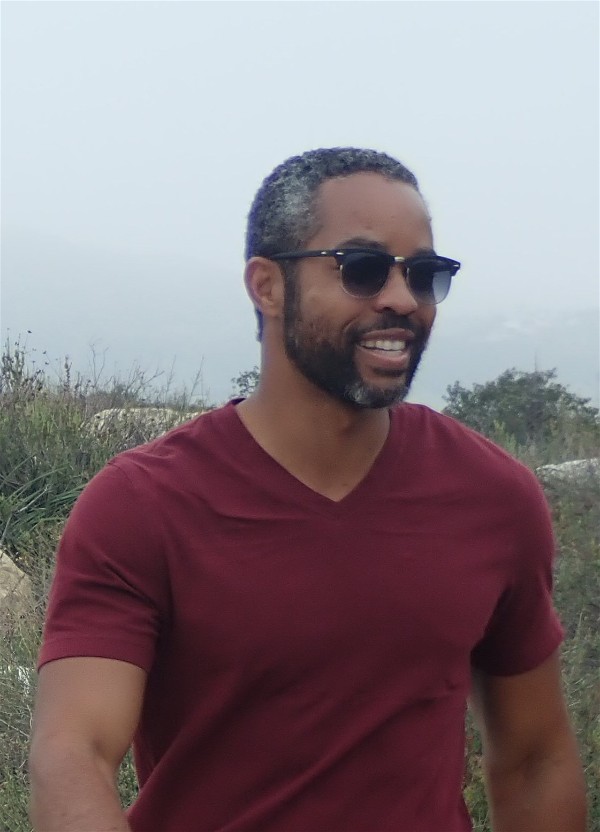
Carlos Grider launched A Brother Abroad in 2017 after a “one-year abroad” experiment turned into a long-term life strategy. After 65+ countries and a decade abroad, he now writes about FIRE, personal finance, geo-arbitrage, and the real-world logistics of living abroad—visas, costs, and tradeoffs—so readers can make smarter global moves with fewer surprises. Carlos is a former Big 4 management consultant and DoD cultural advisor with an MBA (UT Austin) and Boston University’s Certificate in Financial Planning. He’s the author of Digital Nomad Nation: Rise of the Borderless Generation and is currently writing The Sovereign Expat.
Hi Carlos, thanks for sharing your insights and details, very interesting to read. I have been following you for around 2 years and became interested when you posted about your villa in Bali with the flat roof …
Keep on the good work!