
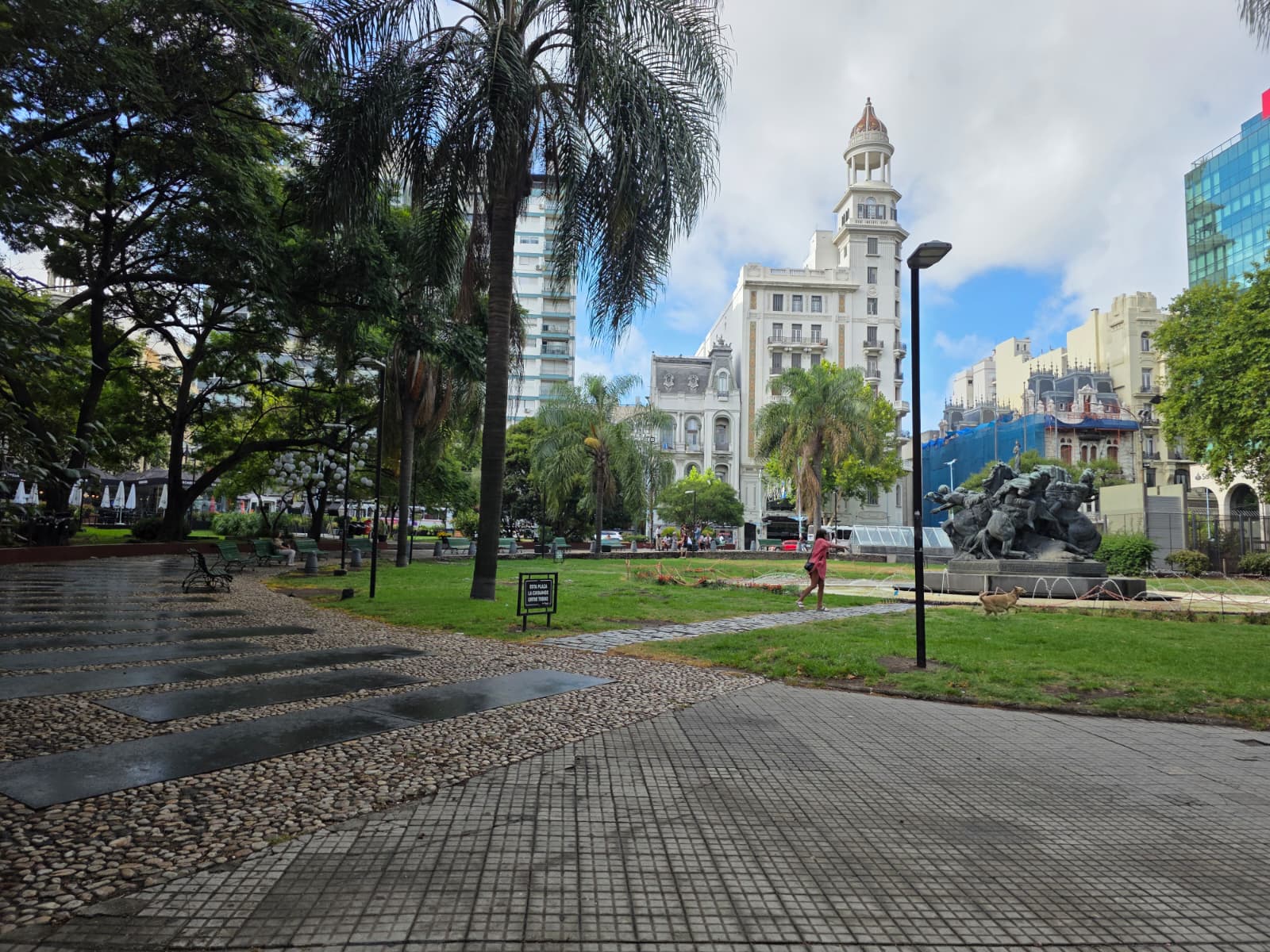
In this rapidly changing and increasingly unpredictable world we live in today, moving to Uruguay often arises as an option for the aspiring expat aiming to go abroad to find safety, peace, openness, and a different pace of life in an unbothered corner of the world. And rightly so. With Uruguay’s slow-moving change, coastal backdrop, a track record as one of the safest countries in South America (and arguably safer than most places in the US), and a “simple” path to residency for the patient, living in Uruguay is a perfect option for the right expat.
However, unlike most influencers, immigration attorneys, and relocation agencies tout, living in Uruguay as a foreigner does come with real tradeoffs. The beautifully slow pace of life leaks into public services and government processes that progress at a snail’s pace, the high quality of life comes with an unusually high cost of living by South American standards, and Uruguay’s shockingly cold winters often shock non—Nordic or Siberian newcomers. But, as stated, these are merely items to be aware of, plan for, and confirm that, for you, the trade is worth the laid-back living that Uruguay delivers in exchange.
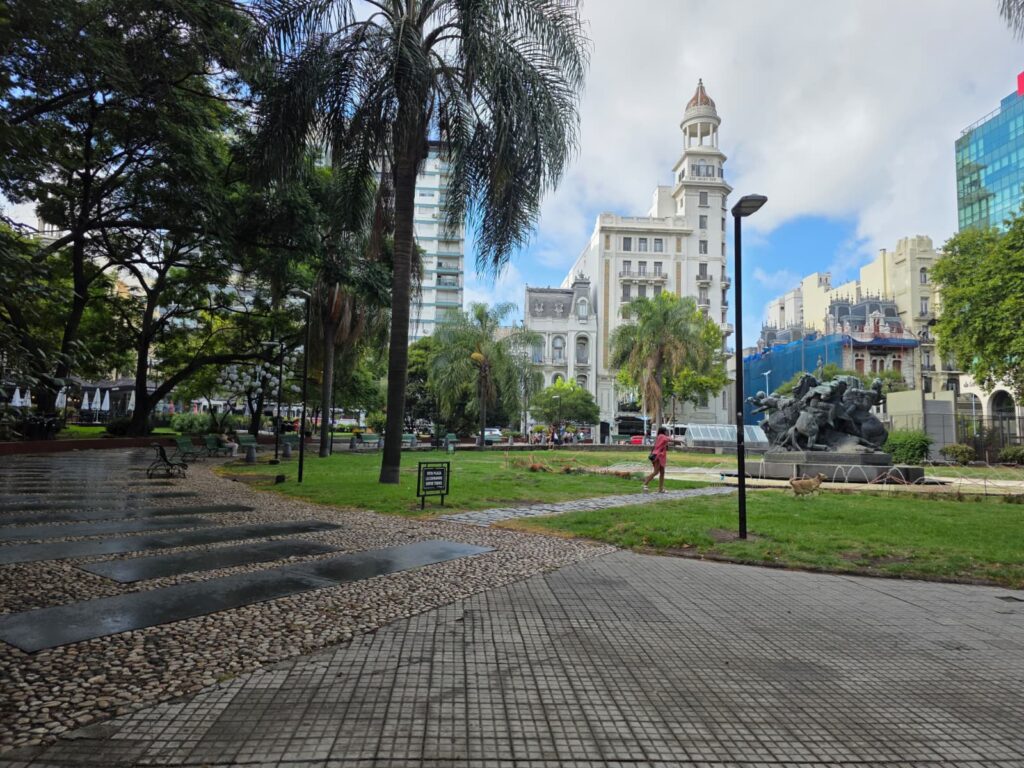
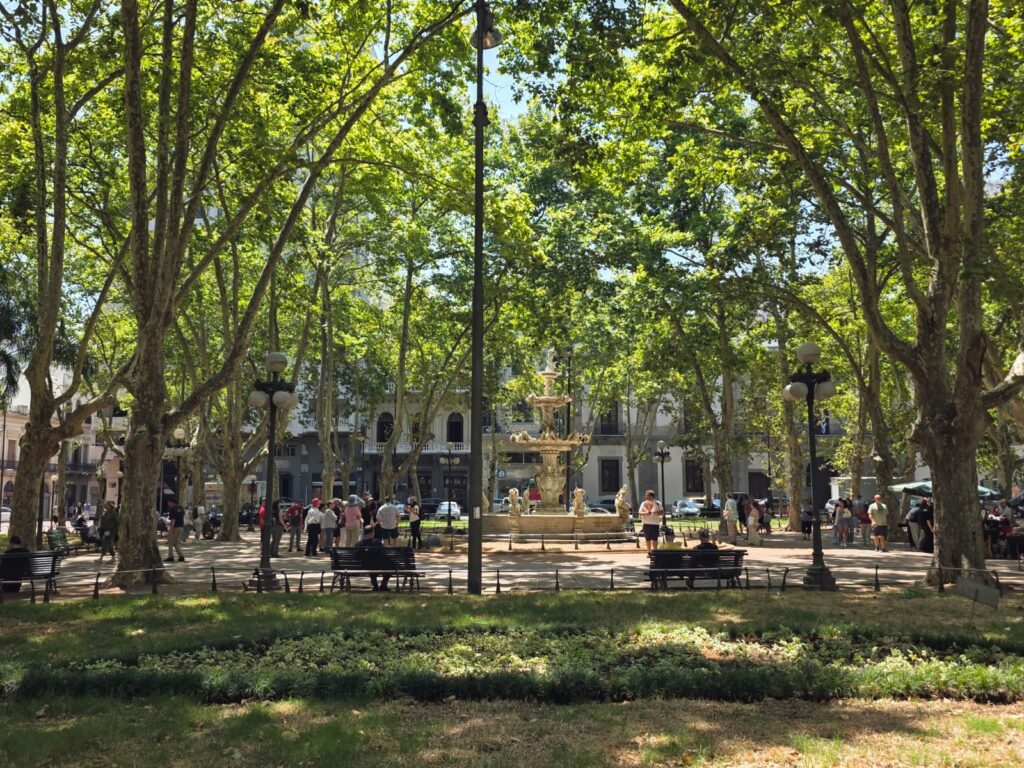
A peaceful plaza on the path to the market
If you are a remote worker or retiree looking for a stress-free pace of life in a coastal city with an “Old World” feel, you value a left-leaning, open, and liberal social backdrop, and you have the money to pay slightly higher urban coastal living costs, Uruguay and its capital city may be right for you.
In my recent adventures to find my new home and feed my desire to taste, smell, and experience everywhere in South America, I carved out a period of time to live in Uruguay and see if the “Switzerland of South America” lives up to its reputation as a quiet, safe country with beautiful beaches welcoming to everyone. More importantly, I wanted to discover and provide a perspective on how Uruguay compares to the other great South American country options for expats – Argentina, Colombia, Chile**, and Peru**, as well as the low-cost, high-quality of life location. What I found in Uruguay was a very niche destination that overdelivered on the things it specialized in, and is a loved home by the expats that match its personality.
Uruguay is niche, overdelivers on safety/calm/openness, and underdelivers (or shocks) on cost + bureaucracy + winter housing reality
In this complete guide to moving to Uruguay and living in Uruguay, we’ll review the essential things that you need to know to decide whether Uruguay is right for you, the essential steps you need to take in moving to Uruguay, and prepare you mentally for living in the “Switzerland of South America.”

Table of Contents
Is Uruguay Right for you?
For financially independent, comfortably retired, or well-paid remote workers that value a socially left-leaning society (think, Portland, Oregon) and don’t stress about getting things done quickly or perfectly, Uruguay just might be a good, potential home for you.
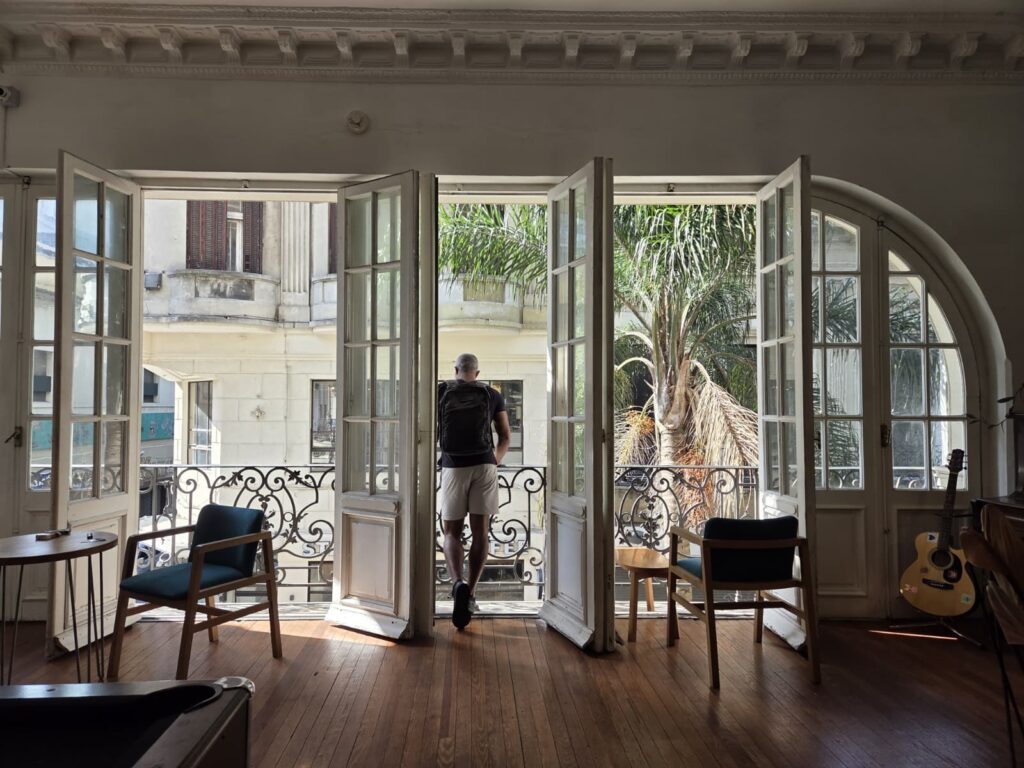
Morning coffee in the Ciudad Vieja of Montevideo before exploring the city
The key things to assess in considering if Uruguay is right for you are
- Can your budget handle it? As of early 2026, Uruguay is 50% more expensive than Argentina, 45% more expensive than Chile, and 60% more expensive than Colombia based on the cost of living site Expatistan. Those mentally prepared to pay 50% “higher than normal cost of living” for Latin America are better suited for Uruguay, while those aiming for more geoarbitrage should consider other locations.
- Is being liberal or left-leaning socially a positive for you? One of Uruguay’s strengths is being politically and socially stable and slow-moving in politics. And in a world that has, in recent years, shifted right and conservative, Uruguay’s is that it is a safe space for liberal minds and living. For those who are proudly and happily left-leaning, Uruguay will be a safe place for the long term.
- Do you have the time and patience?: Thanks to the slow pace of life, immigration and achieving residency will realistically take between 9 months and 2 years. Also, getting anything else done in life in Uruguay will proceed at the same pace.
- Is coastal living a bonus you are willing to pay for? More than half of Uruguay’s population lives in the coastal region of Montevideo and east, on the coast of the Rio de la Plata Estuary (for Montevideo) and the Atlantic (for Punta del Este), making coastal life a main selling point.
- Do you value calm over chaos? Montevideo is notorious for being sleepy and almost boring, and Uruguayans avoid neighboring Buenos Aires specifically because it’s too busy – and culturally Uruguay maintains a consistent calm aligned to this preference. So, if you want a city backdrop with a rural pace of life, Uruguay may fit. If you want energy and vibrance, Argentina and Colombia may be a better fit. Those who want peace, quiet, low stress, and a slow pace of life will enjoy Uruguay’s pace.
- Are you ready to enmesh in all aspects of Uruguayan culture? A fulfilling life in Uruguay requires not just learning Spanish, but embracing the culture and its quirks before your typically more introverted neighbors (by Latam standards) accept you into their social circles, which is virtually required for a healthy life. This integration – language and culture – will also be necessary to get most things done in Uruguay.
Moving to Uruguay is likely the perfect place for you if:
- You are a retiree with stable income, prioritizing a single place, a stable life, and accessible quality healthcare
- You are a remote worker with a healthy income and a desire for calm and political stability above all, and little desire to travel elsewhere.
- You are a queer expat looking for a place to live openly, with legalized same-sex marriage.
- You’re aiming to “escape to peace” because either 1) life is chaotic where you are or 2) you’re treated differently where you are
- You’re seeking a modern quality of life, wrapped in an Old-World culture and feel, with a pace that melts away stress.

Reality check: Is Uruguay really the Switzerland of South America?
Uruguay is often regarded as the “Switzerland of South America” – largely due to stability and a strong social welfare system, and purported high quality of living, next to Buenos Aires as the Paris of South America and Chile as the Germany of South America. But, is Uruguay really the Switzerland of South America?
Beware of the “overbranding” of Uruguay lately, which can make the country difficult to assess from afar.
Uruguay does offer the best package of safety, calm, and stability relative to other South American countries, akin to Switzerland against the backdrop of the EU (but with less maintained infrastructure). However, do not expect the Swiss level of polish (outside of the beachfront condos and coastal resorts) and thought-through design of a “Swiss clock” or swift promptness of a “Swiss train” in how society functions daily. If you simply want safety, serenity, and social acceptance and are willing to pay extra for it against a “Latin American urban backdrop,” Uruguay, specifically Montevideo or Punta del Este, may deliver against your expectations.
As for quality of life, in my experience traveling and living in South America, Chile offers much more modern and developed infrastructure. Similar or better quality of life can be found in Argentina, Chile**, and Colombia. Finally, in my personal experience, Buenos Aires has been just as safe as Montevideo. So, while Uruguay does deliver value for the right needs, many other South American destinations deliver an equally high quality of life.

Cafe Brasilero…a staple in Old Town
So, no, Uruguay is not the Switzerland of South America. Though it is stable and abstains from the geopolitical domino effects and has a high cost of living for the region (similar to Switzerland), expecting the infrastructure, efficiency, and promptness of Switzerland in Uruguay will be setting yourself up for a frustrating life.
Uruguay Cost of Living: The Elephant in the Room
Uruguay is not “cheap Latin America.” It’s stable, functional, and relatively orderly compared to much of South America, and it charges you a premium accordingly. If Buenos Aires is “luxury life on a budget,” Montevideo is “normal life at a premium.” (Expatistan currently pegs Montevideo as ~56% more expensive than Buenos Aires.)
Approximate monthly budgets:
- Lean / local lifestyle: $1,800–$2,400/mo (longer lease, fewer dinners out, fewer imported tastes)
- Comfortable expat baseline (nice area, some lifestyle): $2,500–$3,800/mo
- Premium / coastal comfort (Carrasco / lots of eating out / “I’m not checking prices”): $4,000+/mo
Cost of Living by Category and Item
Quick pricing reality (typical city costs)
- Dinner out (2 people, casual neighborhood spot): $U 1,359 (~$35)
- Coffee (cappuccino): $U 218 (~$5.70)
- Beer (domestic, neighborhood bar): $U 175 (~$4.60)
Flight to another country (typical round-trip ranges from Montevideo)
- Buenos Aires: roughly $90–$250 (varies wildly by date/airline)
- Santiago: roughly $200–$450
- São Paulo: roughly $250–$550
Cost of Living Basket (Monthly for 1 person, nice area of Montevideo
(USD conversions use ~$U 38.35 = $1 as a reference point.)
- Rent (1BR / 1BA, short-term furnished / Airbnb-style in Punta Carretas / Pocitos / Carrasco+):
- Planning range: $1,600–$2,600+ (Carrasco often $2,600+ for comparable comfort)
- For context, unfurnished long-term 1BRs in Montevideo often price much lower in local listings and vary heavily by building fees (“gastos comunes”).
- Utilities (electricity/water/etc): about $U 6,129 (~$160) for a mid-size apartment baseline
- Groceries: ~$350–$600 (depends on how much you cook + how imported your tastes are; Uruguay’s food prices can surprise you even when you “shop normal”)
- Coffee (per cup): ~$5–$7
- Beer (per pint/bottle out): ~$4–$6
- Transit:
- One-way bus: about $U 45–$55 (≈ $1.20–$1.45)
- Monthly pass: around $U 2,256 (≈ $59)
- Healthcare contribution (Mutualista / cuota): a common published adult “cuota social” example is $U 3,801 (≈ $99)—varies by provider/age/plan.
Everyday Taxes: the “why does everything cost more than I expected?” factor
Uruguay’s IVA (VAT) is 22% in general (with some categories only have a 10% tax). In practice, consumer pricing is often tax-inclusive, but it’s still part of why the sticker shock for daily life in Montevideo is real, especially on anything imported.
Everything in Uruguay is imported, and a premium is paid for that.
With Uruguay being such a small country with a smaller population than many global cities, Uruguay does not produce much beyond beef, and most everyday items are imported from Brazil, Argentina, and China. With imported goods filling everyday life, this means import taxes and shipping fees are already added beneath consumption taxes such as IVA, leading to higher costs of daily living than in most other countries in the region.
Beyond goods used daily, real estate appealing to foreigners tends to hug the coastline, with nowhere else to grow. With the impossibility of neighborhoods growing, rents grow instead – add a premium to the monthly rent because of the natural scarcity of coastal real estate.
Where to live in Uruguay
While Uruguay offers a variety of living and neighborhood options, from urban to coastal to rural, Montevideo makes for the softest landing for expats and aspiring immigrants to taste, test, and mingle. This easily navigable place for newcomers makes for a perfect soft landing while solidifying residency, easing into the country, and confirming it is right for you.
During your wait between processing your status from tourist to legal resident in your new country (which will take longer to expect), you’ll have ample time in your temporary living situation to taste Montevideo’s varied neighborhoods to find the one that fits your budget, social life, and daily needs. After you acquaint yourself with Montevideo, you’ll then be able to better decide if the resort town lifestyle of Punta del Este or the ranch living further inland are better fit for your long-term plans.
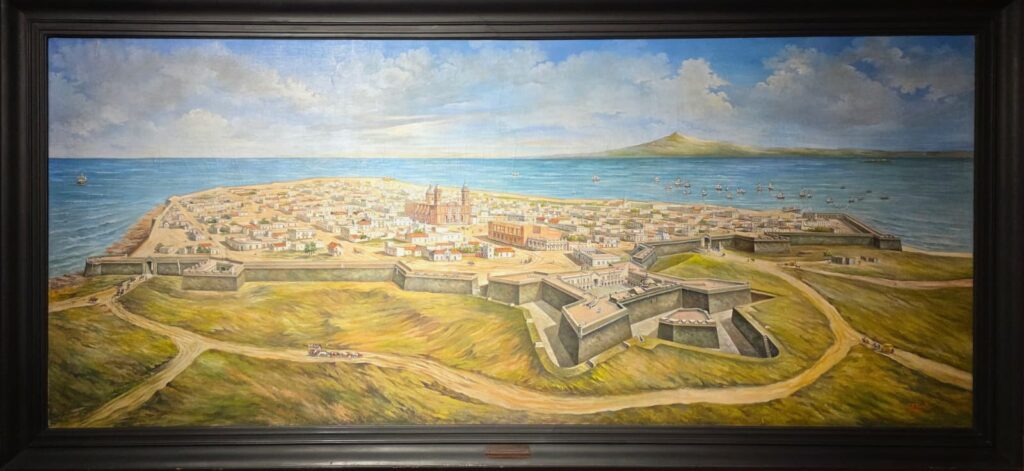
A painting of the original Spanish citadel of Montevideo, in the former city hall and now museum
Montevideo’s best neighborhoods are perfect for a first base.
More than half the population of Uruguay lives in Montevideo, making it the best place to start one’s adventures, specifically in a coastal neighborhood between the old city and Carrasco. This 10-mile stretch has the best quality of life and a high standard of living, most of the popular sites and amenities, public transport, and some of Uruguay’s best living, which makes for a soft landing and a great place to grow into something more residential (or a coastal ranch somewhere) if you stay for years. Though traveling inland hides many potentially charming, smaller towns with lower property prices, the Ciudad Viejo to Carrasco strip is a better, safer launchpad for most expats.
While Montevideo has no true “expat enclaves,” like Palermo in Buenos Aires or El Poblado in Colombia, these neighborhoods all still offer an immersive, high-quality life that would meet the threshold of most expats.
Aim for a neighborhood between the Old Town and Carrasco to land in a location naturally great for most expats’ needs.
Old Town (Ciudad Viejo) (Average Monthly Rent: $900)
Just like ports have historically been the welcoming point for new immigrants to most countries, the Old Town’s tiny peninsula and its historic sites are many people’s first taste of Montevideo. Once a go-to for new arrivals and a prime tourism location, since the pandemic, much of its apartments and shops sit as shuttered, graffiti-covered buildings. Though it may hold potential in the future, travel east for a better, softer landing. As the area continues to revitalize, its historic architecture and palm-lined cobblestone streets will draw visitors back.
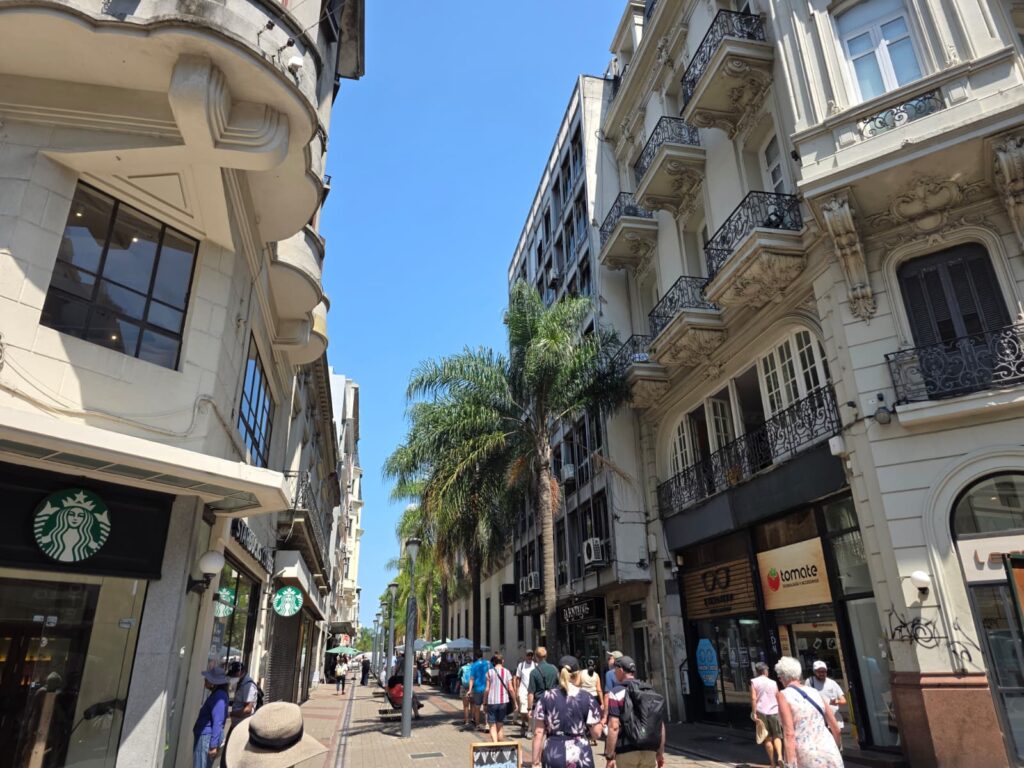
For the expat with more bohemian tastes and aiming for cheaper rent, Old Town could serve as a short-term bridge into a new life as they gradually explore and eventually move further east or inland. Expect the many restaurants and cafes to be more expensive here, and the streets to be dead empty at night. Despite still being in a visible recovery, Old Town is not without value, though as Montevideo’s economic and financial center. This area is home to the Mercado del Puerto, the Port, Teatro Solis, government offices, most bank branches, many of Montevideo’s most recommended tourist sites, and the start of the 14-mile “Rambla” beach walk, so if you do not decide to live here, it is a “must explore” part of the city.
Punta Carretas (Monthly Rent Average: $1800)
Punta Carretas is Montevideo’s “best located” neighborhood when you want the city to feel easy. It’s walkable, coastal, polished, and packed with the kinds of amenities like movie theaters and grocery stores that make Uruguay feel more first-world than Latin American: parks, a golf course area, strong restaurant density, and the gravitational pull of Punta Carretas Shopping mall, one of the country’s most iconic malls (and famously, it sits in a building that used to be a prison).
This is the neighborhood you pick when you want: rambla life + restaurants + convenience without the chaos of a bigger city. On weekends, it becomes a “go here to eat and stroll” zone for locals, too. And food-wise, you’re surrounded by popular standbys (and plenty of high-rated spots), so it’s one of the easiest neighborhoods in Montevideo to live well without trying. Apartments near Boulevard General Artigas and the golf course are some of the best located and sought after, and a great place to start looking.
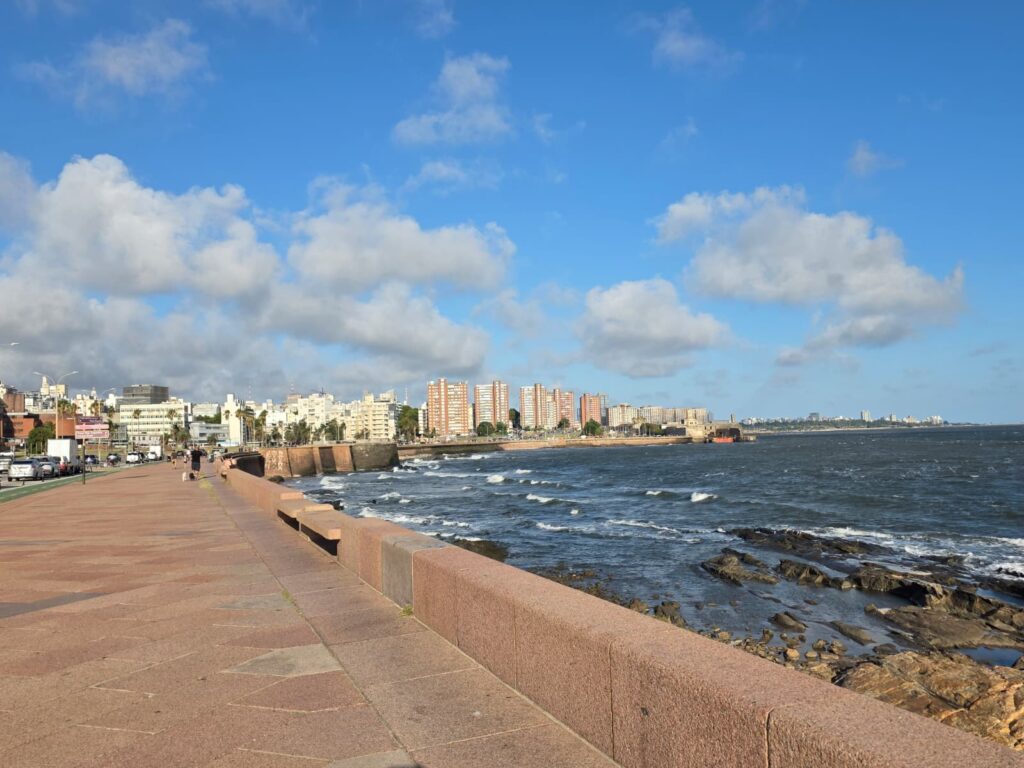
The 14 mile long “Rambla” beach walk
Pocitos (Monthly Rent Average: $1300)
Next to Punta Carreta, Pocitos is a great middle ground. This area offers more homes and apartments than Punta Carretas’ shopping-heavy and mall-dominated area, making for a more balanced “residential feel”, with the lower rental prices that come with it. At the same time, this neighborhood is still a pleasant enclave with cafes, smaller neighborhood restaurants, and neighborhood shops. (Rent average: $1300+ per month)
Malvin: (Monthly Rent Average: $1160)
Malvín is the “normal life” neighborhood, residential, coastal, and more local-feeling than the expat magnets. It has a rambla/beach rhythm, but without the constant churn of short-term rentals or a layout that feels optimized for foreigners. If you want Montevideo to feel like a real city where real people live, but you still want water nearby, Malvín is one of the best value moves.
It’s quieter than Pocitos, less polished than Carrasco, and less “corporate” than Buceo. You can settle here, actually live here, and not feel like you’re paying a premium just for the privilege of being near other expats.
Cordon (Average Monthly Rent: $720)
Adjacent to the Central Business District, this neighborhood is split by the busy artery of Avenida 18 de Julio, with the University of the Republic and the National Library defining the personality of the area. This combination and community improvements in recent years have leaned towards a more youthful “bohemian vibe” with more bookstores, unique cafes, and new bars to match the “young and emerging” personality that is developing. The slight “college vibe” that comes with such areas and being an easily walkable 1 kilometer from the ocean make this area a cheaper option.
Carrasco: (Average Monthly Rent: $2600)
Carrasco is Montevideo’s most upscale neighborhood, but in a quiet, old-school way with a vibe and ambiance akin to San Diego’s La Jolla, Torrey Pines, or Carlsbad Village areas. Think leafy streets, a beach city-style shopping avenue intentionally lined with pine trees, bigger homes, polished apartment buildings, and a general sense that people here have already made it and aren’t trying to prove anything. It’s coastal, it’s calm, and it feels noticeably more suburban than the rest of the city. You come here for space, air, and a cleaner, more residential vibe – and you pay for it.

Here, the tradeoff is the point: Carrasco is less “walk out your door into a city” and more “choose your spots.” If you want Montevideo to feel like a lifestyle upgrade, without the noise, grit, and density, Carrasco is the cleanest version of that. But if your Uruguay plan is cafes, meeting people, and living on foot, Carrasco can feel like you’ve moved to the nice part of town and then forgotten to go outside.
Buceo: (Average Monthly Rent: $1930)
Buceo is where Montevideo starts to feel modern. More glass, more high-rises, more “I work during the week” energy. The area is anchored by the World Trade Center district and has that business-adjacent feel: convenient, tidy, and practical. If you want a neighborhood that makes day-to-day life frictionless with groceries, gyms, shopping, and services walking distance away, Buceo does the job. It’s also a solid “first landing” neighborhood: safe, easy, and familiar. The vibe is less romantic Montevideo and more functional Montevideo. But if you don’t want that and you’re trying to rebuild routines (workouts, work, sleep, repeat), Buceo wins.
Average Montevideo Rents
|
Neighborhood |
Typical monthly rent range (UYU) |
Ballpark average (UYU) |
Approximation in USD |
|---|---|---|---|
|
Ciudad Vieja (Old Town) |
18,000 – 51,418 |
~34,709 |
~$900 |
|
Pocitos |
23,000 – 78,000 |
~50,500 |
~$1,309 |
|
Cordon |
20.000 – 35.340 |
27.700 |
~$720 |
|
Punta Carretas |
24,500 – 113,929 |
~69,215 |
~$1,795 |
|
Malvín |
23,050 – 66,170 |
~44,610 |
~$1,157 |
|
Carrasco |
45,000 – 156,000 |
~100,500 |
~$2,606 |
|
Buceo |
24,000 – 124,905 |
~74,453 |
~$1,930 |
If you’re targeting a small 1-bedroom for a single person, you’ll usually be closer to the lower half of the ranges listed above. Furnished, newer towers/amenities, garage, and sea views will push you toward the top of the price ranges above, especially in Carrasco, which often has USD-priced executive rentals. These rent estimates exclude the “gastos communes” (HOA/building fees).
Data Source: Mirando Stats, Uruguay; Price data from January 2026; Rounded price conversion 1 USD ~ 38 Uruguayan Pesos
Punta del Este + coastal towns
Punta del Este
Punta del Este is Uruguay’s international resort hot spot with high-rises, seasonal pricing, and a summer identity so strong it can distort your perception of the whole country. It’s the point where the Río de la Plata estuary stops, and the Atlantic Ocean begins. It also splits into two beach personalities:
Playa Mansa = calmer water, sunset side
Playa Brava = rougher Atlantic energy, sunrise side (and the iconic “La Mano” hand sculpture)
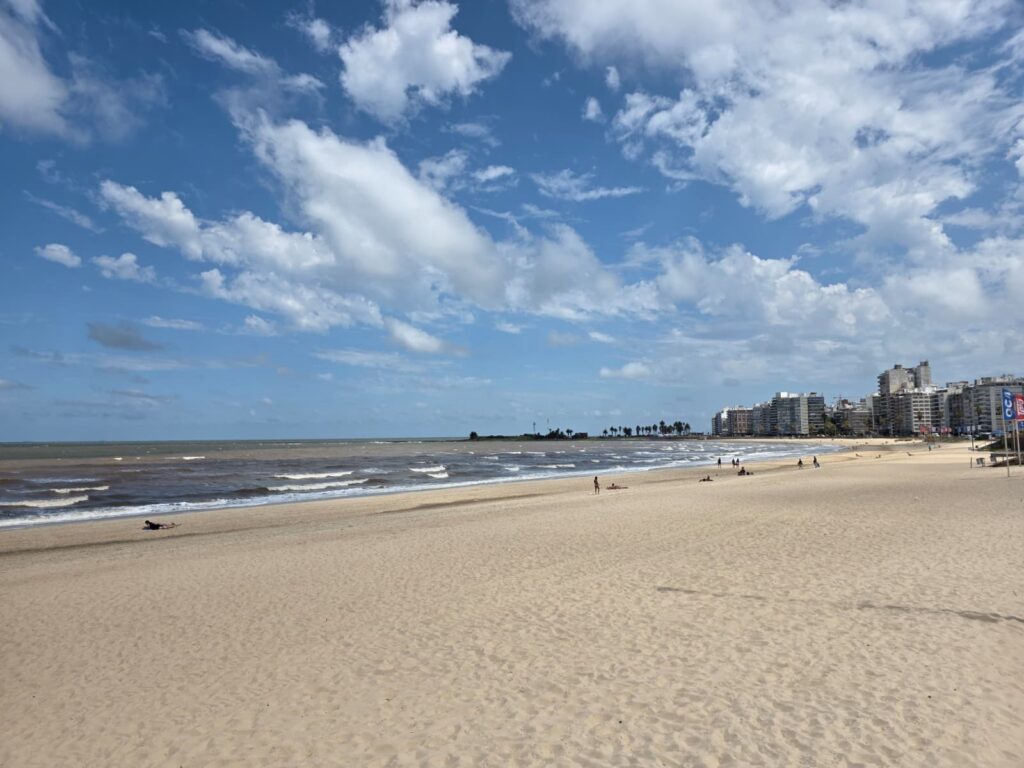
One of Uruguay’s many beaches
Neighborhood note: If you want Punta del Este without living in the most tourist-saturated core, areas like Pinares (more residential, more inland) can feel more livable day-to-day.
Nearby city (practical reality check): Maldonado is right next door and much more “real city” than resort town—often where you look if you want a year-round normal life near Punta del Este instead of permanent vacation pricing.
While Punta del Este is a bustling beachside mini-metropolis during high season that peaks at 600,000 visitors, the city shrinks to 10,000 permanent residents in low season, making for a very polarized “chaos” and “calm” balance in this resort town.
Atlantida
Atlántida is the easy button: a beach town close enough to Montevideo to feel like a weekend extension of the city, not a separate life. It’s relaxed, casual, and built for slow mornings, long walks, and “I’m not doing anything today” afternoons. You don’t move here for nonstop stimulation—you move here to exhale.
It’s also one of the most realistic “coastal Uruguay” options if Punta del Este feels like overkill (or a seasonal trap). Atlántida gives you beach-town living without requiring beach-town money.
Piriapolis
Piriápolis is Uruguay’s classic resort throwback, built with that old European seaside-town and French coastal resort towns as its aspiration. It has a slightly nostalgic vibe: promenades, old hotels, and the sense that this place was designed to be “the nice coastal escape” before Punta del Este became the headline. The Argentino Hotel is the symbol of that era, and this area, grand, historic, and a little cinematic, while its yacht club and the Hotel Colon reinforce the ambiance.
If you like coastal towns with personality, where the architecture and the layout tell you a story, Piriápolis has more charm than most. It’s not trying to be trendy. It’s trying to be Piriápolis.
Make it a soft landing by planning a flexible first month as you test neighborhoods.
While the descriptions above sum up Montevideo’s neighborhoods and strengths very well, Uruguay is a place where you truly need to live and feel it, because there is so much nuance to its life and locations. For instance, the difference between Pocitos and Carrasco may seem small on arrival from the chaos of elsewhere, but feel massive after you’ve settled into Montevideo’s slow pace and picked up on its nuances. It’s best to wait until you’ve experienced life in enough neighborhoods and recognize the subtleties before signing an extended lease (6+ months).
To make the most of life in Uruguay via a strong start, use your initial time in Uruguay with flexible accommodation and shorter stays via Airbnb, Booking.com, or your preferred platform, and explore as many neighborhoods as possible between Ciudad Viejo and Carrasco and beyond.
Finding an apartment in Uruguay
Online apartment hunting resources for Montevideo: Deliver the best coverage and fastest research
- InfoCasas: One of the biggest inventories, strong filters, and neighborhood coverage.
- Mercado Libre (Inmuebles): Huge volume; good for price discovery, but watch for duplicates/outdated posts.
- Gallito: Classic Uruguay classifieds; lots of direct-owner style posts plus agencies.
- Mi Lugar Inmobiliario – Portal backed by Cámara Inmobiliaria Uruguaya; tends to be more “formal agency” inventory.
- Facebook Marketplace + expat/local groups – Great for speed and furnished/shorter-term finds, but verify identity, address, and conditions before paying anything.
Offline apartment hunting resources for Montevideo
- Walk-in “inmobiliarias” (agencies) in the target neighborhood
In Montevideo, it’s still very normal to secure a place through a neighborhood agency—especially for higher-end areas like Carrasco and Punta Carretas. - “Se alquila” signs + building porters (porteros)
Some of the best apartments never get widely advertised; porteros often know what’s opening up in the building. - Check rental guarantee channels early (this can be the bottleneck)
Many landlords require a garantía such as ANDA, the state-backed Contaduría General de la Nación (SGA), or insurance products like Porto Seguro. If you can show you’re “ready to guarantee,” you beat other applicants. - Networking (coworkings, universities, colleagues)
Montevideo is relationship-driven—referrals are common.
Checklist to avoid getting burned in the apartment rental process:
- Never wire deposits before viewing/contract
- Always verify agency identity and property address
- Always clarify guarantee requirements upfront
A Note on Buying Property
While property ownership is allowed for foreigners, and you may be tempted to plan to buy a home right on arrival, don’t. Wait at least two years to simply familiarize yourself with the country, learn the language and culture, and ensure the prospect of property ownership – the headaches it comes with, the service providers you will deal with, and the complications it adds to life in a uniquely Uruguayan way – is something you want.
Visas and Residency in Uruguay, and how it actually works
Uruguay is one of those places where the legal path is straightforward on paper… and slow in real life. The winning strategy is simple: use visa-free entry to test the country, and if you decide to plant a flag, treat residency like a long, patient project, not a quick errand.
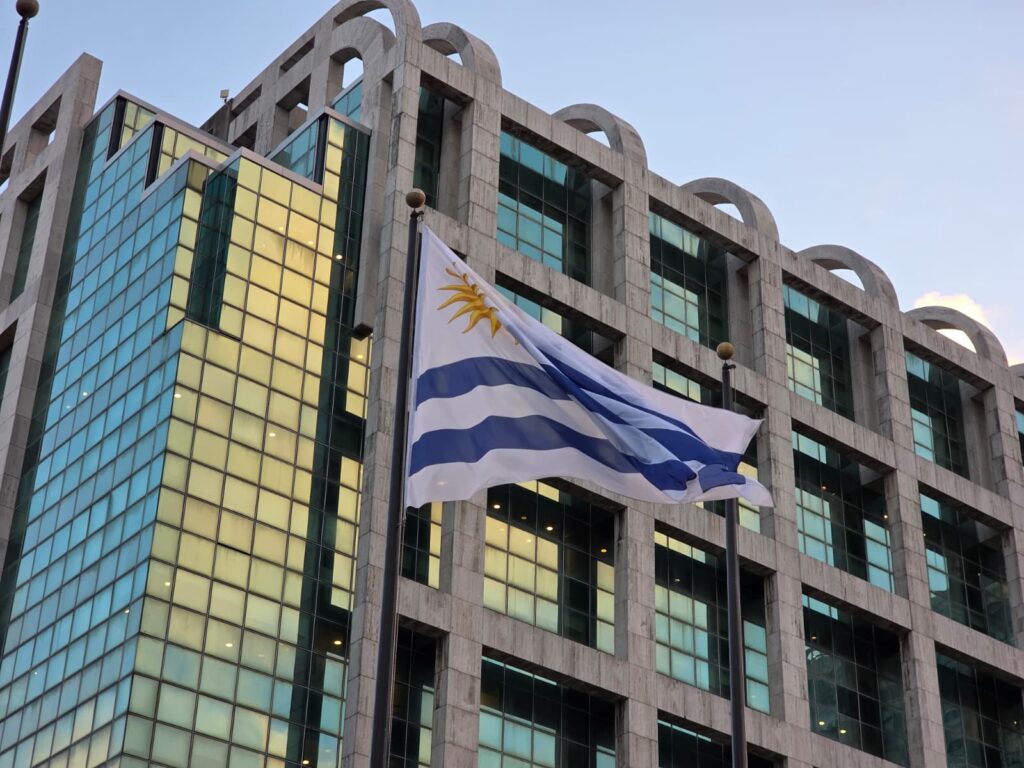
Use Visa Free Entry for the “Testing Phase”
For many nationalities (including U.S. citizens), Uruguay is easy to enter as a tourist: no visa required for short stays, and you’ll typically be admitted for 90 days. If you want more time to test neighborhoods, seasons, and daily life, you can usually extend your stay by doing a prórroga de permanencia temporaria (stay extension) through the government’s official process.
Practical Advice: treat those first 90–180 days as a deliberate trial run:
- Live in the neighborhoods you’re considering (not just the postcard version of Montevideo).
- Run your “real life” routine: banking attempts, apartment searches, healthcare onboarding, Spanish classes, winter housing comfort.
- If the country still fits you after that, then you start residency with confidence.
Temporary residency → permanent residency: Visa requirements, timeline, and the reality
If you decide you want to stay long-term, Uruguay’s system is built around legal residency (temporaria or permanente residence permit options depending on your situation). There are multiple categories, including standard permanent residency and Mercosur-related pathways, if applicable.
In reality:
- Officially, you can start the residency process and work through the requirements. In practice, you should assume it takes a while, and that the pace of the immigration office will match Uruguay’s personality: calm, slow, and demanding a lot of homework and documentation from you while delivering very little progress.
- Plan like you’ll be “in process” for a long stretch. Expats have reported initial appointments taking ~2 to get, and the entire process taking everything from 9 months to 2 years to be granted residency, depending on backlog, category, and how clean your documentation is. (That range is anecdotal, but the point is the same: don’t build a plan that requires speed.)
- Once you’re in the residency pipeline, the safest mindset is: be comfortable staying put. Uruguay is not the place to start residency if your lifestyle involves frequent or routine international travel.
Warnings you’ll be glad you read:
- Appointments are very important. If you miss your scheduled time, you can lose what you paid, and the ID document you used to book must match what you bring.
- Spanish fluency matters for the residency application process. If you aren’t fluent in Spanish, immigration may require you to hire a translator for the in-person interviews and steps in the immigration process.
- Leaving for too long can create new requirements. For example, if you leave Uruguay for more than six months during the process, you may be required to provide a new criminal background certificate from the country where you stayed.
Your Visa Options
Here are the visas that matter when moving to Uruguay:
1) Tourist stay (visa-free + extension)
This is your testing phase: enter, live normally, extend if needed.
Visa Free Access for United States Citizens: U.S. citizens do not need a visa for tourist or business visits to Uruguay lasting 90 days or less, and this can be extended for another 90 days. If you decide to extend your stay, you can renew your visit before the Uruguayan migration authorities by contacting the National Department of Migration through the following email addresses: [email protected] or [email protected]
Visa Free Access to Uruguay for other countries: 80 countries, including the U.S., Canada, UK, Australia, all EU nations, and most of South America, can enter Uruguay visa-free for tourism for up to 90 days. Americas: Argentina, Brazil, Canada, Chile, Colombia, Costa Rica, Dominican Republic, Ecuador, El Salvador, Guyana, Honduras, Jamaica, Mexico, Nicaragua, Panama, Paraguay, Peru, USA, Venezuela. Europe: All EU Member States, Albania, Andorra, Armenia, Georgia, Iceland, Liechtenstein, Monaco, Montenegro, Norway, Russia, San Marino, Serbia, Switzerland, Turkey, Ukraine, Vatican. Asia/Pacific: Australia, Hong Kong, Israel, Japan, Macao, Malaysia, New Zealand, Seychelles, Singapore, South Korea, UAE.
Source: Uruguay Ministry of the Interior Visa Regime
Tourist Visa: Awarded for a length of stay in Uruguay of 90 days, which can be extended to another 90 days, and is multiple entry tourism visa for the duration of the visa.
Visit the official Tourist Visa page for more info.
2) The Digital Nomad Permission program – if you want a bridge, not a forever plan
Uruguay’s route for digital nomads is commonly implemented through a Hoja de Identidad Provisoria (Nómada Digital), a temporary Uruguayan ID card for foreigners and temporary authorization designed for stays under 180 days, with a renewal path described by government guidance, and a clear off-ramp: if you decide to truly settle, you can pursue temporary/permanent residency.
This approach works well for both testing and settling, as the length of stay is perfect for a test period or a period of nomading. Then, if you decide to stay, the identity card allows you to access the government services required to apply for temporary residency.
3) Legal residency (the path to becoming a permanent resident and potentially an Uruguayan passport)
If you want to sign long leases, fully normalize banking/healthcare, and build a durable life, residency is the main game. Uruguay’s government spells out categories and requirements through the official “Residencia Legal” process. Additionally, this is the path to permanent residence and potential citizenship.
Permanent residency and Uruguayan citizenship guidelines
For single individuals, after 5 consecutive years of living in Uruguay, and the ability to show ties and roots to Uruguay along with at least 6 months in the country each year, you are eligible to apply for citizenship. To eligible for citizenship, you must be a permanent resident with a cedula de identidad, demonstrate basic knowledge of Spanish, and evidence of integrating into the country. To apply you must submit your application and supporting documents to the Electoral Court (Corte Electoral) and participate in an interview
Document checklist (apostille + translation, and what usually slows people down)
Uruguay’s residency application process is very documentation-driven. The process is not “hard,” but it is “paperwork-honest”, and it rewards people who show up prepared.
Baseline document requirements you should expect to have covered(and pre-plan):
Identity + civil status
- Valid passport/identity document
- Birth certificate (often needed, especially for ID issuance)
- Marriage certificate (if relevant to proving a relationship; must be recent per rules)
Background checks
National-level criminal background certificate from your home country and from countries where you lived in the last 5 years for 6+ months, properly apostilled/legalized, and translated as required.
If you were born in the U.S., Uruguay notes a path involving Interpol in Montevideo to capture prints for an FBI certificate request.
Health documentation
A valid carné de salud and vaccination certificate from authorized providers (per referenced decrees).
Proof of “means of life” (how you support yourself)
Uruguay explicitly asks you to document how you’ll support yourself. This can be via employment, independent work, business ownership, foreign employer ties, or rental income / retirement income / pension income, typically supported by formal certificates, employment contracts, bank statements, or notarial/accounting documentation, depending on the case.
Apostille + translation reality
Foreign documents generally must be apostilled/legalized and translated into Spanish by a Uruguayan public translator where required (with specific exceptions noted in official guidance).
Document advice: Come with complete, well-prepared documents
Your residency timeline is usually determined less by Uruguay “rejecting you” and more by you showing up with incomplete, expired, or improperly prepared documents. Get your papers right before you emotionally “move.”
Source: Ministry of the Interior – National Directorate of Migration
Other Visa Options
- Student Visa
- Investor Visa / Business Visa
- Work Visa
- Family Reunification Visa
Setting up life: Banking, phone, internet
Opening a Local Bank Account
Opening a local bank account in Uruguay is absolutely doable as a foreigner, whether a resident or non-resident, but it’s not as simple as walking in with a passport and walking out with an account. Part of the political stability, safety, and low corruption Uruguay is famous for is because it is a compliance-forward country, so you should expect that compliance and a little bureaucracy will apply to opening a bank account. Banks in Uruguay want to know who you are, where you live, and where the money comes from to open an account, and they’ll require proof of such in official paperwork.
However, before tackling the obstacles necessary to open an account, it is worth asking…
Do you actually need a local account?
Not always, and not immediately. If you’re in the “testing phase” of your transition to Uruguay, which may last a few weeks to a few months, you can usually survive on foreign cards, ATM cash, Wise, and Revolut. Uruguay is very card-friendly for purchases, and access to cash with a foreign debit card is straightforward.
However, the moment you commit to recurring payments for bills, access well-regulated systems, or receive payments, you will likely need a local account to facilitate payment.
Examples of situations likely requiring a local bank account:
- Sign a longer lease (or pay rent via transfer)
- Set up recurring bills (internet, utilities)
- Pay into local healthcare (mutualista) cleanly
- Receiving local payments, invoicing clients locally, or operating anything “official.”
- Run your residency process like an adult (because bureaucracy loves local banking)
- Order from local online marketplaces
In other words, once you begin living in Uruguay, a local account stops being optional.
What you’ll usually need to open a bank account in Uruguay
Most banks converge on the same core requirements:
- Valid ID: Passport works, but a local ID is better
- Proof of address: Rental contract, utility bill, official certificate, something with your name tied to an address for a long-term stay
- Proof of income/source of funds: Employment letter, invoices, bank statements, or business documents that show monthly income inflows
- Tax registration (where relevant): If you’re self-employed locally or invoicing locally, you will need a local tax ID. Uruguay’s tax office (DGI) uses the RUT system for registration and activity changes. In practice, most people won’t need a RUT on day one, but if you move beyond “tourist with a debit card” into “resident with a life,” you will bump into DGI/BPS sooner or later.
The parts of opening a bank account where foreigners get stuck every time
- Proof of address
Hotels and “my friend’s place” will rarely suffice. Banks prefer leases, utility bills, or something official. - Source-of-funds documentation
Uruguay is not casual about Anti-Money Laundering and Know Your Customer compliance. If your income is remote or freelance, expect extra questions and be able to prove it. Bring clean statements and documentation that tell a coherent story. - Status mismatch
You can open accounts as a non-resident, but banks often treat non-residents differently than residents, with more friction, more requirements, and sometimes higher minimums.
For example, Banco Republica’s non-resident foreign client segment may require a fixed-term deposit (plazo fijo) of at least USD 5,000 for at least 181 days as part of onboarding. Whether this appears “good” or “bad” to you, this is simply Uruguay being Uruguay.
Banks to start with:
- BROU (Banco República): The state bank, widely used with clearly published requirement lists. A common starting point for many expats.
- Santander Uruguay: An expat-friendly bank, as pathways exist for non-residents. Additionally, the bank has branches throughout other countries in Latin American and your account can be accessed abroad via the international desk.
Phone: getting a number + data (fast, cheap, and mandatory to register)
Uruguay has three main mobile operators: Antel, Movistar, and Claro. For most expats, the winning move is simple: start prepaid, don’t overthink it, and upgrade later if you’re staying.
Here’s the key detail people miss: your line must be registered to your identity. This isn’t a “nice to have,” it’s required.
- URSEC (the regulator) spells out the requirement to register mobile services to an identified holder.
- Antel even has a dedicated prepaid registration flow referencing the legal basis.
What to do in practice
- Buy a prepaid SIM/eSIM (operator store or official reseller)
- Register it with your passport (or local ID if you have it)
- Top up and treat it like a “first month tool,” not a marriage
Internet: don’t make housing harder than it needs to be
If you’re renting short-term, the easiest strategy is not “go set up internet.” It’s rent a place that already has solid internet, and request proof of an internet speed test before moving in. If you’re already in and the internet is slow, fixing it will either be a no-go or a hassle akin to pulling teeth.
For longer stays, you’ll typically use Antel for home internet/fiber plans, especially in Montevideo.
The friction point is the same as banking: the internet company will want a clear identity plus proof of address. If the landlord already has service in their name, many expats simply keep it that way and reimburse monthly.
Healthcare in Uruguay
One of Uruguay’s strong perks is an accessible and well-organized health care system with low costs, which still delivers world-class care and world-class healthcare facilities. Uruguay’s healthcare is organized under the Sistema Nacional Integrado de Salud (SNIS): you generally access care either through the public provider (ASSE) or through private providers that participate in SNIS (most “mutualistas”), funded largely via Fondo Nacional de Salud (FONASA) contributions. (Source)
Uruguayan Healthcare System Comparison Table
|
Option |
Best for |
Monthly cost (typical structure) |
Copays (“tickets/órdenes”) |
|---|---|---|---|
|
ASSE (public) |
Lowest out-of-pocket; broad access |
Often $0 (some categories may pay “Cuota ASSE”) (asse.com.uy) |
No tickets/órdenes per ASSE (asse.com.uy) |
|
Mutualista (IAMC) |
Most residents/workers, big networks |
FONASA % of salary (3%–8% depending on family/income) OR private flat fee (varies by plan) (Banco de Previsión Social) |
Tickets/órdenes usually apply, but often bonified depending on provider/category (cudam.com.uy) |
|
Premium private insurance |
Faster access, premium networks, international coverage |
Quoted premium (often high; depends on age/coverage/deductible) |
Often low/no copays, but deductibles/reimbursement matter (Blue Cross Blue Shield Uruguay) |
1. ASSE: The public healthcare system
ASSE is the state (public) provider network: hospitals, clinics (policlínicas), specialists, etc., aimed at universal access.
Who can enroll:
- If you have Uruguayan documentation/residency, you can register as an ASSE user.
- If you do not have residency, ASSE indicates you can still access care by paying a monthly “Cuota ASSE”.
Monthly cost
- Most ASSE users pay $0/month (it is public coverage).
- Some categories (e.g., higher-income / non-residents per ASSE guidance) may pay a monthly “Cuota ASSE”, but ASSE’s public-facing guidance typically explains when it applies more than publishing a single universal fee (it depends on category).
Copays
ASSE explicitly states its services are free of charge and do not use tickets/órdenes.
ASSE is the lowest out-of-pocket option (often $0/month and $0 copays), but you may face more variability in appointment availability depending on specialty and area.
Sources: https://www.asse.com.uy/contenido/Tramites-afiliatorios-14545
2. Private “Mutualista” (IAMC): Non-profit private healthcare system
A “mutualista” is typically an Institución de Asistencia Médica Colectiva (IAMC): a large private (often nonprofit) medical institution providing SNIS/PIAS coverage, plus optional upgrades (private rooms, etc.).
Requirements/ways to access
A) Through FONASA (most common if you work formally in Uruguay): Your employer registers you, and you choose a provider (mutualista or ASSE) if you meet eligibility rules for workers.
B) As a private-paying member (“afiliación individual/particular”): You join directly with the mutualista and pay a monthly membership (“cuota social/cuota mutual”) out of pocket.
Mutualista Monthly cost (two very different cases)
If you pay privately, it’s a flat monthly fee that varies by institution, age, and plan. Examples published for Montevideo:
- Asociación Española shows (as of 01/01/2026) Cuota Social Adulto: UYU 3,687(~97 USD).
- Círculo Católico de Obreros del Uruguay advertises promotional “planes particulares” for new members (1–49 years) from UYU 800 (~21 USD) to 2,000 (~52 USD)/month, depending on age band.
So, for private-pay mutualista memberships in Montevideo, you’ll commonly see ~UYU 800 (~21 USD) –3,700+ (~97+ USD)/month in advertised examples, and it can go higher with age and upgrades.
Copays:
What people actually pay for copays varies a lot because many mutualistas bonify (waive) some copays for FONASA members or by age.
A practical “typical copay” snapshot (Montevideo examples, UYU):
- GP / Medicina General ticket: ~159–202 ($4.15 -$5.25 USD) (avg of examples ≈ 184 ($4.80))
- Specialist ticket: ~310–556 (avg of examples ≈ 419)
- Medication ticket: ~308–434 (avg of examples ≈ 367)
- Basic lab ticket: ~160–764 (avg of examples ≈ 595)
Bottom line: a mutualista can be very affordable month-to-month under FONASA, but you should expect some tickets/órdenes unless your plan/provider waives them for your category.
3. Premium private health insurance: For-profit, private healthcare, often $300+/month
These are private “seguro” style plans (often for-profit) that may offer:
- Faster access/premium networks
- More private infrastructure (private rooms)
- International coverage or reimbursement
- Lower/no copays but higher premiums and/or deductibles
Uruguay recognizes “seguros privados” as a category of integral providers in SNIS listings (examples include BlueCross & BlueShield de Uruguay and MP Medicina Personalizada).
Requirements: Contract directly with the insurer/provider (ID + application; sometimes medical questionnaire/underwriting and waiting periods depending on plan).
Monthly cost
- Usually quoted individually based on age, coverage area (Uruguay only vs. international), deductible, and add-ons.
- In the market, premium plans that include strong private networks and/or international coverage commonly land in the “few hundred USD/month” range, especially for adults, but you generally need a formal quote to pin this down.
Copays
BlueCross “Plan 1500 D” states it is “libre de copagos” in Uruguay (except that outpatient meds are discounted/bonified rather than free), and includes international coverage, with a USD 10,000 deductible for U.S./worldwide coverage and 80% reimbursement out of network in many cases.
The bottom Line: premium insurance often swaps a higher monthly premium for lower point-of-care payments and more comfort/speed, plus international options—but you must watch the deductible and reimbursement rules.
Best resources for researching healthcare in Uruguay (to compare costs, copays, and plans)
- Ministerio de Salud Pública publishes official “tickets y órdenes” datasets for IAMCs and explains taxes/stamps considerations.
- AtuServicio.uy lets you compare providers (including “órdenes y tickets” and other metrics) in a user-friendly way.
- Provider websites’ “tasas moderadoras” pages (useful for what you’ll actually pay at that institution): examples above for Asociación Española, SMI, CUDAM, Círculo Católico, Médica Uruguaya.
- For FONASA contribution mechanics: BPS “Tasas Fonasa.”
Living in Uruguay: The day-to-day realities
Life runs at a different pace in Uruguay — for better or for worse
Uruguay doesn’t just feel slower. It is slower. And if you’re coming from the U.S., or even from louder, faster parts of Latin America, that shift can be either your favorite part of the country… or the thing that quietly drives you insane.
A small example that still makes me laugh: the Starbucks across the street from my apartment sometimes didn’t open until 9 AM, the latest opening I’ve seen in the world for a starbucks coffee shop, and it was closed on Sundays. Not “we’re short-staffed this week” closed. Just… closed. Because that’s the rhythm here.
I’ve heard multiple expats say some version of: “So many things are difficult to get done, but it’s also strangely hard to stay stressed, because the whole country moves at the pace of a long exhale.”
The downside is that this pace bleeds into everything that requires a process – especially bureaucracy. Residency timelines are often discussed as “about nine months,” but in practice, the slow tempo plus backlogs can turn into real limbo. I’ve seen people report waiting two months just to get an initial appointment, and then up to two years before final approval of their residency. And that’s not the truly frustrating part: the problem is, you’re not fully settled, but you’re also not fully free. You can live your life, sure, but you have to hesitate before signing long leases, commit to big purchases, or structure your year around travel if you feel like you need to stay close and available “just in case” immigration calls.
Uruguay rewards patience. It also punishes anyone who expects urgency.
Cooler winters and warmer summers than most people expect
Most foreigners come to Uruguay expecting “mild” weather. And for much of the year, that’s true. Summers are warm and sunny, the shoulder seasons can be gorgeous, and the general climate is very livable.
But the winter catches people off guard, especially if you’re coming from somewhere with central heating and well-insulated buildings. Uruguay has real seasons, and the cold feels colder than the temperature suggests because:
- Many apartments and houses are under-insulated, and
- Energy is expensive enough that you feel it when you heat your place heavily.
That combo can be annoying if you’re in temporary housing or cheaper accommodation, especially the kind of rental that looks fine in photos but has thin windows, damp corners, and heaters that feel like they’re trying their best.
Also: spring can be windy, summers can get hot enough that you’ll appreciate shade, and if you’re planning a long stay, it’s worth choosing a neighborhood with tree-lined streets and better building quality.
And remember the southern hemisphere timing: summer peaks in December/January and winter hits hardest in June/July. If you arrive in January and fall in love, do yourself a favor and stay long enough to feel July before you declare “this is perfect.”
Social life exists in this seemingly introverted country, it’s just more “pop-up” and more circle-based
Montevideo has a social life, but it doesn’t always announce itself. It’s less “constant buzz” and more “it’s quiet until it isn’t.”
One of my favorite examples: I spent time near Plaza España, a mostly uneventful green space near the rambla, only to discover it comes alive on Mondays with a full, live Candombe music-and-dance scene hosted by a nearby bar. On the right day, the city feels electric. On the wrong day, it can feel like everyone vanished.

Uruguayans gathering on a Wednesday near the “Rambla” for live music in the park
That contrast repeats constantly. I’ve walked for miles at 7 PM on a weekday and found cafés, restaurants, and even parks only lightly filled, Monday through Friday, same pattern. Then Saturday arrives, and suddenly the mall near Pocitos (often described as the best in the country), the surrounding shops, and the rambla can become jam-packed with traffic at a standstill.
A Uruguayan explained it to me in a way that makes sense: unlike Argentina, big outings to busy areas are often sparse and intentional. Many people prefer the familiar calm of their own neighborhood and their own company. And what Uruguayans perceive as “chaotic” places, like Buenos Aires or parts of Brazil, aren’t attractive to them. That preference isn’t accidental; it’s the country’s design philosophy in human form.
This is “tranquilo tranquilo” as a lifestyle.
Uruguayan people and culture
One of the most accurate summaries I’ve read from an expat was:
“The country isn’t without its problems, but the people and the natural beauty are incredible.”
That’s also where Uruguay can surprise you. In the beginning, it’s common to feel like you’re on the outside looking in. People are generally polite and respectful, but they can be reserved. Social circles often revolve around friends and family, and it can take time before you feel “invited in.”
But here’s the flip side: I’ve also heard this, repeatedly:
“It took a few years and a lot of effort before locals accepted us—but once they did, the community became incredibly warm and supportive.”
Uruguay is not performatively friendly. It’s not an extroverted culture. It’s a slow-build culture. If you show up consistently, learn Spanish, and live like a good neighbor, it tends to open up over time.
Montevideo’s heritage explains the mix you feel today
Uruguay is small, but the cultural inputs are layered.
Portuguese settlement (think Colonia del Sacramento) and Spanish development (Montevideo) shaped the early identity. The region’s indigenous peoples—Charrúa and Guaraní—left cultural fingerprints that still show up today, including the near-religious habit of drinking mate. Italian immigration added another major influence. Brazil, which Uruguay was once a province of before independence in the 1820s, remains closely tied through trade, culture, and migration. And Uruguay has a meaningful population of African descendants that also informs the cultural landscape, especially in music and tradition.
If Uruguay sometimes feels like “Europe-lite” blended with “Latin America calm,” it’s because it’s a composite.
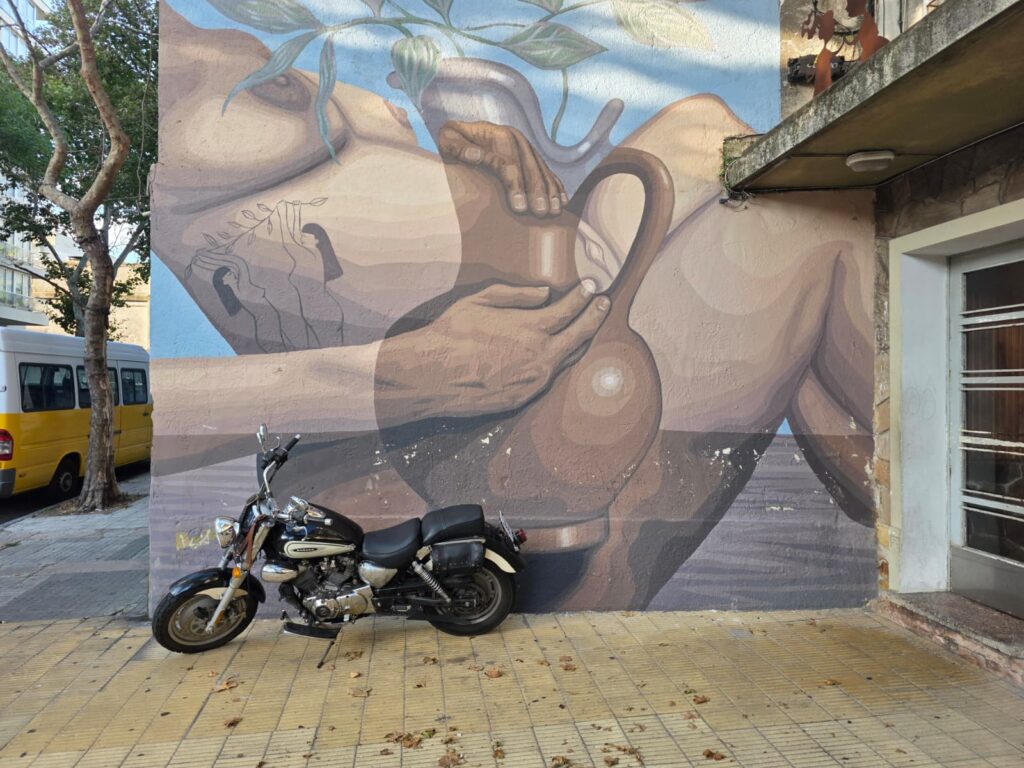
Murals celebrating Uruguay’s heritage and culture show subtle truth
Daily life in Uruguay
If you’re expecting “always-on city efficiency,” Uruguay will reset your expectations fast.
- Shops often open late (9-10 AM) and close early (5-6 PM)
- Long lunches and “I’ll get to it” scheduling are common
- Systems that require coordination can move slowly, not because anyone is malicious, but because the culture doesn’t worship productivity the way the U.S. does
- People routinely prioritize family time and personal time over work urgency
- Socially, Uruguayans tend to be polite and reserved, and less expressive than some other Latin American cultures
- It’s common to feel like (and be) an outsider for a while—but if you stay, learn Spanish, and integrate, the eventual version of community can be genuinely warm and immersive
The country doesn’t revolve around hustle. It revolves around life.
Transportation: Buses
Montevideo’s bus network is the backbone of daily transportation for most people as there is no metro or rail. If you’re living in the city without a car, you’ll almost certainly end up using it. Fares vary by route and by whether you’re taking standard buses which, as of 2026, ranged between 55 Uruguayan pesos ($1.45 USD), or newer electric ones, which were 95 Uruguayan Pesos ($2.47 USD) per ride. You’ll generally get better pricing and convenience using the local transit card (STM). The system isn’t glamorous, but it’s functional—and in Uruguay, “functional” is often the highest compliment
Taxes
The bottom line up front: Income from remote work performed from Uruguay will generally be taxed as locally sourced income
This tax section is quite long and in depth, but will be handy when you need it. Feel free to skip it now, and return later to read in depth. However, be sure to read it before moving to Uruguay
(Click for important details for planning your taxes in Uruguay)
Let’s keep this grounded: I’m not your tax attorney or your tax adviser and this is not tax advice. The tax laws of Uruguay are too nuanced a one-size-fits-all tax analysis – more so than many other potential destinations. Also, the same fine print regulation and compliance that makes for fairly low corruption and financial crime in Uruguay also make understanding taxes and tax planning in Uruguay more complex, so plan on hiring a competent cross border tax strategist
With that said, I want to highlight points for you, as a potential expat in Uruguay with foreign sourced income, to research and discuss with your cross-border tax strategist.
Uruguay does have one of the more expat-relevant tax incentives in the region, and it’s one of the reasons Uruguay keeps showing up in “move abroad” conversations. But, as you research, keep in mind that Uruguay generally taxes based on where income is sourced (where the work happens / where the asset sits), not based on whether you wire money into a Uruguayan bank account.
The big idea: Uruguayan residency is not the same as tax residency in Uruguay
Getting legal residency and becoming tax resident are related, but not identical, don’t happen based on the same criteria, and tax residency doesn’t happen automatically with residency – as it does in places like Indonesia or the US. And Uruguay taxes different “buckets” of income differently (labor income vs. capital/investment income, Uruguay-source vs. foreign-source, etc.).
The “tax holiday” many articles reference: Applies to capital income, not earned income
Uruguay’s National Budget Law for 2025–2029 (Law 20,446) includes changes effective January 1, 2026, including a revised regime for new tax residents.
In plain English, the commonly-cited structure works like this:
- The classic information shared about Uruguay taxes for expats was an “11-year” preferential window (the year you become tax resident plus the next ten fiscal years) wherein qualifying new tax residents can elect for favorable treatment on certain foreign-source capital income (think dividends/interest, and, under the 2026 framework, potentially broader foreign capital income/capital gains categories depending on how/when you qualify). But from 1/1/2026, Uruguay’s rules broaden meaningfully: certain foreign capital returns and related capital gains are treated as being within IRPF (individual income tax, taxed at 12%, with exceptions), unless you’re under a special election/regime. Take these two points to mean taxes in Uruguay are nuanced and change often, and speaking to a tax professional is something you need to prioritize.
- After the preferential window, the “headline” rate many expats plan around is 12% on foreign-source “movable capital income” like interest/dividends under the standard regime.
Two important nuances:
- This tax holiday does not automatically apply to “all foreign income.” The cleanest fit is typically foreign investment income, not necessarily foreign salary/business earnings performed while living in Uruguay.
- Qualification mechanics vary, including whether you’re treated as a new tax resident via standard residency/time tests or via investment-based routes.
Foreign sourced income earned via work performed in Uruguay is generally taxed as locally earned income, regardless of where it is sourced.
Work performed in Uruguay is generally treated as Uruguay-source labor income (even if paid from abroad). This is an important note that remote workers and digital nomads must realize and plan for beforehand. Unlike Thailand, Paraguay, and many other countries that essentially do not tax income for remote work sourced abroad, remote workers in Uruguay can expect to pay taxes as if they were working for a local employer.
Also: If you’re a U.S. citizen, Uruguay doesn’t replace your U.S. filing obligations. It’s an additional layer, not a substitute.
How Uruguay taxes foreign-source income (remitted vs. not remitted)
1) Uruguay is mainly source-based, not remittance-based
Uruguay’s tax system is built on the “source principle”. Income from activities/assets outside Uruguay is generally exempt, with carve-outs. However if you are performing an activity in Uruguay, even if its online, the source of the activity is considered to be in Uruguay.
So wiring money into Uruguay is not, by itself, the taxable event. The taxable event is typically:
- Where the work was performed
- Where the asset is located / economically used
- Whether the income falls into one of the foreign-income exceptions that Uruguay taxes for residents.
2) If the income is truly foreign-source and not in an exception bucket…
In general, if it’s foreign-source and it’s not caught by an exception, it remains out of scope whether you remit it or not, because remittance doesn’t change the source.
Example: you did the work outside Uruguay while traveling, got paid abroad, later wire savings into a Uruguayan bank—this doesn’t automatically “convert” it into taxable Uruguayan-source income. (Still: the details matter.)
3) The big exception: foreign investment/capital income (and changes from 1/1/2026)
Uruguay has taxed some foreign passive income for tax residents for a fairly long time, and usually dividends and interest from abroad. This was often cited at 12% under IRPF, unless you qualify for/choose a special regime.
But from 1/1/2026, the 2025–2029 Budget Law changes expand the scope: certain foreign capital returns (movable, real estate capital) and related foreign capital gains become treated as within IRPF at 12%, with specific exceptions and mechanics.
Key point:
For income that is taxable under these rules, it is taxable because of the category/rules, not because it was remitted.
4) “I live in Uruguay but my money is paid abroad”: The remote-work trap in Uruguay
Uruguay’s concept of “source” heavily tracks where the activity happens. If the work is performed in Uruguay, it tends to be treated as Uruguay-source labor/personal services income, even if the payer is foreign.
So, the “I’ll just keep it offshore and not remit it” idea doesn’t solve this, because again, remittance isn’t the trigger, location where the work being performed is.
5) New tax residents: the “tax holiday / election” is real, but it’s an election with rules, and doesn’t apply to “earned” income
Under the newer frameworks discussed publicly for people becoming tax resident from Jan 1, 2026, there’s an option structure that can allow new tax residents to be treated more favorably on certain foreign income for a multi-year window (often discussed as the “year of change plus 10 years”).
Reliable Uruguay tax sources that explain this better
- International Bar Association (IBA) – Uruguay 2025 tax country report: A clear overview of the territorial/source principle and the fact that certain foreign-source income for residents has been brought into scope since 2011, plus high-level explanation of the IRNR (non-resident income tax) option.
For precise rules and rates go to these sources:
- PwC Tax Summaries (Uruguay, Individual): A solid technical reference for IRPF framework and sourcing principle + “in specific cases foreign income is taxed.”
- KPMG TaxNewsFlash (Oct 2025): helpful on the proposed/implemented direction of the “tax holiday” style elections for new tax residents.
- Uruguayan DGI publications for “what counts as what” and how income categories are defined (good for sourcing rules and official language).
Again, I am not a tax attorney and not your tax advisor, and none of the above is tax advice. The information is there to 1) add clarity to circulated misunderstandings around taxes for foreigners in Uruguay 2) highlight that Uruguayan tax law is incredibly nuanced and actively changing which means that 3) you need to hire a tax professional in Uruguay early to create a personalized tax plan.
9 Mistakes to Avoid When Moving to Uruguay
- Moving before visiting for an extended period
- Not preparing documents for your residency
- Not tasting all of the neighborhood options in the city
- Underestimating the cost of living
- Overestimating the diversity in culture and food
- Assuming you can thrive with only English
- Not understanding that tax liability continues at home
- Not starting with travel insurance
Uruguay vs. the alternatives (Argentina, Chile, Colombia, etc.)
|
Factor |
Uruguay |
Argentina |
Chile |
Colombia |
|---|---|---|---|---|
|
Cost (expat day-to-day) |
$$$ |
$–$$ (FX-dependent) |
$$–$$$ |
$–$$ |
|
Pace |
Slow / tranquilo |
Fast/chaotic |
Medium/orderly |
Medium/energetic |
|
Safety feel (urban) |
High (regionally) |
Medium (neighborhood-dependent) |
Medium–high |
Medium (city-dependent) |
|
Bureaucracy friction |
Medium–high (slow) |
High (complicated) |
Medium (procedural) |
Medium–high (paperwork) |
|
Infrastructure |
Medium–high |
Medium |
High |
Medium (varies a lot) |
|
Culture fit (for many expats) |
Calm, private, reserved, liberal |
Social, intense, expressive |
Polished, structured, reserved |
Warm, social, lively |
A practical 30-day checklist for moving to Uruguay
Mindset first:
- Respect the peace. Keep the peace. Uruguay’s calm is its great draw, so don’t be the person importing chaos.
- Learn Spanish. You can survive without it, but you’ll pay more, and you’ll always be slightly outside the circle.
- Don’t move to Uruguay to fix it. No “it’s great but…” campaigns. Either accept the tradeoffs or choose a country you actually like, and save yourself and everyone else a lot of headaches.
- Assume everything takes longer. Plan like a patient adult, not like a tourist with a return flight.
Week 1: Land clean and setup
- Choose your base neighborhood and lock in housing with reliable internet for 1 to 3 months.
- Get a local SIM and register it with your passport
- Build your “money bridge”: foreign card(s), plan for accessing cash with minimal fees, and test Wise/Revolut transfers
- Start a simple routine: Gym, café, rambla walk. Uruguay rewards consistency
Week 2: Make it operational
- If you’re staying: start the bank account process, or confirm you truly don’t need a bank account yet
- Gather your documentation stack for residency, including proof of address, proof of income/S of funds
- If self-employed / invoicing locally: map your DGI/BPS steps and don’t slack on taxes
Week 3–4: Build a real foundation as a resident
- Pick your healthcare path (public vs. mutualista vs. private)
- Do a winter reality check of your apartment: Check insulation, heating, humidity, and don’t wait until July to discover your apartment is an icebox
- Stress test the country’s logistics:
- Buy something slightly niche and see how import availability/selection feels
- Take one regional trip and see what flight/ferry routing is actually like
- Start social integration:
- Spanish exchanges
- A weekly group activity (martial arts, CrossFit, running club, whatever)
- One local friend is better than fifty expat acquaintances
Other worthwhile notes to know about Uruguay that people don’t tell you
- Uruguay can be a great place to live and a hard place to make money — portable income is the cheat code.
- Food culture is milder; if you live on Thai/Indian/Mexican heat, you’ll cook more.
- Uruguay is stable — but stability often comes packaged as “slow.”
FAQ
Can Argentinians live in Uruguay?
Yes. Argentina is in Mercosur, and Uruguay has Mercosur temporary and permanent residency categories specifically for people born or naturalized in Mercosur/associated countries (Argentina included). In practice, Argentines generally have a smoother residency path than non-Mercosur nationals.
How much money do I need to live in Uruguay?
Uruguay isn’t “cheap Latin America,” so the real question is what version of Uruguay you’re trying to live in (short-term furnished in Punta Carretas vs. long-term local lease in Malvín is basically two different countries).
Planning ranges I’d use for Montevideo:
Lean / local lifestyle: $1,800–$2,400/mo (longer lease, fewer dinners out, fewer imported tastes)
Comfortable expat baseline (nice area, some lifestyle): $2,500–$3,800/mo
Premium / coastal comfort (Carrasco / lots of eating out / “I’m not checking prices”): $4,000+/mo
For a couple, add roughly $800–$1,500+ depending on rent style and how often you go out.
Biggest variables:
Rent (furnished vs long-term; neighborhood; building fees)
How imported your tastes are
How often you eat/drink out
Is Uruguay friendly to foreigners?
Yes—but it’s not performative friendliness.
Uruguay tends to be polite, calm, and “let people live.” People generally won’t hassle you, and you can build a very comfortable life. The flip side is that it can feel reserved. Friendships and community often form slower than in places like Argentina or Colombia.
Uruguay is friendly, but you have to meet it halfway—learn Spanish, show up regularly, and don’t expect instant social momentum.
Can you move to Uruguay as a US citizen?
Yes.
Entry: U.S. citizens typically don’t need a visa for visits under 90 days on a tourist passport, and extensions are possible through Uruguay’s migration authority.
Staying long-term: If you want to actually live there, you’ll shift from “tourist time” to a residency process (U.S. citizens fall under the non-Mercosur residency framework). Uruguay’s Ministry of the Interior lays out the residency categories and process.
Is Uruguay a good place to live in?
It can be excellent—if you want what Uruguay sells.
Uruguay is a great fit if you value:
– Calm pace, predictable routines
– Safety feel (regionally)
– Stability and institutions that mostly work
– A more liberal/rights-forward social environment
It’s a bad fit if you need:
– Big-city chaos and constant stimulation
– “Everything is cheap” Latin America
– Fast bureaucracy, fast service, fast anything
– Ultra-diverse food and consumer options without import prices
In other words: Uruguay is not a bargain. It’s a premium product
Does Uruguay have free healthcare?
Not in the “everything is free, always” sense.
Uruguay has a public system (ASSE) plus private mutualistas, with a national system financed through a mix of state funding and contributions (FONASA). The public side can be very low-cost for legal residents, but “free” is a simplification—somebody is paying, usually through taxes and/or contributions.
Rule of thumb:
Public (ASSE): lower cost, more waiting, less choice
Mutualista: monthly contribution + small copays, generally more convenient
Is the US dollar strong in Uruguay?
If you mean “can I live like a king because I earn USD?”—not really. Uruguay is expensive even if you’re paid in dollars.
But if you mean “does USD go far / is it stable?”—USD is very useful in Uruguay:
The country runs on Uruguayan pesos day-to-day, but USD is widely understood and commonly used for big-ticket things (especially real estate).
The exchange rate obviously moves, but as of the latest mid-market quotes it’s around UYU 38 per USD.
So: USD helps, but it doesn’t magically turn Uruguay into Thailand.
.

.
ABOUT THE AUTHOR
Carlos Grider launched A Brother Abroad in 2017 after a “one-year abroad” experiment turned into a long-term life strategy. After 65+ countries and a decade abroad, he now writes about FIRE, personal finance, geo-arbitrage, and the real-world logistics of living abroad—visas, costs, and tradeoffs—so readers can make smarter global moves with fewer surprises. Carlos is a former Big 4 management consultant and DoD cultural advisor with an MBA (UT Austin) and Boston University’s Certificate in Financial Planning. He’s the author of Digital Nomad Nation: Rise of the Borderless Generation and is currently writing The Sovereign Expat.