
In 2021, at the height of the pandemic, when the world was on lockdown and me and a few of my friends were living our best lives in Bali, amidst the euphoria, I threw caution to the wind and, against my more conservative investment nature, “bought” a little piece of land in Bali. The goal was to quickly and efficiently build a “tiny” nomad base camp, to use as a home in the green of the rice fields close to beaches for surfing, between traveling across Asia once the world opened. Additionally, I hoped to rent out the villas during our times off Bali.

At that time, land was “cheap-ish” for island real estate near a beach, labor and materials costs appeared cheap enough, and building and rental regulation was so laxed that most people (including myself) were unaware of many rules that would be more strictly enforced later.
Over the next 20 months, I navigated the highs, lows, and lowers of attempting to have my first home built in a place where standards and specifications are “suggestions” and “optional.” Despite all the chaos that mama Bali threw at us – from earthquakes, to cyclones, to shady contractors, to lawsuits, to regulation changes, to tax calamity and more – three years after finishing the experiment, my house and I are both still standing.
But the question is, was it worth it?
Was it worth risking building a villa in remote Southeast Asia in a place known for the unconventional and chaotic?
Better yet, if placed in the same position, would I do it again?
In this article, I’ll look back on the project of building a villa in Bali three years ago to assess what worked, what didn’t work, what I would change, and what I think about building a villa in Bali now. I’ll address the prospects for Bali in the near future from the perspective of someone whose been an appreciative guest for five years and gotten his hands dirty in the construction and real estate sectors. As a kicker, I’ll share tax secrets and surprises that you and your villa will face, why you may want to reconsider opening a “PT PMA,” what to look out for when looking for developers and Bali. To finish, I’ll share the bottom-line priorities I recommend considering to assess whether building or owning real estate in Bali is right for you.
The financial comparison at the heart of this question — what the equivalent investment in a diversified ETF portfolio would have returned versus the villa — is exactly the argument the rentvesting article makes in full, with the actual numbers: Rentvesting: Why ETFs Often Beat Foreign Real Estate for Expats →
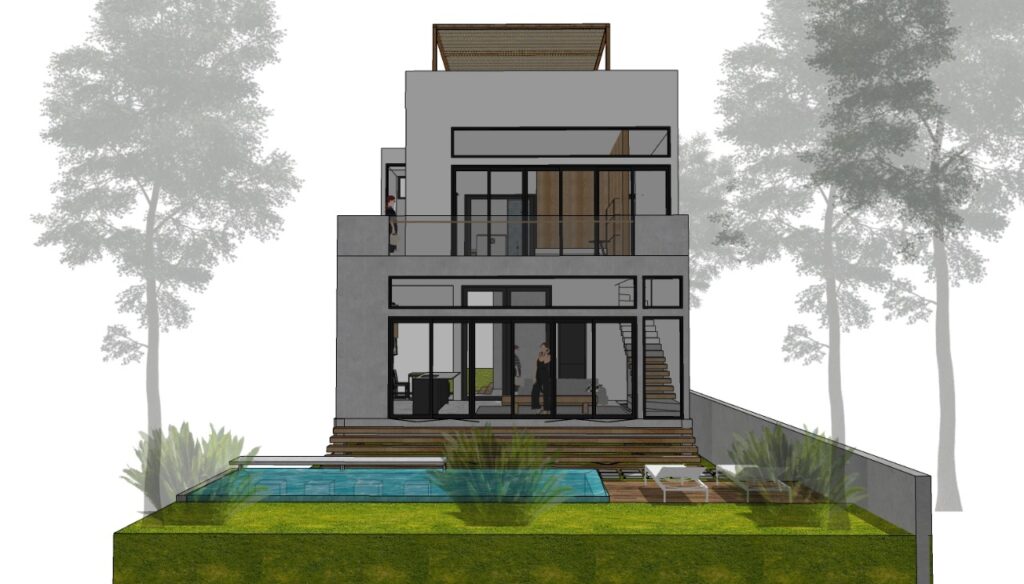
Table of Contents:
- Notes on My House: What worked, what didn’t
- Now, what didn’t work with my house…
- Notes on other people’s houses: What’s working, what’s not
- What I’ve seen working with other people’s homes in Bali
- What’s not working with other people’s homes in Bali
- Pro Tip: Use ChatGPT for extra, healthy skepticism
- On Renting out villas
- Buying existing and renovations: Don’t do it, here’s why
- Negotiating Land Leases
- If building in Bali as an investment, consider taxes and regulations before building
- Taxes: You will owe personal taxes and additional taxes if renting short term
- Legal Dump: You can own a villa in Bali that is rented, you cannot rent out a villa without a company
- Check the ITR (Land Zoning)
- What to do if you have an existing building and no IMB/PBG
- What to do if you’ve purchased Green Zone land
- Straight Answers
- The Hard Questions and Frequently Asked Questions about Bali
The Bottom Line Up Front:
- Doing an industrial style build (exposed concrete, exposed electrical wiring, expose piping, and emphasis on structural engineering) saved us from mold, during heavy rainy seasons, and made adjustments and upgrades easy compared to the all-white Instagramable villas most opt for
- The rainy season in Bali is like Squid Games for villas. Very few make it through with no issues. Leaky roofs, rising damp, poor water shedding design, and poor drainage from the yard are the issues that ruin the rainy season for many. Design your house to avoid those issues, and plan for your home warranty to be valid during the first rainy season
- Open living is a horrible way to go, between the heat, mosquitoes, and burning in the ricefield. Panoramic windows with wooden curtains (for sun protection) are the perfect balance.
- Plan the layout and architecture of your home for 1) the direction of the sun and its heat and 2) the direction of the wind and rain during rainy season.
- The government offices in Bali (Tax Office, One Stop Investment Shop, village administrative office, etc.) have been the surprisingly easiest parts of the experiences – and I recommend engaging them over agents. Do Bali a favor and eliminate the middleman
- Beware of “contractors” in Bali, as most are unexperienced, primarily salesmen, and have been running off with the money of foreigners and locals alike
- Beware of the Bali villa pyramid scheme which is very active among foreigners, with “off-plan development” being the latest, leveraged approach to the scheme
- Keep an eye out for knowledgeable workers and specialists (not generalist handymen). Treat them with respect, watch them, and ask them every question you can think of and you’ll get a graduate level education on construction in Bali
- Learning to speak very basic Indonesian has saved time, effort, money, and headache
- Taxes: If you’re living in Bali more than 180 days a year or renting out a villa, you have to pay taxes
- No single consultancy in Bali has been fully accurate on laws and taxes – so beware. The government offices are open to answering questions.
- Contacts in Bali generally have two years before they “expire” and become unreliable.
- For any service you dont use bi-weekly, or monthly, you will have to find fresh each time (belonging to a small group of friends that share contacts and keep them employed, leveraging the “obligation of reputation” will be your best bet)
- Do not hire an unknown for any job you do not understand. Google is your friend – looking up international building standards. Oddly, chatGPT is your friend too
- Beware that the more lucrative the environment gets (more touristy) more of Bali that is lost
- Don’t forget, there are great alternatives to Bali in Indonesia and throughout Southeast Asia. Don’t do yourself the disservice of settling before exploring.
Notes on My House: What worked, what didn’t
Of all of the places I’ve lived in Bali, I am happiest with my house. It is an industrial, almost brutalist, styled build that is oddly reminiscent of many minimalist cafes in Thailand. The priorities in the process were having everything exposed (electrical wiring, plumbing) for easy maintenance and upgrade, durability against the rain, heat, and mold that Bali is known for, a solid structure that will stand up to the inevitable massive quakes Bali will eventually have, and airy, spaciously open layout with unnecessarily high ceilings (3.1 meters/10ft). Beneath our feet, a one meter tall foundation keeps everything above flood level when it inevitably happens and out of reach of rising damp (and the mold that follows), and six meter long bore piles run into the bedrock below supporting the house above the shifty muds of old rice fields in the earthquakes to come. In the original design, half of the walls were just windows opening to ricefield views and a mini jungle with Kingfishers and Cockatoos waking us up each morning – but as of now only looks on construction developments.
The cherry on top (literally) is a flat rooftop that looks on to the ocean in the horizon and a bit of Uluwatu too.
So, what worked in the designing and construction of my house?
Exposed cement and ample ventilation kept things fresh, and mold/mildew free.
Coming from the US, where everything in residential homes is built with pine, I was happy to overdo it with the cement and leave it exposed – paint free unlike most villas in Bali, with just a breathable silicon sealant. This uncovered wall ensured breathability and quick drying without molding after an epic rainy season caused some shoddy windows of ours to leak. Additionally, having fans and motorized ventilation to the outside was so significant that even while we left for two weeks with a window leaking (I didn’t realize it until after), the rooms quickly dried with no signs of mold and mildew – which are ruthless in Bali.
Having an excessively tall foundation has prevented “rising damp,” aka moist walls
In Bali and wetter parts of Europe, a phenomenon known as “rising damp” in which moisture literally crawls up the inside of walls is a massive problem. The issue is that porous materials used to build walls that have tiny holes – such as masonry bricks or wood – suffer from a capillary effect when they are exposed to standing water for too long, such as which happens to houses during the rainy season for weeks on end. As a result, the water saturates walls up to 50 centimeters high on average and up to 1 meter in very bad situations. The constant moisture – because the house rarely has a period of dryness long enough to fully dry – ultimately always leads to mold and mildew. Then, mold and mildew become a foe that fades as things dry but never goes away.
In the foundation for our house, I’ve been able to beat rising damp with an excessively high foundation (1 meter off the ground) and using non-porous materials in the foundation (riverstones) that can’t soak up water. Thus, the walls of this house will never have the problem of rising damp.

(A tall, river stone foundation has been the successful defense against rising damp in my home)
As a warning for anyone wanting to refurbish a used house, I’ve seen many houses with the issue of rising damp, but the moisture and mold signs have been painted over, and the future owner/renter doesn’t discover the issue until the rainy season. As a precaution in renting/buying houses in Bali, beware of any house with 1) a low foundation (less than 50cm above the ground) 2) a foundation in contact with the ground made of porous materials and 3) poor plot drainage.
Additionally, if you are building new ensure there is a “damp proof course” or water impermeable layer between the bricks of your walls and your foundation that may soak up water – ideally with a non-porous material used in the foundation.
Having a flat rooftop has proven both useful, practical, and (almost) issue free
Ask any contractor or builder in Bali about flat roofs and they will likely tell you that a flat roof in a tropical climate and rainy destination (like Bali) is a horrible idea – and it normally is. With that said, I have no had a single leak from my rooftop, which I’ve enjoyed many sunsets and glasses of wine on. While on the other hand, I know of three other new villas that suffered heavily leaky roofs during their first two rainy seasons. So what made the difference?
- Prioritizing gimmick free water shedding to get water off the roof ASAP
- A conscious, full system for durability and keeping the house dry
So, what does this mean?
My roof is contractor covered by a burnt-on bitumen coat (tar on bottom, sand on top to counter the stickiness and allow walking), designed for the water to flow freely off the sides and not rely on a gutter system. During the rainy season, the flow of water over my balcony (where the roof is sloped to) becomes a waterfall as it pours into my garden. This is the key. My roof doesn’t leak because it is one contiguous layer with nowhere for water to pool up. There is railing on the sides of the house, but no walls on the rooftop.
In villas with flat rooftops that commonly leak, the problem is the parapet wall that wraps around the edge of the rooftop, leaving only the gutters to drain water from the roof. Pro tip: No gutter system is capable of properly draining an entire rooftop’s coverage of rain during Bali’s rainy season, which only leaves the option for inches of water to pool up for the duration of the rain while the gutters are overloaded. Yes, you could add more, wider drainage points, but it still won’t be sufficient. If your rooftop only has a painted on layer of waterproofing – like Aquaproof – you’ll get two years tops before the water finds the cracks that develop in the paint from sun exposure, then find the cracks in your cement roof.
Another fyi – all cement and concrete cracks. You can’t always see it and its commonly painted over, but all plaster, cement, and concrete will crack – and water will find those cracks.
So, the solution for a bullet proof rooftop – nothing to trap water in (like, no parapet wall), a durable contiguous waterproof layer (like bitumen), and proper slope.
What about pitched roofs? Why are those failing?
The primary reasons I’ve seen pitched roofs failing in Bali, is that they either don’t have a full waterproofing system (like, they eliminate the rigid layer, or eliminate the waterproof layer which is commonly Tyvek) and only do the “aesthetic elements,” or they don’t account for the wind and how it blows rain under tiles in Bali.
From my experience walking through houses under construction in the US, a good roof has a support layer (rafters), a flat rigid layer supporting (plywood usually), a waterproof sheet layer (Tyvek, tar paper, or an alternative), and a durable weather resistant layer designed to shed water, heat, sun, etc. (tiles, tar shingles, corrugated steel or PVC, etc.). Keep in mind, a good roof sandwich might have additional elements, but these elements will be the minimum for a good roof.

(Image courtesy of Green Building Advisors)
Now, in Bali, generally contractors eliminate the flat rigid layer (plywood) to cut corners and save costs. They may still put a layer of plastic underneath, but it always comes free due to Bali winds. And while those tiles keep things dry in a rain that comes straight down, when the wind and rain mix, the water literally gets blown under the tiles.
The solution: Whether you opt for a sexy rooftop or a practical pitched roof, ensure the roof is a full waterproof system that sheds the water off the house as quickly as possible. If you are having trouble visualizing this roof or understanding it, I highly recommend discussing your potential roof with ChatGPT and asking it how such a roof would hold up in extreme weather in different regions.
In early 2025, rainy season winds blew at 45 mph (70kph) during rain storms, which essentially means your house is being power washed. Don’t plan for the sunny days in Bali. Plan for the rainy days.
We didn’t use gypsum…at all
Gypsum, also known as drywall or plaster board, is essentially gypsum (soft sedimentary rock) plaster sandwiched between two pieces of thick paper. Drywall, or gypsum as it is called in Bali, is intended only for interior use in dry areas. Drywall has a significant weakness when it comes to Bali construction – exposure to water, moisture, or excessive humidity causes it to dissolve and disintegrate. Despite this, “gypsum” is used excessively in Bali, considering how rainy and moist a climate this is. At worst, drywall dissolves on contact with water. At best, when exposed to moisture it molds faster than anything else I’ve seen in Bali. I’ve lived in two houses wherein a small roof leak caused the false ceiling, made of gypsum, to completely collapse – luckily no one was in the room at the time, otherwise they would have definitely been hurt.
If you are tempted to use gypsum anywhere in your house, I recommend instead using fiber cement boards (aka Kalsiboard) as the fiber laced cement, unlike gypsum and paper, stands up to water and moisture impressively.
Exposed electrical wiring and plumbing made upgrades easy
Most construction contractors in Bali put everything in the cement floor or buried in the walls. Unfortunately the use of chases (piping or conduit that wiring is easily inserted into and removed) isn’t common, and you specifically have to request it. Even when chases are used, upgrades are limited to replacing existing wire and that’s it – any electrical appliance or lighting changes generally requires carving new holes in your house, and the cleanup, plastering, and painting that follow.
Exposed electrical wiring – a cue I took from common construction practices in Thailand – makes major electrical upgrades, like adding new outlets, moving hanging lamps, and adding ceiling fans, a process that takes 30 minutes or less and that I’ve done on my own several times. We’ve completely re-designed lighting to change the feel of our home, and the entire process took half a day and less than $30 even when hiring a professional. While exposed electrical lines aren’t for everyone, I personally like the look and I like the chance to easily fix and customize even more.
Buying “too much” land
In Bali, the climate of profit and greed first has every developer attempting to squeeze a mega villa into 100 square meters. However, for me, I’d originally planned to build a villa with a friend, purchasing a full 500 square meters which we would split. Unfortunately, he flaked but the hidden bonus was I was left with ample land which ultimately became garden and jungle – and it’s the best accident that came in the process.
the remaining land allowed for ample parking, spacious walkways, and three beautiful garden spaces. These are things that developers skimp on in Bali, to cut costs, and most buyers dismiss as unnecessary. However, after having them I realize in the traffic filled chaos of Bali, often devoid of privacy and greenspaces, accidentally having more private space to cultivate greenspaces, comfort, and security is one of the best luxuries you can add to your villa.
Whether it means wanting a space to walk and enjoy coffee in the morning privately, or having a space to hide during Nyepi, having too much land has been a great accident.
A clear coat finish on the outside of the house
While most villa projects in Bali end with a coat of white or grey paint, we fully committed to the cement look (and practicality) by going with clear waterproof paint on the exterior of our villa. This paint has allowed us to easily touch up the house and (even better) see clearly where the inevitable plaster cracks are. Its an odd approach but, whereas most villas in Bali are trying to hide their issues, we want to see them immediately, to fix quickly, before they become a bigger problem. White villas are nice, but often the paint hides developing issues – like cracks, leaks, and mold.
Though the brutalist architectural look of exposed concrete may not be your style, I can’t encourage enough designing a house wherein common problems in Bali are quickly seen, identified, and fixed. The tradeoff will save you time, money, and headache and improve the longevity of your home in the long run.
Now, what didn’t work with my house…
Too many windows, for such a sunny place where greenspace views disappear
While the panoramic view created by the original floor to ceiling windows worked slightly when the forest and rice field was in place, it became less worth it when construction began around us when zoning changed – which I am honestly in no position to complain about.

(While the panoramic ricefield views were as beautiful as planned, the greenhouse effect during the sunny points in the day made enjoying the views difficult. Plan your windows in Bali conservatively, and consider the direction of the sun in your design)
The major issue overlooked is – Bali is an insanely sunny place and an insanely hot place. All of those windows not only turn your home into a greenhouse, forcing you to close the curtains and miss out on the view, but are horrible for insulation. A room that may take one small AC to cool if made completely of brick could take two large ACs to cool with panoramic windows, even if there are curtains.
The lesson is be selective about where you point windows, and make sure its towards a view that you own and enjoy (garden or pool). Ensure the windows are setback or covered so that they won’t be overwhelmed with water from the tops, bottoms, or sides during the rainy season.

(Panoramic windows guarded from direct sunlight and pointed towards the greenspaces we own – and know will be there indefinitely – was a great idea)
To fix both issues – too much sun and too much rain – we’ve removed two wall’s worth of windows and kept the covered panoramic windows to the back yard. The result is a more private, more picturesque view with a house that is easier to keep cool.


(To fix the problem of too much sunlight, and heat, and the risk of leaky windows, we went through the pain of “downgrading” to adding a library and wall of art in places of the windows where jungle was cut down)
Vent stacks on plumbing are the key to eliminating the drainage smell
Throughout Bali you’ll run into an issue of whenever you turn on a faucet, you get an “off” odor. Many people swear it’s the water. In actuality, it’s due to a common practice of improper plumbing by forgetting (skipping?) the installation of “vent stacks” – which instead of directing the foul odor of plumbing out in to fresh air, instead force it back up the drain and into your face. Yuck. Vent stacks are tall, central venting pipes that allow the built up air in the septic lines and tank (from decomposition) to vent off into a place outside of the house. Proper P-Traps and S-Traps generally keep air from septic lines from re-entering a room. However, without vent stacks, the pressure from the water flowing into the sinks means that “sewage air” has nowhere to go but back in your face.
After six months of the odor issue from septic lines, we had a plumber check (thanks to the exposed piping), and he discovered the need for vent stacks, added vent stacks in 10 minutes, and were completely done with an odor free home.
Not forcing the essentials with the build (gazebos, awnings, window overhangs) during the building process and assuming they would be easy after
Nothing meaningful is easy in Bali construction. Never assume it will be.
The building process in Bali is stressful. You will have to force providers in Bali to do things properly that you’ve already paid them for and you will always be behind schedule. The temptation I gave into amidst this stress was eliminating things from our build plan – assuming they would be easier to do later. Do not do this. Do not eliminate anything from the building plan that you will want or need eventually.
In my case, I allowed the contractor to not build a rooftop gazebo and an extra 50cm on our boundary wall. These were major mistakes because the uncomfortable discussion of “remotivating” my contractor would take a fraction of the effort that it would to find a reputable provider that would do the job correctly. For instance, the steel gazebo on the rooftop involves calculations of load capacity on the roof, wind load on the gazebo thanks to Bali winds, and the dilemma of how to anchor a gazebo to the rooftop without permanently compromising the waterproofing. By contrast, the contractor that built the house already had engineering calculations as well as structural designs for the plan and could have poured a better anchor during the slab pouring process for a fraction of the price.
Ultimately, to improve a better outcome, simply do everything you need done when the project is underway, otherwise you will never be fully done.
Not inspecting everything according to the BOQ and plans, and ideally hiring a professional Indonesian third party to inspect and enforce the plans
Ideally, when building your house you should have a third partner project manager (ideally a licensed engineer) to inspect the house according to the plans for each stage of payment. These are very hard to come by, and I wasn’t able to find one with my timeline (and remaining patience). Secondarily, there should be a project manager on your construction team that does this – however, as he works for the boss and not you, plan on him being compromised and you needing to inspect yourself.
This ultimately boils down to the suggestion to understand everything in your home’s plans. Then buy a tape measurer, buy a level, purchase ChatGPT premium, and inspect everything. Check the brands of materials used and ensure they match the BOQ. Count the outlets, check their brand, and check their placement. Measure the width and thickness of columns, slabs, and doorways. Check the sizes of pipes. Compare everything to the drawings. And, again, if there is anything you don’t understand, get into a conversation with ChatGPT, then go back to the contractor and make him answer for any deviations. Remember, it is your contractor’s job to deliver the house you paid for and help you understand that it is the house you paid for. It is not your job (as a foreigner) to accept subpar work.
Not sticking to the original plans
Beyond procrastinating portions of the project for fear of the conflict/chaos, be sure to stick to the plan. Do not change anything…if possible. Your contractor has likely planned materials and process to accommodate on what you agreed on before. Additionally, those plans have (hopefully) been signed off by engineers, architects, and the government to create an accurate set of plans you can hand to the workers. When you made these plans you were in your right mind. Once construction starts you will not be in your right mind. The changes that seem easy will be hard, and the difficult changes will be excessively harder. Unless it is a matter of life or death, do not change your architectural and structural plans.
While this list could go on forever for the perfectionist, especially when considering architectural styles, interior design preferences, and whether you’re building your forever home, a tropical flexpat base, or a short term vacation rental, the list above covers the things I would prioritize repeating and avoiding respectively.
But how have my friends and other people’s homes faired in the last three years?
Notes on other people’s houses: What’s working, what’s not
In the time since I’ve settled into my home, and written about it on this site, I’ve chatted with tens (probably closer to 100) other people that had already built, were in the process of building, or planning to build in Bali. I was able to not only chat with owners about the issues they were overcoming, but also the approaches (and warnings) that they’d plan on if they built again.
Now I’ll share – based on my nosiness and friendly conversations – what worked, what didn’t and things to be aware of in Bali.
What I’ve seen working with other people’s homes in Bali
Pitched roofs with a roof full system, or overbuilt roof system
Half of the year, Bali is experiencing rain. Lots of rain. A good portion of those times, the rain will be torrential and paired with winds that will make you question if your house will stay standing. The best defense against both the wind and the rain is a durable roof, with a very steep roof and plenty of overhang. There is a reason traditional Balinese architecture, and architecture throughout Indonesia have a significant amount of pitch – to shed water as quickly as possible.
Reiterating points above, ensuring you have a durable top layer that is strong, sun resistant, and weather resistant is a key starting point. While terracotta tiles are the most common they rely heavily on being properly fixed in place and a second waterproofing layer beneath. Tar/asphalt shingle systems have performed well. Ironwood as well. Corrugated steel is durable but will always be loud in the rain unless coated with a soft coating like bitumen. Corrugated PVC is good in theory, but frequently cracks after a season in the dry, hot sun, and is known to leak at the screw points.
Second, having a single, contiguous waterproof layer is important. Tyvek is common in the US, but any durable, waterproof, windproof material (suitable for construction) will work

(Picture courtesy of Patriot Roofer at https://patriotroofer.com/)
Next, the rigid support layer, flat, and meant to support and keep the flexible waterproofing layer in place. In the US, for asphalt shingle roofs, plywood is most common, but I’ve see corrugated sheet metal options in Bali turn out well.
False ceilings (that don’t use gypsum) and low ceiling heights for easy cooling
Half of the year when it is not raining, Bali is hot, dry, and exposed to blazing hot equatorial sun. While you could install ten different air conditioning units in each room to stay cool, that’s not good for the environment, your electrical bill, or planning of your home. Instead, building a “false ceiling” )also known as a “drop ceiling”) which creates an insulative pocket of air between your actual ceiling and the ceiling you see is an energy efficient way to keep the Bali sun from baking you alive in your own home.
As mentioned above, beware of building ceilings with gypsum (drywall), as its susceptible to mold, will cave in on you with a very small (often inevitable) leak, and generally doesn’t stand up well to humidity. Considered fiber board (aka Kalsiboard), solid wood, bamboo matting, or even painted steel sheeting instead.
Additionally, while high ceilings look great for Instagram, low ceilings reduce volume in the room and make it much easier to cool, and in a well designed home you’ll never notice the difference. Most of my friends building their second villa are specifically planning for comfort spaces (the bedroom, the study) to be areas with low ceilings.
What’s not working with other people’s homes in Bali
Rising damp due to porous material in foundations, foundations that are too low
Rising damp is a miserable beast in Bali, because once it happens in a house, it requires the equivalent of open-heart surgery to get rid of. As detailed before, rising damp is the event of moisture and water literally climbing from the ground, up, and through the walls of your home, saturating the walls. Rising damp occurs in homes with foundations and walls that are too porous or too close to the ground.
Rising damp has been most common with people that have purchased “local builds” to renovate, or opted for their home to be built by a contractor that uses more “local building practices and standards” than internationally recognized construction practices and standards.

Though rising damp can (sometimes) be fixed by carving out the bottom 10cm to 20cm of your wall and replacing it with a non-saturating material, it is better to pass on a house than plan on this option.


As preventative measures, when planning your home, ensure 1) the foundation is built of material that is less porous and less water permeable (like stone foundations) over more porous and more water permeable (like brick) 2) the foundation is high enough above the ground and likely flooding level during rainy seasons 3) there is a “damp proof course” between your walls and the foundation.

Mold and moisture issues (in renovations)
Whether the water comes in from the top, via rain, or from the bottom, via rising damp and flooding, constant moisture is a home killer, but in the short term it is the primary contributor to mold. And I’ve heard very, very, very many mold issues mentioned in the last few years – even with new builds. All of them boil down to moisture. If you eliminate the risk of unwanted moisture (leaks) and ensure things dry fast when wet, mold won’t be a problem, but this needs to be planned into your house.
The three things that are best at preventing mold are dry air, fresh air, and sunlight. If the rooms in your house get plenty of sunshine and circulating dry air, mold won’t be able to grow. However, if your room has no natural ventilation, no mechanism to force air movement and exchange, and no sunlight, you’re guaranteed to have mold by the end of the rainy season. Even if you don’t have any leaks, the humid climate during the rainy season combined with the mold spores that are always in the air and a dark space add up to a mold problem.
So, ensure all rooms in your home have sunshine and fresh at all times.
No PBG (in real estate for sale/lease) or improper zoning (green) or improper zoning for short term rental (green or yellow-residential)
People continue to build without proper building permits and proper land zoning with the intentions to solve the problem later. Though I wrote extensively about how this is a very bad idea, especially if you are building a villa as an investment or with your life savings, I’ll mention the issue again.
The PBG is the “Building Permit Guarantee” (Persetujuan Bangunan Gedung) and is a building permit given to you by the Indonesian government based on the architectural designs you provide, structural plans, electrical and plumbing plans, water use, land zoning, and intended use. This building permit replaced the IMB, the “Izin Mendirikan Bangunan” or “Permission to Establish a Building.” Because the permission is based on architectural, structural, electrical, and other standards, not applying before building can result in surprise upgrades that the government will require before granting you a permit, if they do at all.
I’ve received more than a few Whatsapp messages from people that built a villa without the PBG at the recommendation of their contractor (assuming their contractor would help them). However, after the completion of the build, the contractor took the money and ran – as the PBG and SLF weren’t their responsibility based on the contract. This ultimately leaves the villa owner with an unpermitted build that can’t be rented out and is at risk of eviction and demolition in extreme cases. Of all the things I’ve figure out how to do on Bali, I have not figured out how to easily get a PBG after the fact via the SLF process, and I haven’t found anyone trustworthy that facilitates it, professionally, and for a reasonable fee.
While there is an “SLF” process, “Sertifikat Laik Fungsi” (Function-Worthy Certificate), which allows a prospective villa builder to apply for permitting of their villa after construction begins, its risky, its costlier, and it exposes you to a less structured process. In short, get your ducks in a row before you start building, and don’t rely on this BandAid for what will be the equivalent of a broken leg.
Lack of due diligence leads to building something you don’t own, or land that can’t be built on
This one goes back to my previous articles**, but aspirational homeowners are still getting excited about the process and building their villas without the proper research. Specifically, they are not fully researching who truly owns the land, what the land’s zoning is, and what it will truly take to build on the land. Understandably, for those enamored with Bali and observing the skyrocketing land and villa prices, they may feel the need to act urgently to avoid missing the boat – and thus skip prudent investment research in the process.
Do not do this!
Most recently a friend shared a villa for sale that seemed heavily pressured and the owner was demanding a deposit and sales commitment quickly. The villa was being offered “for sale” and with a lease that could “easily be extended”. I advised her to not do anything until she performed the full due diligence, which took about two weeks. In that two weeks, the villa owner stopped communicating, which might add pressure making one believe the owner had made a sale.
In actuality, it came out the villa build was unpermitted, that the permit would be extremely difficult to get because the villa was built on agricultural land, that the villa was only being sold with an overpriced 10 year lease, and that the (Indonesian) land owner was demanding $20,000 to $30,000 per year after the end of that 10 years, aiming to exploit a foreigner with (what he assumed to be) deep pockets. In a normal real estate sale in the US, enough of this information would come out in the process to discourage a sale. In Bali, the goal is commonly to get someone’s deposit before such information comes out – and there is no reliable recourse after the fact.
Roofs without a rigid layer
I’ve already mentioned proper roofing extensively. However – just to highlight one last time – the biggest roofing issues with normal pitched roofs is the roofs being built without a rigid support layer (plywood) and without a durable waterproof layer (Tyvek, tar paper) on top of that.
Plan for the wind and rain to blow water under the tiles if you have terracotta tiles. Plan for the wind to blow your waterproofing layer out of place if you don’t have plywood or similar holding it into place.
Parapet walls and insufficient drainage on flat rooftops
For flat roofs, plan on the gutters and scuppers to be insufficient to quickly drain your roof during the hours long heavy rains of the rainy seasons. If you have raised “parapet” walls around your flat roof, plan on it turning into a swimming pool while your drainage system plans to catch up.
To prevent this, in planning your build, plan for a backup (or primary option) that skips the meticulous piping, doesn’t trap water on the roof, and gets water off the roof ASAP. Additionally, plan for a minimum 3% slope, accommodating any unevenness in your waterproofing layer. Burned on tar (bitumen) is the best performing waterproofing option for flat, concrete roofs that I’ve found.
Lacking plumbing vent stacks and plumbing with piping too small
Plumbing is a complex issue that I seriously underestimated before coming to Bali. The nuances and complexities of planning for clogs, avoiding sharp bends, planning proper cleanout points, ensure a slope that is not too flat and not too steep, ensuring the “run” between a drain and septic/sewage point, etc. is a hefty field that affects health and comfort more than we give it credit.
Most houses in Bali suffer from either odors from sink drains or clogs. I’ve heard these complained about in conversations routinely as well as in Bali Building Facebook and Whatsapp groups. In the long term I encourage you to research drainage pipe slope, S/P traps, grease traps, vent stacks, and proper width.
For your build simply ensure that your pipes are wide enough to accommodate a few mistakes, and ensure venting “stacks” are added to pipes outside that allow the venting of nasty gases from greywater runoff to vent into the air instead of in your face from the sinks.
Open Living: Open Living works on Instagram and nowhere else
Open living designs are generally cheaper, look more Instagramable because they are more connected to nature, and are a welcome contrast from the little boxes with tiny windows (apartments) that most people live in most of their lives.
What you don’t realize that ruins the dream is Bali is filled with mosquitoes and heat. When you’re here on a one week holiday, the euphoria helps you overcome the mosquitoes, and you jump in the pool to cool off. When you live here, especially when you live next to a ricefield or river, those Dengue carrying mosquitoes become a miserable foe. Additionally, the open living is unusable and debilitating when its 30 Celsius (86 Fahrenheit) in the cool part of the shade.
Bali is beautiful though, and hiding yourself in a viewless box isn’t the answer.
Instead of open living, use well planned, high quality panoramic windows pointed at intentional views. An option to open them all on those rainy days is even better. Ensure they are constructed with something strong (like high grade aluminum with ample thickness) or PVC, nice and thick, ideally double paned. For the sun, look into “krey,” the local name for rollup bamboo and hardwood curtains that act as amazing sunshields with a touch of class.
Doors and windows not sealed (let’s in “flying bugs” during rainy season, and makes cooling/heating inefficient)
I’ll prep you now – the finishing stages of building in Bali are rough. While for you the final elements that piece the plan together are no brainers, many of them just won’t happen unless you press the point.
Ensuring doors and windows are properly sealed is one of those areas.
During the rainy season, termites literally swarm the air and crawl into houses through any unsealed hole, then oddly shed their wings and disappear. Ensuring doors and windows are properly sealed will save you this quasi-apocalyptic experience as well as make your house easier to keep cool.
Planning to rent out a villa on AirBnB without understanding the tax, legal, and immigration issues
I’ve met more than a handful of people who decided to build a villa in Bali to rent it out, built the villa, and then left the regulatory and tax considerations as an after thought.
The kicker is that, best case scenario is you plan poorly and end up paying an additional 32% in taxes – in addition to marketing fees, villa management fees, and maintenance fees. Worst case is you can’t rent out the villa at all, due to zoning or work restrictions.
I’ll discuss more on taxes and PMAs later, but know that researching if you can rent out the villa, how you can rent out the villa, and whether or not a PMA is even right for you should happen before buying land and planning your villa.
Connecting with furniture suppliers and construction workers/developers from Java
There is an admittedly beautiful design scene and element in Bali. The Balinese are extremely visually creative, as evidenced by their temples, the Ogah Ogah festivals, and even the bohemian art and custom motorbike scenes. However, these creative circles are all quite young.
By contrast, the island of Java is a land of craftsmen. The best construction workers, best carpenters, best Joglo builders, and best furniture makers unpretentiously come from Java. Though Bali based furniture makers and designers market themselves heavily, head to Java for incredible craftsmanship at a descent price.
If furnishing a whole home, its worth it to fly to Java, rent a bike, and cruise the carpenter villages in search of what you need. I won’t share my secrets here, and I’ll leave that as an open adventure for you.
Replacing all ground and grass with cement, increasing risk of flooding, preventing recharging of the water table
One of the biggest mistakes (in my opinion) is making a villa that replaces all of the natural green with concrete. While I admittedly live in a concrete box, from the first step into my garden, the path is made with porous bricks and lined with low maintenance grass friendly to the climate, banana trees, mango trees, frangipanis, and vines. Wildly greenscaping my villa not only keeps the grounds cooler but helps manage three water issues. First, my gardens never flood, as the porous bricks, fertile soil, and grass drain the water quickly even in the heaviest of rainy seasons. Secondly, at a time when Bali is notoriously suffering water management issues, this approach ensures the rain is allowed to reach and recharge the natural water table that feeds the wells that supply most houses. Last, a densely greenscaped villa requires no additional watering. When my villa was just grass, the constant sun exposure required watering twice a day, at a time when Bali was more publicly going through water issues. Now, the balance between bushes, shade trees, and grass gives me a garden that never requires water, looks beautiful, and at the heat of the day has sitting spaces that are cooler than inside my villa.
Bottom line – when it comes to the grounds around your villa, go for grass over concrete.
Yard drainage not planned into architectural plans
My comment about the greenscaping of the villa ensuring that my villa grounds never flood isn’t totally accurate. My building contractor completely ignored the drainage plans in my villa architectural plans leaving me to fix it myself. After multiple trips to the hardware store, I installed a pseudo-French Drain with a tropical twice. Four inch wide PVC piping with holes drilled through is set in stones and connects the corners of my yard and exits at a single point out of my villa wall. I can see from the drainage during rainy days that it barely drains as the ground absorbs most of the water – but it is a worthwhile backup as flooding becomes more likely, thanks to continued development around me eliminating greenspaces that are essential in water management.
By contrast, many villas suffer from moisture issues partly due to improper drainage planning. Don’t let that be you.
Mis-timing use of the home warranty period (ideally covering the first rainy season)
When your home is constructed you should have a “warranty period” in the contract. If you’re lucky, the warranty period is six months to a year. If you’re unlucky, it’s three months. Do your best to ensure that your warranty period covers your first rainy season.
The dry season in Bali, as a villa owner, is beautiful. Nothing goes wrong. The rainy season is villa squid games, and the monsoons will highlight every roofing, foundation, and plumbing building flaw you have. During that time, contractors and tukangs will be in high demand, hard to find, and will charge more than you’d pay in San Diego or Sydney to fix emergency issues. I was quoted $3000 to fix a window leak, demanding 50% deposit before he would even come assess the problem.
Planning your construction so that the developer/contractor takes responsibility for their mistakes the first year is the only way to go.
Misstructuring the payment terms
One of the biggest travesties people experience in the Bali building process is contractors literally taking their money and disappearing. Due to the “relaxed” nature of things on Bali, and the sketchy level of demand for construction professionals lately, you will often sign a contract with, pay, and plan to work with an individual without ever seeing an office or location to tie them with. They will consistently meet you at your house or in a coffee shop, and if they decide to stop answering your calls, you have nearly no options.
The only way you can reduce the risk of losing money with a bad contractor is by not giving any more than you can lose.
Contractors routinely demand exorbitant amounts for deposits – the guy managing removal of windows in my house right now requested 50% upfront on an overpriced renovation. Deposits are generally only meant to cover immediate supplies, and 10% is sufficient. To be honest, the only reason I agreed to 50% is because I know three other projects he is working on, and if anything goes wrong I will happily show up and follow through on getting my money back – but I should have negotiated lower, and so should you. For deposits, 10% maximum.
Not only does overpaying on a deposit, or any payment, leave you prone to being ghosted, but you’ll realize that with contractors, the most motivating factor for proactiveness and responsiveness is having money on the line. If they are close to getting money, selling a deal, or receiving a payment, they will always respond. If they already have your money, you drop as a priority.
So, insist on smaller, more frequent payments to keep your contractor’s attention – and if he does ghost you, you lose as little as possible.
Termites, rot, and wooden builds: Go with “ironwood” or not at all
For those on a budget, the allure of a wooden house in Bali is always there, and it is always paired with a rice field plot for rice field views. But, do you remember those rainy season bugs I mentioned? Termites? You should absolutely not build wooden houses in Bali for that reason.
The exception to the “no wooden houses” rule is ironwood, also known as Ulin. Ironwood is a miracle wood that I am in love with. It is so dense that it sinks in water, like iron, hence the name. Steeped in water for years, it doesn’t rot. Ironwood is also so dense that termites can’t eat it. All of this is why quality Joglos (traditional and classic Indonesian wooden houses) are only built with ironwood.
Additionally, for normal wooden houses made of pine, young teak, and bangkirai, the constant wet and humidity of the rainy season often leads to rot and mold. The supernatural nature of ironwood is the only wood that stands up to the elements consistently.
So, if you can get your hands on beautiful ironwood, build that wooden house. Secondarily, consider using Kalsiboard to built a “faux wooden house” that will stand up to the termites and elements. Otherwise, plan for termites and skip the wooden house.
Contractors have been sketchier and sketchier
The only thing that has gotten worse than overdevelopment in Bali are the contractors. Because of not only a surplus of work for building contractors and a shortage of qualified construction professionals, contractors are demanding higher prices (beyond normal inflation) and delivering lower quality work as they give in to greed and take on more projects than they can handle.
To boot, as said before, the phenomenon of contractors disappearing mid project with the payments is becoming much more common. Even a Balinese business owner in my neighborhood was a victim, as the workers walked off his job sight after admitting they hadn’t been paid in two weeks. The contractor refused to answer my friend’s calls, and he didn’t even bother to take any legal recourse as he felt it was pointless.
Now, if contractors are doing this not just local Indonesians but to Balinese people (who are highly regarded and respected in Bali) imagine the amount of care (or lack of it) a foreigner can reasonably expect to receive.
The pattern I have noticed is that construction contacts – developers, contractors, and tukangs – are good for approximately two years of recommendations. During that period, they will deliver amazing work, true to their word, almost driven by a desire to uphold their reputation in the social network. But, at the two year mark, this falls apart. Quality dips, calls don’t get returned, and things begin to get careless. Don’t fight this, plan on it, and the second you see signs of failure, get out, save your money, save yourself, and start that backup plan.
The exception to the two year rule on Bali are the actual construction workers. The guys getting their hands dirty that come from Java. They often don’t speak a lot of English, they are the ones actually planning the projects and doing the work, and they are the true craftsmen. Watch them and you’ll notice they navigate complex problems with rudimentary tools and deliver – just like they’ve been doing it skillfully for 20 years. When you find these guys, get their phone number and hang on tight. They will be the ones you can rely on for any job within their skillset, and without the self-important pretentiousness you will get from developers and contractors if you call them out on their mistakes.
They are called “tukangs,” which some translate as handymen, but the legit ones are true craftsmen. If you find these guys, please be respectful and occasionally pick them up a nasi bunkus for a hearty lunch or dinner if they’re working harder or later than necessary without being asked.
Other Tips:
Kalsiboard rules – use it anywhere you’re offered gypsum
“Kalsiboard” is a brand of cement fiber boards used as the blanket term for cement fiber boards throughout Indonesia. These durable, fire resistant boards shaped to look like normal wood planks offer a durability against water and mold that crumbling gypsum can’t offer or match. Be sure that in any outdoor space, or a space potentially exposed to water or heavy humidity, Kalsiboard is used instead of gypsum. While the cost is initially more, you’ll save yourself the danger and replacement costs that happen when the gypsum collapses or molds.
Go exposed where possible, and add proper maintenance access points where you can’t
In Bali, and with villas in Bali, things will break. It is an imperative. Whether due to poor quality materials, poor quality work, or simply the harsh conditions (for homes) of constant wet, humidity, and blazing sun, cracks will form, appliances will break, and things will leak. So, in planning a villa that is comfortable and built to last, longevity matters less on building a villa that never needs to be repaired, maintained, or renovated, but instead on building a villa that can be easily be repaired, maintained, or renovated. Ensuring proper access and maintenance points to the major systems in your villa – electrical, plumbing, roofing/ceiling, ensure when problems do happen, the diagnosis and repair will be quick and easy.
The two options for keeping the repair and maintenance quick and easy are exposing all of your systems, or adding frequent access points for maintenance to your systems.
In my home, I chose exposed electrical conduit throughout, and exposed plumbing on the exterior of the home. It has proven a lifesaver, and headache saver, in maintenance – such as diagnosing plumbing clogs and adding more “cleanouts” and vent stacks later, or simply adding more lighting quickly (10 minutes total) in the living room. However, this industrial look isn’t for everyone.
If you choose not to make your major systems exposed, add proper access.
For electrical systems, ensure proper chases (encased in conduit) are placed in the walls, so that wiring can be added, removed, or replaced easily. A common shortcut electricians/contractors in Bali use is placing bare wire directly into the concrete of the floor and walls, which adds up to bad building standards, a difficult to diagnose electrical situation when you have electrical issues, and a massive problem if any outlets, wiring, or lighting fixtures need to be replaced.
Ensure your plumbing system has accessible “clean outs,” points that can be screwed off easily to access and clean the inside of the pipes. Keep in mind if your plumbing pipes have extended length, you’ll need more cleanouts, so that common plumbing tools in Bali (like pipe snakes) can reach the problem.
For ceilings and roofing, a major problem is that in Bali once the tiny, light-footed roof workers disappear, roof maintenance and roof leak diagnosis becomes very difficult due to access. Getting a look inside the attic or replacing a single clay displaced by a cat running becomes near impossible without either a longer ladder than you have or risking your life. When planning your home, consider access to the space between your false ceiling and roof, so that you can get a look at problems that will inevitably occur. Also consider a structure overheard that can support your weight enough to move around and check out the problem without risk of falling through the ceiling.
Plan for ventilation
The best antidote for mold is prevention, and the best prevention for mold is sunlight and airflow. Let’s assume you have the sunlight covered and focus on airflow.
Many “local builds” in Bali incorporate the need for ventilation, but fall short on ensuring airflow, by simply adding breeze blocks in place of windows. While this may add some airflow, it often doesn’t add enough to prevent mold and also allows rain and mosquitoes in, which create new problems. In place of breeze blocks, I recommend forced ventilation, in the form of fans.
Placing electrical fans in the wall of each room – ensuring they are equipped with the settings to blow air in and blow air out – ensures on demand airflow to keep the fresh are in rooms that potentially helps prevent mold. These have been my favorite impromptu addition to my villa, as I’ve left them on when leaving home for weeks at a time during rainy season and even with light moisture issues (like the wind blowing water in under a door), I returned to a dry home with no mold.
A warning – when adding fans, avoid ducting and simply opt for a fan that can be placed directly in the wall. Ducting creates a place for geckos, birds, and rats to make a home in and creates one more place to maintain. Also, ensure the fan has a mechanism that covers the airflow path when not in use and screening, to prevent bugs and critters from crawling in when the fan is off.
(**picture of fans**)
Smaller rooms are easier to cool
While I love the high ceilings of my home (3.1 meters in my main home, 6.2 meters high in my loft), the design has proved frustrating when trying to keep cool during the hotter seasons in Bali. While you theoretically could purchase several massive air conditioners in an ultimate show of luxury, this is neither convenient and efficient nor responsible. Instead, compromise on ceiling height to make a home that is easier to cool.
If you are dead set on the aesthetics of a spacious home, intentionally place high ceilings in the places people see (living room, kitchen) and keep the ceilings low in comfort spaces (bedroom, bathroom, study).
Avoid steel windows if they’ll be exposed to rains
While steel frame windows are appealing because they are cheaper, and steel is naturally much stronger than aluminum and PVC, avoid steel windows – especially in uncovered spaces particularly exposed to rain.
While I do like the look of many arched steel windows which are common in Bali, they pose a plague of rust and leaking issues.
While the potential galvanized or stainless steel used in the windows may not inherently rust, the weld points on the windows will rust, and will prove the gateway to rust, degrading connective points, leaking, and a domino effect of other problems.
As for leaking, most steel windows are fabricated from scratch using hollow square steel that wasn’t inherently designed to be windows and facilitate the waterproofing a window needs during a tropical rainy season. The result will likely be hollow steel connected with tack welds and gaps filled with either epoxy or Bondo (auto body filler) that isn’t meant to be leak proof. The result is something that looks like a window, and would do well in the dry climate of Arizona or Morrocco, but adds up to incessant leaky headaches in Bali.
If you are lucky enough to find a good craftsman, they may be able to fully design and build steel windows that don’t leak, but this is a 1 out of 10 chance, and the windows will still need to be resealed in 3 years tops.
A better bet is opting for high quality PVC or aluminum windows made from materials designed to used for a leak proof window in a tropical climate. Properly designed by professionals dedicated to fabricating windows, with no issues of rust, and a lifespan much longer than 5 to 10 years before needing a refresh.
Place windows strategically, and clarify the quality (thickness) of aluminum or PVC and whether they will be prefabricated or built onsite
Windows keep out the elements of wind and rain, however, they let in the elements of sun and the accompanying heat. Lastly, they let in the beautiful views of Bali that we all moved to Bali for.
When designing your home, plan your windows based on the path of the sun – not just letting in the sunlight, but accounting for how hot the sun can get, turning your home into a greenhouse. Know that Bali is such a sunny place that windows facing indirect sunlight still offer more than enough sunlight without turning your home into an oven. I learned this from experience.
In the original design of my home, 40% of the walls in the house were windows, half of which facing the travel of the sun. Major mistake! Not only did this ruin the little insulation my home provided, but it also soaked up the sun’s rays a little too much. As a result, my first renovation project on the house started with removing 18 square meters of windows, which amazingly brought the ambient temperature of the house down immediately by 5 degrees Celsius.
Beyond planning your windows for sunshine and heat, plan your views based on what you know will be there in 10 years – primarily your garden and views of the sky.
The original misguided plan with a house that was half windows was driven by a tiny jungle next door, filled with 8 meter tall trees and colorful birds that woke us up each morning. But as luck would have it, two days after moving into my new villa, I awoke to the sounds of chainsaws, cutting down the tiny jungle I’d built in so many windows for. In it’s place, eyesore houses and a shoddy guesthouse. The moral of this story is, don’t plan for anything to stay the same in Bali that is beyond your control – that includes green zone jungle and rice field views.
(**view of the jungle next to the house**)
Instead, be sure to plan space around your home for a garden and the green views you want to endure, and place your windows there.
For renovations – start with a small project, and negotiate no more than a 10 percent down payment with several milestones
Due to the pattern of excellent salesmanship and poor delivery in Bali, beware of overcommitting on projects with unverified contractors and craftsman. I’ve learned that many contractors in Bali have little actual construction experience and simply work hard on selling the work, and then pass of delivery to another party – a foreman that is their partner with a team of laborers and craftsmen (tukangs). While this model is common around the world, the part that isn’t common is how unreachable the contractor, your main point of contact, will be once they’ve received the money they need for the project. Additionally, many contractors take large deposits not necessarily to fund the project the deposit is for, but to cover mismanagement of funds on other ongoing projects.
While it is virtually impossible to stop these unprofessional practices or detect who is a reputable, professional, experienced building contractor (there are many in Bali, they’re just all too busy working to oversell themselves) compared to the scammers that just started yesterday, it is possibly to minimize your risk of loss.
To minimize risk of loss, in renovations, start with a small project to test a contractor, paying attention to their promptness, communication, and team management without your involvement. For this small work, pay no more than 10% deposit for the project and negotiate that you will pay more for materials as necessary. Whatever you observe during this project, accept that the professionalism, quality, and efficiency with which they and their team work will get no better, and worse is more likely.
Also understand that just because someone else received impeccable service does not mean you will. What you see is what you get and will get (or less). Never more.
For air conditioners, opt for inverted ACs as big as you can afford (2pk to 2.5pk) instead of bigger, non-inverted aircons
Air conditioners will be essential in Bali. You will have two general types manufactured in three different places and by several different brands.
The best possible way you can go with air conditioners is Daikin brand air conditioners that have inverters and are made in Thailand.
Inverters are little “doo-hickies” in an air conditioner that allow it to run more efficiently and cool your home easier. While older, non-inverted air conditioners can either stay on at full power or turn off with no in between, causing power spikes as they turn on and off, inverted air conditioners can run on a spectrum of low power/speed to high power/speed, running continuously to keep your room cool while using low power.
Ultimately, inverter AC’s cool rooms more effectively with lower power, cost less (in terms of electricity), and last longer. Though they tend to cost 20% to 30% more than non-inverter air-conditioners, its well worth the investment.
In terms of where AC’s sold in Bali are manufactured, Thailand, China, and Malaysia are the big options. Thailand always delivers quality. Malaysia’s quality in reasonable, but second to Thailand in quality and durability. Chinese air conditioner quality varies by model and manufacturer.
In terms of brands, anytime an AC is performing impressively well, it is likely a Daikin and made in Thailand. Second to Daikin is Gree, which is cheaper and made in China.
In my house, I started with two Daikin non-inverted AC’s and two inverted AC’s. I added two large inverter AC’s so that there is at least one in every space, and these AC’s (2pk inverter Daikin) cool on half power far better than the 2.5pk non-inverted Daikin AC’s which were the best non-inverter AC’s available on Bali at the time.
Bottom line – if you want performance with minimal headaches, opt for Thai made inverted Daikin AC’s in the largest PK (horsepower rating) that you can afford. You won’t regret it.
Observe and inspect every step in the construction process. Understand if you miss major milestones (pouring concrete columns, pouring reinforced steel foundations, placing pipes) corners will be cut for budget, convenience, and laziness.
I had a meeting and missed the construction of a brick wall and arrived shortly before it was finished. I noticed a small sign that horizontal reinforcing steel wasn’t place in the top row. I asked if the steel had been properly placed in the other rows and was assured “yes, of course. every row.” With healthy skepticism I said “ok prove it.” The workers removed brick by brick of each row, adamantly assuring me they’d properly reinforced the row we were about to remove. We removed 8 rows of bricks in total, the entire section of the wall, and not a single row had the proper steel reinforcement that was planned. So, eight separate times, the workers lied straight to my face, assuring me they’d done what they hadn’t during the work over the last two hours. This happened just a week ago with a highly recommended contractor – meaning even three years later, the building experience in Bali is rife with poor quality, dishonesty, and exploitation, and arguably more so than during my build previously. During my first round of construction, I had one instance where a third partner service provider did lie to me, but when I told him I was going to measure, he corrected himself and the situation immediately – instead of lying to me even as the lie was staring us both in the face.
The moral of the story is trust that anything you do not observe will not be done to the standard you are planning for. Check everything, focusing on critical stages (foundation, slabs, structural concrete pouring, plumbing, electrical placement). Additionally plan that the supervisor on the project will exercise the same level of carelessness, laziness, and dishonesty. Either inspect for yourself to ensure standards are adhered to, or hire a trusted and qualified third party to inspect.
Pro Tip: Use ChatGPT for extra, healthy skepticism
As mentioned before with the contractors – one of the biggest struggles with construction service providers in Bali is a current issue of a lack of professionalism, a lack of formal training, and a lack of experience. In the tourism and expat boom of Bali, where foreigners arrived and started spending $150,000 to $200,000 to construct homes in a market that once commonly sold homes for $30,000, construction became the gold rush boom that hustlers flocked to. Even if they were furniture makers, valets, and chefs two years before (yes, three contractors I knew switched from these professions), the wild west nature of Bali and often unenforced regulation made it possible for charming and fast talking locals to, if ambitious enough, sell villa projects that they would contract other foremen to deliver.
The sticky dynamics of the construction services ecosystem in Bali is enough for its own post, but the point of this is, with many contractors you will end up with someone advising you on important aspects of construction – structure, roof design, drainage, plumbing, electrical planning, etc. – that have no formal training, no experience, and aren’t actively leveraging building standard resources.
This creates the problem of the question, “is this the right way to do this?”
If you ask the hustler contractor, the answer will always be “yes, we can.” And, to their credit, they can do it the way you’re asking, or the way they’re selling. However, when the house crumbles a year down the road, that’s your problem…not theirs.
So, how do you find the appropriate answer or building standard without digging through the International Building Code on your own and running structural engineering calculations?
As much as I hate to say it – ask ChatGPT.
From my tests, ChatGPT has been a much more accurate advisor on proper construction standards, than all of the contractors I’ve met in Bali. From structural planning, to proper plumbing practices, to proper safe wiring practices, ChatGPT has been great for highlighting bad building practices to approach construction service providers about.
I want to note – ChatGPT is not (yet) suitable for fully designing and planning a villa build. However, if you are stuck in a construction situation that you do not understand and you feel like the “professional” you’re dealing with is gaslighting you about proper building practices (according to international building standards) have a conversation with ChatGPT, enter the numbers and information you have, ask for example images, and ask what you’re not seeing.
I want to warn that I have seen ChatGPT making errors in construction planning and design, but it has been a great potential tool in highlighting design and planning mistakes as well, so that I could find another solution.
On Renting out villas
The allure of Bali is partly its chaos. Watching the pandemonium of its traffic as motorbikes drive the wrong on a street and internalizing the standard of lateness and that time doesn’t exist might make the quick traveler the entire island of Bali as their canvas to play, explore…and earn.
All of those bits are true, but the last one of “earning” comes with special requirements. Even with the all too tempting project of building, renting and selling villas.
It is important to remember that while in Bali, despite the lack of enforcement, the laws of Indonesia still apply. These “extra laws” for earning income by renting out real estate are no surprise as anywhere you go – Spain, Japan, Germany, Chile – they will generally apply. Even if, for years, people in Bali have disregarded them, the new darling of Indonesian tourism is no longer flying under the radar. I don’t share these points to criticize Bali or Indonesia – Instead quite the opposite. I share these points to remind would-be landlords that regardless enforcement in Bali now, Indonesia bears common regulations and practices governing real estate and enforcement is likely to increase in the future – so better to plan for it now.
Laws and more commonly enforced practices to heed: **
Foreigners cannot “work” in Bali without a work permit – to include marketing and “hotel operations” common to short term rentals and Airbnb’s
This law isnt new but around 2022
– Short term accommodations that compete with hotels – such as airbnbs – are subject to additional regulation and taxes
– Any earnings within the country are subject to taxes
– Anyone that qualifies as a tax resident (staying 180 days) is obliged to file taxes in Indonesia
Buying existing and renovations:
I recommend avoiding buying existing homes with plans for renovation at all costs – unless you have access to the original design plans and you certainly aren’t looking at a house that has had a lot of makeup thrown on some potentially disastrous problems. The exceptions to this are if you have ample knowledge of home inspection and building trends in Bali, or proceed with extreme caution
Many people buy existing structures to renovate on shorter leases because it is “cheaper.” In actuality it generally isn’t, as you are paying for a fraction of the lease you would get when owning the home or that renovation usually costs much more than most people anticipate.
The issue: Bali is a place where they excel in doing pretty veneer, but often fail in the practical and functional elements that hold up a building. This focused expertise in “polish” makes it difficult to discern the true problems in a used house.
Most buildings aren’t sold with the original construction plans, making it difficult to impossible to assess the foundation structurally, and assess earthquake suitability (presence of bore piles) or proper construction to avoid rising damp.
Used homes in Bali are extremely well masked to hide mold and rising damp.
If the roof has issues, you won’t discover it until the rainy season, a miserable time to learn about and fix such issues.
Renovation crews are much harder to wrangle than you think – and they generally only do well with solid, pre-planned projects, not the “work, discover and solve” projects Bali renovations tend to be.
If you do decide to buy an existing home for sale, be sure to understand why it is being sold – and figure out what’s not being said clearly. Additionally, ensure all ownership and zoning paperwork is solid before proceeding
Also, keep in mind that for the price of a used home in Bali, you can buy in Thailand with minimal renovations required or in Japan with the similar amount of work but with more reliable craftsmanship to start.
Negotiating Land Leases
Ensure you negotiate the extension for the following 25 years and have it codified in a well written, notarized contract. Additionally, push for the extension period land price to be the same as the original purchase price for an appropriate project valuation. While it may seem to make sense to agree to a higher price for land in the future, a financial principle known as the “time value of money” along with the fact that you are not agreeing on a price for a villa but instead undeveloped rice field land, make it fair to all parties to agree on the original sales price as the future extension price.
If building in Bali as an investment, consider taxes and regulations before building
Bali and Indonesia as a whole have several tax and legal requirements that any savvy investor must consider before assessing whether building in Bali is worth it. If you are building a villa in Bali to rent out short term, like on AirBnB, or long term, like a monthly rental advertised via Facebook, you do qualify as an investor and there are certain aspects you want to be aware of.
The following information (and information above) is not tax advice or investing advice and is instead a list of discussion points that I recommend consulting a reliable tax and advisor and local attorney about to craft a solid tax and investment plan for your villa.
Taxes: You will owe personal taxes and additional taxes if renting short term
Just like anywhere else in the world, taxes in Bali can be a frustrating thing. The following information aims to simplify that by highlighting key points to inform you of overlooked tax requirements in Bali.
The three primary taxes in Bali that you want to be familiar with are:
- PPh Final 4(2): 10% tax on rental income for tax residents of Indonesia (with an NPWP)
- PB1: Regional hospitality (hotel) tax paid on rentals less than 30 days or offering services with stay
- PPh Pasal 26: 20% tax on income for tax non-residents (do not have an NPWP)
To understand how taxes affect your bottom line, approach a tax advisor and ask about these three taxes (above) paying attention to your tax resident status (do you have an NPWP?), how long you will rent out your villa, whether you will offer any services with the rental (cleaning, gardening), and whether there will be a signed rental contract.
Keep in mind these “generally accepted facts” about taxes in Bali – understand that the tax office you report to has the final say.
- Short term rentals are anything less than 30 days and are subject to, at minimum, the normal national rental tax of 10% (PPh 2(4)) if you have an NPWP or 20% (National tax PPh Pasal 26) if you do not of plus a regional hospitality tax (PB1) of 10%. This could be in addition to corporate taxes if you have a PT PMA (Foreign Owned Indonesian Company).
- Short term rentals will always require the additional payment of tourism and hospitality taxes at the local level (PB1 taxes / Pajak Bangunan 1 Taxes) in addition to normal rental taxes (PPh 2(4))
- Long Term rentals are rentals for 30 days or longer and are generally taxed at 10% (Indonesian tax PPh 2(4)) for those with NPWP’s and 20% (National tax PPh Pasal 26) for those without NPWPs.
- Note that long term rentals that offer additional services such as cleaning, electricity, internet, etc. are then subject to the hospitality tax (PB1)
- Long term rentals that do not have a signed rental contract are additionally subject to hospitality taxes (PB1)
- Note that non-residents of Indonesia for tax purposes (those that do not have a tax ID known as an NPWP) are taxed at 20% on rental income while tax residents (those with NPWP’s) are taxed at 10% on rental income (PPh 4). This can be in addition to hospitality taxes for short term rentals (PB1) and corporate taxes if you own a PMA as well
- If you reside in Bali longer than 180 days in a single year, you are considered an Indonesian tax resident, and your global income is taxable by the Indonesian government
- Real Estate income is not excluded in most tax treaties with Indonesia, and can be treated as a “transfer tax” instead of a capital gains tax or income tax
Getting an NPWP to Lower Your Tax Obligations
The easiest way to reduce your tax obligations on a long term rental is by getting an NPWP, which reduces your direct tax obligation from 20% as a non-resident to 10% as an Indonesian tax resident. However, beware that as an Indonesian tax resident, Indonesian will require reporting and will tax the money you earn from everywhere in the world. Additionally, your Indonesian tax residency stays in effect until you request (and the Indonesian tax office you report to) approve either 1) declaring your NPWP non-effective or 2) acknowledging revocation of your tax residency – for either case you will need to contact your respect regional tax office to initiate the process.
To get am NPWP to begin with you must be either a temporary or permanent resident of Indonesia, and that means holding a KITAS (temporary residency) or a KITAP (permanent residency).
The easiest temporary residency to get in Indonesia currently is via the E33G Digital Nomad Visa (KITAS). If you apply for this one-year visa, you will be eligible to apply for a KITAS and then be eligible to apply for an NPWP. At the end of the year, and the potential expiration of your KITAS, you will be able to keep your NPWP indefinitely.
My recommendations
- Find a good tax consultant (I wasn’t able to find one)
- For specific tax questions, go directly to the tax office for your region, based on the address your NPWP is registered at. Each tax office has a dedicated helpline via Whatsapp that answers questions and clarifies tax questions, in English if necessary
Legal Dump: You can own a villa in Bali that is rented, you cannot rent out a villa without a company
While this may seem like semantics, the nuance will prevent you from ending up chatting with an immigration officer about ending up on the black list.
A foreigner, with any visa be it a KITAS or a tourist visa, can legally own (more accurately long term lease) a villa in Bali, for up 25 years, with up to 50 years of extensions.
A foreigner, with any visa, can build a home, as long as the build is permitted (with a PBG).
That villa, which was built can be rented to another party, and the foreigner can legally receive income for the villa being rented – however they must pay taxes on that villa.
However, the foreigner cannot manage the villa or provide any services (cleaning, gardening, electricity) as this is construed as “work” and violation of their visa or work permit. The solution to managing a villa is that a foreigner that wishes to rent out their home must hire an agent (an Indonesian local) or a company to manage the villa for them.
Additionally, a foreigner cannot market their villa, by sharing it in Whatsapp groups or on social media like Facebook, as this is viewed as work and is a violation of their visa and work permit. The solution is hiring a local agent to market the villa or hiring a company (a villa management company) to do the marketing of the villa.
Grey Areas that I Haven’t Figured Out: The Legalities of Short Term Rentals as a Foreigner
For all of the things I’ve figured out on Bali, I have not figured out the legal requirements and safe zone of how to rent out a villa short term or on AirBnB as a foreigner. While I have observed many foreigners renting out their villas short term, I haven’t seen any situation that seems 100% defensible should immigration arriving asking questions.
To be fair, this (short term rentals) hasn’t been my focused.
However, if I was interested in converting my home into a short term rental, these are the “commonly accepted truths” I’ve heard from others, but can’t rely on as fact, that I would start researching:
- Short term rentals require a commercial IMB or commercial PBG to be legal
- Short term rentals require either a Pondok Wisata (small scale tourism license) or a Izin Usaha Hotel (hotel license)
- The underlying land that a short term rental is built on must be zoned with an appropriate tourism ITR, such as pink/red. In some cases, mixed use may qualify (orange), but yellow (residential) and green (agricultural) land do not allow short term rentals or the licenses necessary for legally renting out short term
- Pay taxes PPh 2(4) and PB1 at a minimum
Check the ITR (Land Zoning)
Checking the zoning of permitted uses or the “Izin Tata Ruang” is one of the most integral first steps in even considering buying/leasing land, or buying/leasing an existing structure on land. The four zoning color categories you want to know are:
Red: Commercial and Tourism use – commercial buildings and short term accommodation allowed
Orange: Mixed use – regulation varies
Yellow: Residential use – development allowed and long term leases allowed, however short term leases and pondok wisatas not permitted
Green: Agricultural

The Indonesian government has made it wonderfully easy to search your chosen plot of land and find its zoning and permitted uses. Rely on this as the end all truth, and don’t take anyone else’s word on otherwise unless they are erring on the side of caution.

What to do if you have an existing building and no IMB/PBG
If an existing building you are considering buying doesn’t have a building permit (IMB/PBG) then walkaway.
If you built without an IMB/PBG, you will need to engage in the SLF process to get a PBG after the fact. While you could engage an agent to do this for you, agents will generally take advantage of the exposed position you are in and you will end up paying between 3x and 10x the actually cost of the SLP process for the PBG. If this is for a commercial building (a commercial PBG) you will pay more.
With that said, depending on your comfort with operations in Bali and your adaptiveness, you may be forced to work with an agent as your only choice. However, I highly recommend visiting the “One Stop Investment Shop” in your regency to “carefully” ask questions to ascertain whether you could possibly go through the SLF process on your own.
Keep in mind that the SLF process is a more standardized process than the former IMB process, and is nationally regulated meaning there will be less wiggle room in the architectural standards, structural standards, and MEP planning standards, and you may need to do modifications to your home before it will pass the process. But, without the PBG (from the SLF process) you will not be able to lease out your home, you will be vulnerable to fines from LINMAS (Perlindungan Masyarakat) a “community protection” civil defense force, and your home will be vulnerable to demolition if the government so chooses.
Long story short, if your build is unpermitted, get it permitted, and consider doing it yourself before contracting it out.
What to do if you’ve purchased Green Zone land
If you’ve purchased land and after the fact discovered it was green zone, I’m sorry for you, but there is nothing to do but wait. It may be in your best interest to negotiate an extension price while the cost of the land is still cheap, but this is speculative and trusting that “everything in Bali will be developed soon.” I would ask that you respect the zoning and preservation of agricultural land until your time comes.
Personally, I would consider redirecting the funds that would have been used for construction and use them for another investment and disregard the green zone land until the time comes for legal development.
Straight Answers
Was it worth building a villa in Bali?
In large part because we purchased land during the pandemic when prices were low, nearly ½ to 1/3 current prices, and we built during the pandemic when there was a surplus of labor, we were able get in before land prices and construction prices skyrocketed. Getting in cheap allowed cost savings (compared to current villa prices and values) that compensated for the many mistakes we had to fix due to our contractor secretly cutting corners, and fixing elements of the villa that didn’t work. At the moment, we could sell with a slight profit worth the money and additional time we’ve invested in it.
However – Bali has changed quite a bit since the pandemic when it was a peaceful never neverland and pre-pandemic when Canggu was a small myth among surfers and remote worker runaways. Now, the streets are crammed with traffic making the once peaceful 15 minute ride past rice fields to Canggu a 45 minute motorbike exhaust filled rush hour past endless construction sites. Many of the Balinese people and charm filled establishments from 2018 are gone. Lastly, the changes on the island seem to be adapting to short term tourists ready to shell out big bucks and don’t mind sitting in traffic – and less so the nomadic runaways and backpackers that freely wander Thailand, Vietnam, and Sri Lanka.
This would almost make you think I would say that it wasn’t worth it building a villa in Bali – but in my specific case two final factors force me to admit that building a villa in Bali, despite all of the unwelcome surprises, was worth it.
- Rental investment value.
- Second passports.
The very thing that I, in my crusty, grumpy old ways, feel is souring Bali (overtourism) is increasing the value of the villa I built by the day. Specifically, rental value. If we were lucky enough to go back to some of the best times in Bali – 2018 and 2021 – the maximum rent I would be able to charge for my cave would be dirt cheap. Now, the rents are easily double to trip their 2018 and 2021 prices. This leads to the second point that, for me, made building a villa in Bali worth it.
Rentier visas (temporary residencies) and second passports.
While many wanderers these days are considering digital nomad visas** to allow them to stay in their country of choice for an extended period, by building this house just before an overtourism kickup I accidentally unlocked a new travel tool. Most of the countries you would love to live in, throughout Latin America and Southern Europe, offer a long term minimum hassle residency permit for 1 to 2 years or more as long as you can display passive income from sources such as passive real estate investments (such as villas you own that are marketed, rented out, and operated by a local villa management company in Bali). This “independent means visa” or “rentier visa” is available in Spain, Portugal, Argentina, Chile, and Ecuador to name a few places, and leads to one of the easiest ways to obtain a passport in the EU or Mercosur.
However, this answer to why building a villa in Bali ended up being worth it highlights a nuance – that whether or not building a villa in Bali is a good idea for you will very much depend on your situation. I’ll give a straight answer on how to weigh that, with the benefit of my three years of hindsight, at the end of this article.
Going back to 2021, would I build in Bali again?
Knowing what I know now and about how difficult the process of building in Bali would be, the regulation changes, and what the potential would be, I absolutely would not build a villa in Bali, if I could go back in time.
My answer “no” is primarily due to the very personal reason that Bali is not a home I want to live in long term. I experienced Bali at its best (in my opinion) and am grateful for that. However, living in Bali was just one luckily chaotic adventure.
The experience of building a villa in Bali and owning real estate in Bali is a very involved, intensive experience. There will be times that the difference between success and failure in a construction situation will literally boil down to how much you smile and enjoy being there even though you may want to scream and rip your hair out. The experience will drain you, drag you through the mud, and drive you to drink and question your sanity – like any passionate relationship. However what makes it worth it or not (the relationship and building in Bali) is whether or not you want to live in Bali consistently and long term.
Bali and Indonesia in general are interesting places in that insider knowledge and acumen navigating life, not just the cafes but going to the tax office, dealing with the banjar, visiting the police station, and having contacts with everyone from construction workers to real estate agents, pays off exponentially the more that you dig in. The more that you invest time and money in Bali smartly, the easier life becomes. However, if you intend to only live part time on Bali, maybe owning a home on the island that you “casually” rent out part time, and do so without living here a few years to get to know the place – Bali will nearly rape you financially and emotionally before you find your way.
So, because Bali isn’t my “forever home” I don’t think the financial and emotional effort along with the time and sanity was worth what I’ve achieved.
For retirees, runaways, yoga teachers, and surfing planning to be here for the next 10 to 15 years, doing what I did may be the perfect move for them.
Would I build or buy a villa in Bali now?
I would absolutely not buy or build a villa in Bali right now, unless I uncovered a very particular strategic advantage.
Though rents are high in Bali relative to Thailand, Vietnam, Malaysia, and Japan, building costs and maintenance costs are exorbitant. The model of leasing for 10 to 25 years (and accounting for alternative investments) makes the prospect of building and calculation of whether it is worth it difficult. Additionally, recent changes in enforcement of laws around renting villas make renting out a villa in Bali more complicated.
Lastly, the real estate boom of the last few years in Bali has literally led to unemployed backpackers and friendly valets declaring themselves contractors and making it very difficult to discern who is delivering quality builds and who is faking it. For many people recently moved to Bali that are making a living building villas, the “greater fool theory” is in effect heavily as they are building new villas simply based on the fact that “someone is going to buy it” as the only market analysis. Building the house I own now for twice the construction cost and three times the land cost (normal prices these days) would be beyond a bad idea.
Comparably, nice, well-constructed two bedroom condominiums in my favorite city in Thailand are only $100,000 in the best locations, $70,000 in the underrated metropolis of Kuala Lumpur, and comparable in tucked away areas of Europe and beachy Latin America.
Would I recommend building in Bali now?
If you have lived in Bali for at least two to three years, you understand the Bali market, you are comfortable with the prices relative to comparable countries, and you have thoroughly researched proper building practices, have identified a trustworthy contractor and construction team, you understand how you will cash in on your villa (rent or sale) and you understand the tax impacts of the construction process and how you’ll cash out – and you’re still committed, building in Bali may be a good idea.
If you feel less than confident in any of the areas above, I recommend returning to your research first.
If not Bali, then where?
That is a great question – and it depends on you. From a “money mentor” perspective, you should have three other countries that you would love to live, and understand the real estate prices and ownership nuances. After being aware of the options, you should then be able to detail, based on your wants and needs, why Bali and not there.
With the Akiyas, one Euro houses, and countless investment visas, it would be a shame to fall for oversold glitter believing it was gold.
Would I recommend moving to Bali now?
Whether or not moving to Bali for you is very dependent on your situation.
If you have never been to Bali and always dreamed of coming, I’d totally recommend coming, carving out a month, and living out your dream on the island of the gods – then, decide from there. If you still love it, carve out six months and decide again. At that point, you’ll be able to answer that question for yourself better than anyone else.
If you visited Bali pre-COVID and want to come back and live out of nostalgia, I recommend reconsidering the plan of “moving.” Bali has change significantly. I do recommend coming back for a week or two to see how your old haunts have changed, but delay planning a permanent move to your old sweetheart until you see how she’s changed.
As backup plans for places to move long term, within Indonesia I highly recommend considering Lombok, Sumba, Sumbawa, and Labuan Bajo. In these places, you’ll find the budget friendliness that Bali was once known for, a less touristy vibe (though less so in Lombok), and an ambiance that is a little more “remote tropical paradise” and a little less “packaged tour.”
Beyond Bali, if you still want to move to Asia long term, I recommend considering Thailand with its new visa overhauls and very timeless situation, Malaysia with its quieter more conservative atmosphere but welcoming situation for families, Vietnam with a new digital nomad and golden visa and burgeoning nomad hub. Additionally, if you just want to live cheap and adventurously in Southeast Asia long term, Laos, Cambodia, and the Philippines are always good bets.
The Hard Questions and Frequently Asked Questions about Bali
Why am I leaving Bali?
In short, I was lucky enough to experience Bali during the quiet of the pandemic arguably at the best it has been in 50 years. Modern infrastructure was the backdrop for a quiet “local adventure” with no tourism, empty roads, and a cluster of surfers and nomads living in a Peter Pan-esque Never Neverland. No matter how enjoyable the tropical paradise of Bali will be, it will never be that good again – and that memory eats at me enough that it sours many days in Bali that are otherwise better than anywhere else in “the real world.”
With that realization – that its me, not Bali – I’ve recognized that its time to take the beautiful memories I have from a once in a lifetime experience when the whole world shut down, and continue the globe trotting search for “home” that stopped the day the pandemic started. I’m leaving to search for my forever home and build Balifornia again somewhere else.
Should you still come and build on Bali?
You should absolutely still come to Bali and see if the island “jives” with you. See if you can tolerate the traffic, if the coffee is up to your standards, and if it is everything the Instagrammers sold you. You should visit the cluster f*** of Canggu, the posh new Pererenan, the buzz of the Bukit and Uluwatu, then you should explore the quiet (not for long) of Amed and Candi Dasa and north Bali where they’ve been considering putting an airport. Finally, you should hop to the other islands of Lombok, Sumba, Sumba, and Komodo/Flores with Labuan Bajo as the finisher.
After that, you will see if Bali is all its cracked up to be and, if you are truly in love with Indonesia, you will pass through several quieter, less developed alternatives. After that you will be able to answer for yourself, could you live on Bali, or elsewhere in Indonesia.
If the islands pass this test, live in Indonesia for a year – and in that time search for land, talk to people who are building, and talk to people who have built. If after that year of navigating a rainy season, a tax season, a tourism high season, and a season of the “expat blues” you’ll be able to answer for yourself whether or not building in Bali is a good option for you.
No matter what you decide, I guarantee this approach of discovery will be a beautifully wild ride that you won’t trade anything in the world for.
Do I do consultations?
Yes, I absolutely do virtual consultations as long as I am not in Indonesia.
Virtually, whenever I am outside of Indonesia, I do hourly consultations on villa construction, purchasing real estate abroad, and relocation planning. For information, or to book a consultation, email me at [email protected].

.

.
ABOUT THE AUTHOR
Carlos Grider launched A Brother Abroad in 2017 after a “one-year abroad” experiment turned into a long-term life strategy. After 65+ countries and a decade abroad, he now writes about FIRE, personal finance, geo-arbitrage, and the real-world logistics of living abroad—visas, costs, and tradeoffs—so readers can make smarter global moves with fewer surprises. Carlos is a former Big 4 management consultant and DoD cultural advisor with an MBA (UT Austin) and Boston University’s Certificate in Financial Planning. He’s the author of Digital Nomad Nation: Rise of the Borderless Generation and is currently writing The Sovereign Expat.