
In a world where wealth has always equaled accumulation, the future of wealth holds a counterintuitive opportunity.

Boarding school…
I didn’t expect that answer.
As we sat chatting over a midday cappuccino, in a café filled with teak, surrounded by banana trees, and filled tropical ambiance, I’d asked a casual question as we discussed plans and ambitions for the future — what are your plans for your son’s schooling?
On relatively remote islands like this, the “Neverland” lifestyle and carefree pace of life come in abundance, making for a great opportunity for young families to escape the rat race and let their young ones experience a more freed way of living – playing in the ocean, riding bikes through rice fields with friends, and existing largely disconnected from tech – that felt invaluably yesteryear. However, planning the future for a driven, intelligent child, like my friends’, required a touch more intention.
This charming and sophisticated Singaporean-Malaysian couple I’d met in Bali owned businesses across the island, seemingly materializing artistic ideas from thin air that blossomed into successful business ventures as they maintained a charmingly low profile presence. They were the kind of people who moved through the world with a particular ease I’d started to recognize more often, showing up more frequently around the world.
As to my question about their plans, I expected to hear something about local schools, maybe an international curriculum option in Seminyak.
Instead, they told me he’d be going to boarding school. The best they could find. Full stop. Not in Bali. Not in Asia. The best boarding school in the world. While they restructured their business operations to run more remotely, they would use the that freedom to sculpt their daily lives into whatever they desired — potentially leaving the island to find cleaner air, calmer waters, a slower pace, and more empowering schooling for their son than was available around their current home – all without disrupting the flow of cash that kept them affluent and increased their options by the day. The summers would be family summers sharing the epitome of “pleasant”: European cities in July, Japanese cherry blossoms trails in spring, and the Himalayan and Patagonian treks they kept circling back to.
The adventures would happen. The education would happen. The business would run. Most importantly, all of it would continue in whatever configuration enriched their health, expanded their son’s world, and enhanced the texture of their lives.
I sat with this for a minute.
This wasn’t wealth we were speaking of. Not exactly, and not in the most people usually mean it. Something more precise. Something more powerful.
A different kind of wealth underpinned their lives.
Lifestyle portability.

The impulse driving what they’d built is older than the internet and the growing trend of digital nomadism. People have continually migrated since the beginning of our history, always aiming to move toward better. More recently, people around the globe are transporting their lives to optimize them.
Recently, Californians having increasingly fled to Texas and Arizona as the US west coast cost of living grows more unjustifiable – more than 700,000 population loss in California from migration between 2020 and 2022, the first years of net population loss in California’s recorded history (U.S. Census Bureau data). Many New Yorkers departed permanently to Florida in numbers large enough to reshape the politics of both. For decades, northern Europeans have run south — to Portugal, Spain, and Greece — chasing sun, a slower pace, and a cost of living that allows them to actually enjoy being alive.
None of these migrants called themselves digital nomads. Most wouldn’t say they were designing a portable life. They were just following the oldest human logic: this place isn’t working for me anymore, and somewhere else might.
What changed in our situations as a global society is how deliberate, how accessible, and how architecturally sophisticated the opportunity to follow that impulse to move to better has become, and how the possibilities that spur from that one decision have exponentially increased.
Four things converged to make this “lifestyle portability” possible at scale — for the first time in history.
The first was awareness. Wanderers early in the digital age blazed trails into overlooked destinations and shared what they found: which neighborhoods worked, which visa loopholes held, which cities had the infrastructure to actually live in versus just visit. Chiang Mai, Medellín, Lisbon, and Tbilisi didn’t become nomad capitalsx by pure accident. They became capitals through the intentional actions of real people visiting first, living there between travels, reporting back, and wearing in the path, of living in these welcoming international hubs, that is now walkable enough for everyone to follow. The adventuring, testing, and sharing made novel possibilities known.
The second was financial self-ownership as a new possibility. Online brokerage accounts and index funds, which were novel in the early 2000s yet mainstream by the 2010s, handed ordinary people the ability to own and manage their financial lives from anywhere with just a browser. No phone call, agent, or bureaucracy littered gatekeeper necessary. Consumer investors could participate in the market, quickly, easily, and remotely without ever speaking with a broker. FIRE movement followers (the Financial Independence and Retire Early Movement) had the online financial tools accessible to organize a financial independence and banking stack on their own that allowed them to retire early, and access the resources from anywhere they chose. Borderless banking tools like Wise and Revolut eliminated the friction of currency conversion and international transfers. You no longer needed a local branch, a local address, or an overpriced broker to keep your money working for you. Wherever you decide to go in the world, your money and assets are always available to you.
The third was intellectual permission, the big idea combining portability and life, and seeing them forced into reality, as a realistic and empowering idea. In 1997, Tsugio Makimoto and David Manners published Digital Nomad** and imagined a future in which people worked untethered from location. Tim Ferriss translated that vision into an actionable blueprint with The 4-Hour Workweek** in 2007. The pandemic did what a decade of persuasion couldn’t: it forced companies to prove, at scale, that remote work was viable, regardless how reluctant they may have been prior. All at once, millions of workers realized, for the first time, that they had more leverage over where they lived than anyone had told them.
The fourth was infrastructure. Today, your entire life fits in the cloud. Bank accounts managed from a phone. Virtual mail services that give you a legal address and forward your tax documents to wherever you are, or make them accessible online. Storage units paid for and accessed online. Visa applications processed completely remotely, with in demand countries like Portugal, Thailand, and Georgia offering multi-year stays designed specifically for people who earn digitally and live sovereignly. The logistics that made living abroad feel cumbersome to impossible twenty years ago have been quietly, methodically solved to make existing anywhere else nearly as easy existing where you are now.
These four elements are converging now, to create a once rare possibility accessible to more people than known the possibility exists
For most of modern history, wealth meant accumulation, and for most of history that idea made sense.
Before the 1990s, a family could buy a home, take a vacation, and retire with a pension on a single income, all while staying with one employer until 65. Accumulation, of assets and time with an employer made this possible. That wasn’t just a lifestyle; it was a priceless social contract and the foundation that increased the value of everything accumulated on top of it. The system would take care of you, if you stayed inside it, played by the rules, and piled up enough of the right things.
That contract has been quietly voided.
The same technological acceleration that has made the portable life possible in the last 20 years has also made the traditional path increasingly precarious. We now live in a roughly two-year cycle of disruption in which workers develop the skills and tools that run the current economy, only to watch the next wave of automation make those skills redundant and the workers obsolete. The workers who trained the models that replaced them are not a cautionary tale from the future, they’re a sobering daily reality. And behind them is the clear implication that no credential, no tenure, and no corporate loyalty is a permanent hedge against the next wave of technological advancement.
The old setup required trusting the system to take care of you for life. That was a reasonable bet when the system was stable. Now, that bet is reckless. The new wealth, the smart wealth, isn’t accumulated inside a system that may not honor the original deal. The new wealth is built in a personal architecture that serves you, on your terms, wherever you are.
A decade ago, the first rewrite of that old story happened.
The generation sparked by the musings of Tim Ferriss – early freelancers, remote workers who negotiated their way out of the office, and entrepreneurs who discovered that their income didn’t need a zip code – wrote a new rule: portable income is the new wealth. And this cultural shift, out of the office chair and into the world, was genuinely revolutionary. The realization that you could fund a good life from a laptop in a Portuguese café or a co-working space in Medellín cracked the world open in ways that are still radiating outward today.
But portable income is the infrastructure, not destination. It’s the engine, not the vehicle.
What the Bali couple had figured out, and what a growing wave of people are now building deliberately, is that portable income is only the entry point. The real asset is the portable life.
Portable income is the key that gets you through the door. A portable life is what’s behind it – the capacity to not just live somewhere beautiful, but many “somewheres,” to fluidly inhabit the best the world offers at any given moment. The right school, in the right season. The right climate for the chapter of life you’re in. The right cost of living for how hard you want to work, or don’t want to work, right now. The right culture and environment for who you’re becoming.
During the pandemic, billionaires absconded with a seemingly unattainable freedom most were jealous of, loading super yachts with duplicates of their entirely lives to work, play, and adventure around the world without obstruction, while most stayed imprisoned in “lockdowns.” Though the veneer of wealth and billions of dollars may make this lifestyle seem impossible for many, in actuality only the scale is made possible by the wealth itself. The act is available to anyone with the foresight to design it and the courage to take it on.
I know all of this not just as an observer. I spent the last decade engineering a similar never-ending journey, nomading across Southeast Asia, Southern Europe, the Balkans, Latin America, and I reached financial independence because that life abroad. For me, the portable life wasn’t an indulgent lifestyle experiment. It was the architecture. Everything I have now was built on top of it.
Why does the idea of a portable life matter? Let me count the ways, and let me be honest about all of them.
The first reason is immediate and practical. Geoarbitrage – earning in strong currencies from strong economies and spending in places where the cost of living is a fraction of home – doesn’t just let you live better. It lets you live exponentially better. The cost of a Michelin listed meal in Chiang Mai is the price of a gas station sandwich in Houston. A penthouse on the Adriatic costs what a damp studio in a bad neighborhood of London costs. The math of geoarbitrage isn’t slightly in your favor. It’s embarrassingly in your favor.
The second reason is financial. The same arithmetic that can improve your daily life can also compress your timeline to financial independence. When your monthly expenses drop by half, your savings rate (the portion of your income that you save each month) doubles without earning a single dollar more. When geoarbitrage is applied over a decade of living abroad, and you increase your saving and investing as a result, a modest portfolio taken abroad does what a large portfolio couldn’t accomplish at home, in the US and Europe. I am living proof of this possibility of financial independence, reached not because I earned a tech salary, but because I learned to make every dollar work harder by moving it to places it was worth more, and where I coincidentally enjoyed living more as well.
The third reason is designed possibilities. A portable life is, in its essence, a chosen life. The pace of your days. The landscape outside your window. The culture you’re immersed in without effort, the food you eat without thinking, the values quietly encoded in the environment where you raise your kids. Most people inherit these things by accident, by staying where they were born, or where they happened to find work. A portable life transforms all of that into intentional decisions, and a new foundational system in your new home(s). That’s not a small thing. For many people, it’s the thing.
The fourth reason is one people think about more than they say out loud. In a world that feels increasingly divided, increasingly volatile, and in certain places increasingly unsafe, a portable life is a hedge. Insurance. It’s the option to move your family somewhere that reflects your values, somewhere the ambient noise of political anxiety is lower, somewhere the energy you’d spend on worry gets reinvested in community, in craft, and positively in the people in front of you. It won’t solve the world’s problems. But it may solve yours, by moving you to a place where they value what you value, they invest their efforts in it, and they honor it accordingly – and that is not nothing.
The €1 houses and digital nomad visa headlines were the first crude expression of opportunities proposed by welcoming villages and governments responding to a real hunger in a new personality. What has replaced those initial, fragile schemes is quieter and more lasting: people buying heritage homes in rural Japan, Spain, and Portugal as homebases; pursuing multi-year residencies with genuine intention to grow into adopted communities and second citizenships; building lives designed to move rather than vacations dressed up as lifestyles; borderless banking replacing the financial friction of being a permanent resident of nowhere.
Over thirty-five million people already live some version of this life, which means the path has been walked, the lessons have been shared, and the logistics have been solved millions of times over by people who’ve already done it. At the same time, countries around the world are actively competing to attract self-sufficient residents with mobility, flexpats, and “sovereign expats”.
The opportunity to design a portable life has never been more accessible.
But early-mover advantages always fade eventually. The destinations that were extraordinary bargains five years ago are already gentrifying, tourists discover hidden gems and knee jerk immigrants pounce on the easy and obvious targets, causing costs to rise, neighborhoods to fill up, and visa applications to close. The countries offering the most attractive terms to mobile residents will continue to recalibrate as demand rises, so the flexpats that desire them now must act soon, before the window of opportunity to their country of choice quietly slides closed.
The people who will benefit most from lifestyle portability will design for it before it becomes the default conversation, not after.
Here’s the uncomfortable truth underneath the inspiring ones: you don’t stumble into a portable life. You design it.
The difference between the people who achieve a portable life and those who don’t isn’t primarily income, it’s intention. Most people with portable income still build lives that can’t move easily: leases signed too long, too many possessions accumulated without thought, nearly unbreakable commitments made to a geography as if it were permanent when it’s actually just familiar. Buying a house in the city they don’t want to live forever. The 5-year car note justified only by the current job. The financial logistics that require they be home to open mail and call the broker. These people, stationary by default, have the engine of freedom bolted to a house.
A portable life requires designing backwards from one honest question: what do I actually want my life to look like – and what would it take for that life to move with me?
The answer is almost always simpler than expected. Fewer possessions. More systems. One or two fixed commitments traded for flexible ones. And the decision, made once and clearly, that optionality is worth more than accumulation.
I think back to that couple in Bali. What struck me wasn’t their money, their businesses, or even their ease. It was their certainty. They knew what their life was supposed to look like. They had built the architecture to make it moveable. And now they moved through the world accordingly — choosing the school, the air, the sunlight, or the adventure that fit the season they chose to be in.
That, I kept thinking, is what wealth actually buys when you finally know what you want.
Not a bigger house. Not a nicer car. Not a corner office with a view.
A life that can go anywhere – and a reason to take it somewhere worth going.
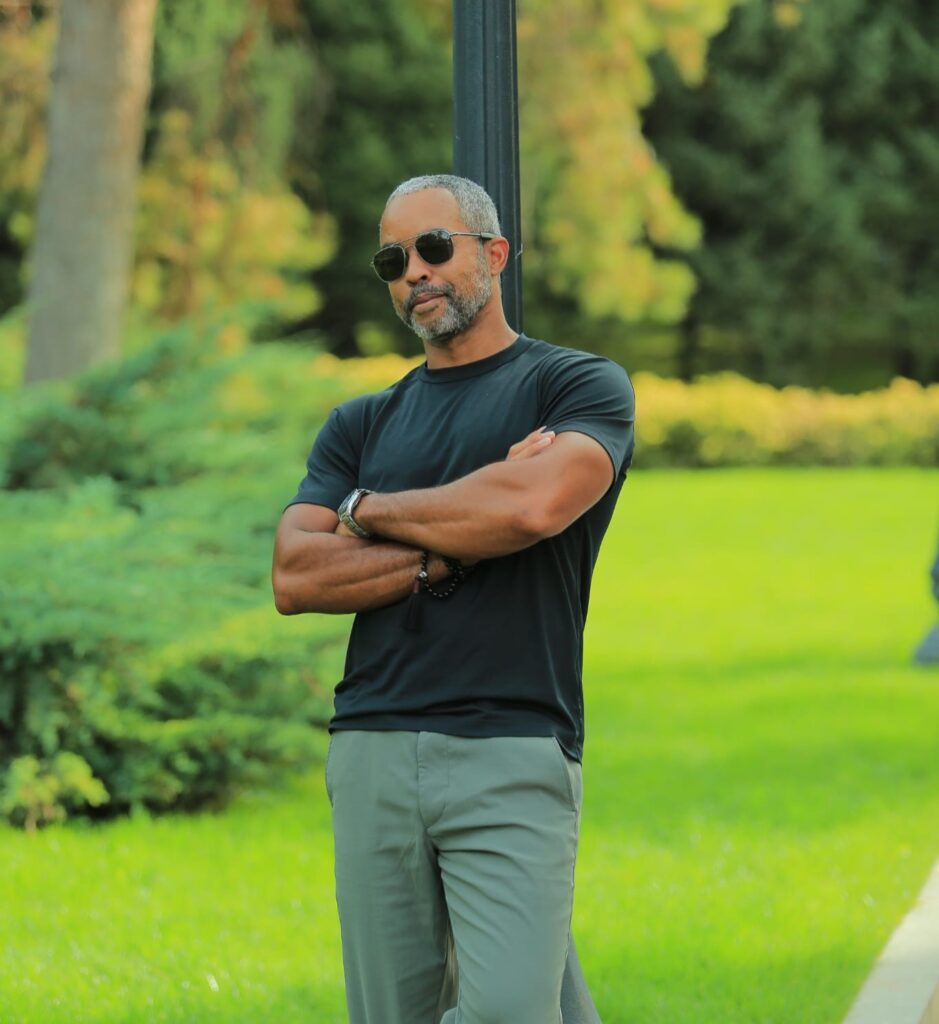
Carlos is the author of Digital Nomad Nation and writes about nomad and expat life at ABrotherAbroad.com. Read his full story of reaching ExpatFIRE through a decade of nomadic living here.

.
.
ABOUT THE AUTHOR
Carlos Grider launched A Brother Abroad in 2017 after a “one-year abroad” experiment turned into a long-term life strategy. After 65+ countries and a decade abroad, he now writes about FIRE, personal finance, geo-arbitrage, and the real-world logistics of living abroad—visas, costs, and tradeoffs—so readers can make smarter global moves with fewer surprises. Carlos is a former Big 4 management consultant and DoD cultural advisor with an MBA (UT Austin) and Boston University’s Certificate in Financial Planning. He’s the author of Digital Nomad Nation: Rise of the Borderless Generation and is currently writing The Sovereign Expat.