
CHAPTER 10
Digital Nomad Nation: Rise of a Borderless Generation
Models for a Digital Nation
.
“We cannot solve our problems with the same thinking we used when we created them.”
— Albert Einstein
“The future is already here—it’s just not evenly distributed.”
— William Gibson
In the Digital Nomad Nation’s ongoing evolution as a decentralized nation, the sky is the limit for the goals it can accomplish.
With an organically evolved and efficient approach to focusing energy and attention solely on what matters to nomads and what motivates them to act, the nation has accomplished wonders as a gang of ragtag travelers—negotiating visas, coordinating nomad villages, championing startups that focus on nomad issues, and gathering a digital nomad conference around the world.
More remarkable is all of this happened without any central authority dictating needs, planning, or execution. These accomplishments simply condensed from the chaos of nomad life.
However, what if the Digital Nomad Nation took a more structured approach to examining possible goals and still, in a decentralized way, divided new objectives based more on intention than simply awareness of need?
This capability becomes possible as members of the Digital Nomad Nation—individual digital nomads—become aware of the specific possibilities that the nomad nation can achieve and take the initiative to drive the community towards those projects.
While the primary purpose of the digital nomad community in the past was informing, emotionally supporting, and connecting, the next stage as the Digital Nomad Nation continues to transform will be empowering digital nomads and redefining what a nation can be and achieve in the digital age.
From online record keeping and governance to decentralized banking and finance, to strategic community building and supporting 3rd-party private startups in providing products and services tailored to the needs of digital nomads, the Digital Nomad Nation, its nature, and its citizenry feels immense opportunity in the next stage of transformation, as they combine to innovate and push the boundaries of what is perceived as possible by an empowered collective.
The Digital Nomad Nation is the first digital nation to exist. However, it still has infinite room for improvement and a near-infinite list of inspirational models for serving its citizenry.
In this section, we will briefly review a list of highlight projects that provide a glimpse into the infinite possibilities of a digital country and how a digital country can achieve its goals for its citizens while remaining productive, efficient, and decentralized.
Designing a Digital Country: Digital project success in aggregate could add up to a decentralized digital country
To date, no complete example exists for either a decentralized nation or a fully digital country.
However, recent projects around the world, online and offline, prove the possibility of an online country fulfilling the essential functions of a government. These projects prove that a decentralized digital nation could provide essential and empowering services that improve the quality of life of digital nomads based on the nuanced needs of the lifestyle.
Though this proof has only been “piecemeal,” as the individual functions have been successfully performed separately by separate organizations, this creates a great challenge for the Digital Nomad Nation to continue innovating and evolving – to combine best practices from around the world to in aggregate, accomplish the mission of serving its citizenry completely and efficiently. These self-contained lessons from a multitude of projects add up to the optimal design of a digital nation-state.
This “piecemeal” approach to designing an optimal digital nation by borrowing how specific goals are achieved in smaller projects is a viable potential way forward. Modern-day governments don’t simply attack all problems with a single organization. Instead, modern governments assign departments, subordinate organizations, and task forces to address the varying needs of a nation autonomously. The Digital Nomad Nation can realistically follow the same path.
A major difference between traditional governments and the decentralized government of the Digital Nomad Nation is that traditional governments mandate departments and ministries with their mission. In contrast, the nomad nation is “volunteer only.” While anything is possible within the nomad nation, nomads taking the initiative to volunteer ideas, volunteer to drive projects, and push them to completion is essential for the Digital Nomad Nation to achieve its potential.
To tackle the idea of what a decentralized digital nation could achieve, what it should achieve, and how it could achieve it, we can examine the essential tasks and goals of such a nation would be and how existing projects and organizations are achieving them.
Digital Nation Project examples: Estonia and Tuvalu
Tuvalu
The Tuvalu Digital Nation project is an ambitious initiative wherein Tuvalu, a small Pacific Island nation threatened by rising sea levels, is working to preserve its cultural heritage, governance, and national identity in the digital realm. This effort exemplifies a pioneering approach to nationhood in the digital age, blending sovereignty with technology to ensure the continuity of a nation even as its physical land may become uninhabitable.
Tuvalu’s project is a great example of how to establish a virtual presence that transcends physical geography, allowing its citizens to connect, collaborate, and govern digitally and experimenting with how to leverage digital infrastructure as a country.
Tuvalu will continue to blaze trails as a traditional country, transitioning to being a digital country in recognition of its rights as a digital nation and using this project to maintain cultural cohesion.
Estonia
Estonia has positioned itself as a global leader in digital governance and e-residency, transforming into a highly advanced semi-digital nation. Estonia’s e-residency and attempts to build an internet-based entrepreneurial ecosystem, backed by digital governance innovations and global advocacy for nations transitioning processes and online infrastructure, are paving the way for e-governance possibilities for future digital countries.
Additionally, the Estonian e-residency shows how essential services can be online, delivered by a formally organized and accepted nation-state, and formalized concepts such as membership and citizenship and the benefits they afford.
Example: Open-source movement projects
Open-source projects are collaborative initiatives wherein the source code, designs, or documentation of a software, system, or framework are made publicly available for a decentralized community to build, adapt, and improve a specific product in pursuit of a specific goal or many goals. This decentralized, volunteer, and open-invite model allows anyone to access, use, modify, and distribute the product being created. Open-source projects are often developed by communities and guided by shared principles such as transparency, inclusivity, and decentralized contributions. They serve as models for how the Digital Nomad Nation can grow and evolve without a centralized authority while still achieving community goals.
While open-source projects are traditionally associated with computing software – such as Linux or the blockchain – there is an opportunity to leverage the general model to build projects and achieve goals within the nation in a still decentralized way. Making ideas now, voting by volunteerism and participation, sharing proposals and plans and designing improvements collectively, and powering through to a finish line wherein nomads and the nation benefit, even if there is no personal profit.
Within the metaphor of the open source “source code,” nomads can create plans, guides, or frameworks to achieving a specific end – enclave designing, co-working space success, and immigration department engagement checklist for volunteer diplomacy. From here, such information can be leveraged to build a shared, open-source product or service available to everyone, such as a community meetup, a nomad services contact list, or a digital nomad visa, or nomads can leverage the best practices and insights from open source “source code” cheat sheets and frameworks to build a private service that supports the community based on shared values – such as a coworking space, workcation tours, and visa agent services.
Potential Open-Source Digital Nomad Nation Projects
- Digital Nomad Visas (by country)
- Digital Nomad Residencies (by country)
- Community and enclave planning projects with local governments and local business owners (urban planning)
- Best Practices Frameworks: Community enclave cooperatives, coworking spaces, and co-living spaces
- Research Projects: Co-living and co-working best practices for sustainable and ethical business, Nomad population research, best practices for minimizing negative effects of gentrification
- Community awareness and education: Consumer awareness and advocacy, aggregating nomad reports related to healthcare, education, insurance, etc.
- Global Information Platforms: Tax, business regulations, property ownership regulations
- Nomad-focused startups, bridging gaps in social services not accessible in-home countries
- Nomad advocacy and diplomacy NGOs
- Government cooperation projects with tourism boards, “nomad village” development, etc.
- Nomad enclave development and investment trusts
Examples of Existing Open Source Projects as Inspiration and Case Study Sources for Best Practices
- Cryptocurrency: Digital currencies, such as Bitcoin, Ethereum, are secured by cryptography and typically built on open-source blockchain technology, enabling decentralized, transparent, and peer-to-peer transactions without intermediaries
- Wikipedia: A free, crowd-sourced online encyclopedia that anyone can edit, operating on an open-source model with publicly editable content
- The Internet: Built on publicly shared protocols (like TCP/IP and HTTP) and open technologies that enable global collaboration and innovation
- Apache Software community: An open-source community that develops and maintains free software projects, such as web servers (Apache HTTP Server), big data tools (Hadoop, Spark), cloud computing (CloudStack), database systems (Cassandra), and development frameworks (Struts, Tomcat), through collaborative, transparent development
- WordPress software community: An open-source content management system (CMS) that allows users to create and manage websites, powered by a global community of developers contributing to its freely available code.
- Decentralized Finance Platforms (DeFi): Open-source financial tools such as Aave, Uniswap, and Compound that use blockchain technology and smart contracts to create financial services without intermediaries, enabling transparent, permissionless access
- Distributed File Systems: Open-source peer-to-peer (P2P) file-sharing protocols, such as Bit Torrent, that enable decentralized data distribution, allowing users to share files efficiently without relying on a central server
- Decentralized Social Media: Open-source platforms such as Mastodon, Bluesky, Diaspora, Briar, and Bridgefy that operate on blockchain or distributed networks, allowing users to control their data, resist censorship, and engage without central authority oversight
Example: Community Events, Conferences – Burning Man Community, SXSW Conference
Concentrated and large-scale in-person meetings within the digital nomad community are valuable for connection, support, and coordination of efforts on projects in the Digital Nomad Nation and guiding the path of the nation. Several examples exist for decentralized communities coordinating large meetings with massive impact, internally and externally, that could prove to be valuable models for the Digital Nomad Nation’s path forward.
The most notable open community event models for best practices are the Burning Man Project / Burning Man Community, which serves as a model for event coordination for education, enrichment, etc. The Burning Man festival in Nevada additionally sets a very good “hub and spoke” or “capitals and hubs” event model from a strong connection within a community demonstrated by the “regional burns” that take place around the world, subordinate to the primary Burning Man event, embodying the same values, principles, structures, and goals every in the world.
Open media events such as South by Southwest in Austin, Texas, additionally show what is possible with a decentralized community organizing events around shared values and valued experiences.
Example: Networks of Community Enclaves worldwide: “Chinatowns” worldwide, Little Italy neighborhoods, and “Gayborhoods” worldwide
A community enclave is a geographically defined space where a specific cultural, ethnic, or identity group establishes a concentrated presence, fostering social cohesion, cultural preservation, and mutual support, as well as offering social identity and belonging and potentially adding up to political power and advocacy.
Community enclaves often serve as spaces of resistance, refuge, and resilience in the face of larger societal forces.
While the existing digital nomad capitals and corresponding neighborhoods in Chiang Mai, Lisbon, and Medellin serve as great “borrowed territories” for digital nomads, the nomad nation could take cues from long-standing cultural enclaves on better, more sustainable integration and cooperation with the surrounding communities.
Takeaway from the existing community enclaves: It is possible to exist as a community and culture while “borrowing” territory and sharing culture and economic benefits in a mutually beneficial way.
Example: Decentralized Autonomous Organizations (DAOs)
A Decentralized Autonomous Organization (DAO) is a digital organization that operates through rules encoded as smart contracts on a blockchain. Unlike traditional organizations, DAOs have no central leadership; instead, decision-making is decentralized and managed collectively by members who hold governance tokens. These tokens grant voting rights, enabling members to propose, debate, and vote on changes or initiatives transparently. DAOs are fully autonomous, with operations and funding managed by the underlying smart contracts, which execute decisions automatically when consensus is reached. This structure fosters transparency and global collaboration, making DAOs particularly suited for managing decentralized communities, projects, or digital ecosystems.
Examples of Blockchain projects, Decentralized Autonomous Organizations (DAOs), decentralized identity and citizenship, decentralized social media platforms
- Decentralized Governance: Aragon, DAOstack, Colony
- Decentralized Identity & Citizenship: Worldcoin, SelfKey, BrightID
- Decentralized Finance: Aave
- Decentralized Social & Communication Platforms: Mastadon, Matrix, Status
If and when the Digital Nomad Nation formalizes with the intent of remaining a decentralized organization, DAOs and the blockchain provide insights into best practices and possibilities for creating a more formal organization managed by rules and guidelines that maintain the shared values and goals. Additionally, there is an opportunity to move beyond mere “voting with dollars” into actual voting based on confirmed membership.
The Bottom Line: With motivation, action, and following proven approaches, anything is possible for the nomad nation
Additionally, the blockchain may be a resource and tool as an information repository (Identity and personal verification for sharing with nation-states) related to partner-country relationships and outsourcing apostilling.
As individual nomads that comprise the community awaken to the possibilities of what can be achieved by a motivated group of nomads acting on the initiative, coordinating resources and actions, and tipping the first snowball on the avalanche of a new project, the Digital Nomad Nation will begin to make it’s potential a reality truly.
With motivation, action, and collaboration, these case studies have shown that by leveraging the example successes of major projects achieved by other open-source, decentralized, and digital organizations, no goal is beyond the capability or out of reach of the Digital Nomad Nation.
Chapter 10 Field Insights: Models for a Digital Nomad Nation
① A Nation Doesn’t Have to Be a State
The Digital Nomad Nation may never have borders, embassies, or a standing army—but it can still have shared values, institutions, support systems, and influence. It can be real without being traditional.
② There Are Many Possible Models
From DAOs to visa corridors, from digital citizenship to decentralized social platforms, the infrastructure of the Nomad Nation could take many forms. What matters is not uniformity—but utility, flexibility, and participation.
③ It’s Already Being Prototyped
All over the world, nomads are experimenting with new ways of living, working, collaborating, and governing. The question is no longer if the Digital Nomad Nation will exist—but what kind of nation we want it to become. And what kind of nation do you want to be a part of?
Departure Point:
Close your eyes and imagine it: What would a nation for people like you look like?
What would it protect? What would it celebrate? What would it build?
You don’t need permission to start shaping that future. Join the conversation. Prototype the solution. Share the knowledge.
The Digital Nomad Nation doesn’t need to be perfect. It just needs people brave enough to try.

- PROLOGUE
- CHAPTER 1: Why Are Digital Nomads Everywhere?
- CHAPTER 2: What is a digital nomad?
- CHAPTER 3: The Digital Nomad Lifecycle
- CHAPTER 4: How Digital Nomads Earn Their Living
- CHAPTER 5: Geoarbitrage
- CHAPTER 6: Solo Struggles as Foundations for a Nation
- CHAPTER 7: Digital Nomad Hotspots
- CHAPTER 8: The Nomad Nation Is Already Forming
- CHAPTER 9: The Dark Side of Digital Nomadism
- CHAPTER 10: Models for a Digital Nation
- CHAPTER 11: Tuvalu
- CHAPTER 12: Decentralized Autonomous Enclaves
- CHAPTER 13: Visionary Possibilities
- CHAPTER 14: What Comes Next?
- CHAPTER 15: Conclusion
- CHAPTER 16: The Digital Nomad Nation Manifesto
- CHAPTER 17: The Call to Action
- EPILOGUE: Rise of the Flexpat
- APPENDIX A: Global Digital Nomad Study
- APPENDIX B: Nomad Nation Resources

.
.
ABOUT THE AUTHOR
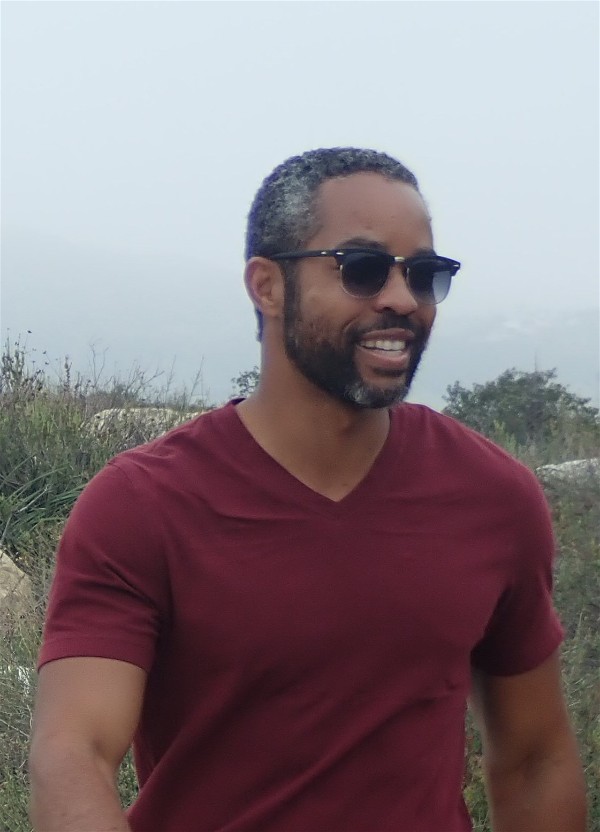
Carlos Grider launched A Brother Abroad in 2017 after a “one-year abroad” experiment turned into a long-term life strategy. After 65+ countries and a decade abroad, he now writes about FIRE, personal finance, geo-arbitrage, and the real-world logistics of living abroad—visas, costs, and tradeoffs—so readers can make smarter global moves with fewer surprises. Carlos is a former Big 4 management consultant and DoD cultural advisor with an MBA (UT Austin) and Boston University’s Certificate in Financial Planning. He’s the author of Digital Nomad Nation: Rise of the Borderless Generation and is currently writing The Sovereign Expat.