
PART 3
Digital Nomad Nation: Rise of a Borderless Generation
The Future
How the Digital Nomad Nation Will Evolve & Shape the World
.
The Digital Nomad Nation is the first digital country. It proves that individuals who share a common identity—beyond traditional borders—can unite with the economic, cultural, and political influence of a nation to achieve shared goals and positively impact the world. By empowering its members to enjoy a high quality of life anywhere, this nation offers a necessary new model of global citizenship.
CHAPTER 13
Visionary Possibilities
.
“The only way to deal with an unfree world is to become so absolutely free that your very existence is an act of rebellion.”
— Albert Camus
“Home isn’t where you’re from. It’s where you find light when all grows dark.”
— Pierce Brown
As long as borders have existed and been enforced by governments, and as long atrocities have forced people to leave their homelands, there have been displaced persons. Whether from war, famine, or human rights violations, for some, escape has always been the best path to survival and maintaining a semblance of quality of life. Though immigration for survival may guarantee life, it most definitely does not guarantee the quality of life, as being forced to leave one’s homeland as a refugee is the start of an immeasurable new struggle.
Even in the situation of caring, benevolent countries eager to assist unfortunate populations, the simple “welcome” can be followed by a host of nearly unanswerable questions and logistics issues for the refugees, the hosting governments, and the local people of the host country – such as happened in many of the Mediterranean and Nordic states of the EU. In the 2010s, the complexities of ripping oneself from not only their home but also their livelihood and support network were beyond comprehension for most and were difficult to compensate for by even the most capable and wealthy governments.
In the case of displaced persons, how can a country empower a displaced person or community in a way that allows them to preserve their culture, their community, and their quality of life in a way that does not overly burden a welcoming country and also encourages displaced persons to maintain self-reliance?
Better yet, how can a displaced person or community empower themselves to, in the void of being stateless and nearly supportless, maintain the community support, economic capability, and cultural preservation that they would have at their once home while in indefinite exile?
If one could fully answer each of these questions in an actionable way, the quality of life for a massive population of victims could be drastically improved. While digital nomadism and the digital nomad nation do not have the answer, the still developing framework for living abroad self-sufficiently may hold possibilities for empowering displaced persons to support themselves and thrive even in a near-stateless situation. While digital nomads and the digital nomad nation are still figuring out the full solution to how to live a life abroad fluidly, there are piecemeal lessons within the digital nomad approach that may be tools of empowerment for displaced persons to earn, learn, maintain community, and plot a path for themselves into a better situation.
Before the 35+ million digital nomads made that fateful decision to abandon everything, they were… different. Unsatisfied. Unfulfilled. Unempowered.
Thanks in large part to the journey of digital nomadism and the opportunities within, they no longer survive. They thrive.
Just as the individual nomad now designs their life in a previously unthinkable way, the Digital Nomad Nation is re-designing the world. Multi-cultural neighborhoods. Empowered small businesses. Revolutionized, borderless finance.
Suppose the Digital Nomad Nation is capable of this in its infancy. Why can’t the Digital Nomad Nation simply “design” a better world and then hand the opportunity to anyone who would join it?
The answer is it can.
And it will.
In the next evolution of the Digital Nomad Nation’s transformation, this nation will become the first digital superpower. Instead of forcing its will on the world via violence and economic warfare, it will change the world collaboratively—creating ideas, models for governance, and approaches for living that are too good to pass up and sharing them in a way that changes the world forever.
Most developed, visionary superpowers change and influence the world by discovering, developing, and creating in a way that the wealth of their actions spills beyond their borders, changing the world for the better indefinitely.
Mesopotamia created the first known written script, enabling the book that you now read.
The ancient Greeks in Athens made real the first direct democracy, making a way for the people of a country to hold the power truly.
The United States developed and freely shared the first versions of the internet (ARPANET), which makes the culture of digital nomadism possible today.
As the Digital Nomad Nation grows, learns, experiments, and transforms, there is an unmatched possibility for this vast and growing nation to make it possible for anyone to live a life without borders. Not just nomads but anyone whose life would be improved by, instead of living where they are, living where they wish. Where they can grow. Where they will thrive.
Just like the written word.
Just like democracy.
Just like the internet.
The first way this nation will change the world is by empowering everyone to live not where they were born but where they will grow and thrive.
This idea, this prospect of a possibility, found me in an emotional Spring of 2018 and has gripped my heart ever since. This idea shows a glimpse of the true potential of the Digital Nomad Nation.
My Failed Vision: Empowering Refugees in Greece during the EU Migrant Crisis
In 2018, following up on a promise to myself, I traveled to the island of Lesvos, Greece, with the intention of volunteering to help in the continuing migrant crisis that plagued southern Europe for half a decade. At the time, countless refugees were fleeing dangerous and life-threatening circumstances from Iraq, Syria, Afghanistan, parts of Africa, and beyond in hopes of being saved and taken in thanks to the European Union’s human rights laws. These laws allowed specific displaced persons to stay in Europe once their feet touched European soil, but this did not mean following through on this benevolent offer would be remotely easy. The tiny island of Lesvos, within eyeshot of Turkey, was arguably the hardest hit by incoming refugees during the migrant crisis. An island with only 83,000 Greek inhabitants was involuntarily “hosting” more than 50,000 refugees, with an average of 1,700 people arriving per day in 2016.
Beyond the crisis of resources and infrastructure that inevitably happens when an underequipped island is forced to double its population in an already resource-strained capacity, there were few additional resources and few “next steps” options for these refugees, with few opportunities and fewer plans. Most adult males seeking refuge were denied admission to any EU country and left in limbo on the island until they requested to be deported back to the hell on earth they’d tried to escape. As is the case in tense situations like these, I didn’t discover these heartbreaking truths until I’d already arrived in Greece with three months available on my EU visa.
At the time, I was fully in the digital nomad life, living as a writer, working, and being paid completely online, happily disconnected from my home country. As for the beginning of the volunteering experience, I had no idea how I could contribute in a meaningful way or what the NGO I’d joined intended to have me do in support of the mission of improving the lives and chances for survival of these refugees. Luckily, fate had other plans.
The common task of “boat spotting” done by volunteers, wherein volunteers would watch the ocean for ill-equipped, nearly sinking incoming boats of refugees and then alert the Greek Coast Guard once the migrants had set foot on land, did not sit well with me as a non-Greek citizen and did not seem impactful enough to make a difference in an already existing, and overwhelmed, system. Recent Greek legal changes in enforcement against human trafficking affecting volunteers implied that Greek officials agreed. However, my profession as a writer, my lifestyle as a digital nomad, and my history as an interpreter still opened some very special opportunities to help and learn.
In light of my realization of the legal and moral grey area I was falling into, I decided to hunt for an opportunity to do unquestionable good instead. I worked foremost as an English teacher, assumingly to help refugees from the Middle East and Africa learn the English necessary to navigate the Greek immigrant process with the highest probability of success possible. However, I learned later that this was not the best aim. Secondarily, I volunteered as an Arabic interpreter with a medical NGO, translating for Arabic speakers within the Moria Camp established by the United Nations High Commissioner for Human Rights (UNHCR). During these humbling “adventures,” I learned the brutal truth that the best effects that could come from the refugees being on Lesvos and in the horrible camp of Moria were the improvements that they could take with them to the next place, wherever it may be.
In the case of the medical NGO, better health and the strength to survive deportation, travel home, or integrate into a community that may not welcome refugees regardless of what their government decides was a valuable intangible “toolkit” that refugees could take with them, empowering them for as long as the trials lasted.
In the case of teaching English to male refugees who knew they stood little chance of ever being allowed into anywhere else in Europe legally, my eyes were opened to the possibilities of a framework for living beyond one’s home country and how truly difficult it can be without the right financial infrastructure, visa, immigration permissions, and acceptance into some “system” that vouches for one’s personal history.
The insight came when I was teaching a group English class, and a frustrated Pakistani student was equally frustrated that his time on the island was coming to an end thanks to deportation and also upset at the speed at which he was learning, or perhaps he felt like he was not learning English. After one of the most candid and emotional conversations I’d had with a group of men, I learned that most of the men wanted to learn English for two reasons: Firstly, to communicate to the police to kindly not verbally or physically abuse them, and instead treat them as the humans they were. They’d come to understand the cursing and racial slurs and wanted to be empowered to resist by opening a door of “more human” communication. Secondly, the men wanted to learn English because it was a marketable skill that could lead to jobs elsewhere in the world. Not just in Europe but anywhere else.
This made sense.
If they were able to speak English, it would be possible for them to find a way, even in their regions, to find employment and support themselves, washing dishes at a hotel, driving for tours, beginning as a journeyman learning a new trade. English could potentially open much-needed new doors in many new countries beyond their own as a near-universal key to unlocking opportunities around the world. They had hopes of entering the EU but knew the odds of admittance were slim. However, learning English and taking that skill wherever they went next would empower them to support themselves and their families.
Contrary to what many might believe, these men did not want a welfare paycheck or a handout; these men wanted the skills and intangible assets needed so that they could build stability for themselves within a world crumbling around them. They wanted to learn English, how to use email, and whatever other skills they could learn to be employable wherever would have them. These men wanted to build a toolkit to survive and thrive in whatever part of the world would have them, just like digital nomads.
Within the same conversation, I opened up to the eager English students about what I did for a living at the time and how I did it so far away from home. I toted a laptop, researching what in the world was worth writing, writing it, finally devising a way to connect this to payment for my time ethically, then accepting payment and repeating the process. We discussed what other fields beyond writers the approach could work for: graphic designers, marketers, accountants, and more. Their eyes lit up through the conversation, and ideas poured about how we could empower them with skill sharing on the logistics of digital nomad life, as well as the skills beyond my competency that they could learn.
In their past lives, these men had been mechanics, engineers, bodybuilders, accountants, and more.
However, the conversation slowed as it fell into the quicksand of reality, and we realized two major hurdles preventing them from “joining the nomad life.”
Banking and residency.
The true hurdles to seamless nomadism: Financial infrastructure, residencies, and “vouching.”
Despite the many marketable skills the group had, both offline and online, they were of no use if there was no way to deliver the skills and find clients beforehand and no way to be paid.
We’d uncovered two of the major hurdles for “stateless nomads.”
The banking industry and financial infrastructure are among the most secure operations and networks in the world, and rightly so. With trillions of dollars at risk, it makes sense to have safeguards to protect entrusted money, fend off financial crimes, and avoid financially enabling unscrupulous acts such as drug trafficking, organized crime, and terrorism. In order to maintain this security standard, banks tend to only provide accounts to residents of the primary country or countries they operate in. However, suppose one does not have residency, a home address, and proven ties and does not have any banking account at a reliable, functioning bank that cooperates internationally. In that case, this person has no way to pay or receive money remotely, grinding the digital nomad life of the stateless person to a halt.
Secondarily, many of the chattered about tools for getting started within digital nomadism, such as freelance marketplaces, e-commerce marketplaces such as Amazon and Etsy, or alternative banking tools, require the nomad to have a passport or residency and tax identifier number in an “approved” country. This residency, passport, or tax identifier requirement rightly acts as a filter for “trusted entities.” It is the most common method that companies use to ensure a “reputable country” has “vouched” for a digital nomad. The problem arises in that most countries that fall under frequent sanctions, such as Iran, Russia, North Korea, Venezuela, or Myanmar, and their citizens or residents are blocked from these platforms as their country of citizenship isn’t part of a trusted network and thus blocked from the opportunity. This means that even if a potential digital nomad or refugee has no interest or benefit from their sanctioned government, they are still blocked from the digital global economy, the digital global marketplace, and the major portions of the global financial system because of their passport and lack of residency until a country healthily engaging in global trade and with a respected passport vouch for the nomad, via temporary residency or permanent residency and tax identification number.
As I stood there in front of the class, once teaching English but now learning very grim life lessons, the dots connected. I realized that what was an easy situation for me, earning and traveling as a digital nomad, was an impossibility for them; reality set in.
With the resilience I’d seen from them many times, the students decided to get back to work learning English, their target new skill for this period, and continued to ask me eye-opening questions about the digital nomad lifestyle and its potential piecemeal solutions to the many problems of displaced persons, refugees, and economic migrants.
Now, Digital Nomadism as a solution for displaced persons is already happening and has potential.
Fast forward to the year 2022, and arguably, more unrest does and will continue to exist in the world. However, displaced persons are learning to navigate the world as digital nomads leveraging changing geopolitical conditions and growing tools. In the case of displaced Ukrainians and Russians, cryptocurrency and ingenuity online have added up to living abroad more safely than possible in their home countries at the time.
In 2022, the war in Ukraine had displaced more than 1/3 of the 37 million Ukrainians, many of whom fled far beyond Europe to Asia and Latin America [5]. Within the same breath, many average Russians expressing dissenting opinions against Russia’s invasion of Ukraine were jailed, forcing many Russians to leave Russia for fear of persecution and human rights violations.
Follow the trail of Ukrainian and Russian expats and nomads, and you will find clusters of Slavic communities living abroad, working online, and handling financial transactions across borders using cryptocurrency and the dark web to circumvent financial sanctions that target the Russian state but affect nomads that wish to live abroad, in peace. Keep in mind this isn’t criminal activity; this is an example of ordinary people attempting to live ordinary lives. Many of whom I’ve seen are young couples in their early 30s with two bright-eyed children in tow who are moving abroad to piece their lives back together.
Similarly, from a snapshot of Buenos Aires, Argentina, in 2022, in the depths of a financial crisis with 72% inflation, the Argentine peso was devaluing by the day and wreaking havoc on the pocket of the average Argentine. An average Argentinean working in Argentina earned the equivalent of $1,200 US Dollars in Argentine Pesos. If they kept the money in Argentine pesos, they could have that valuable income devalued by half seemingly overnight, either due to inflation or government policy. However, if it was possible to earn money and hold money in a more stable currency, like dollars, they could weather the rough economic days.
Enter a marriage of convenience between many Argentines, Russians, and Ukrainians.
This multi-layered and very standardized solution, involving crypto, a grey area market exchange, the dark web, and online work to facilitate cross-border online work and financial transactions, happened out of necessity and happened with no central authority – in a centralized way – but flawlessly filled a need gap for nomads abroad – digital nomads whose home countries weren’t satisfying their needs.
Russian and Ukrainian refugees from war zones and political persecution were using digital nomadism to survive without excessive aid from any foreign government. In doing so, these nomads ultimately funneled much-needed US dollars into Argentina, allowing young, struggling Argentines an option to hedge inflation and survive an economic crisis. Additionally, the conversion of crypto in person to cash increased the possibility that Argentines could trade in their inflation-exposed pesos for the cryptocurrency that Russian and Ukrainian nomads, among other nationalities, were bringing into Argentina.
Though this arrangement, both watching and participating, may seem mildly sketchy, it is a perfect example of how digital nomads, displaced persons, regional nomads, and economically disadvantaged groups are using approaches common to digital nomads to build high-quality, honest, self-sustained lives despite global political circumstances and unrest without burdening any country or community economically.
“Arbolitos” likely won’t exist in every country, and life is better for all when life-preserving activities don’t need to happen in these kinds of legal grey areas.
The Takeaway: Digital Nomadism could be a solution for the economic empowerment of displaced persons if residency and banking issues are overcome
For any government that benevolently accepted the involuntary burden of supporting migrants and refugees, the tools of digital nomadism and the support of the digital nomad nation in education, sharing best practices, and general support could be an option to ease the economic and social burden created by a refugee population short term. In the long term, it could lead to the creation of a self-sustained community, economically and socially, better equipped to direct the newly available energy saved on not focusing on economic survival to instead focusing on integrating into a community that would willingly have them.
However, for this self-empowerment to fully take place, banking or a banking alternative needs to be in place, as well as sufficient access to the tools of employment only that are accessible after a trusted country “vouches for a nomad” by offering them residency.
The Future: Digital Nomadism will become a more available opportunity as finance, cryptocurrency, and immigration policy evolves
Cryptocurrency, alternative banking products, and their “plug and play” opportunities as stores of value and means of payment without the residency hurdles of traditional banks will continue to evolve, grow, and empower more nomads with weaker passports and in questionable situations to take advantage of the economic opportunities of digital nomadism and the borderless, digital economy.
The informal economies and the connections that can be established on the internet between like minds, between clients and businesses, and between collaborating businesses without a platform or mediating authority will continue as tools for nomads to work across borders with mutual benefit, overcoming the byproduct problems of borders, territorial issues, war, famine, and economic crises.
The Digital Nomad Nation is already the digital nation of the future
The Digital Nomad Nation already has the asset of representing nearly every country on the planet and having a presence in nearly every country on the planet. As the nation grows and connections between nomads become deeper, these connections, collective knowledge, and strength of working in a decentralized way will continue to produce life-improving solutions for nomads and the world – just as Argentina’s arbolitos eased economic pressures from wars half a world away and stale economic policies from half a century ago. Working together and enabling each other financially and economically.
As the first decentralized digital nation on earth, the Digital Nomad Nation will continue to evolve, grow, and help aspiring nomads and people of all backgrounds around the world thrive anywhere around the globe, paving the way for a more connected, more egalitarian world and redefining how we can all leverage the connectivity and innovation potential of the internet to live our life of choice beyond borders.
While the journeys of many individual nomads have taken their course and are approaching their sunset, and the Digital Nomad Nation is already highly effective for its young age on the world stage, there is much more to come.
The story of the birth of the Digital Nomad Nation is complete.
This is now the story of how a digital nation will change the world.
Chapter 13 Field Insights: Visionary Possibilities
① Displacement Doesn’t Have to Mean Disempowerment and Digital Nomadism Can Promote Empowerment
For refugees and stateless people, modern borders and global politics can mean isolation and exclusion. However, digital nomadism offers a framework—however early in its development—for economic self-sufficiency, mobility, and community without dependence on a single nation-state.
② The Nomad Model Offers Tools for Survival and Dignity while Between “Homes”
Remote income, decentralized governance, portable culture, and global networks—these have the potential to be more than just luxuries. For displaced populations, they could be critical tools for maintaining identity, autonomy, and quality of life in exile.
③ The Digital Nomad Nation Could Become a Global Ally
While not a solution to every humanitarian crisis, the Nomad Nation can share infrastructure, knowledge, and models of resilience with other stateless or at-risk groups. If freedom is a right, not a privilege, then access to the tools that make a productive, healthy life possible should be universal.
Departure Point:
Ask yourself: What does it mean to have a nation? A home? A future?
Then ask: How might the principles of digital nomadism that we have covered—mobility, self-reliance, income sourced from the digital economy, mutual aid—empower not just the privileged but the vulnerable?
If the Digital Nomad Nation can help someone choose freedom, perhaps it can one day help someone regain it.
That is the visionary possibility.

- PROLOGUE
- CHAPTER 1: Why Are Digital Nomads Everywhere?
- CHAPTER 2: What is a digital nomad?
- CHAPTER 3: The Digital Nomad Lifecycle
- CHAPTER 4: How Digital Nomads Earn Their Living
- CHAPTER 5: Geoarbitrage
- CHAPTER 6: Solo Struggles as Foundations for a Nation
- CHAPTER 7: Digital Nomad Hotspots
- CHAPTER 8: The Nomad Nation Is Already Forming
- CHAPTER 9: The Dark Side of Digital Nomadism
- CHAPTER 10: Models for a Digital Nation
- CHAPTER 11: Tuvalu
- CHAPTER 12: Decentralized Autonomous Enclaves
- CHAPTER 13: Visionary Possibilities
- CHAPTER 14: What Comes Next?
- CHAPTER 15: Conclusion
- CHAPTER 16: The Digital Nomad Nation Manifesto
- CHAPTER 17: The Call to Action
- EPILOGUE: Rise of the Flexpat
- APPENDIX A: Global Digital Nomad Study
- APPENDIX B: Nomad Nation Resources

.
.
ABOUT THE AUTHOR
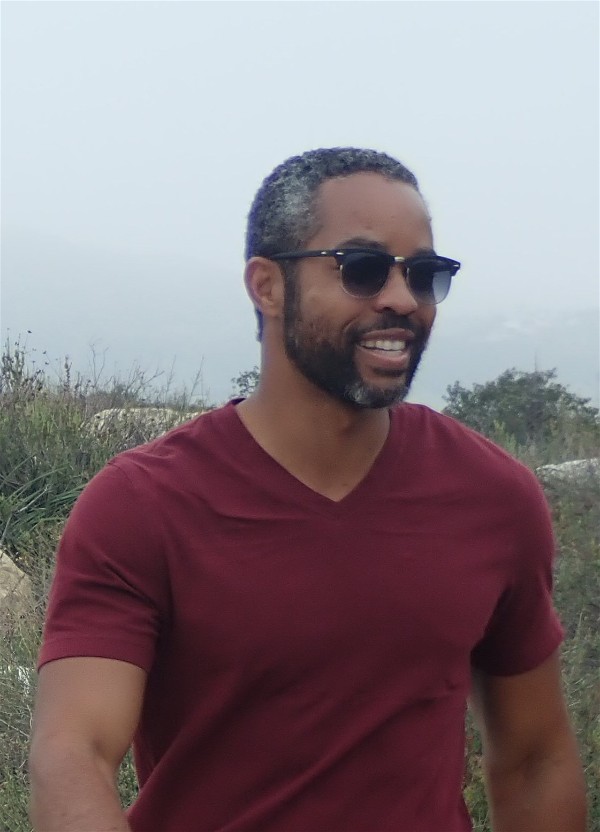
Carlos Grider launched A Brother Abroad in 2017 after a “one-year abroad” experiment turned into a long-term life strategy. After 65+ countries and a decade abroad, he now writes about FIRE, personal finance, geo-arbitrage, and the real-world logistics of living abroad—visas, costs, and tradeoffs—so readers can make smarter global moves with fewer surprises. Carlos is a former Big 4 management consultant and DoD cultural advisor with an MBA (UT Austin) and Boston University’s Certificate in Financial Planning. He’s the author of Digital Nomad Nation: Rise of the Borderless Generation and is currently writing The Sovereign Expat.