
CHAPTER 1
Digital Nomad Nation: Rise of a Borderless Generation
Why Are Digital Nomads Everywhere?
“I was not born for one corner. The whole world is my native land.”
— Seneca
“Not all who wander are lost—some are escaping what they were never meant to be.”
— DNN
In 2017, two decades after Tsugio Makimoto and David Manners introduced the idea of the “digital nomad,” millions of people were leaving their stable lives behind.
Traveling the world while working remotely was picking up momentum as a trend.
The Digital Nomad Revolution had begun.
The opportunity to work from anywhere was still an aspirational lifestyle, yet to be seized by many. The revolution still needed a push to propel aspiring nomads into the unproven opportunity. They needed to reach a tipping point in their lives. To motivate them to cross from current stability into the ambiguity of nomadism, they needed an emotional spark.
This “spark” came at a breaking point from the stifling struggles of daily life for many.
The Aspiring Nomad’s First Struggle: Disappearing opportunities to travel, roam, and explore
War, rising tensions, and stricter borders have made easy travel harder to find, extinguishing many of the once plentiful opportunities to roam and explore freely. This chaotic global landscape has been limiting youth’s opportunities to come of age through adventure.
However, in the 1960s and 1970s, young people with nearly empty pockets and big hopes were able to set out without a plan or care and easily wander the world.
Perhaps they might follow a vague travel tip from a friend toward empty beaches south of the border, in Mexico or Spain. Perhaps they might set out on a blind cross-country trip starting with just a few coins for the bus from Ohio to Hollywood. Perhaps they’d hop in a van to ride the Panamerican highway and explore the wilds of Patagonia.
In all cases, the youth of the past had ample opportunity to wander wherever the road and the levity of their spirits may take them. For the travelers of the mid-20th century, there was a call to adventure that was easily answered and satisfied their wanderlust.
The legendary “Hippie Trail” was a prime example of such free-spirited travel.
The backpacker travel path of the Hippie Trail was an exotically diverse chain of destinations easily accessible on a 7,000-mile road trip from Western Europe to India and beyond. They shared vans, hopped cheap mini busses, or simply hitchhiked on a shoestring budget. This string of wanderings perfectly captured the “coming of age” travel experience. It started in the familiar and gradually led into the less known and mind-expanding for the young adventurers that embarked on it.
The journey began in well-known, cosmopolitan European cities like London, Amsterdam, Paris, and Berlin, with each city being a great destination on its own. Then, travelers moved to the Slavic lands of the Czech Republic, Slovakia, Romania, and Bulgaria. From there, they ventured into the Middle East – Turkey, Syria, and Iraq – before continuing into Iran and Afghanistan. Then, the journey concluded with the spiritual heights of the Himalayas in Pakistan, India, and Nepal.
It was a slow, layered journey. A natural migration path of free spirits. No schedules. Just discovery.
On a single road trip, travelers heard over 10 languages: Turkish, Kurdish, Persian, Urdu, Hindi, Nepali, Arabic, Hebrew, Serbo-Croation, Pashto, and countless more beyond the Western European languages. They encountered seven distinct cultures: Slavic, Turkish, Arab, Pakistani, Indian, and Nepali. This intense cultural exposure happened in a single, gradual adventure as well, without a single flight along the way.
In one journey, these budget backpackers not only experienced the exotic lands along the remnants of the Silk Road. They also experienced the undiscovered beauty of regions assumed to be “familiar” to them. Then, every leg of the journey pulled them deeper into something unfamiliar. And for many, something transformative.
Parts of the Hippie Trail experience inspired culture-defining creators of the era that still have an imprint on modern culture. Classic 70s bands such as The Beatles and The Beach Boys spent time on parts of the trail, soaking up Eastern culture in an influential way and enticing an entire generation to venture from Istanbul to Kathmandu.
The Lonely Planet founders’ adventures began on the trail. After India, their adventures continued in such a way that inspired them to inspire others to wander via their now ubiquitous travel guides.
In these ventures far from home, they explored untethered by phones, social responsibilities, and the anxiety they bring. Freedom of expression, freedom from societal constraints, and welcomed countercultural experiences characterized every step of the way.
This naturally occurring “migration path of free spirits” made it easy to wander the world and discover cultures and lands far beyond one’s home, akin to an “international travel conveyor belt.” The journey didn’t require expensive flights, cumbersome visas, or significant cash to start. But even though starting the trip was easy, the trip provided deep value for those who joined.
Sadly, conflict, war, and political instability in the region halted this beautiful rite of passage. The Iranian Revolution in 1979 slammed the door shut on Western travelers. The Soviet invasion of Afghanistan the same year started a wave of unwelcome sentiment toward Westerners throughout the region. Lastly, the growing political instability in Pakistan made the route unsafe.
These chaotical global events ended one of the most accessible and exciting travel adventures from Western Europe.
Though the Hippie Trail is gone, the resourceful and adventurous hippies blazed a trail of possibility. They proved that the adventure of wandering is always possible. They proved that it is worth seeking out opportunities to explore the unknown.
Though there are plenty of travel opportunities today, many of those adventures are far less accessible and diverse than the “Hippie Trail.”
The “Gringo Trail” is another quintessential travel trail experience snaking through each country in South America and is still encouragingly accessible. This backpacker path starts in Buenos Aires, Argentina, Santiago, Chile, or Medellin, Colombia, and meanders through the continent from there via budget-friendly buses and trains. Spanish as a single language throughout most of the journey and a warm, welcoming populace make this a comfortable yet immersive endeavor. However, the cost of flights just to arrive at the start point of Buenos Aires amounts to thousands of dollars, making the experience prohibitively expensive for shoestring budgets.
While the Gringo Trail is an amazing experience, the costs of starting understandably hold the average gap-year wanderer back.
Alternatively, there is the notoriously cheaper backpacking trail through Southeast Asia, which is among the cheapest travel experiences on the planet. The “Banana Pancake Trail.”
Many a runaway has picked up where the hippies left off by flying into Bangkok, Thailand. Then, even small pockets feel ample as travelers make their way from Thailand on to Vietnam, Laos, Cambodia, the Philippines, Malaysia, and Indonesia for mind-blowing food, nature, and cultural diversity.
The problem for new travelers with exotic travel trails, such as the Banana Pancake Trail, is the drastic start. A simple flight potentially dumps novice travelers into a seemingly indecipherable new language and a vastly different culture that is as “foreign” as can be. For first-time international travelers, leaving everything they know to fly to a remote corner of the world and starting day 1 in a foreign language and an unknown place is a major first step. Possibly a prohibitively large step for a new solo traveler.
Cultural differences can be exciting and are often the best part of exploring for experienced travelers. But for a sheltered 18-year-old, the overwhelming culture gap and fear crashing and burning while trying to spread their wings may be too much to overcome.
By contrast, the average 18-year-old of the free-love era never knew how good they had it. Starting the first few weeks of their travels in the familiarity of Western Europe in a familiar language with empty pockets is a dream travel experience. By comparison, adventurous wandering today is more resource-intensive and intimidating for newcomers.
Fortunately, in the wake of the Hippie Trail’s demise, the wanderers past left breadcrumbs in the form of travel guides like Lonely Planet and legends of their adventures retold by Rick Steves to lure future wanderlusters into other adventures.
Today, digital nomads are taking that empowerment a step further, leaving breadcrumbs for each other that lead to a new, modern migration path across borders. A trail for a new breed of nomads.
Digital nomadism gives ambitious wanderers the time, mobility, and freedom to explore with the pace and ease of a 60s-era international road trip. It lets them recreate experiences like the excitement and awe of discovery found on the Hippie Trail. Modern nomads follow global migration paths to travel freely, avoiding international conflicts, economic barriers, and political issues. They can explore and experience life anywhere and in any way they choose.
There will always be a call to adventure, even if the possibility of starting feels impossible. Though the Hippie Trail has disappeared, the revolution of digital nomadism calls as the quintessential travel adventure for a “borderless generation.”
Digital nomadism ensures a new generation isn’t robbed of the opportunity to experience the world properly. No borders, flights, or schedules will stop them.
The Aspiring Nomad’s Second Struggle: Economic crises ruin quality of life and limit experiences.
Young people today have faced more financial struggles with far less gain than generations before. Crises in the costs of living, cost of housing, and employment make it increasingly difficult, if not impossible, to enjoy life.
Between 1997 and 2017, Makimoto’s idea of digital nomadism grew into a major trend. During that same period, entry-level wages for college graduates in the US rose by just 65%, averaging only 3.3% per year. This salary increase barely kept pace with inflation [2] [3]. The rise in living costs far outpaced this tiny income jump.
In the same period that earnings rose by 65%, education costs jumped by 213%. This meant that the average cost of job training tripled, going from $3,100 to $9,700 [4].
Graduates then faced a tough choice. They either skip life’s joys in university to save enough money to pay for education in real time and forgo life’s pleasures along the way. Or, they finish school with over three times the debt of graduates from two decades ago.
Today, it takes the average American 21 years to pay off their student loans. This immense time of holding debt means many people in the US spend years paying off student loans. From the time they leave for university until the time of their midlife crisis, this debt robs them of money and opportunity.
Current financial conditions aren’t just restricting possibilities in the present; they are devouring futures, hopes, and dreams.
In the same 20 years, from 1997 to 2017, US housing prices more than doubled. The average home price went up by 120%, rising from $145,000 to $320,000. This shows that the wage increase of 65% was far from enough. Ultimately, fewer young people have the pride, security, and comfort of having their own home than previous generations. This shift makes the “American Dream” an increasingly slim possibility [5].
In addition to wages lagging behind living costs, 2017 college graduates struggled with underemployment. Many couldn’t find jobs that matched their education and tuition investment. The effects of the 2008 financial crisis still lingered in many job markets. If jobs were available, they often weren’t stable. In 1997, about 34% of new graduates were underemployed. By 2017, that number rose to 43% [6].
Those who were lucky enough to be fully employed enjoyed more spartan benefits packages with fewer retirement and healthcare benefits than those from the ’90s. Employees now had to fend for their own health and financial stability.
This forced self-reliance coincided with an increased expectation of work “after hours.”
In 2024, 25% of employees reported spending 5 hours or more per week answering emails after their work day had officially ended [7]. In a situation wherein employees were expected to deal with the financial and professional leftovers and “take it for the team,” they were also expected to give up more of the most valuable thing they have – time – without a thought of self-preservation.
From any perspective, the economic situation since 1997 has been increasingly suffocating.
Facing these grim financial and employment prospects, cracks in their trust in the system began to form. The conditions did not reward their efforts in exchange for what it took from their souls. They reached a professional and financial breaking point, and they awakened to the brokenness of their system. That system was designed for stability, which is essential for society, but it could never truly satisfy the needs of the adventurous soul.
The Aspiring Nomad’s Third Struggle: How Societal Limits Block Growth and a Fulfilling Coming-of-Age
For those people with the nature of “wander lusters,” the enviable stability of a small town with a predictable life path robs them of something they need. The wide breadth of possible experiences that the world has to offer is something they crave, almost need, for growth and fulfillment.
Climbing the mountain ranges of the Andes and Himalayas in far-off countries lets them explore new heights of existence. Connecting with exotic cultures through mimed ideas and new experiences helps them discover new ways of living. Eating “strange” new foods streetside from indecipherable menus lets them learn tastes they never knew they had.
Experiencing a country’s best rituals and kindnesses in person instead of hearing of their worst in the news helps them internalize humanity’s timeless global truths. Dabbling in the world’s luxuries and poverties lets them learn of humanity in the contrast between those extremes. Soaking in beautiful views too magnificent for any camera to capture teaches the value of the natural world.
Experiencing both true love and heartbreak without a drop of romance opens a side and appreciation for more than logic and reason. Pressing through problems unique to wandering the world alone offers them one of the highest educations in life.
These are the vast possibilities of life that aspiring nomads crave. They feel this longing when stuck in the social structures of home. Calling them.
Scientific research has proven a genetic basis for such an urge to roam and desire to experience more, explained by a variant of the “risk-taking gene” DRD4 gene. The specific gene variant DRD4-7R is known as the wanderlust gene. Studies indicate that about 20% of the population carries this DRD4-7R “wanderlust gene” variant, with a higher prevalence in regions with histories of migration. It is associated with increased curiosity and restlessness; traits ultimately believed to drive wanderlust-prone individuals to fill gaps in experience by seeking out new experiences and adventures. [2]
The call to adventure literally speaks to our genetic makeup.
Before the journey begins, the guardrails, commitments, and planned paths in society held aspiring nomads in the shapes needed to fill specific societal roles – in their society, company, community, and family. The manager. The employee. The consummate student. The dedicated son or daughter and responsible older brother or sister. This is who they are within their existing social system. No more. No less.
One of the most valuable opportunities in travel is to “break out” of the society-issued personas. Travel offers a chance to escape the roles we play at home, trading in the confining structures and pressures of the world back home. In return, we receive an opportunity to embrace a freer, more open experience and grow in a unique way.
You can be the traveler. The writer. The artist. The explorer. The philosopher. The scientist. The adventurer. The humanitarian. This assumption of a new identity is allowed and achievable by entering a world where so much is unknown to you. In turn, you are unknown to the world, giving you a fresh chance to be whoever you want to be and are meant to be – according to you.
Once the bag is packed, the flight is booked, and the journey has begun, nomads gain a “void” around them in return for this reckless abandon of ditching it all. Here, they can shape, grow, and expand their personality and choose who they want to be.
The idea of a “void” around solo travelers and growing into something “new” is like Jungian Psychology’s “shadow” concept.
Carl Jung describes the “Shadow” as the hidden part of our psyche. It holds parts of ourselves that we might ignore, deny, or not even realize exist. These “parts” can be emotions, desires, or traits that clash with how we view ourselves or what the norms of our community require. So, we ignore those parts in order to be who we are needed to be. Not necessarily who we want to be. Not necessarily who we are.
But, allowing that hidden part of us to have its day can be a reward well worth the risk.
This reward and its value are especially true in any society that lacks the wild adventures that usher in a coming of age [3]. The opportunity to face the “shadow” of ourselves and repressed needs via travel facilitates the beneficial possibility for what Jung referred to as “the Individuation Process,” in which the wanderer can get to know themselves and grow into someone more similar to who they truly are.
While this idea may seem “soft,” the practice of letting people coming of age hunt out a big, vacant space and wander until they “find themselves” has been part of ancient tribal cultures for thousands of years.
In this roaming, an opportunity exists to experience, experiment, learn by doing, and find one’s way on a much longer path in life. Like the ancient coming-of-age rituals of Aboriginal Australians and the Massai Moran, this chance to wander has roots in our history. It has been part of a well-lived life long before modern society began. Both experiences with Aboriginal Australians and the Masai give youth a new space. Here, they step outside their usual communities. They learn deeply about the world and themselves. They explore who they want to be. The opportunity to experience and grow devoid of confining pressures is an opportunity that can’t be overvalued. As young people come of age, a blank canvas to paint themselves is essential.
Wandering, exploration, discovery, growth, acceptance, coming of age, and, potentially, rebirth. Worthwhile experiences and complex stages of human development are all integrated into the wonderful experience of travel that digital nomadism affords.
Ancient nomadic hunter-gatherers migrated away from threats and towards the sustenance of greener pastures. Modern nomads today feel the urge to move away from the confining pressures of stifling societal structures and migrate toward the opportunity for more varied, deeper experiences of the world than modern society and their communities can deliver.
Sadly, the once sacred time of coming of age, experimenting, exploring, and growing is fading for many people today.
With the fading of such unstructured experiences that, by design, cater to the wanderlust of youth, the present-day conflict for would-be nomads arises. The stifled, aspiring nomad faces a struggle to live a satisfying, varied, depth-filled life. But how can they maximize the experience of the human condition within the confines of a normal role in modern society?
To wander is to answer the quiet call of the horizon, satisfying that timeless urge to roam that instinctively stirs within restless travelers’ souls. For those who heed the call, the journey that ensues becomes both their greatest teacher and truest home, delivering something none of us ever knew we needed.
However, first, they must hear the call.
When the call for them is so loud it cannot be ignored, their only choice in life is to respond.
Their adventure wasn’t done yet.
The advancements in technology alone that Makimoto and Manners predicted could not have led to such an explosive event as the birth of the digital nomad. Good stories are driven by emotions that sweep us along and, even when the telling of the story is completed, drive us into action.
Struggle, conflict, and overcoming are key components to any good story, and the story of the digital nomad is, arguably, an amazing story.
From 1997 to 2017, an entire generation of aspiring adventurers struggled to fit into society. They struggled through the crippling financial crises. They struggled through disintegrating paychecks. They struggled through the disappearance of opportunities to explore, grow, and discover themselves. They struggled not to feel imprisoned in their “place” in society. They struggled to stay as the pressure stacked into the emotional powder keg that each of these soon-to-be nomads was sitting on.
Then, they were no longer able to accept the meager rewards of a stable yet stifling society until, finally, they reached their breaking point. They snapped!
That “snap” was a deep, emotional spark that lit the powder keg of potential, launching them like rockets into the journey of digital nomadism.
The explosive consequences were beautiful – as the nomads’ drive of “my adventure isn’t done yet” took over. Would-be wanderers realized that the solution to their biggest struggles in life was to head onto the open road, embracing the unknown.
They wandered. They explored. They enjoyed. They stumbled. They failed. They continued. Ultimately, they discovered – a new way to live.
They soon realized digital nomadism is not just a lifestyle. It is a powerful framework for creating a life of freedom, growth, connection, and limitless possibility. By embracing this approach to living, they could align their work with their values. With a newly tapped desire to explore and a newfound way to earn income anywhere, they could now design a life lived on their terms and experience the world in deeper, more meaningful ways.
These new nomads had awakened to the existence of the struggles that were suffocating them.
They finally decided to break out of their place in society and risk it all in pursuit of experiencing the world. They’d broken free. Their adventure wasn’t done yet.
Even more, their adventure into becoming digital nomads was just beginning.
Chapter 1 Field Insights: Why Are Digital Nomads Everywhere?
① The Disappearance of Freedom to Roam
Modern travel is less accessible than it was in decades past. As easy pathways to adventure vanish, wanderers are taking more extreme steps to reclaim them.
② A Crisis of Opportunity
Middle and lower socio-economic classes in societies around the world are facing rising living costs, stagnant wages, job insecurity, and vanishing opportunities in general. The adventurous are now leaving in search of better conditions—and finding more than they expected.
③ Society Is Failing the Adventurous Soul
Rigid social roles, overwork, and the erosion of time and freedom are robbing people of the coming-of-age experiences that lead to self-discovery and growth in youth and at transition points in life.
Departure Point:
Take a quiet moment and ask yourself: How are the systems around me shaping my life?
If you—or someone you care about—feel stifled by today’s structures, consider whether a season of exploration might not just offer escape but the chance to find the life you’re truly meant to live.

- PROLOGUE
- CHAPTER 1: Why Are Digital Nomads Everywhere?
- CHAPTER 2: What is a digital nomad?
- CHAPTER 3: The Digital Nomad Lifecycle
- CHAPTER 4: How Digital Nomads Earn Their Living
- CHAPTER 5: Geoarbitrage
- CHAPTER 6: Solo Struggles as Foundations for a Nation
- CHAPTER 7: Digital Nomad Hotspots
- CHAPTER 8: The Nomad Nation Is Already Forming
- CHAPTER 9: The Dark Side of Digital Nomadism
- CHAPTER 10: Models for a Digital Nation
- CHAPTER 11: Tuvalu
- CHAPTER 12: Decentralized Autonomous Enclaves
- CHAPTER 13: Visionary Possibilities
- CHAPTER 14: What Comes Next?
- CHAPTER 15: Conclusion
- CHAPTER 16: The Digital Nomad Nation Manifesto
- CHAPTER 17: The Call to Action
- EPILOGUE: Rise of the Flexpat
- APPENDIX A: Global Digital Nomad Study
- APPENDIX B: Nomad Nation Resources

.
.
ABOUT THE AUTHOR
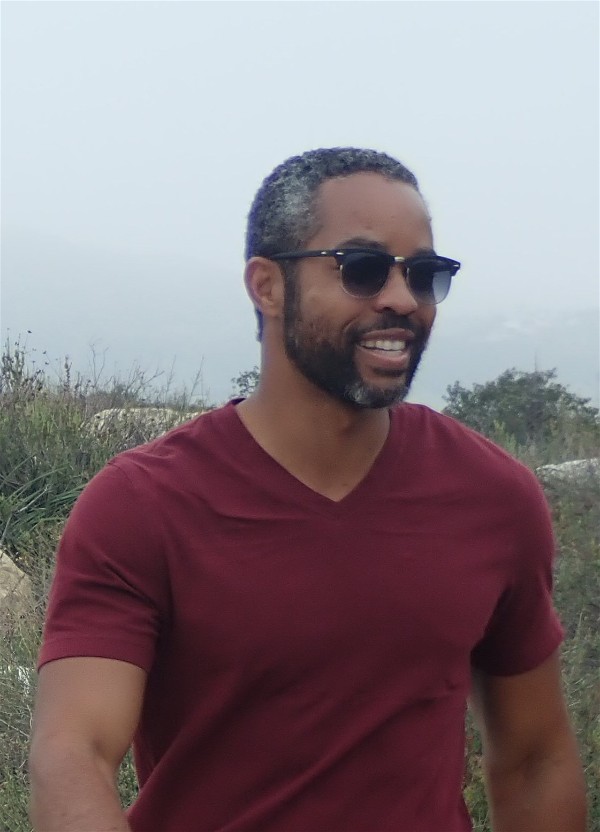
Carlos Grider launched A Brother Abroad in 2017 after a “one-year abroad” experiment turned into a long-term life strategy. After 65+ countries and a decade abroad, he now writes about FIRE, personal finance, geo-arbitrage, and the real-world logistics of living abroad—visas, costs, and tradeoffs—so readers can make smarter global moves with fewer surprises. Carlos is a former Big 4 management consultant and DoD cultural advisor with an MBA (UT Austin) and Boston University’s Certificate in Financial Planning. He’s the author of Digital Nomad Nation: Rise of the Borderless Generation and is currently writing The Sovereign Expat.