
CHAPTER 4
Digital Nomad Nation: Rise of a Borderless Generation
How Digital Nomads Earn Their Living
.
“Do not go where the path may lead; go instead where there is no path and leave a trail.”
— Ralph Waldo Emerson
“Opportunity is missed by most people because it is dressed in overalls and looks like work.”
— Thomas Edison
As digital nomads grow through the journey of life abroad, they internalize new personal habits, grow more emotional resilience, and learn new professional skills. One of the nomad’s most potent new capabilities is the ability to earn an income anywhere.
The ability to generate a sustainable, resilient income anywhere in the world is the capability that takes individual nomads from barely surviving to luxuriously thriving. Additionally, learning to do so resistant to the whims and innovations of the digital economy sets them apart from the workforce and becomes their superpower. The adaptive skill of creating an income anywhere punctuates the transformational journey of the individual nomad.
But how exactly do digital nomads earn their income?
Experimenting. Discovery. Trial. Error.
On the multi-pronged adventure of digital nomadism, “dialing in” a profession or a way to make an income while bouncing between countries is one of the toughest challenges to successfully mastering the lifestyle. However, the process is a worthwhile crucible with the outcome being hard-earned.
Peruse any online nomad community and some of the most frequent questions will be about how to make a living.
“What does everyone do as digital nomads?”
“How do digital nomads make money on the road?”
“How do you pay for your travels as digital nomads?”
While online communities are some of the most open, helpful, and collaborative on the internet, you will never find an authentic, accurate, one-size-fits-all answer to the question of how digital nomads earn money. This is because it is virtually impossible to provide a blanket answer to the frequently asked question.
But from a different perspective, the question is quite easy to answer when we consider the real question:
“How did most digital nomads get to their current point of making a sustainable living remotely?”
The answer: Struggle and adaptiveness.
Pure and simple.
The path to income for most digital nomads is one of grit and struggle
Chat with someone who gave up on digital nomadism and returned home, and you’ll likely find that a major contributing factor to their return home was that they couldn’t figure out how to make a sustainable living as a nomad before the time afforded by their savings ran out.
By contrast, ask a seasoned nomad, comfortably on the road with no plans to return home, whether their source of income now is the first that they tried. Odds are the answer will be, “Absolutely not!”
53% of nomads are self-trained in their current profession, which also isn’t the profession they were originally trained in [1].
Successful nomads earning a sustainable income realize that the perfect job, the perfect field, and the perfect business for digital nomadism is the one that pays an income now. They also realize that the “perfect job” will continue to evolve and change in the future. So, they must change, too, continually, until they build a resilient and diversified skillset, business model, and financial situation that naturally flexes and evolves with the job market, the digital economy, and the stages of their journey.
The seasoned nomad also realizes that if the current profession, business, or situation is not tuned to the current job market and digital economy, it’s immediately time to embrace the struggle of learning. It is time to restart the experimentation, self-development, and strategic growth.
Successful digital nomads struggle through this process of experimentation, often for years before “dialing in” the formula of specialty, business structure, and customers before they finally discover how to build a successful, sustainable business.
This is how digital nomads build their income — starting by quickly and adaptively observing the in-demand skills and needs of the digital marketplace. Then, they experiment with how to deliver products or services based on that skill or need remotely. Nomads proactively explore popular, in-demand, and easy-to-deliver fields, seeking out retraining if possible. In the final stages, they adapt this skill or product, with a proven need and sufficient profit potential, into a digital business model as a freelancer, solopreneur, or entrepreneur.
After establishing the business, they closely market. When threats to their business come from the industry, business trends, or labor market trends, they pivot their products, services, customers, marketing, or business model. They even potentially abandon their business for better, calculated opportunities, restarting the process with lessons learned.
As we will discuss in the nomad career progression and top careers among nomads, everything else is negotiable. Nomads create and adopt business structures for their preferences, stages of the nomad journey, and the market.
This evolution is driven by the professional struggles all nomads face. These struggles hold the key lessons needed to understand and adapt to the unique professional environment of the digital nomad.
The struggle to find a remote job.
The struggle to figure out how to do a previous job remotely.
The struggle to break free of low-paying gig work.
The struggle to refuse high-paying clients in the wrong time zone.
Nomads soon realize that owning a business and the risk that comes with it are the ultimate tickets to freedom. Along the journey, they learn that the process is also weighed down by risk and hard work commensurate with the potential reward.
These two ingredients — embracing professional struggles and internalizing solutions discovered in the process — add up to how digital nomads build an initial income source. As nomads learn more about the digital economy, their income source evolves as well. Job field, delivery model, target clients, and more change as they “dial in” their business. In exchange for this adaptation, the consummate student of digital business gains more location independence, autonomy, freedom of time, and earning potential.
Ultimately these nomads use newfound knowledge to progress up the “Digital Nomad Career Ladder.”
The Nomad Career Progression Ladder
- Remote Worker (least autonomous)
- Freelancer
- Consultant
- Solopreneur
- Digital Entrepreneur (most autonomous)
While the corporate world has the “corporate ladder,” digital nomads follow their own loose “career progression.” This ladder consists of the phases of employment structure and business structure nomads transition through as they gain expertise, understand their target customers, learn the nuances of the digital global economy, and design an income situation suited to them.
Traditional employees usually begin as juniors and then move up in management as they gain skills and experience. The digital nomad career ladder swaps the corporate hierarchy for levels of autonomy in digital business. Remote employment tends to exist on the lower end of that spectrum of autonomy. Digital entrepreneurship exists on the more autonomous end of the spectrum.
In progressing up this career ladder, digital nomads are afforded a wide latitude of freedom in how they do or do not progress. This affords them the opportunity to stop progressing once they achieve a work situation that is satisfying and suitable based on the financial, personal, and travel lifestyle they want. They may choose to skip levels on the ladder. They may choose to stay at a level indefinitely if the work and income situation suits them. Additionally, new nomads do not necessarily need to start at the “beginning” of the ladder. Instead, they may leverage prior work experience, prior management experience, and existing contacts to target any point in the progression ladder as a starting point.
Most of the levels within the nomad career progression suit virtually any work field. Additionally, there is a “progression level + work field” combination that suits every type of nomad, as well as their unique preferences. With effort, ambition, and adaptiveness, digital nomads truly have the opportunity to design the perfect career and overall lifestyle.
Let’s look more closely at the levels that digital nomads progress through in their careers.
Remote Workers: Stifling stability makes for an empowering starting point, yet long-term woes
Remote work, also known as remote employment, is permanent employment for a company, but the work is performed in a physical location different from the employer, supervisor, and team.
Remote work is commonly mistaken as the primary source of income for most digital nomads. In reality, only 17% of nomads are remote workers, while the remaining 83% of nomads take the risk of working for themselves on their terms [1]. This lack of remote workers within the digital nomad community is less because remote work is difficult to find and more due to the fact that remote employment is rarely conducive to a “well-lived” digital nomad lifestyle.
Remote employment tends to be the most restrictive, difficult-to-maintain source of income while fully enjoying the lifestyle. Because of this, remote work is the least preferred income option for digital nomads.
The time commitments enforced in many remote working situations, with desk hours and set times for meeting participation, generally clash with time zone differences and schedules of the traveling nomad. Time offset could easily be a full 12-hour difference between the nomad’s daytime hours and the employer’s daytime hours. A nomad visiting Dubai would experience such a 12-hour offset with an employer in Los Angeles. A nomad in Bangkok would experience the same with an employer in New York. Time-synced work with teams in remote work situations potentially adds up to midnight work sessions for the nomad and few daylight hours to enjoy the life they designed. These time zone conflicts quickly add up to the kinds of disruptions of the “freedom” and “independence” of the lifestyle that often pave the nomad’s way to burnout.
Luckily, remote employment that leans towards asynchronous timing with management and teams or is more performance and delivery is a more viable option. Though these opportunities are generally rare, coding and software development, as well as employment in the information economy, are more likely to offer this “nomad-friendly remote employment.” The nature of fewer meetings and more time freedom add up to more viability in the long term.
However, employed digital nomads should still be concerned about whether travel abroad is against company policy.
Many companies currently have policies in place that prevent remote working internationally. This could be due to employee insurance coverage issues, legal and data liability issues, or simply distance to office policies. While some digital nomads report avoiding detection by using Virtual Private Networks (VPN) to mask their locations, this approach places the nomads in a risky grey area of employment policy and legal policy.
For liability reasons, career prospects, and efficiency, the best path is transparency. Digital nomads and companies employing digital nomads need to be clear and upfront about the remote work and location policy. If the specific terms of a company’s remote employment do not fit the lifestyle of the employing nomad, address the concerns and adapt or move on.
While remote work potentially provides ample security, the restrictiveness encourages burnout in a lifestyle that has freedom as its main selling point.
Seasoned digital nomads who are lucky enough to start their travels supported by remote work and are successful in the long term tend to realize the conflicts between permanent remote employment and international digital nomadism in time to change course. They are able to translate their position and experience into freelancing, digital solopreneurship, or digital entrepreneurship. When this evolution is taken on, it creates a work situation that is a better fit for digital nomadism. This is why, in the long term, remote employment remains the least desirable option on the nomad career progression ladder.
Freelancers: Contract employment on a per-project basis
The term “freelancer” was coined by author Sir Walter Scott in his 1820 novel Ivanhoe. It referred to medieval mercenaries working “freely” and known for their weapon of choice – the “lance.” These “freelancers” offered their services to any lord or cause without allegiance to one single employer during their journey.
Modern-day “freelancers” continue the tradition as digital business “guns for hire” and specialists ready to tackle any problem. A freelancer is a self-employed individual who offers services to clients on a project or contract basis. They often work independently without long-term commitments to a single employer.
Working as a freelancer, trading time or projects for money, is the most common entry point into digital nomad life. Freelancing can be maintained long-term. However, doing so requires adaptiveness to fast-moving trends in the digital economy, as it also stands the serious risk of being undercut by changing labor pricing driven by technological advances that automate tasks commonly performed by freelancers.
For example, the AI revolution, in which the use of AI replaced many writing, design, and administrative workers, was a potent reminder of the fragility of the freelancer’s position in a digital economy powered by technological innovation. It has been well publicized that many people lost income and work to new AI capabilities. On the other hand, many others adaptively learned new skills and leveraged the newly introduced tools. They ultimately pivoted with the AI revolution to find new work, more work, and continued income.
While some SEOs and copywriters reported losses as companies wrote in-house with AI, new “prompt engineers” and small agencies leveraging AI saw big wins. This highlights the everpresent point that due to the fast pace of change and lack of loyalty in the digital economy, freelancers always stand at risk of being replaced. However, the nimbleness of being a solo “digital economy mercenary” combined with awareness can prove to be a strength.
In addition to the risk of client “churn,” freelancers face the deceptive client acquisition trap of quick vs. quality. Gig sites vs. traditional client development.
Getting freelance and gig work from online marketplaces may seem easy to new digital nomads. However, this method often fails to attract loyal, high-quality clients and projects over time. Clients attained from gig work sites are generally more dedicated to the platform and its budget pricing than to specific freelancers. As such, gig platform clients are less likely to be repeat clients for the same freelancer. This makes the prospect of keeping clients from gig work sites slim. Additionally, due to aggressive fee structures on freelance gig platforms and associated marketing around low-cost models and low price points, freelancers’ net earnings from gig worksites tend to be very low in comparison to client work attained via a good client-generation model.
There are exceptions to the dismal yet common gig site prospects, such as outlier superstar freelancers who create a business model, profile, and on-platform reputation that attracts consistent clients and higher pay. However, still relying on a single marketplace for clients may put long-term success and sustainability. Client source diversification is valuable and should not be overlooked for achieving sustainability and resilience.
While cold outreach, marketing campaigns, and word of mouth are the long, hard roads of client development, client quality and loyalty make these approaches essential approaches for the freelancer targeting a resilient, sustainable stream of work.
Another risk many freelancers fall into is relying too much on the work of a single client, which creates a lack of income source diversification. If that single client is lost, or if the client reduces the work requested, this loss of work potentially forces the freelancer to return to the sales cycle while in a period of less income than normal. As such, many freelancers eventually opt to diversify their income by acquiring more clients than they can personally serve. This approach leads the freelancer to grow into an agency model, leading to more diversified, resilient income.
In an agency model, the original freelancer hires contractors/employees to assist in performing the agency’s work. The agency model allows for higher profit potential through scaling and more “financial margin for error” when clients are lost. As the freelancer performs work with a more robust business model and more complex delivery model, they are beginning to dip their toe into digital solopreneurship and digital entrepreneurship.
Freelancers provide services and deliverables as wide as the internet itself. Perusing any online freelancing marketplace day to day and month to month shows the ebbing and flowing of in-demand services among freelancers on gig marketplaces. The most popular freelance services to date include copywriting, editing, graphic design, coding deliverables, video and audio editing, translation services, integrated digital marketing, business consulting, and Artificial Intelligence services.
Consultants and Advisory Workers: Common paths for senior managers and professionals
Virtually any high-skill, knowledge work or white-collar profession can be delivered remotely by providing the same service based on expertise, knowledge, and information. The difference between normal advisory work and advisory work as a digital nomad is the nomad professional is usually not employed or managing employees. Instead, they serve in consulting, advisory, or informative capacities only. This opportunity to advise and tackle specific problems as a consultant provides senior managers and professionals a clear path into location-independent, self-employed work.
Many respondents in the 2022 Global Digital Nomad Study reported having professional careers (e.g., architects, doctors, lawyers, public relations professionals, etc.) powering their nomadic endeavors. All were formerly employed at a management or senior management level at a permanent company prior to “going nomad.” These nomads successfully traded their former leadership responsibilities for the opportunity to leverage proven expertise in a remote work-friendly advisory capacity.
This approach, moving from permanently employed management to advisory work, requires a strong reputation and a strong enough network of professional contacts to start the client generation process. Initial clients are often recent employers, recent coworkers, recent clients, or referrals from such. The consultant’s book of customers then generally grows via word of mouth, along with increased reputational strength and observed results in their new capacity.
While most consultants that are nomads provide marketing or wider business consulting services, architects, engineers, and lawyers within the global digital nomad study also reported working in a consulting or advisory capacity [1]. All still worked within their respective professional fields while traveling as digital nomads.
Solopreneurs: A compact and adaptable business model for minimalist nomads
The common next level up in career progression is “solopreneurship.”
Solopreneurship is a digital small business approach in which a person runs and manages a business independently. Solopreneurs do this without co-founders or employees and handle all aspects of the venture on their own.
By contrast, in the role of a freelancer, the service or product that is the goal of the project is provided piecemeal for a client. The freelancer has zero responsibilities for what happens next on the value chain or “go to market process.” This approach of delivering only a piece is similar to a junior employee completing an assignment for their boss within a company.
Solopreneurs level up to a cohesive product or service that they then sell and deliver to customers – consumer or business. As a result, solopreneurs own the entire business process along the way. They take on the full suite of business problems as they venture into small businesses, including marketing, product delivery, customer service, operations, business strategy, and more.
Solopreneur digital nomads align less with a common field and more with delivering information products or services around which a business model can be wrapped.
The lightweight approach to business, with no employees and fewer operations, allows for more experimentation and adaptability. With this freedom, these digital small business owners try to find or design a model that works for them quickly and efficiently. This flexibility makes the experiment of solopreneurship a perfect next step for nomads to grow professionally.
This process of building a sustainable and successful digital business – solopreneur or entrepreneur – takes digital nomads 3 years on average [5].
Digital Entrepreneurs: Limitless digital businesses
Digital entrepreneurs take their businesses one step beyond solopreneurs. They aim to scale their businesses by employing other individuals, increasing income potential and potential freedom of time.
Digital entrepreneurs’ businesses often function completely online. The businesses differ from small businesses and solopreneur activities in that the entrepreneur hires or contracts third-party workers in order to “scale.” In “scaling,” they aim to take on and perform more work performed by the growing team in delivering a product or service. Digital entrepreneurs oftentimes design businesses so that they can simply manage or advise on operations instead of performing them. This structure of owners choosing to manage and advise instead of actively working and performing low-level tasks potentially frees up time and effort to build and operate multiple businesses at once or just enjoy more free time. As a result, each business then becomes systematized enough to be sold at a later date if desired. However, the ultimate goal may be to own a business and operate for profits indefinitely.
Work and Career Statistics
One of the most common questions about digital nomads is, “What jobs do digital nomads actually do?”
The simple yet accurate answer is “almost everything.”
The more robust answer is that the fields in which digital nomads work spread as wide as your imagination. If there is any element of the work within that field that can be delivered from a distance, that field is a candidate for remote work.
From working traditional fields in a way that they can deliver value online and asynchronously to creating fields particularly suited to the digital space, to teaching, or even practicing within professional fields such as law, medicine, and architecture, digital nomads are proving that with a deep set of knowledge, a good reputation, and customer/employer focused creative delivery, the digital nomad lifestyle accommodates most any field of work.
The following is an excerpt from the 2022 Global Digital Nomad Study highlighting the most interesting statistics about digital nomads’ careers [1].
- 83% of digital nomads are self-employed, while 17% of nomads are employed as remote workers by traditional companies
- 66% of self-employed digital nomads report owning their own business, while 34% work as freelancers or gig workers
- 51% of digital nomads work in the fields of marketing, computer sciences/IT, design, writing (long form, content writing, and copywriting), and e-commerce
- 14% of digital nomad professions are careers not commonly associated with digital nomads, such as architecture, medicine, law, urban planning, and engineering
- Career fields and jobs not commonly associated with digital nomads but reported multiple times during the study:
- Architecture
- Accounting / Bookkeeping / Tax Prep
- Legal
- Project Management
- Human Resources / Recruiting
- Medical Field
- Psychology/Therapy
- Engineering
- Product Management
- Psychology
- Academic Research
- Urban Planning
- Massage Therapy
- Mathematics (Mathematician)
- Remote Property Management
- Real Estate
- Trademark Law
- The most interesting job field reported during the study was “virtual game show host.”
The most commonly reported job fields among digital nomads, listed in order of representation
-
- Marketing
- Marketing – Advertising
- Marketing – Sales / Business Development
- Marketing – Affiliate marketing
- Computer Sciences / IT
- Computer Sciences / IT – Data Scientist / Data Engineer
- Computer Sciences / IT – Security Engineer / Cybersecurity / Information Security
- Computer Sciences / IT – Software Engineer /Developer/Coder
- Computer Sciences / IT – Web Developer
- Computer Sciences / IT – Network Engineer
- Computer Sciences / IT – Software as a Service (SAAS)
- Design / Graphic Design / Web Page Design / Document Design / Branding / UX / UI Design
- Content Writing / Copywriting / Writing / Editing
- eCommerce (including dropshipping)
- Photography
- Teaching (Professors / Online Traditional Ed.)
- Teaching – ESL
- Teaching – Teaching Languages (other than English)
- Teaching – Traditional Education, Online (Professors, online/homeschooling, etc.)
- Translation
- Virtual Assisting / Business Support / Executive Assisting
- Journalism / Traditional Writing
- Coaching
- Videography
- Architecture
- Business Consulting / Business Coaching / Sales Consulting
- Social Media Management
- Accounting / Bookkeeping / Tax Prep
- Legal
- Project Management
- Business Analytics / Business Intelligence
- Human Resources / Recruiting
- Medical Field
- Psychology / Therapy
- SEO
- Trading (Stocks, FOREX, crypto, etc.)
- Engineer
- Entrepreneur/Small Business Owner
- Product Management
- Academic Research
- Urban Planning
- Virtual hosting
- Virtual Gameshow hosting
- Virtual Workshop hosting
- Art
- Blogging
- FBA / Dropshipping
- Fitness Services
- Insurance
- Massage Therapy
- Mathematics (Mathematician)
- Nutrition / Health Coaching
- Podcast Editing / Podcast Production
- Public Relations
- Remote Property Management
- Real Estate
- Trademark Law
- Vlogging
- Marketing
Most reported professions and fields of digital nomad business owners
- E-Commerce
- Coaching
- Creative Agency
- Marketing
- Translation Services
- Teaching
- Podcast Editing/Production
- Virtual Assisting
- Virtual Hosting
- SAAS (Software as a service)
- Social Media Management
- Graphic Design / Visual branding
- Videography, Video Editing, Video Production
- Product management
- Coding
- Business Consulting Services
- Real Estate Sales
- Trading (Equities)
- Personal Fitness Training
- Web Design
- Engineering
- Web Development
- Photo Editing
- SEO
- Human Resources
- Insurance
- Medical Writing
- Architecture
- Writing/Editing
- Therapy/Counseling
Insights for how nomads commonly earn a living: Self-taught, adaptive, self-sufficient
One of the most valuable traits of the digital nomad nation is the consistent sharing of knowledge and best practices. This information sharing helps future nomads more quickly discover how to build a sustainable life in digital nomadism.
The following are highlights of insights on what nomads do for a living and what it took to achieve sustainable, professional success.
Be open to learning new skills.
As we’ve reviewed, owning a digital small business is the most sustainable and freedom-bearing path within the digital nomad lifestyle. However, doing so takes the willingness to learn new skills within a new career field and within the context of operating a business in the digital frontier, regardless of the formal field of study. More than half of successful nomads empower themselves with the critical knowledge for success, with 53% of nomads claiming to be self-taught in their current profession as digital nomads. Additionally, being open to retraining to adapt to the changing digital economy and labor needs sets nomads up to flexibly apply timely lessons gleaned from current events and the digital marketplace.
Use experiences from employment to learn, but beware of the possibility of burnout that comes with the security of employment.
Any start is a good start. However, beware of the trap and potential burnout that can come from remote work for a permanent employer. Be especially wary if that work comes with a restrictive schedule tied to time zones.
On the same note, if you are afforded the opportunity of a paycheck as a remote employee along with the chance to practice a trade when no other work opportunities exist, then, all other things being equal, take it. Embrace the work experience as a learning opportunity, with the price of compromising your freedoms temporarily – and consciously approach how long you can healthily, fruitfully, make that compromise. Similarly, when learning and polishing your expertise, accept the practice and growth that any gig work can deliver as intangible compensation for lower pay. But, in remote work and low-paying gig work, beware of falling into the trap of relying on either option to improve on its own in the long term. Ultimately, it will be your responsibility to apply the lessons learned and polish the stones of opportunity presented to you into the gems that comprise your optimal nomadic life.
Plan and adapt for the long-term
As an aspiring nomad, fight through trial and error to learn a field that is in need in the long term. Aim for a field that fits your personality, preferences, and long-term vision. Then, work to build a self-sustained business around that craft. Choose a craft such that when the time comes to evolve again, the skills, lessons, and practice form useful cornerstones in the foundation of your new craft.
Insights for companies: be clear about expectations.
Companies that wish to hire digital nomads should first take a deep look at their company culture and expectations of employees to assess their expectations of time, timing, and collaboration before publicizing being a “remote-work friendly” employer.
Be clear about the geographies expected for remote employees. Be clear about whether location policies are domestic-only, province-only, or a specific distance from the office. This agreement on location upfront can avoid inconvenient surprises later.
Additionally, be clear about schedule, timing, and collaboration expectations. Hiring a digital nomad as a remote employee who is expected to sit at a desk between normal North American business hours while in Europe, Asia, and beyond may work initially. However, there is a strong risk that the employment situation is less likely to be successful in the long term if the nomad is traveling abroad, bending their travel and lifestyle to the edicts and schedule of a company thousands of miles away. The new nomad desperate for employment is very likely to fight through timing constraints. However, the seasoned nomad is more likely to trade a restrictive employment situation for better opportunities. Being honest about perspectives and expectations of “what remote work is” will help avoid hiring a digital nomad who could be a good employee if the lifestyle fit wasn’t wrong.
Insights for companies: Be open to the nuances of the nomad lifestyle to gain loyal, capable, adaptive employees.
In the same moment that time and location restrictions may ruin the suitability of a job position for most digital nomads, employers willing to allow work time freedom may be uniquely suited to benefit from a seasoned, mature, adaptive pool of highly skilled digital nomad employees.
Building management systems that allow for a few specific freedoms makes hiring nomads a possibility without negatively impacting productivity or clashing with company policy. Allowing nomads the ability to split a work day with personal time without issue permits nomads to balance work and play anywhere. Accepting communication not synched to a specific time zone allows nomads to stay productive in the time zone they choose. Consciously designing collaborative projects with asynchronous participation allows nomads to contribute at their best. In the right company and management situation, all of this is done while maintaining a healthy, productive work environment for the nomad employee, supervisor, and employer as a whole.
However, realizing all of this potential and opportunity hinges on transparency and clear communication before employment begins.
Whether the work situation with a specific company is suited to a specific nomad involves an honest look and candid discussion. Both sides should genuinely express needs and expectations. The result could be a perfectly suited, loyal employee and a working relationship that will last as long as the opportunity does.
Among the hundreds of nomads interviewed in the 2022 study, several reported happily working as remote employees for years. They cited loving their job, enjoying engaging with their team, and deeply appreciating the understanding and adaptiveness of their employer that made the employment situation within nomadism possible. These anecdotes prove that, under the right circumstances, remote work can be perfect for the right digital nomad with the right employer.
The Nuanced Grey Area: How Digital Nomads’ Work Breaks Laws Without Damaging Economies
While there is a unique opportunity for cash injection from nomads into host countries and communities as a potentially powerful tool for economic development, a problem arises in the case of digital nomads – as the nomad’s work situation potentially clashes with tourist visa and immigration policy.
The average digital nomad’s work and income are derived completely online from a country in which they do not reside. At the same time, they reside temporarily in a country that they do not earn money from while working online. This situation presents a wonderful opportunity for countries to receive the money nomads bring into the country and spend without impacting their labor market. However, it also presents a potential legal risk if immigration and labor law clarification is unclear.
For most digital nomads, a simple tourist visa is the most convenient and accessible visa for their stay, thus making tourist visas the most common way digital nomads receive permission to visit hosting countries. However, most tourist visas explicitly forbid any work while in the country on that particular visa – with no exceptions for remote work deriving income from a completely different economy.
In reality, this issue is commonly overlooked in places popular with nomads, such as Thailand, Colombia, and Vietnam. There, immigration officials generally know that digital nomads work remotely. They also know immigration laws do not allow any work on a tourist visa, even remote work. However, the governments rarely, if ever, enforce this law on digital nomads and remote workers.
Enforcing labor rules for remote work by digital nomads may cause more trouble than it’s worth, potentially eliminating a tourism income source without any offsetting net positive for the communities nomads visit. Additionally, such immigration activity may do more harm than good for valuable national tourism brands.
Though over 50 countries currently offer digital nomad visas that explicitly allow remote work, most have the hassle and price tag that makes them unappealing for the 66% of digital nomads that stay in a country for only 3 to 6 months. The average nomad visa allows 12 months of stay with a price tag between $100 and $2000 and a 1 to 6-month application process. This cumbersome and costly process is only worth it for nomads aiming to stay in a single country for a long time. Just as for the average Thai immigration officer, busting a nomad for doing graphic design work for a client in New York isn’t worth it; for the average digital nomad, applying for a 1-year visa, visiting an embassy, doing an interview, and sending documents for a 3-month stay isn’t worth it. To spend all of this effort to get out of a legal grey area that few immigration officers are enforcing just isn’t worth it.
So, what does this all mean?
Governments that appreciate the idea of the “cash injection” from digital nomads and wish to attract nomads must better consider the implications of immigration and labor policy. This check ensures proper groundwork is being laid to build a stable situation and relationship with nomads in the future. Potential changes will be needed to ensure that digital nomads can not only visit but also work remotely legally during their stay. Such publicized accommodations to nomads by governments in the areas of immigration policy, tax, and tourism send a message that attracts nomads. Even better, these actions build a great basis for a clear, mutually beneficial relationship between the governments and the nomad community that visits.
Fully permitting “remote work” may be the answer to clearing up an immigration law grey area in a way that does not damage either party. Additionally, creating short-stay visas akin to tourist visas that are easily applied for on arrival and valid for one to three months but allow remote work would be an equally visible solution.
Additionally, separate “digital nomad residencies” that are valid for one year or more are another viable solution. A great example of such is the simple and easy Georgia Digital Nomad visa. This visa can be applied for online with instant approval and bears the right to work remotely. This makes the experience of planning for, arriving to, and working in Georgia easy for digital nomads and beneficial for Georgians in a way worth emulating.
Solutions such as these solve the immigration grey area in a way that moves the nomad and government relationship forward, allowing both to recognize and focus on bigger and better opportunities between them.
A hidden benefit for hosting countries: Skill sharing
By clearing up the immigration policy grey area of remote work currently prohibited on tourist visas, governments open the door to an amazing opportunity and potential free resource for training, education, and economic innovation in local communities.
Skill sharing.
As observed in the 2022 Global Digital Nomad Study, most digital nomads are not only self-taught in fields not taught in school, but they additionally run profitable, successful small businesses online. They are skilled in navigating the rapidly changing digital economy. They often handle all functions within the business, from marketing to operations, to finance, to product development, and more, in a way that would do a university business program justice.
However, currently, universities around the world are struggling to teach students a sliver of these marketable skills that focus on practicality and fit in the fast-changing digital economy. Even more, one of the most common complaints university graduates have is either not getting a job that employs their skill sets after graduation or not having the skills required for a job upon graduation. By contrast, digital nomads have honed the skills specifically required for changing digital business now, are employing those skills actively and productively, and are happy to share.
Within the Digital Nomad Nation, offline and online, nomads are constantly exchanging skills, approaches, best practices, and tips on exactly how to do business and succeed in the digital economy. This same knowledge could willingly be shared with the locals of any country willing to host the nomads – and willing to let nomads teach.
At the moment, sharing, explaining, and teaching the skills a digital nomad has, even for free, is a violation of most tourist visa restrictions, just like working remotely. As a result, digital nomads keep sharing skills within their own communities and coworking spaces that are less likely to attract the attention of enforcing immigration officers. But, they do not share valuable skills with locals outside of their community.
However…
Imagine the ability to import skill sets such as digital marketing, IT, software engineering, e-commerce entrepreneurship, and other income-producing skills within the digital space and do so for free. These skills could easily empower anyone to tap into the global digital economy, providing a much-needed product or service from anywhere to anywhere.
Imagine the empowering possibilities of sharing such skills in remote parts of Africa, South America, and Southeast Asia. People around the world who may otherwise be disconnected from the global economy could be connected to it and earn with a simple internet-connected device via this approach to inclusion. All could be achieved without the time and money wasted in traditional universities. All could be done in a way that allows digital nomads to give back to the communities and countries that host them.
Now, let’s take this a step further.
The connections created by the process of sharing how to create and run a successful digital business could foster mentor and mentee relationships that continue across borders. Traveling digital nomads could introduce newly trained locals to other markets and countries around the globe virtually to provide their products and services globally. Similar to how the Philippines has become the go-to market for virtual assistant services, remote locations around the globe could join by cornering niche markets of the global digital economy similarly and in a way that benefits all involved.
This opportunity is possible by simply giving digital nomads explicit permission to continue their digital profession online. Nomads continue delivering products and services to foreign countries. Along the way, nomads freely share their business processes with willing listeners. They would easily be within the legal limitations of their newly expanded visas.
Give a community a digital nomad, and they’ll have income for as long as the nomad stays. Teach a community “to digital nomad,” and they’ll have income long after their new friend has gone.
By sharing hard-earned lessons and bringing overlooked communities into the digital economy, individual nomads stand to make a more economically equitable and positively connected world.
This opportunity showcases one of the many ways digital nomadism has the potential to empower people around the globe to transcend borders economically. This forces us to rethink the nature of work, employment, and income. It also forces us to imagine the many new, versatile, more suitable ways we can achieve such in a digital, economically borderless “layer” of our world.
The journey of cultivating location-independent income will evolve and empower, just as the nomad’s journey mirrors it.
Discovering how to earn income as a nomad is a pivotal part of the transformation from “working stiff” to a successful nomad.
Every seasoned nomad’s skill set and current income were learned through adaptiveness. They learned what the world needed and the tools of the digital economy to deliver. They achieved this by approaching the professional struggles of the nomad life head-on. The ultimate solution for location-independent income is creating a resilient framework for earning an income anywhere, then pivoting, adapting, and beginning again as the world changes.
As most nomads generally don’t achieve this milestone until the end of year three, it is likely the last essential tool in their nomad toolkit. Mastery of this last pivotal piece empowers the nomad as fully capable of location independence, time independence, and general autonomy. Now, they have the financial resources to make the most of any opportunity that comes their way.
This newfound financial stability unleashes another new powerful financial lever that empowers nomads to live the lives of kings & queens in a way no one would have thought possible.
Chapter 4 Field Insights: How Digital Nomads Earn Their Living
① Most Nomads Don’t Start with the Perfect Job — They Build It
Sustainable location-independent income rarely starts with a dream job. For most nomads, it emerges through experimentation, skill-stacking, failure, and iteration over time.
② There’s a Career Ladder for Nomads Too
From remote employee to freelancer to solopreneur to entrepreneur, the path evolves. Each step offers more autonomy—but also more responsibility. What matters is choosing the level that fits your goals and target lifestyle.
③ Self-Reliance Doesn’t Mean Going It Alone
Nomads succeed not just through hustle, but through community. Skill-sharing, mentorship, and information exchange are common within the digital nomad nation—and often make the difference between surviving and thriving.
Departure Point:
Take inventory of your current skills, interests, and work habits. Then ask:
What kind of remote income model suits where I am right now, and where I want to be?
Are you best served by building something solo, freelancing with structure, or negotiating remote terms with your current job?
No matter where you start, the key is to stay curious, stay adaptable, and keep learning. Your growing palette of skills in the digital economy is your toolkit—and the road is your workshop

- PROLOGUE
- CHAPTER 1: Why Are Digital Nomads Everywhere?
- CHAPTER 2: What is a digital nomad?
- CHAPTER 3: The Digital Nomad Lifecycle
- CHAPTER 4: How Digital Nomads Earn Their Living
- CHAPTER 5: Geoarbitrage
- CHAPTER 6: Solo Struggles as Foundations for a Nation
- CHAPTER 7: Digital Nomad Hotspots
- CHAPTER 8: The Nomad Nation Is Already Forming
- CHAPTER 9: The Dark Side of Digital Nomadism
- CHAPTER 10: Models for a Digital Nation
- CHAPTER 11: Tuvalu
- CHAPTER 12: Decentralized Autonomous Enclaves
- CHAPTER 13: Visionary Possibilities
- CHAPTER 14: What Comes Next?
- CHAPTER 15: Conclusion
- CHAPTER 16: The Digital Nomad Nation Manifesto
- CHAPTER 17: The Call to Action
- EPILOGUE: Rise of the Flexpat
- APPENDIX A: Global Digital Nomad Study
- APPENDIX B: Nomad Nation Resources

.
.
ABOUT THE AUTHOR
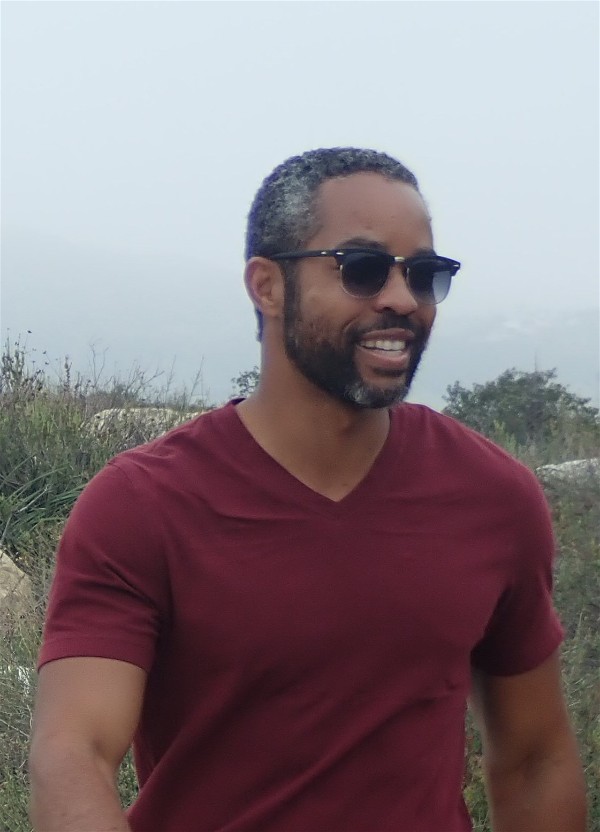
Carlos Grider launched A Brother Abroad in 2017 after a “one-year abroad” experiment turned into a long-term life strategy. After 65+ countries and a decade abroad, he now writes about FIRE, personal finance, geo-arbitrage, and the real-world logistics of living abroad—visas, costs, and tradeoffs—so readers can make smarter global moves with fewer surprises. Carlos is a former Big 4 management consultant and DoD cultural advisor with an MBA (UT Austin) and Boston University’s Certificate in Financial Planning. He’s the author of Digital Nomad Nation: Rise of the Borderless Generation and is currently writing The Sovereign Expat.