


PROLOGUE
Digital Nomad Nation: Rise of a Borderless Generation
At the close of the 20th century, Tsugio Makimoto, a technologist, and David Manners, a business writer with a penchant for tech, predicted the rise of a new persona that would lead to a sociological shift with global impacts.
According to the authors, the convergence of shrinking technology, expanding internet connectivity, and increasingly efficient business operations would lead to a new type of working traveler. This newfound mobility would enable workers to use connectivity, technology, and location-independent employment to work from anywhere.
They called this new type of working traveler the “digital nomad.”
The birth of this idea of a new breed of nomad suited to the global economy and global landscape of a digital age coincided with unusually impactful new technological innovations that would change the world and how people function daily. Innovations, such as social media, the expanding reach of internet access via cell networks and satellite in remote locations, and cryptocurrency would accelerate the digital nomad revolution. It would initially empower thousands, then later millions of corporate runaways and wanderers to learn of, seek out, and build mobile lives abroad, detached from their home nations.
Twenty-five years after the digital nomad revolution was predicted, Makimoto and Manners’ imagined possibilities had become a powerful reality.
For these new nomads, what seemed like a simple desire to travel was actually a calling to a much deeper journey. A journey of not only solo wandering but also discovering a revolutionary new way to live.
This adventure into digital nomadism wasn’t just a lifestyle shift. It was diving into a new culture, a new philosophy for life, and a new identity rooted in freedom — a life of trials, growth, and possibility.
They were unknowingly following a call to a borderless existence with limitless possibilities.
This movement, for restless individuals to solve their societal and economic struggles at home with remote work, further fueled the “digital nomad” revolution, pushing it past the tipping point of a simple travel trend into a rapidly growing phenomenon and a community with the mass and gravity of a nation.
Though this new type of wanderer had solved their struggles at home with the new possibility of indefinite travel and adventure, new problems awaited. These new trials would be the uneven cobblestones paving the path of the Digital Nomad Nation’s story.
Inevitable struggles dotted their adventures in solo travel. Tackling problems one by one led to the solutions that shaped the behaviors of individual nomads while sparking cooperation within the growing community. Those struggles common to nomading tested some wanderers to their breaking points, sending them home with mere memories and tattered dreams. For the nomads that remained, the trials were just the start of a unifying experience powered by shared misery. Outlasting, the trials was met with a realization that, perhaps together, these not-so-disparate nomads could make this revolutionary new lifestyle work. Not just for one or two years but indefinitely.
An invitation was buried within these hurdles.
Countless other deserters from society had gone before, taking on the digital nomad lifestyle alone, achieving something most thought impossible – a life of travel around the world with no end date.
However, if you want to go fast, go alone, but if you want to go far, go together. The newly formed and still coalescing digital nomad community was calling these uninitiated wanderers to join in the collective adventure to build something revolutionary and society-changing… together.
They were being called to join the Digital Nomad Nation.
Unintentionally, they synced individual behaviors to solve collective problems. Shared values of freedom and independence were underpinned by similar goals, such as “living one’s best life” and existing in the now in pursuit of irreplaceable experiences. A growing “digital nomad culture” was forming. A pattern of migration through the same borrowed “territories” drove more connection within the condensing yet globally distributed nomad community.
This new type of working traveler was created by the external factors of technological advancements, economic limitations, and societal construct-imposed restrictions. The aspiring nomads struggled to find fulfilling experiences, find their fit in the world, and achieve the personal growth that arises from coming of age.
On their individual journeys of exploration, these nomads had many of their needs, created by the social disconnection that comes with travel, filled and solved in a way that a functioning government would normally solve. However, their struggles weren’t resolved by their government. Those new and unique problems that come with life abroad were resolved by each other within this young, natural experiment of a nation.
Though this story has yet to be completed, it is an entrancing and powerful one that is increasingly shaping and impacting the world around us, both online and offline. The nomad nation will continue to redefine what it means to be a country and citizen in the digital age and what can be achieved with a lifestyle with freedom as its base value.
The telling of this story marks the end of the first chapter of the digital nomad and the beginning of a new, more impactful chapter.
This is the story of the first nation born of the internet.

- PROLOGUE
- CHAPTER 1: Why Are Digital Nomads Everywhere?
- CHAPTER 2: What is a digital nomad?
- CHAPTER 3: The Digital Nomad Lifecycle
- CHAPTER 4: How Digital Nomads Earn Their Living
- CHAPTER 5: Geoarbitrage
- CHAPTER 6: Solo Struggles as Foundations for a Nation
- CHAPTER 7: Digital Nomad Hotspots
- CHAPTER 8: The Nomad Nation Is Already Forming
- CHAPTER 9: The Dark Side of Digital Nomadism
- CHAPTER 10: Models for a Digital Nation
- CHAPTER 11: Tuvalu
- CHAPTER 12: Decentralized Autonomous Enclaves
- CHAPTER 13: Visionary Possibilities
- CHAPTER 14: What Comes Next?
- CHAPTER 15: Conclusion
- CHAPTER 16: The Digital Nomad Nation Manifesto
- CHAPTER 17: The Call to Action
- EPILOGUE: Rise of the Flexpat
- APPENDIX A: Global Digital Nomad Study
- APPENDIX B: Nomad Nation Resources

.
.
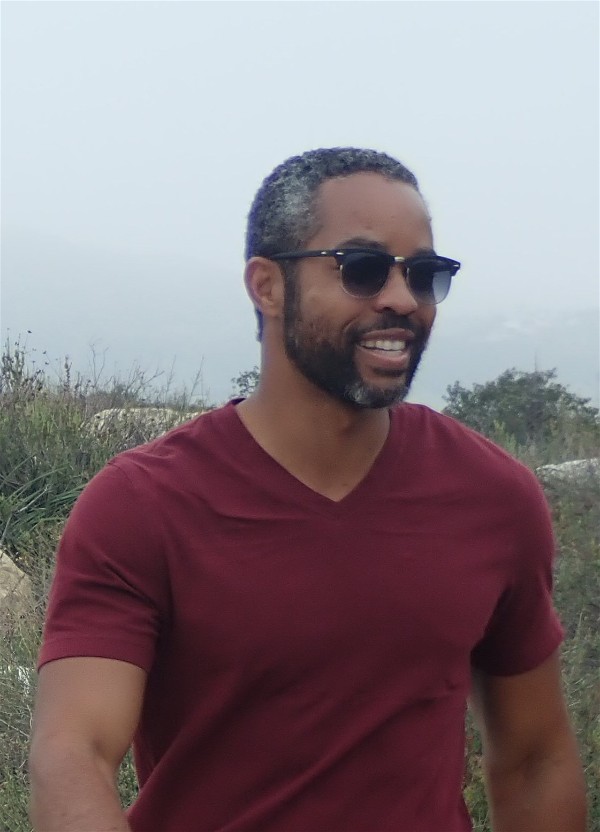
ABOUT THE AUTHOR
Carlos Grider launched A Brother Abroad in 2017 after a “one-year abroad” experiment turned into a long-term life strategy. After 65+ countries and a decade abroad, he now writes about FIRE, personal finance, geo-arbitrage, and the real-world logistics of living abroad—visas, costs, and tradeoffs—so readers can make smarter global moves with fewer surprises. Carlos is a former Big 4 management consultant and DoD cultural advisor with an MBA (UT Austin) and Boston University’s Certificate in Financial Planning. He’s the author of Digital Nomad Nation: Rise of the Borderless Generation and is currently writing The Sovereign Expat.