
CHAPTER 6
Digital Nomad Nation: Rise of a Borderless Generation
Solo Struggles as Foundations for a Nation
.
“In the middle of difficulty lies opportunity.”
— Albert Einstein
“If you want to go fast, go alone. If you want to go far, go together.”
— African Proverb
While the timeline of the journey for each digital nomad is unique, the milestones along that path are common to all nomads’ journeys.
Regardless of how compressed the journey, experienced digital nomads all share that exhilarating thrill of starting, working through the evolutionary cycle as individual nomads, progressing as far as they choose along the remote employee to digital business owner spectrum, and finally discovering the logistical and locational mix of the nomad life that suits their needs and desires.
This “complete” state for the nomad represents the peak potential of freedom, autonomy, and possibility. It’s what every nomad dreamed of, even before their journey began.
But as Oscar Wilde highlighted, “There are only two tragedies in life. One is not getting what one wants, and the other is getting it.”
Adventurous travel is hallmarked by obstacles, mishaps, and struggles. The adventure of wandering as a digital nomad is no exception.
The aspiring nomad, now fully living the borderless life, faces new challenges. These struggles are unique to the nomadic lifestyle beyond what most people can imagine.
As the wide-eyed and optimistic new digital nomad wades into the world excited about what’s to come, three key struggles exist in their path. However, the struggles hold the promise of being the doorways to the nomad’s next journey of transformation.
The Nomad’s First Struggle: New pains unique to the digital nomad lifestyle
Early adventures as a digital nomad are some of the most exciting, fulfilling, and enriching experiences one can have in a lifetime. The thrill of the unknown is experienced on a path that leads to wherever one desires to go next. As a new nomad, the experiences of traveling anywhere, everywhere, and nowhere can be overwhelming in the satisfaction and excitement they bring. New places, new friends, and new cultures come quickly. Each memory shines with the glow of optimism and the excitement of freedom.
Early in travel, every obstacle is perceived merely as an opportunity to experience the world in a new, different way. Every discomfort is merely an education. Any sacrifice is worthwhile in exchange for the patchwork of global experiences that could happen no other way.
As time passes into the first year, the excitement fades. The happy hormones that filled new nomads with joy and gratitude at the start of the journey with all its novelty start to wane. New nomads start to notice the daily and weekly challenges of nomadic life without the idealized views and optimistic veneer.
For part-time travelers, a three to six-month trip abroad can be pure bliss. There will always be some small challenges, but everything is easily handled with bright-eyed determination and the new elation from life in a backpack. By contrast, months 6 and 12 begin to introduce aspiring nomads to a cascade of struggles unique to a permanent life abroad.
As a new and paradigm-shifting way to exist, digital nomadism is a new approach to living, balanced with equally unique challenges. These are the struggles that shape each nomad and ultimately determine where their journey leads.
Loneliness: Lack of consistent relationships and community affects mental health during extended solo travel
Meeting the diverse carousel of people that come and go during travel is a hallmark of the experience. Other travelers and friendly locals met in hostels, coworking spaces, and on street corners can be polite, charming, and life-changing. But, having nearly all new relationships fade within 48 hours can emotionally wear on long-term travelers.
Even the most introverted among us are social beings at their core. We all need stable, reliable, and positive relationships to feel grounded, supported, and healthy. This fact is such a universal truth that in the 2022 Global Digital Nomad Study, loneliness was reported as the #1 reason digital nomads stopped traveling and returned to their home countries [1].
Beyond the “social churn” of travel, where people arrive as quickly as they depart, the discomfort goes beyond fast friendships. Between a nomad and locals, the figurative distance of language and culture can leave a nomad feeling alone in a crowd of people. In the remote Philippine islands, Balkans, Mongolia, and similar places, English, and any other common language, is rare. This makes building personal connections tough during what could be enriching travel. Though people often successfully rely on hand signals and smartphone translators, at some point, the lonely nomad needs real connection. Traveling alone for weeks can create great memories. But being by yourself, without anyone to share it with or even talk to, can wear down the ambitious traveler.
They may share snippets of these exploits as stories with friends and family “back home.” But connecting across the world comes with its own set of difficulties.
The European or North American nomad traveling Southeast Asia, Africa, or South America may love the experiences in their new far-off land. Yet, their travels likely put them several time zones away from friends and family back home. This physical distance disrupts the once-constant contact with loved ones many of us take for granted. As a result, relationships slowly slip “out of sync” due to less chatting, less face time, and less overall connection. As the months wear on, those relationships “at home” inevitably weaken if not carefully and intentionally tended by both sides.
The longer a nomad travels, generally, at best, the weaker these connections become while they remain abroad. At worst, the longer a nomad is abroad, the fewer relationships they can sustainably maintain at home.
As time passes, everything left unattended weakens. So, the longer nomads roam, the more their support networks at home deteriorate, and the less support they have to lean on while wandering the world.
Long-term traveler fatigue and accrued culture shock
New locations, new cultures, and new foods are among the most wonderful aspects of life abroad. Travel’s foreign tastes, smells, and sounds make the experience of wandering fulfilling.
Three months in East Asia, eating at street food carts in Thailand, izakaya grills in Japan, and noodle stalls in Vietnam can leave a lasting impression, igniting a sense of elation in your taste buds and mind. However, immersing solely in these three amazing countries can mentally fatigue the solo traveler. Navigating three different languages, calculating three different currencies, and dodging three different types of tourist traps can wear on one’s mind.
When travelers must constantly remain vigilant and must constantly interpret, they can’t “shut off” and rest, then fatigue builds up. If they feel the need to “solve” every interaction for weeks or months on end, even simple tasks become overwhelming. The longer this goes on, the more draining travel becomes. Traveler fatigue and accrued culture shock in the long term are the second most common reasons that digital nomads leave the nomad lifestyle and return to their home country [2].
Culture shock is a sudden feeling of disorientation when someone faces a new culture or way of life. In contrast, long-term traveler fatigue, the accrued state of mental and seemingly physical exhaustion, builds up over time. It happens when a traveler’s energy and optimism fade after months of constantly moving on the road.
For the new traveler stepping off a flight into the chaos of Bangkok, navigating the human zoo of sights, sounds, and people is a treasured part of the bigger adventure. The bombardment of the senses makes the journey that much sweeter and more memorable for the fresh-faced wanderer. Yet, for the depleted digital nomad in country number 19, city number 50, and month 9 of travel, navigating a new language, new culture, and a new landscape can feel like a gargantuan task. With wanderlust giving way to a craving for the calm and familiar, the worn-out nomad yearns for simplicity and balance in work, health, and travel.
“Familiar” could be the drastic decision to end the adventure of nomadism and return to the familiarity of one’s home country and town. Depleted, tired, and feeling few accessible alternatives, this is the path out of long-term traveler fatigue for some.
A more sustainable way to blend familiarity with a nomadic lifestyle is to stay in one spot for a while. Finding a place that feels like home can change everything for tired travelers. As stability offers the fertile ground for routines to form, favorite cafés pop up, friendships grow, and the nomad’s mind and spirit are put at ease to recharge. This approach of slowing down and settling temporarily not only brings comfort but also unlocks a richer, more immersive experience of slow travel.
However, for the slower-traveling nomad, settling in too long comes with its own set of challenges. Visa restrictions can turn a peaceful stay into a new logistical headache. If the community and location for long-term settling aren’t chosen selectively, staying too long can change the nomad’s presence from curiously welcomed to regarded as intrusive.
Visa & Residency: The barrier to staying in the places nomads love
While the average backpacker may spend less than a month in a single country, 80% of digital nomads prefer to stay in a single country for 3 to 9 months. A 6-month stay is the sweet spot for most digital nomads to travel sufficiently while enjoying [2]. Unfortunately, most tourist visas only allow a limited stay of 1 month on average and 3 months at their most generous. This often leaves nomads doing potentially inconvenient “visa runs” to nearby countries to reset their “visa clocks.”
This ever-present time constraint prevents nomads from “settling in” and forces them to stay on the go. The result is a greater possibility of traveler fatigue and a lesser possibility of joining a connected community. While many visa options let nomads stay in one place for a long time without needing visa runs, identifying these options can be tricky for new nomads.
The introduction of “digital nomad visas” in 2020 by Estonia, Bermuda, and Barbados teased the idea of solving visa issues limiting long stays for nomads. These “DN visas” offered renewable stays of a year or longer in beloved destinations that seemed to be exactly what people needed. Sadly, the paperwork and application process for the nomad-specific visas are still too cumbersome for most nomads who are always on the go.
Also, these innovative visas revealed a gap between government expectations and what digital nomads could provide. For instance, the minimum annual income for the Estonian DN Visa was €42,048. For the Bermuda visa, the minimum annual income was $50,000. In contrast, the average digital nomad’s yearly budget was just $22,500 in 2022 [1, 13].
The best scenario for nomads and countries would be more digital nomad visas with easy applications and clear expectations between nomads and governments. This would allow specific sub-demographics of nomads to connect with host countries uniquely suited to their needs on both financial and social levels.
This clarity, ease of application, and culture match between digital nomads and countries’ provided visas would allow nomads to settle in a single location long enough to avoid burnout. In that time, they could become familiar with the language and culture of their temporary home. This enriching, deeper connection and the familiarity it brings would recharge mental energy via a stint of stability and familiarity.
This slower travel would then allow nomads to tackle the most troublesome pains of nomadism abroad in the long term.
Income and clients: The #1 headache for digital nomads
In any business, acquiring customers (or an income source) and achieving a profit are among the most difficult tasks. The professional life of the digital nomad is no different. As such, finding new clients and retaining old clients was reported as the #1 struggle of digital nomads in 2022 [2]. Most digital nomads reported not achieving a sustainable income until their third year abroad [5]. This implies that the first three years of nomadism will be littered with professional trials and lessons in building and maintaining an online business.
However, the new nomad is in luck. In the digital nomad community, blueprints and best practices are constantly shared among members. From digital marketing to sales to client generation, millions of nomads have mastered the skills for solving the “income problem” within the digital economy. Among digital nomads, 66% reported owning their own successful business across a vast array of fields commonly and not commonly associated with remote work [2].
The digital nomad community has an opportunity to share skills among its members to speed up the journey to small business success.
Unfortunately, once nomads finally achieve clients, income, and profit, a new headache approaches. Governments always expect a cut of earnings in return for hospitality. The certainty of death and taxes is still true as a nomad and looms at the end of the productive nomad’s first year abroad.
Taxes abroad, taxes at home
For nomads who find a place to settle, there’s a new concern: taxes. They can get comfortable, meet clients, and rest. But soon, tax obligations appear on the horizon.
Many digital nomads find that staying in one place for about six months is ideal. This time lets them settle in, make friends, and enjoy life more fully. But what many don’t realize is that this half-year mark often lands them in the “183-day rule” territory—a critical tax law in many countries. Under this rule, if a nomad spends 183 days or more in a country within a given tax year, they may automatically be classified as a tax resident. If that country taxes residents on global income—as Indonesia and the U.S. do—then a new surprise awaits. Suddenly, after just over six months, they could be legally required to file and pay taxes on all income earned worldwide. For nomads who don’t know of this rule, the extended stay for stability could instead bring unexpected new financial headaches.
Some countries, such as Georgia and Argentina, offer fantastic tax situations for nomads. Both of these countries allow nomads and tourists extended stays of over 11 months without any tax obligation. However, the problem for nomads is finding the right information on taxes in their host country. Tax law is usually in the home country’s language, not in English or a widely known language, and stored on hard-to-find government tax websites. To make matters worse, tax rules for digital nomads are unique due to the nature of their constant travel through tens of countries per year with businesses that exist primarily in cyberspace. Knowledge of the tax rules as they relate to nomads exists, but it’s often buried deep in the digital nomad community.
Taxes in a person’s home country are likely already daunting. For the already overwhelmed first-year nomad, figuring out taxes in a foreign country could be downright scary. This is clearly why taxes are one of the top five struggles among digital nomads [2].
To properly plan for and avoid unnecessary tax headaches, digital nomads managing taxes must be aware of whether the “183-day rule” applies to the country they’ll be based in the long term. Then, they should track whether they will be in the country long enough to be categorized as a tax resident. But more importantly, before choosing a country as a long-term base for over six months a year, check its tax residency rules. For example, some countries require you to stay 183 days or more. Also, consider if the country taxes only local income, like Paraguay, or all global income, like Indonesia, when predicting how taxes will affect your nomad experience.
Any one of these struggles – loneliness, fatigue, clients and income, visas, and taxes – could be surmountable. However, the way these struggles build up over time can truly wear on a digital nomad. Few people face this when they are at home, surrounded by familiar faces, language, routines, and the freedom to stay.
The Nomad’s Second Struggle: The isolation of solo travel makes each challenge even harder
Freedom, roaming, and isolation are key ingredients in the nomad’s adventure. As they seek exploration, growth, and rebirth, satisfaction comes afterward as a byproduct of the journey. But all things are best in moderation.
As discussed earlier, the digital nomads’ first year of solo travel starts with excitement that overshadows the potentially negative emotional impact of most obstacles. As time goes on and one stays on the road, those major struggles – loneliness, fatigue, client instability, income instability, visas, and tax confusion – still loom increasingly larger, like imposing shadows in the background. The double-edged sword of solo travel, beautifully disconnected from all, often brings with it the downside of having to learn the solutions for each of these problems in isolation and via trial and error in order to stay on the road.
In the “real world,” one might call a colleague, a mentor, or a friend for support and advice in hard times. The new digital nomad on the road has an internet search at best, with outdated and less than helpful “content” as the only consistent resource while they blaze new trails.
Loneliness may creep in while alone on a night bus in Laos. While the language difficulties are beyond the capabilities of Google Translate, that lonely night can lead to days of speaking no English at all and little communication. Visa issues may pop up as the flight is already booked or, worse yet, they stand in the inbound immigration line. Ready for a much-needed recharge in familiar territory but instead turned away, unknowingly, at the end of 90 days allowed in the country. With nowhere to go, the only solution remaining may be a flight to a country in North Africa you have never researched before, much less visited.
Client issues may hit when a long-time client who makes 80% of your income informs you that they’re “going with another option.” With the income stream ending next week, you sit at the end of a stressful 3-month work stint in Bangalore and see the prospect of your planned month of fun social travel in Albania or Hua Hin for recovery start to fade away slowly.
For those new nomads experiencing these demoralizing hits, the biggest upset will be dealing with them alone and in silence.
The best friend, who has never traveled, won’t understand what a visa is and why nomads aren’t allowed into Portugal after 90 days in the EU.
The friend who is still employed in the rat race won’t understand the work that went into getting that client recently lost. They won’t understand how much trust, perhaps too much trust, went into the relationship.
The first-year nomad will feel the urgent pressure to find a solution. They won’t have time to sulk, and there won’t be sufficient emotional, mental, or career support standing by. While there are good practices and solutions for each situation, new nomads likely will not find this information easily.
Feeling alone makes each of these issues harder to bear. It takes a toll on the mind, wallet, and spirit. This lonely cycle means facing challenges alone, pushing through them, and then wishing for a break. The only hope is for a chance to enjoy the nomad life before the next storm arrives.
However, the crucial issue is whether the emotional toll on the solo nomad will completely deplete them.
The Nomad’s Third Struggle: Burnout at the crossroads of continuing to travel or returning “home”
The struggles common to all new nomads exacerbated by isolation all potentially lead to a single commonplace: burnout.
Burnout happens when a nomad’s resources—mental, emotional, physical, or financial—run dry. Some find themselves financially depleted, struggling to pay for their journey. Others experience mental exhaustion from the endless cycle of problem-solving in a foreign world. And for many, the emotional toll of long-term solo travel—disconnected from deeper relationships—leads to a sense of isolation and fatigue. Without a sustainable plan, the challenges of the digital nomad lifestyle will become overwhelming.
This common breaking point that happens between the first 9 and 12 months of travel (and sometimes again later) is a dilemma that often has three paths:
Option one is to go back to their home country. This choice clears away problems like visas, loneliness, and traveler fatigue. It also allows them to rebuild a healthy life with ease in the safety and familiarity of home.
Option two is to stop and rest. Take time to recharge. Then, hit the road again, ready for new adventures, challenges, and all. But, without “structural change” in their lifestyle, nomads will face burnout again soon. Inevitably, balance must be found to break the cycle of travel, fatigue, burnout, recharge, and returning to travel.
Option three is to find a source of solutions, support, and sustenance for the nomad’s mental and emotional needs that have been neglected. By tapping into the collective knowledge, like minds, and eager connection of a community online and offline, the struggling nomad can find support within the digital nomad nation.
An increasing number of nomads choose the third option. They decide to stay “on the road” and face their challenges. They look to other nomads and the community for support. They inadvertently choose to help the digital nomad community grow in number and potential.
The struggles became chances for nomads to adapt and improve their lives. This unique challenge brought them together, forming a community. Like particles in a nebula, they were drawn together by their shared experiences, under their own gravity, beginning to burn brightly and form something that would illuminate a world-changing new path. Together, they created a new, bright force.
These common struggles for nomads might have ruined the journey for some. However, and more importantly, for the nomad who decided to keep traveling, these struggles sparked a chain reaction leading from struggle to a search for solutions to finding these solutions in the community as the tip of the iceberg for what it could offer. It led not just to a better way to live but to the creation of the digital nomad nation.
These struggles were pushing nomads toward support and a larger opportunity that they didn’t even know existed.
“The cure for burnout isn’t just rest. It’s community.”
— Emily and Amelia Nagoski (Burnout)
The Nomad’s Solution: Community and Support
The nomads who stayed despite the challenges all realized at some point, “I can’t be the only one who has experienced this.” This spark of thought led nomads to seek each other out. That inkling and the active search for each other became a force of gravity, pulling them together into a community. As a community, they began to share insights into how to solve such problems quickly, easily, and permanently.
Nomads who stayed on the road scoured the internet for solutions. They followed clues to find digital nomad communities full of solutions. Because of this grassroots pursuit and the steam it was picking up, in 2017, the digital nomad revolution began to pick up steam as early communities formed on platforms like Reddit and Facebook.
Social media and online communities became the first virtual gathering points of the digital nomad nations.
Within these social media groups, nomads shared their struggles in hopes of solutions and support. The many solutions shared reduced the previous need to struggle and flounder alone. Nomads worldwide shared helpful tips on where to visit and work. They highlighted great, lesser-known places to live. They provided real-time feedback on safety and quality of life in emerging locations, focused on common nomad needs. They shared details on travel planning, cost of living, nomad-friendly neighborhoods, and visa information. They’d become invaluable shared resources for each other on everything that they needed to know.
The community of nomads began to coalesce as they met virtually to discuss common issues, emboldened by a desire to engage with people, travelers, and nomads like them. The circular interaction of inquiry, discussion, solution, feedback, ongoing support, and repeating drove the nomads to connect more often and more deeply. Nomads worldwide returned to online communities. They tackled issues, shared experiences, and empathized over the unique aspects of the digital nomad lifestyle.
An unintended side effect: Massive growth in the digital nomad community
A side effect of this very visible online exchange between nomads on the road was the attraction of aspiring nomads. Nomads actively on the road were sharing personal stories, experiences, struggles, and insights that let those dreaming of escape feel connected, even while still at home. Aspiring nomads could now observe and participate in the nomad community via social media. As a result, more newcomers were being attracted to the nomad life, ultimately growing the community.
As this increased connection born of struggle attracted more newcomers to digital nomadism, the digital nomad community grew rapidly while offering support so that fewer nomads felt the need to return home.
As these digital nomads connected for camaraderie and support, they were unknowingly answering a call to their next journey. They were joining the digital nomad “community’s” growth and transformation from a disparate cluster of working travelers to a coalescing, sophisticated, and influential network of something much more.
Their new struggles and the allure of shared solutions were leading them to join in the new adventure of the rise of a borderless nation.
By 2022, about 35 million people belonged to the digital nomad community. In the world, by population size, it was a touch smaller than the population of Canada in the same period [2].
Migration patterns and the rise of offline nomad communities
The growing connectivity and information exchange within the nomad community drastically improved the lives of nomads. They continued to reach out to their community to solve problems and returned to offer advice. However, the most powerful outcome of this new phenomenon was an emerging pattern of nomads following the same migration paths between the same locations.
The digital nomad community, in its online and offline variants, was using decentralized authority (the wisdom of the crowd) and influence to guide nomads to gathering points around the globe. Digital nomad capitals began emerging within the community as connection and engagement spilled from online to offline.
As individual nomads began to feel a tinge of relief on an individual level, from finding solutions to the struggles that plagued them in solo travel and finding emotional support in their newfound community and shared identity, a phase of the journey of these individual nomads came to a satisfying close.
These nomads felt a dream from a distance and took an unknowing leap into the world towards it. They embraced the euphoric highs and unexpectedly lonely lows of wandering the world alone. They became aware of the need for balance in life, nourishing professional opportunities as much as their own health. They became aware of the limitless possible pursuits to make a living online, location-independent, and on their own terms.
Now, finally, they found more people like them, sharing their ideas, values, goals, and identity.
The individual digital nomads completed the extraordinary beginning phase of the digital nomad journey alone. They now had the pieces of the puzzle, including the last thing they had been missing since they left home. A tribe. A community. A nation…that they belonged to.
Aware of their potential, nomads began to follow each other, joining fellow nomads in the emerging cities that fostered nomad communities and supporting each other in the real world.
They would soon realize that the Digital Nomad Nation was more than a community. It was the world’s first borderless, online nation. By challenging outdated notions of citizenship, work, and identity together, they could pave the way for a future where global mobility and connection redefine how we live and thrive beyond borders. They would change society’s assumptions on the limits of how we can live by empowering each other to live better, connecting to enhance their experiences, and showing the world what is truly possible via borderless living.
The journey was no longer about individual nomads. The next phase of the journey was as a contributor, a member, and a citizen of the Digital Nomad Nation.
Chapter 6 Field Insights: How Individual Struggles Laid the Foundation for a Digital Nation
① Nomadism Begins with Personal Breakdowns
Burnout, disillusionment, loneliness, and systemic frustration push individuals to seek freedom through remote work and travel. What feels like escape is actually the first step toward reinvention.
② The Challenges of Nomad Life Forge Community
Visa restrictions, income instability, and emotional isolation aren’t just problems—they’re pressure points that drive stronger connections within the nomad community. Out of shared pain, nomads began to organize, share, and support one another.
③ From Survival to Solidarity to Strength
What started as scattered individuals solving personal problems evolved into a decentralized global community—bound by shared values and mutual aid. In solving for themselves, nomads unknowingly began solving for each other.
Departure Point:
Think back to a personal struggle that pushed you to your limits—professionally, emotionally, or financially.
Now ask: What did it teach me? What did it prepare me for?
If you’re a digital nomad (or aspiring to be one), know that your struggles aren’t detours—they’re initiation into a new skill set, a new community, and a new framework for living. And you’re not alone. The very challenges that seem insurmountable today may one day be the bridge that leads you to your tribe, your purpose, and your place in the Digital Nomad Nation. Embrace the struggle and lessons while staying focused on the future for which you are laying the foundations.

- PROLOGUE
- CHAPTER 1: Why Are Digital Nomads Everywhere?
- CHAPTER 2: What is a digital nomad?
- CHAPTER 3: The Digital Nomad Lifecycle
- CHAPTER 4: How Digital Nomads Earn Their Living
- CHAPTER 5: Geoarbitrage
- CHAPTER 6: Solo Struggles as Foundations for a Nation
- CHAPTER 7: Digital Nomad Hotspots
- CHAPTER 8: The Nomad Nation Is Already Forming
- CHAPTER 9: The Dark Side of Digital Nomadism
- CHAPTER 10: Models for a Digital Nation
- CHAPTER 11: Tuvalu
- CHAPTER 12: Decentralized Autonomous Enclaves
- CHAPTER 13: Visionary Possibilities
- CHAPTER 14: What Comes Next?
- CHAPTER 15: Conclusion
- CHAPTER 16: The Digital Nomad Nation Manifesto
- CHAPTER 17: The Call to Action
- EPILOGUE: Rise of the Flexpat
- APPENDIX A: Global Digital Nomad Study
- APPENDIX B: Nomad Nation Resources

.
.
ABOUT THE AUTHOR
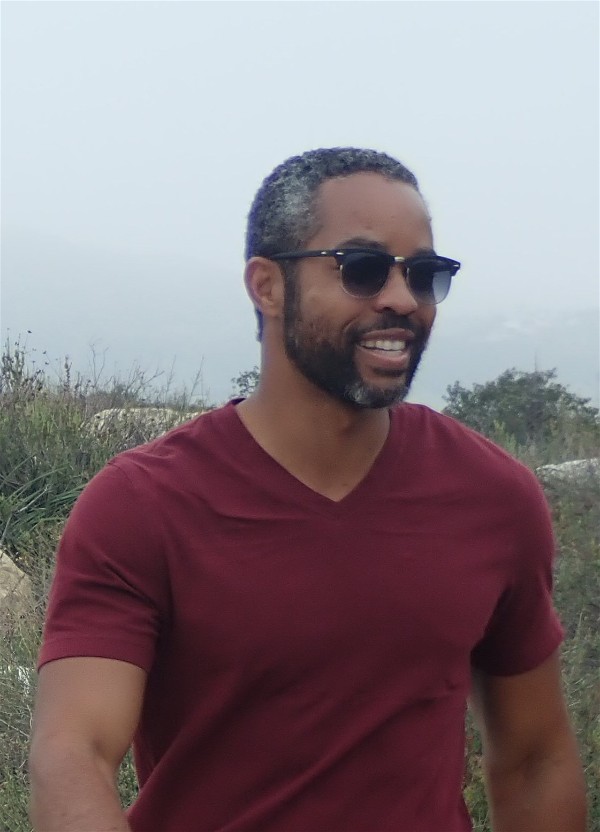
Carlos Grider launched A Brother Abroad in 2017 after a “one-year abroad” experiment turned into a long-term life strategy. After 65+ countries and a decade abroad, he now writes about FIRE, personal finance, geo-arbitrage, and the real-world logistics of living abroad—visas, costs, and tradeoffs—so readers can make smarter global moves with fewer surprises. Carlos is a former Big 4 management consultant and DoD cultural advisor with an MBA (UT Austin) and Boston University’s Certificate in Financial Planning. He’s the author of Digital Nomad Nation: Rise of the Borderless Generation and is currently writing The Sovereign Expat.