
CHAPTER 9
Digital Nomad Nation: Rise of a Borderless Generation
The Dark Side of Digital Nomadism
.
“The world is not yours for the taking. It is yours for the cherishing.”
— Karen Blixen
“Look, I try not to fuck places up. You know what I mean? I’m aware of the fact that sometimes if we put this wonderful little neighborhood bar that’s beloved by locals and no one else knows about it, if we put that on TV, that we could change its character forever, or that the owner might be happy for the additional money, but the other customers will be miserable and angry and I’ve basically ruined an important part of their lives.
“I think about that a lot, and there have been occasions where we won’t even give the name of the establishment that we put on camera. And there have been times were we deliberately shoot in such a way that you’ll never find it. I don’t want to hurt people. I don’t want to change the world in a bad way, if I can avoid it.”
– Anthony Bourdain, traveler, writer, my idol
The Digital Nomad Nation has the gravity of a nation and influence that transcends borders. Such immense potential comes with responsibilities. Any talk about the nation’s possibilities is limited if we ignore its potential impacts, too. So, what must governments, companies, and digital nomads do to take responsibility from the outset?
Digital nomadism’s popularity is increasing to a fever pitch – both in press coverage and among aspiring nomads joining the life. All signs point to continued growth, which will increase cash spent in far corners of the world. In turn, the potential influence to grow new nomad enclaves and shape the areas surrounding them will increase as well.
This transformation into a larger, more influential, more powerful community will continue to follow a pattern of decentralized self-governance. Only projects, ideas, and plans that nomads and the community pursue will succeed. These projects include the preservation of local culture and communities and nomading ethically.
In the early phases of the digital nomad journey, singletons stumbled into the unknown. These solo travelers, passionately and enjoyably, struggled to find a way to make things work. The light footprint of their small numbers and meager resources made even the largest of mistakes on the road small in the big picture. This light travel by small groups had minimal long-term negative effects on the destinations and the people who hosted them.
But, now, the newfound resources of the individual seasoned nomads across the large and growing nation are starting to add up. The significantly larger footprint of the community makes even small actions add up. Unnoticeable mistakes on a small scale now stand the risk of adding up to changing landscapes for the worse with such a large population.
If these problems aren’t fixed, they could harm the success, diplomacy, and influence of the Digital Nomad Nation.
Nomads spend billions each year, boosting their impact and increasing the nomad nation’s appeal. So, nomads, governments, and local businesses need to recognize two key risks this impact brings.
The major risks of digital nomadism are the negative effects of gentrification and economic leakage.
Gentrification: An unavoidable side effect of the nomad nation, if travel isn’t approached with intention
Gentrification occurs when wealthier people, businesses, and investors move into a neighborhood. This change alters the makeup of the local economy, community, and presence of local culture.
When wealthier people spend more, property values, rents, and business prices go up. This can push out longtime residents and replace their culture with that of new arrivals.
When wealthier populations enter, spending more, property values, rental prices, and costs of living usually go up. This can push out long-time residents. As legacy residents leave, new preferences of incoming residents replace the legacy culture of the area.
Gentrification and its harmful effects are major social risks linked to the Digital Nomad Nation.
Unlike permanent residents, Nomads usually stay in neighborhoods for 3 to 9 months. Even though their visits are temporary, they can still impact a location, just like wealthier residents moving in for good. They all likely bear the same tastes and needs, like cafes and Wi-Fi, with similar monthly budgets well above the average monthly income for a local. This chain of very similar wealthier “semi-permanent inhabitants,” nomads, can have the same effect as new, permanent residents.
If businesses react to the budgets and tastes of nomads by raising rental prices, replacing old accommodations and restaurants with more expensive options, and targeting new demographics, it could lead to serious issues. These unchecked changes might drive up costs and alter the local culture. Ultimately, locals could be pushed out, losing their homes and heritage. This is how nomads moving into new neighborhoods and spending “normally” can reshape cultural landscapes.
Digital nomads shape neighborhoods, cities, or countries by voting with the $787 billion of spending power annually [2].
To understand this $787 billion impact, consider that U.S. foreign aid from 2001 to 2024 averaged just $22.9 billion a year [19].
The Digital Nomad Nation’s annual spending budget dwarfing the US foreign aid budget is impressive, to say the least. But if the right precautions and responsibility for ethical investment and development aren’t taken, this has alarming potential.
Who is responsible for negative impacts when nomads move in?
Though digital nomads are commonly blamed, nomads are not the only culprits and arguably not the most responsible party or most capable party in preventing the negative effects of gentrification. The risk of gentrification caused by digital nomads bears a very unique, nuanced difference from the typical gentrification of poorer urban areas wherein wealthier citizens of a country move in, buy businesses, and displace citizens of the country. The difference is, by contrast, digital nomads generally cannot and do not purchase or operate real estate or businesses in foreign countries – as their livelihoods are, by definition, derived online.
Though digital nomads are commonly blamed, nomads are not the only culprits. Even more, nomads are not the most responsible or most capable party in preventing the negative effects of gentrification. There is a nuanced difference between the gentrification caused by nomads compared to “normal gentrification.”
In “normal gentrification,” wealthier citizens of a country move in, buy businesses, and displace citizens of the country. This process makes the wealthier new residents the clear drivers of that gentrification.
Digital nomads don’t buy or operate real estate or businesses in foreign countries. By definition, digital nomads’ livelihoods are derived online. And, by law, nomads’ visas don’t allow the operation of “brick and mortar” businesses. Nomads can support gentrification-inducing accommodations and businesses, but nomads alone cannot cause gentrification.
So, if digital nomads aren’t fully responsible for gentrification, who is? And what can be done about it?
Local business owners are the first line of defense against gentrification and its negative side effects
The nomad generally arrives at a new location, unaware of what culture should be preserved and how. However, the local business owners and real estate owners do (or should) know. These locals tend to be citizens of the country and residents of the region where “development” is taking place. The local business owner should have the cultural insight to know when a restaurant or hotel sacrifices old customs and culture. The local business owner should be aware of when a change to a business, a renovation, a price hike, or an expansion is a step toward gentrification.
Business and real estate owners benefit the most from gentrification. They are also the most responsible and influential in the process of gentrification. These community members have a responsibility that comes with their opportunity. They are the first line sacrificing local culture, local land, and local livelihood in exchange for profits. These profits come with higher prices that digital nomads unknowingly pay but the business owners knowingly accept.
In this chain of events, the initial opportunity for awareness of and prevention of gentrification sits with the local real estate and business owners.
Local real estate and business owners have the first chance to recognize and prevent gentrification. It is they who “know” the culture and landscape. It is they who increase prices. It is they who have the first opportunity to react and stop overdevelopment. It is they who fail to react when local residents and culture are displaced.
Policymakers and government enforcement agencies are also key players. They form the second line of defense against the harmful effects of gentrification. A government must guide its communities’ cultural and economic paths. It does this through regulations and policies that focus on urban planning and cultural preservation. The community and its cultural preservation are key reasons to focus on research, collaboration, and planning. This is important as governments create special stay and residency permits, digital nomad villages, and targeted tourism zones in the future.
Last, digital nomads are the third most responsible and influential party in gentrification and its ill effects. Nomads spend selectively at specific restaurants and hotels that fit their tastes. This targeted spending can fund growth and development that can potentially be adapted to their tastes and needs.
However, knowledge combined with intentional action can reduce negative effects.
Digital nomads can choose not to support establishments that result in a net negative impact on communities if well informed. However, a nomad traveling alone may not know much about a place before arriving. They likely have little understanding of the location and its culture from days, weeks, or months before their visit. It isn’t easy to make an informed decision about whom to support and whom not to support. It’s hard to tell if a business helps or harms its community and culture. It’s tough to see if it has pushed out local residents for profit.
The main issue regarding the problem of gentrification and the nomad’s part is knowledge.
A practical solution is for nomads to share their experiences. They can share which countries and cities are prone to exploitation by businesses and real estate owners. They can tell the community which businesses are using digital nomads in a way that hurts the local culture of a destination. By sharing this feedback in online digital nomad communities via trip reports and discourse, digital nomads keep each other informed. They empower each other to choose in a way that ensures net positive outcomes and avoids gentrification.
Nomads can share valuable feedback about observed changes in a destination over time. They can discuss issues like ethics in new developments and observed drops in locals holding influential jobs. This information helps them combat the negative effects of gentrification together.
Then, nomads can use economic Darwinism to support the preservation of businesses that preserve culture and support local populations and starve businesses that run counter their values.
While the Digital Nomad Nation can use institutional memory to sniff out and avoid locations prone to exploitation, it is essential to acknowledge the power that local businesses and real estate owners have in defending against gentrification and resulting cultural erosion. Additionally, policymakers and government officials targeting the digital nomad opportunity must enforce laws – zoning and business practices – that preserve.
However, for all involved, identifying culturally harmful or potentially exploitative establishments is the first step in avoiding gentrification. Avoiding the existence of such culture-consuming business practices is the second and best thing that business owners, governments, and nomads can do to preserve local communities.
Economic Leakage: How mindless spending can leave communities stuck in poverty
Economic leakage happens when money spent in a community “leaks out.” In this case, service providers and business owners who receive payments aren’t part of the community. As profits go elsewhere, this means business activities don’t benefit local members or help community growth.
This “leakage” can be profits paid to foreigners, buying imported goods instead of local, or hiring cheaper migrant workers. As a result, profits don’t pass among the people who live in a location or contribute to its development. Instead, the profits leave the location as quickly as they arrive. Locals are then left behind as foreigners and non-locals prosper, and income sources for the community are lost. This type of economic exploitation often occurs in tourism, foreign investment, and import-dependent industries.
In 2017, the Bank of Indonesia and the Indonesian government looked into a major case of economic leakage. The case involved Chinese tourists on packaged tours traveling in Bali for weeks at a time. During these trips, tourists frequently paid using Chinese payment apps Alipay and WeChat. But at the time, these apps weren’t officially approved, properly taxed, or regulated in the Indonesian market. At the same time, many of the tourism partners throughout the trip had strong business and economic ties with mainland China. Practically, this meant the tourism money spent stayed within the borders of mainland China. Though the money lightly touched the hands of a small, it remained in a culturally homogenous circle disconnected from the Balinese community [21].
The simple acts of packaged tourism and paying in a way that was normal at home resulted in economic leakage.
Similarly, in the nomad hotspot of Canggu, many of the popular bohemian cafes and accommodations frequented by nomads are owned by Australians, Dutch, expats of other nationalities, or even foreign companies. Foreign owners then commonly employ workers from the nearby island of Java, not Bali. This foreign ownership and migrant worker staffing mean both profit and salaries completely leave the local Balinese community. Profit payments are sent abroad, while salary savings are sent to families in Java or other islands.
In both cases, with the Chinese tourists and digital nomads, locals in poverty remain unchanged. They are still stuck in poverty despite the so-called “foreign injection of cash.”
So, how can digital nomads avoid economic leakage? How can nomads ensure that their spending benefits the benefactors of the places they are enjoying instead?
Be curious and go local by asking about the ownership of cafes, co-working spaces, and hotels and the origins of staff and service providers. Then, vote for community preservation with dollars and presence. By staying informed and then leaning towards locally owned establishments, nomads fight economic leakage and empower local workers and business owners.
An Extra Tip in Community Preservation: Silence Is Golden
While many people love to share their travel spots on social media, this can harm the hidden gems we love. The rush of “likes” and “comments” feels good, but it often leads to the overcrowding and destruction that spoil these special places.
Hidden destinations are always exciting to discover. The stunning waterfall, the cozy cafe, and the charming island are all amazing surprises. Though “sharing” may be the instinctive way to enhance the experience, often, it is the perfect way to destroy it. Most destinations can’t handle the onslaught of attention and visitors that social media platforms of millions can deliver. Perhaps the surrounding roads, transportation, and communities aren’t designed for such generous attention. Maybe the destination itself has an inherent maximum capacity for a pleasant experience. Maybe the bump in sales is a little too tempting for the proprietors – leading to compromising the culture and the community for the prospect of more.
The Eiffel Tower can handle the onslaught of literally thousands of visitors daily, as can the infrastructure of Paris itself. But, my favorite small steakhouse in the Patagonian frontier can barely support tens of visitors in a single afternoon.
Recognizing these realities leads to one realization. Sharing destinations too widely will lead to their ruin. Luckily, there is a simple solution to preserving travel gems around the world.
Keep it off social media.
Keep that experience, that gem, to yourself.
Visit these wonderful places and enjoy them. But enjoy them as a solo traveler, in reality and “virtually.” Don’t promote these places on social media or wide-reaching information channels. Save them for close connections and impromptu travel buddies via word of mouth. Allow these places to remain on the “unknown path” that people discover on their own.
There is an indescribable beauty in the experience of stumbling upon “a gem” through your travels. However, this satisfaction only comes with the effort of getting off the beaten path and the curiosity to truly explore. Allow your fellow travelers that opportunity for discovery, and protect the “travel gems” we have left in the process.
An Adventurous Solution to Overtourism: Getting off the beaten track
Just as many of the travel gems can’t handle the onslaught of tourism that comes with a viral share on social media, the nomad capitals stand at risk, too. No city is capable of handling the entire 35+ million digital nomad population, more than twice the population of Tokyo, at once.
While it’s unlikely that many nomads will flock to one city, the image shows that it’s possible to have “too many nomads.” The nomad nation will continue to grow, and that will be an empowering transformation for the community. Yet, nomads must be aware that too many nomads in one location at one time will at least sour and, at worst, destroy the places we love.
Visit the remote locations in Southeast Asia and South America that nomads love, and you’ll realize that the best places are meant for many people at once. Small roads meant for minimal traffic. Limited seats in cafes. Limited rooms in guesthouses. Only a handful of restaurants in town. For any of these “charming” elements of a nomad’s experience, once a threshold of “too many people” is crossed, the experience becomes progressively more miserable for everyone.
Beyond a small crowd being more intimate and enjoyable, publicity often broadcasts opportunities.
Sharks can smell blood in the water, and vultures begin circling at the inkling of an opportunity. In the context of “too many” nomads in a place that cannot inherently support it, while one would hope the opportunity would fuel a sustainable development project and beneficial nomad enclave, it is much more likely that profiteering and potentially exploiting business owners step in and cater to the business opportunity.
When there are too many nomads in a place that can’t support them, it’s tempting to think this will lead to good development. However, this may attract business owners who aim to exploit the opportunity instead of creating positive outcomes. While there is a possibility such development can be mutually beneficial, quick businesses created purely in response to nomad dollar opportunities are rarely purely benevolent and should be approached with caution.
The easy cure for potential overtourism and predatory businesses is for nomads to get off the beaten path more frequently. Don’t always go to the same place as other digital nomads. Some places aren’t equipped to be nomad hubs – in policy, economics, ethics, and otherwise.
At the same time, embrace the adventurous roots of nomadic nature once in a while. Wandering “off piste” spreads the nomad community’s load over more areas. It also enhances the experience by adding more of the adventure nomads want and avoiding the excessive structure they fled. In doing so, nomads may stumble onto more efficient and pleasant destinations filled with more hidden gems than the people hives they routinely flock to.
The nomad capital and hub cities are worthy staples in every nomad’s itinerary. Still, balance is key in everything. An itinerary that includes some genuine wandering brings unique positives and memorable experiences.
Sharing information, spending wisely, and exploring new places will help protect the spots we cherish.
The Digital Nomad Nation is growing in size and influence. This means the risks of gentrification and economic leakage will increase, too.
Clearly, business owners primarily drive exploitation and culture mining for profit. Policymakers and government officials should protect against this. However, individual digital nomads and the nation must also take responsibility for how they live, work, and play. If not for ethical reasons, then at least to protect the places they love and friends who call those places home.
To achieve this, they must empower each other with the information. Nomads must be curious and conscious in their travels. They should search for places to visit, stay, eat, work, tour, and shop that prioritize sustainability. These places should respect, protect, and contribute to local culture and community.
As nomads make their discoveries, they must guide other nomads onto the sustainable path and away from careless spending. Nomads should share clear and helpful feedback about places or businesses that harm local nature, culture, or communities. This helps nomads avoid supporting businesses that harm the places they love.
Additionally, nomads must remember their roots and get off the beaten path. Skip the nomad capital city. Choose a cafe other than the coffee shop with perfect reviews. Explore to avoid overloading infrastructure and to spread cash injections and opportunities throughout communities and regions.
Sometimes, please don’t share it. While the countless hidden, beautiful travel gems around the world might be fun to share, not many can handle the pressure of popularity. Sometimes, an onslaught of visitors can destroy what makes a place beautiful. So, when you share a hidden gem, do it carefully. Be aware that too much attention can ruin what you cherish.
By contrast, in the adventure of wandering, the bumbling journey of discovery can add an indescribable sweetness. So, allow other travelers that sacred adventure of discovery and preserve a gem in the process.
Not everyone needs to experience everything.
And not every gem needs to be seen.
Lastly, go where you’re wanted for more than just your wallet. Suppose a person, or the tourism industry as a whole in a destination, is only responding to your wallet, essentially treating you as less than equal. Then, there is a strong chance to exploit other elements of that community —nature, employees, and culture—for that same profit.
Choose places that treat you and others with respect, and you help create a positive environment and keep the best of the area alive.
These risks will exist for as long as the digital nomad nation does. While these solutions are best practices now, as the digital nomad nation grows and grows more sophisticated, it can and will create new solutions mitigating the risks posed by the evolving nomad nation. The nomad nation should always aim to preserve the quality of the communities and lives it touches.
Luckily for the Digital Nomad Nation, as a digital nation that decides and acts in a decentralized way, countless other digital collectives are innovating and creating new approaches to ideate, motivate, and coordinate for action to achieve their goals.
These potential models for open-source and decentralized governance in the digital world don’t only hold potential blueprints for coordinating to prevent harm. They also stand to take the nomad nation beyond the next level to become a nation unlike any the world has seen.
Chapter 9 Field Insights: The Dark Side of Digital Nomadism
① Freedom Without Awareness Can Cause Harm, and nomads must beware of this
When digital nomads enter a new place without understanding its culture, economy, or struggles, they can unintentionally contribute to gentrification, social friction, and displacement—especially in fragile local economies.
② Collective Knowledge Is a Powerful Ethical Tool
Nomads can use shared experience and communication to guide each other toward ethical, sustainable destinations—and away from exploitative or overdeveloped ones. When local practices turn harmful, the most powerful protest is often moving on with your money.
③ Silence Is Golden: Not Every Paradise Needs Promotion
Some places thrive best in quiet. Sharing undiscovered gems on social media can invite unsustainable tourism and stress fragile communities. Sometimes, the most respectful act is restraint—loving a place without broadcasting it.
Departure Point:
Ask yourself: When I enter a new place, am I a guest… or just a consumer?
What would it mean to reciprocate—to give as much as you take, to listen as much as you post, to integrate as much as you explore?
The dark sides of nomadism aren’t reasons enough to stop the journey. They’re invitations to walk with more awareness. Being part of the Digital Nomad Nation doesn’t just come with freedom—it comes with the chance to shape a new kind of global citizenship, one built on mutual respect, not just mobility.

- PROLOGUE
- CHAPTER 1: Why Are Digital Nomads Everywhere?
- CHAPTER 2: What is a digital nomad?
- CHAPTER 3: The Digital Nomad Lifecycle
- CHAPTER 4: How Digital Nomads Earn Their Living
- CHAPTER 5: Geoarbitrage
- CHAPTER 6: Solo Struggles as Foundations for a Nation
- CHAPTER 7: Digital Nomad Hotspots
- CHAPTER 8: The Nomad Nation Is Already Forming
- CHAPTER 9: The Dark Side of Digital Nomadism
- CHAPTER 10: Models for a Digital Nation
- CHAPTER 11: Tuvalu
- CHAPTER 12: Decentralized Autonomous Enclaves
- CHAPTER 13: Visionary Possibilities
- CHAPTER 14: What Comes Next?
- CHAPTER 15: Conclusion
- CHAPTER 16: The Digital Nomad Nation Manifesto
- CHAPTER 17: The Call to Action
- EPILOGUE: Rise of the Flexpat
- APPENDIX A: Global Digital Nomad Study
- APPENDIX B: Nomad Nation Resources

.
.
ABOUT THE AUTHOR
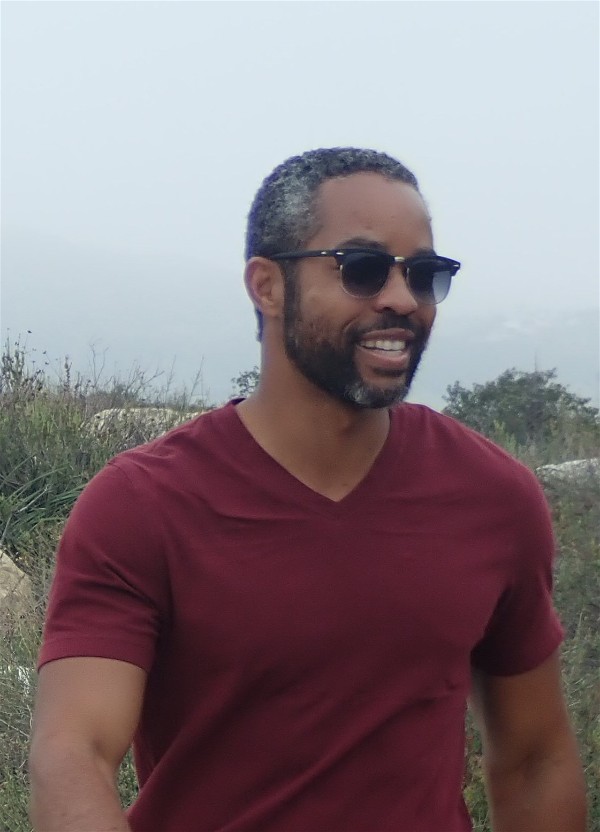
Carlos Grider launched A Brother Abroad in 2017 after a “one-year abroad” experiment turned into a long-term life strategy. After 65+ countries and a decade abroad, he now writes about FIRE, personal finance, geo-arbitrage, and the real-world logistics of living abroad—visas, costs, and tradeoffs—so readers can make smarter global moves with fewer surprises. Carlos is a former Big 4 management consultant and DoD cultural advisor with an MBA (UT Austin) and Boston University’s Certificate in Financial Planning. He’s the author of Digital Nomad Nation: Rise of the Borderless Generation and is currently writing The Sovereign Expat.